We Need Smarter Prostitution Laws

Sex_work_top_image

Jill Filipovic in Al Jazeera:

Current sex workers — at least those who are active on the Internet, arguably an English-speaking, financially stable and educated sliver representing sex workers who are significantly more privileged than the average global sex worker — seem to populate the pro-decriminalization group more heavily. This is not surprising, considering the perils sex workers face when their trade is outlawed, with rapes and assaults that cannot be reported to police, abuse at the hands of police, control by pimps or organized criminal cartels, arrests and criminal records that make other work impossible, murders no one cares about. (Street sex workers, for instance, are underrepresented in mainstream media stories but account for about 20 percent of sex workers in the U.S. and face much higher levels (PDF) of extreme poverty, homelessness, desperation and substance abuse than the general population — and even the overall sex-work population — does.)

It is clear that outlawing prostitution has not worked. Legalization, it would seem, would be a solution. Regulate sex work like any other job and treat sex workers with the dignity afforded to any other worker, and you undercut the assumption on the part of some johns that they can rape, abuse and rob, and you empower sex workers to go to the police without fear of arrest. In theory, legalization would even cut down on human trafficking and coercive practices. Regulation would make it easier to identify those who are in the trade voluntarily versus those who are not. Taking sex work out of the shadows would cast more light on those people who are being abused.

More here. Also see Aziza Ahmed in Foreign Policy:

Abolitionists typically insist that criminalization is imperative. Some have pushed for making the sale of sex illegal. Others, however, including feminists who oppose prostitution, support a different model: outlawing only the purchase of sex. They argue that criminalizing clients will force the sex industry out of business, liberating sex workers but not treating them as criminals.

Already, this model has achieved legislative success. Sweden outlawed buying sex in 1999; Norway and Iceland later followed suit. France is on the verge of joining the club, and a debate on the issue is even gaining steam in Germany. Feminist Kathleen Barry, author of Female Sexual Slavery and co-founder of the Coalition Against Trafficking in Women, has even called for an international treaty that would mandate “arresting, jailing and fining johns.” (She first introduced the idea in the early 1990s, but has recently revived it.)

In reality, there is no convincing evidence that punishing “johns” decreases the incidence of commercial sex. Troublingly, Sweden's sex workers report that criminalization has simply driven the sex industry underground, with dangerous consequences: Clients have more power to say when and where they want to have sex, inhibiting workers' ability to protect themselves if need be.

More here.

the love of pigeons

84b31690-8386-11e3-_400700hJennie Erin Smith at the Times Literary Supplement:

On a chilly autumn morning in Ozone Park, Queens, Carmine Gangone, an Italian-American veteran of the Second World War, sends his rooftop flock of pigeons into the sky, screaming “Climb, you bastards!” as he waves a bamboo pole after them. Across town in Brooklyn, a man who calls himself Tony the Terminator releases his own birds in the hope that they will “tangle” with flocks like Gangone’s and return with a pigeon or two more. Elsewhere in New York, hundreds of people casually toss chunks of bagel or pizza crust at feral pigeons; others carry whole bags of bread to feed them with, despite long-standing efforts by city officials to discourage the practice.

In The Global Pigeon, his ethnography of human–pigeon encounters, Colin Jerolmack makes an imaginative and convincing case against interpreting any of these activities as “driven by a singular deep-seated need to connect to nature”, as environmental scholars persuaded by the biophilia hypothesis might. Jerolmack, too, first thought of the rooftop pigeon coops as a way for their owners to “escape the concrete jungle and find solace in intimate relations with the ‘natural world’”. But people like Gangone quickly disabused him of the idea. Instead, Jerolmack found, after spending thousands of hours with pigeon flyers, feeders, and racers – mostly in New York but also in Berlin, London, Venice and South Africa – that people who interacted with pigeons did so mainly to reinforce their connections to other people.

more here.

On Afrikaner Dance Music

ImageTrevor Sacks at n+1:

Boeremusiek usually has no vocals, and its central instrument is the crunchy, droning concertina, an originally European free-reed instrument replete with bellows—much like an accordion, but smaller and perhaps cuter. As with some forms of American folk music, guitar, banjo, occasionally violin, and bass or cello accompany it. It could be considered the bluegrass of South Africa, although perhaps it’s closer in sound to Cajun music, or polka mixed with Parisian cafe kitsch.

A typical boeremusiek song, like the traditional “Sonop” (“Sunrise”) as played by Die Oudag Boere-Orkes (The Old-Time Boere Orchestra), begins with a short figure played on a lone concertina, increasing in tempo like a wind-up record, before the rest of the band joins in. An acoustic guitar provides rhythm along with a bouncing, plucked cello to mark the bassline; while a second concertina provides harmonic lines and chord stabs. As in bluegrass, a banjo adds extra jauntiness, tripping atop the guitar rhythm. In the traditional bands, no drums feature, though they do in bands like The Klipwerf Orkes, perhaps the most successful current boeremusiek act. Their drummer adds plenty of splashy accents to the relentless, chugging rhythm in their version of “Sonop,” and they’ll often include clean electric guitars, synthesizers and pianos.

more here.

the greatness of herzog

BellowKevin Stevens at The Dublin Review of Books:

“If I’m out of my mind, it’s all right with me, thought Moses Herzog.”

So begins Saul Bellow’s Herzog, a half-century in print and still funny, intense, personal, and contradictory from its opening sentence. Still contemporary. Imbued with two thousand years of learning yet crackling with wiseass Chicago wit. Cerebral and earthy, dense and free-flowing, brilliant, imaginative, hilarious. Thoroughly Jewish yet thoroughly American. And, though many might argue otherwise, the great postwar American novel.

Great works of literature are both representative and unique. Representative because, at least in the Western mimetic tradition, they depict, via genre, rhetoric, and habit of thought, the cultural and political realities of their time. And while full of the detail of the historical moment, the best works also transcend the moment, giving narrative or lyric the scope and depth of the timeless, so that meaning and relevance persist as history fades.

Uniqueness is mediated by language – not simply as style, though that is important, but as the medium through which idea, image, and narrative are captured and conveyed. Language, as Richard Ford puts it, is what happens in literature.

more here.

Thursday Poem

Evolution

Once I was a Paleolithic painter, a sensual hunter
plundering the earth, living from hand to mouth,
drawing at one end of the cave, all my worries ordinary.
I was faithful to nature, transmitting pure and honest beauty,
my drawings of movement were snapshots.
I saw the finest nuances of color
and didn’t know what shadows were.
I didn’t believe in gods or the world to come,
I lived in an age of deeds
and afterwards I split in two and divided the world
into reality and the beyond,
the seen world and the hidden one
the mortal body and the soul.

by Yediot Aharonot
from Ra'ad ha-ear
Publisher: Yediot Aharonot, Tel Aviv, 2013
translation, Lisa Katz

The Happiness Index: Putting people before profit in Bhutan

Gretchen Legler in Orion Magazine:

Happiness_magnet011DRUK YUL, the DRAGON KINGDOM, has been incognito for a long, long time. A country roughly the size of Vermont and New Hampshire combined, but with less than half the population, it sits sandwiched between its giant neighbors, China and India. It has never been colonized by a foreign power and was only once unsuccessfully intruded upon by the British. It has remained a place apart—a secret, secluded jewel of a Buddhist kingdom in the lap of the Himalayas, ruled by a family of kings and queens whose pictures adorn nearly every household. Suddenly, however, it has burst upon the global scene, not only as an elite tourist destination, but as a champion in the quest for human happiness and sustainable economics, its leaders making international headlines as they invite other nations to wake up and get on board with the pursuit of Gross National Happiness. GNH, as the Bhutanese call it, was conceived of by the country’s fourth king, Jigme Singye Wangchuck, who, in the mid-1970s, realized Bhutan could no longer remain hidden from the rest of the world like a real-life Shangri-La, but would need to modernize or risk being erased entirely. How could this be done without wrecking Bhutan’s diverse and precious natural resources, subjecting its people to unfettered capitalism, or prostituting its complex and rich Tibetan Buddhist culture to tourism? His answer was Gross National Happiness, and he is famously quoted as saying, “Gross National Happiness is more important than Gross National Product.”

…In Bhutan, happiness is not a perfect life softly cocooned in pillows of cleanliness, security, and abundance. “I like to start by translating what happiness means in our language,” he says. “Ghakey—the first syllable, gha, is a word that you can use when you say you like something, when you say you love someone; it can also be used to describe a state of elation. The second syllable, key, means peace. When we refer to happiness, we are talking about harmony, striking a balance, so you’re not just focusing on individual emotion but the enabling conditions that will facilitate an individual pursuit of happiness.” Can a country that claims in its brand-new constitution that happiness is more important than money survive, let alone thrive, in a global economy that measures everything by the dollar? How do you measure happiness? Can governments actually help people be happy? Can this tiny hermit kingdom really serve as a model for change for the rest of the world? You could argue that these are some of the most vital questions of our time.

More here.

The Heartbreaking History of Divorce

Amanda Foreman in Smithsonian:

AnnThe fact is, in the United States the probability of a first marriage lasting for 20 years has decreased to about 50-50. (Before anyone blames Western decadence for the breakdown of the family, it should be pointed out that the Maldives occupies the number one spot in the divorce league tables, followed by Belarus. The United States is third.) Furthermore, these grim statistics don’t even touch on the reality that for an increasing percentage of the population, life is a series of short cohabitations punctuated by the arrival of children. For a country that makes such a fuss about love on the 14th of February, America has a funny way of showing it on the other 364 days of the year. This may be my XX chromosomes doing the talking, but it seems to me that divorce is, and always has been, a women’s issue par excellence. Multiple studies have shown that women bear the brunt of the social and economic burdens that come with divorce. The quickest route to poverty is to become a single mother. This is awful enough, but what I find so galling is that the right to divorce was meant to be a cornerstone of liberty for women. For centuries, divorce in the West was a male tool of control—a legislative chastity belt designed to ensure that a wife had one master, while a husband could enjoy many mistresses. It is as though, having denied women their cake for so long, the makers have no wish to see them enjoy it.

…The most celebrated divorce case in history remains that of Henry VIII versus Pope Clement VII. The battle began in 1527, when Henry tried to force the pope into annulling his marriage to Catherine of Aragon, who had failed to provide him with a male heir. Determined to make the younger and prettier Anne Boleyn his wife, Henry finally broke with Rome in 1533 and declared himself the head of a new church, the Church of England. The collateral damage from Henry’s unilateral decision was a way of life that stretched back for more than a thousand years. Gone forever was not just a system of patronage or the ancient rites, but the vast network of religious schools, hospitals, convents and monasteries that maintained the social fabric of the country.

More here.

Wednesday, January 22, 2014

On and off the road with Barack Obama

David Remnick in The New Yorker:

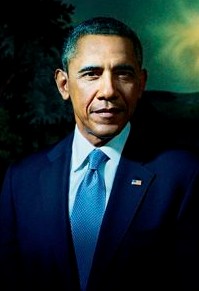
ScreenHunter_467 Jan. 22 18.25On the Sunday afternoon before Thanksgiving, Barack Obama sat in the office cabin of Air Force One wearing a look of heavy-lidded annoyance. The Affordable Care Act, his signature domestic achievement and, for all its limitations, the most ambitious social legislation since the Great Society, half a century ago, was in jeopardy. His approval rating was down to forty per cent—lower than George W. Bush’s in December of 2005, when Bush admitted that the decision to invade Iraq had been based on intelligence that “turned out to be wrong.” Also, Obama said thickly, “I’ve got a fat lip.”

That morning, while playing basketball at F.B.I. headquarters, Obama went up for a rebound and came down empty-handed; he got, instead, the sort of humbling reserved for middle-aged men who stubbornly refuse the transition to the elliptical machine and Gentle Healing Yoga. This had happened before. In 2010, after taking a self-described “shellacking” in the midterm elections, Obama caught an elbow in the mouth while playing ball at Fort McNair. He wound up with a dozen stitches. The culprit then was one Reynaldo Decerega, a member of the Congressional Hispanic Caucus Institute. Decerega wasn’t invited to play again, though Obama sent him a photograph inscribed “For Rey, the only guy that ever hit the President and didn’t get arrested. Barack.”

More here.

Away from her

Amitava Kumar in The Indian Express:

Wbf-ak092908I am writing these words during a 14-hour flight from New York to Delhi. After landing in Delhi, I will catch another flight, this one to Patna. I am going to Patna to cremate my mother. Ten years ago, almost to the day, I was on a highway outside Washington DC and I thought that my mother had died. She was visiting us from India because my first child had been born. That morning I was driving with Ma to my sister’s home. I was to take a plane later that day to Atlanta, where I was going to interview the actor Manoj Bajpai. Only a few miles from my sister’s house, as I was driving, I looked at Ma, who was on the seat beside me. Her eyes were open but her gaze was unfocused. She certainly didn’t appear to hear me. Her body had gone rigid. Ma, I said softly, and then Ma again, louder and louder. We must have been driving at 120 kmph and I began to change lanes, getting to the slower lanes, and then exiting till I came to a stop on a suburban street. Did I sprinkle water on her? I cannot say. But my mother seemed to awaken from a sleep. She remembered nothing. And soon she was fine. Before I said goodbye to her at my sister’s house, Ma asked me if she should prepare some suji ka halwa for Manoj Bajpai. This is how one can think of many women in our society: they are survivors. They have endured so much, they have carried such burdens, weathered so many storms. And we, who are their children, are the beneficiaries because, at the end, we are asked if we want some mango, or milk, or suji ka halwa.

More here.

Happiness and Its Discontents

Photo_45547_portrait_largeMari Ruti at The Chronicle Review:

If all of that isn't enough to make you suspicious of the cultural injunction to be happy, consider this basic psychoanalytic insight: Human beings may not be designed for happy, balanced lives. The irony of happiness is that it's precisely when we manage to feel happy that we are also most keenly aware that the feeling might not last. Insofar as each passing moment of happiness brings us closer to its imminent collapse, happiness is merely a way of anticipating unhappiness; it's a deviously roundabout means of producing anxiety.

Take the notion that happiness entails a healthy lifestyle. Our society is hugely enthusiastic about the idea that we can keep illness at bay through a meticulous management of our bodies. The avoidance of risk factors such as smoking, drinking, and sexual promiscuity, along with a balanced diet and regular exercise, is supposed to guarantee our longevity. To a degree, that is obviously true. But the insistence on healthy habits is also a way to moralize illness, to cast judgment on those who fail to adhere to the right regimen. Ultimately, as the queer theorist Tim Dean has illustrated, we are dealing with a regulation of pleasure—a process of medicalization that tells us which kinds of pleasures are acceptable and which are not.

more here.

Karachi’s Dark Knight

Highres_copyright-john-stanmeyerviiHM Naqvi at Caravan:

JAMEEL YUSUF IS SMALL AND STURDY and wears his trousers slightly above his waist. Quick on his feet, he has a firm handshake and the general disposition of an economics professor—he wears a trim salt-and-pepper beard and rectangular-rimmed spectacles and peers at you with inquisitive eyes. His gaze, manner and mien do not betray that Yusuf was once one of the toughest characters in a city with a tough reputation. He was Karachi’s Dark Knight.

Yusuf, however, will say, “I’m just a Khoja businessman.” The Khojas are a tight-knit, mostly mercantile community who populate cities from South Asia to East Africa and Canada. Muhammad Ali Jinnah, the urbane founder of Pakistan, was one. Yusuf’s trajectory was rather more traditional: he got into the textile business after graduating from university, manufacturing cones used in spinning units, before venturing into construction. He built one of the first malls in Karachi in the mid 1980s. By the late 1980s, he had become a successful self-made businessman—“Whenever I take up something, I like to do a thorough job,” he said—and middle-aged.

And in the late 1980s, Karachi had become unsettled.

more here.

Getting Away With Murder

Jason Burke in The Guardian:

Benazir-Bhutto-books-011Decade after decade, Pakistan waxes and wanes as a news story. The early and late 70s, the end of the 80s, the beginning and end of the last decade have all seen spikes of interest in this complicated, troubled nation. In 2007 and 2008, two events in particular focused attention on the country: the assassination of Benazir Bhutto in the northern city of Rawalpindi and the terrorist operation launched by Pakistan-based Islamic militants on the Indian commercial capital of Mumbai, which left 166 dead. Together with new violence along the Afghan-Pakistani frontier as Pakistani troops tried to roll back resurgent extremists and bombings across Pakistan itself, these two attacks signalled the return of the “strategic centre of gravity” of the post-9/11 battle against extremist violence to south-west Asia after the shift to the Middle East following the invasion of Iraq in 2003. Heraldo Muñoz is a UN assistant secretary general who led the investigation into the assassination of Bhutto. He tells his story in Getting Away With Murder: Benazir Bhutto's Assassination and the Politics of Pakistan, a short book which, though oversold by publishers' claims of a “gripping” narrative that goes “further than anyone else to unravel the mystery” of the two-time prime minister's death, nonetheless makes some interesting points.

Central to the narrative is Bhutto herself. I spent much time with this impressive but deeply flawed woman in Pakistan in the late 90s, spoke to her regularly throughout her exile and accompanied her on several days' campaigning close to the Afghan border only a week or so before she died. She was charming, intelligent, moderate and extraordinarily brave. On one occasion, I joined her after she impulsively halted her motorcade and headed off into a market in a violence-prone conservative town to mix with stallholders and shoppers. But Bhutto was also intolerant of dissent, wilfully blind to the faults of key associates and, by the time she returned to Pakistan, in 2007, out of touch with her homeland.

More here.

The Anti-Fragility of Health

Esther Dyson in Project Syndicate:

HealthcareAccording to Taleb, things that are anti-fragile – mostly living things – not only resist being broken; they actually grow stronger under stress. When coddled too much, they grow weaker. Evolution is an anti-fragile process…

What are the equivalent terms for health? Most dictionaries define health as the “absence of disease.” But, in those terms, it is not a compelling proposition for people to “invest in health.” How can you invest in a vacuum?

Of course, we do invest in health care. But that is like investing in auto repair – allocating resources to repairing damage, rather than to improving safety technology or brightening traffic lights. Health care is what we wield when inactive “health” has failed to keep us healthy: the immune system has been overcome by a pathogen, or too much (bad) food, alcohol, smoking, recreational drugs, or stress – perhaps compounded by too little sleep and exercise – have compromised the body’s normal operation. Even if we are unlucky and suffer from a genetic condition that cannot be prevented, it often will still be easier to address in an otherwise healthy person.

Health itself is the capacity to undergo stress and react positively to it – anti-fragility in a specific context. For example, without exposure to infectious agents, the human immune system will never learn how to ward off invaders and may even turn inward, as in auto-immune diseases. Muscles need to work (and be stressed) to grow strong. The discomfort of hunger impels us to eat.

At first, the notion of producing health sounds a bit pompous, like “ideating solutions” or listing “legal intervention” (by a policeman’s bullet) as a cause of death. But it is a concept worth exploring and promoting.

Read the rest here.

What does anxiety mean?

140127_r24517_p233Louis Menand at The New Yorker:

The idea that anxiety is central to the human condition can also mean that our mental life is characterized by psychic conflict, and anxiety is the symptom of that conflict. This is, roughly, the psychoanalytic view. It’s what Freud meant when, in 1917 (not, as Stossel has it, 1933), he called anxiety “a riddle whose solution would be bound to throw a flood of light on our whole mental existence.” Anxiety is the common feature of all neuroses. Feeling anxious is what makes people seek psychiatric help. It’s a signal that unconscious drives are in conflict—that (as Freud believed in 1917) the ego is repressing a libidinal impulse. We’re not aware of the conflict itself—we’re not aware that we have a repressed desire—but we are aware of our anxiety. That’s what makes it the key to understanding what’s going on inside our heads.

Anxiety plays a big role in other accounts of the human condition, too. In theology, anxiety has been associated with the concepts of conscience, guilt, and original sin. Reinhold Niebuhr called anxiety “the inevitable spiritual state of man.” In evolutionary psychology, anxiety is usually explained as part of the “fight or flight” reflex that gets triggered in the presence of danger. The reflex is naturally selected for: organisms that lack it might fall off a cliff or get crushed by a mastodon, because their physiologies failed to warn them of a threat to their survival. And, in some schools of sociology and cultural theory, anxiety is interpreted as a reaction to the stress and uncertainty of modern life. It’s a natural response to unnatural conditions. It’s how we know that the world is headed in a bad direction.

more here.

contact lens to track glucose levels

From KurzweilAI:

Gogole_contact_lensTo help people with diabetes as they try to keep their blood sugar levels under control, Google is testing a smart contact lens designed to measure glucose levels in tears. It uses a tiny wireless chip and miniaturized glucose sensor that are embedded between two layers of soft contact lens material, according to Google Official Blog. People with diabetes must still prick their finger and test drops of blood throughout the day. It’s disruptive, and it’s painful. And, as a result, many people with diabetes check their blood glucose less often than they should. This should help. “We’re testing prototypes that can generate a reading once per second. We’re also investigating the potential for this to serve as an early warning for the wearer, so we’re exploring integrating tiny LED lights that could light up to indicate that glucose levels have crossed above or below certain thresholds.

More here.

Wednesday Poem

Term of Office

For 15 years I served as a child until removed from my post
in this kingdom where the land was once trustworthy
and trees glittered in the rain.
Now the almond grove is dry, the bread fish have turned brown,
the tented sky collapses on Mount Leviathan, and love,
once on the tip of my tongue, sticks to the roof of my mouth.
.

by Isreal Bar Kohave
from Beh-karov ahava
publisher: Am Oved, Tel Aviv, 2005
Translation: Lisa Katz

Tuesday, January 21, 2014

‘The Greatest Catastrophe the World Has Seen’

Evans_1-020614_jpg_600x354_q85

R.J.W. Evans in the NYRB:

[A]ll sides moved to a more balanced attribution of responsibility for 1914. There seemed to be a wealth of evidence that all sides had taken risks and been complicit in decisions that made war likelier. Moreover, literary witnesses, such as Robert Graves, encouraged the conclusion that the whole story was one of monstrous stupidness and futility. The first phase of reflection culminated in a long work of scholarship, published in 1942–1943, by the Italian politician and journalist Luigi Albertini. Silenced by the Fascist regime, Albertini immersed himself in all the sources, and added more of his own by arranging interviews with survivors. That lent an immediacy to his wonderfully nuanced presentation of the individuals who actually made (or ducked) the fateful decisions. Albertini’s magnum opus eventually made its mark in the 1950s, when it appeared in English translation. As the fiftieth anniversary of Sarajevo approached, the verdict seemed clear: the road to war, an immensely complex and protracted process, was paved with shared culpability.

At that point the learned consensus was shattered, and earlier assumptions seemed corroborated in a new perspective. The Hamburg historian Fritz Fischer issued a series of works incriminating the German side in a premeditated “bid for world power.” By the time of his closest examination of pre-war diplomacy, in Krieg der Illusionen (1969), he argued that Kaiser Wilhelm II and his ministers more or less single-mindedly provoked the conflict out of a combination of expansionist ambition and a desire to distract and discipline socialists and other increasingly insubordinate elements in domestic German society. The resultant “Fischer controversy” had its roots in intellectual instabilities of the then Federal Republic of Germany, including ambivalent attitudes toward the recent National Socialist past, in its relation to the course of German history as a whole, and in a vogue for socioeconomic explanations of political behavior. In any event, it brought influential confirmation that the much-maligned drafters of the Versailles settlement might not have been so far wrong after all.

Decades of contention followed, akin to a rerun of the interwarKriegsschuldfrage, or war guilt question; but like the Versailles diktat before it, the Fischer thesis has not worn well. In fact, to judge by the crop of books reviewed here, it is almost dead (lingering on in a qualified way only with Max Hastings). As we approach the centenary of Sarajevo, Albertini has triumphed. And so fully that—with one partial exception—there is a notable absence of polemic in these texts. Indeed they have much in common.

More here.

The Futurist Cookbook: 11 Rules for a Perfect Meal and an Anti-Pasta Manifesto circa 1932

Futuristcookbook

Maria Popova in Brain Pickings:

Given my voracious appetite for unusual cookbooks — especially ones at the intersection of food and the arts, including little-known gems from the likes of Andy Warhol, Liberace,Lewis Carroll, and Alice B. Toklas — I was delighted to discover The Futurist Cookbook(public library; AbeBooks) by Italian poet and editor Filippo Tommaso Marinetti, originally published in 1932 and reprinted in 1989, translated into English by Suzanne Brill.

At the time of its release, the cookbook became somewhat of a sensation, thanks to Marinetti’s shrewdness as a publicist. But while major newspapers like the Chicago Tribuneproclaimed it a bold manifesto to revitalize culture by revolutionizing how people ate, what the media missed at first was that the cookbook was arguably the greatest artistic prank of the twentieth century — it wasn’t a populist effort to upgrade mass cuisine but, rather, a highbrow quest to raise the nation’s, perhaps the world’s, collective artistic consciousness.

In the introduction to the 1989 edition, British journalist, historian and travel writer Lesley Chamberlain calls it “a provocative work of art disguised as easy-to-read cookbook” and writes:

The Futurist Cookbook was a serious joke, revolutionary in the first instance because it overturned with ribald laughter everything “food” and “cookbooks” held sacred: the family table, great “recipes,” established notions of goodness and taste.

What made Futurist “cooking” so revolutionary was that it drew on food as a raw material for art and cultural commentary reflecting the Futurist idea that human experience is empowered and liberated by the presence of art in everyday life, that osmosis ofarte-vita.

More here.