
Danny Crichton in City Journal:
 Digital quantification determines Americans’ quality of life. Algorithms select job applicants for interviews and employees for performance bonuses. They aggregate stories and products as we shop for news and goods, matching our preferences to the infinite bounty on offer. And they determine which homes we can buy, purchases we can make, and investments we can pursue. In love, the whims of Hinge’s matching algorithms will determine our romantic fate; in health, a nonprofit network will use its algorithm to allocate a kidney or liver donation—saving one life over another.
Algorithms dominate our lives because commerce dominates our lives. Competitive companies have a strong economic incentive to replace expensive and inattentive human decision-makers with reliable and cheap computational ones. For most, the weeks-long work of securing a mortgage, for example, has been replaced by faster digital approvals available through a website or app. The transition is so complete that the rapturous wonder of these new technologies has mostly subsided, replaced by astonishment when we stumble upon the old ways such things used to be done.
Government, ironically, is one place where direction by algorithm has barely made a dent.
More here.
Enjoying the content on 3QD? Help keep us going by donating now.
 The United States doesn’t really make chips these days, instead relying on a complex process of design, production, assembly, and testing that spans the globe. The vast majority of fabrication is done in East Asia; Taiwan, in particular, produces 41 percent of all processor chips and more than 90 percent of the most powerful chips, essential to advanced computing and AI. The supply chain’s concentration in an island nation with which China expressly seeks to “reunify” gives the whole matter unusually weighty stakes. At a White House event to get the bill past the finish line in Congress, Deputy Secretary of Defense Kathleen Hicks
 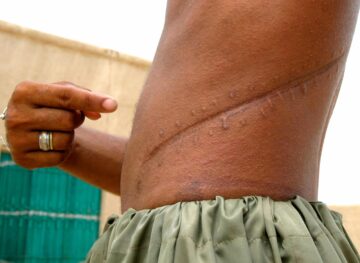 It is illegal to buy or sell an organ anywhere in the world, with the
 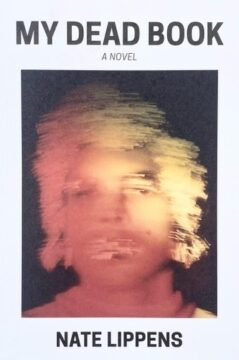 I’ve been reading Nate Lippens for years. I think this is the third time I’ve read My Dead Book and I’m finally getting a grip on what kind of machine his writing is. I think it’s a poetic instrument and also some kind of natural phenomena. I went to Joshua Tree one night in the aughts with a gang of people to see the Perseids. I’ve been thinking about that. We had sleeping bags and some people had drinks and their drugs of choice and then we all laid down flat looking up the sky waiting for the show. There wasn’t much. Like almost nothing. There’s one. And then in maybe about seven minutes another. Then another one. And nothing for a while. Then wham and all of the sudden we were screaming, giddy as kids because we were getting inundated with meteors making the sky like this crazy vibing net and we were ancient people animals lying there looking up in naked awe. It was the best. Start to finish I think that’s what Nate Lippens has done. Let me lay it out here. My Dead Book starts off with a fairly sentimental recitation, a recollection of one of his dead friends from the past. And then another one. I mean of course I like the way he writes. It’s clean, it’s fairly direct, and conceptually I am reminded of how practical friendship is to a lost child which this narrator definitely is. If you don’t know who you are then you make yourself up with bits and pieces of your friends.
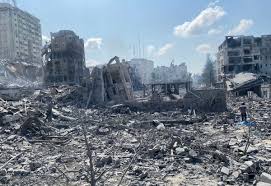 On the first day of November, I stopped writing my diary of this despicable war. Not because I was bored and desperate for it to end, nor because I was unable to preserve my memories amid all the trauma, but simply because my phone broke. I had been writing my diaries on the notepad app of my phone, when it went the way of so many things in this war—patience, hope, dreams for the future—and broke.
 Sometimes you stumble across a line in a book and think, “Yeah, that’s exactly how that feels.” I had that moment reading the introduction to Zadie Smith’s 2018 book of essays,
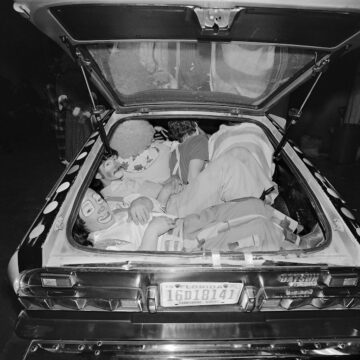 South Bronx-born, but raised in Long Island,
 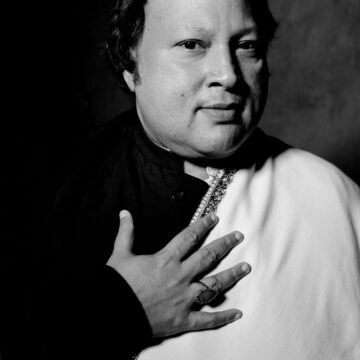 On Oct. 27, 2022, the photojournalist Saiyna Bashir was interviewing the musician
 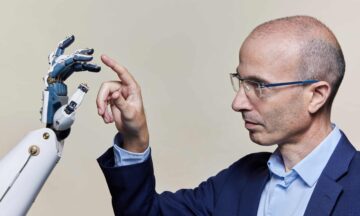 W
W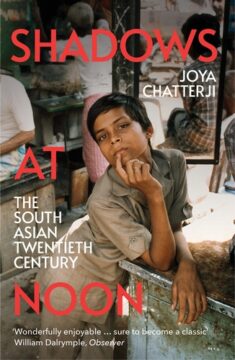 How did we become ‘Indians’, ‘Pakistanis’ and ‘Bangladeshis’ after the two divisions of the subcontinent? Given that national identity was so fragile and contested before 1947, how did it become a matter so ‘natural’ after it? Or did it? Did nation-making projects succeed?
 T
T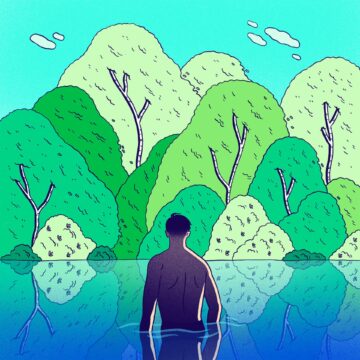 In “
In “ A drug that slows aging may already be on the market.
 ABOUT TWO HOURS south of the grandiose architectural amalgam that is Zagreb lies the equally impressive natural wonder of Plitvice Lakes National Park, a network of waterfalls and lakes serenely carving its way through the lush limestone plain. The park, at the northeastern edge of Croatia’s largest and least-populated county, Lika-Senj, is one of the most popular tourist attractions in the region, and also the site of the first casualties of the succession of Balkan wars in the aftermath of Yugoslavia’s disintegration in the 1990s.