
Jonathan Portes in The Guardian:
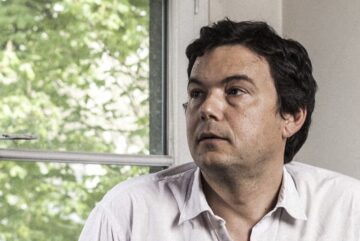 Thomas Piketty has come a long way. He first captured public attention in 2014 with his wildly ambitious, 704-page updating of Marx’s Das Kapital, entitled Capital in the Twenty-First Century. Part of its appeal – it became both an international bestseller and an academic sensation – was the simplicity of its basic thesis. Although packed with history and statistics, its fundamental proposition, that if the return on capital exceeds the growth rate of the economy, wealth will become increasingly concentrated, could be reduced to one simple equation: r>g.
Piketty’s latest book is almost exactly the opposite. Not only is it much shorter, based on a lecture given to the Société d’Ethnologie in his native France, its key message is: “It’s a lot more complicated than that.” Like Capital, it discusses the evolution of income and wealth inequality over history. But it emphasises historical contingency and, most of all, the role of politics and of collective mobilisation.
Piketty rejects the thesis – implicit in the way economics is often taught in our universities, and explicit in the way some economists and many conservative politicians and commentators discuss policy issues – that very large inequalities are the inevitable outcome of a well-functioning market economy.
More here.
Enjoying the content on 3QD? Help keep us going by donating now.
 W
W P
P T
T I
I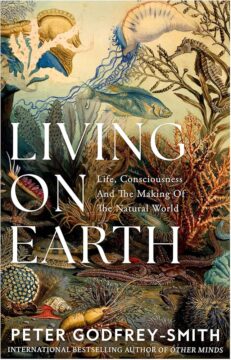 In 2016, scuba-diving philosopher Peter Godfrey-Smith made a huge splash with his book
  I opened the library’s glass door and placed a fresh copy of my latest novel, What the Dead Can Say, on the bottom shelf. Then I returned to the car. For months my wife and I had been driving around the country, dropping off free copies of What the Dead Can Say in hundreds of Little Free Libraries. Now, we turned back on to the main road and headed down to Colorado, in search of more.
 The operation that used pagers and walkie-talkies to
 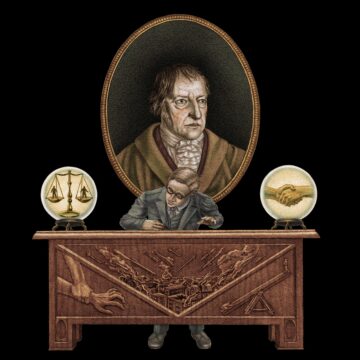 No idea has fallen flatter than the “end of history,” popularized by political philosopher Francis Fukuyama in his eponymous 1993 book. Few still believe that all human beings will accept liberal democracy and free market capitalism as the final forms of society and are uninterested in any alternative. But like many truly awful ideas, the end of history had its 15 minutes, or in this case 15 years, of fame, as a catchall motivation for America’s misguided attempt to export democracy to Afghanistan and Iraq.
 An ideas generator powered by artificial intelligence (AI) came up with more original research ideas than did 50 scientists working independently, according to a preprint posted on arXiv this month