Taliban’s rise in Karachi must be stopped

Rafia Zakaria in Al Jazeera:

Src.adapt.960.high.1391482153122There have been more than 80 terrorism-related deaths and about 46 reported injuries in 2014 in Karachi, Pakistan’s most populous metropolis. Most of the incidents tallied multiple fatalities and injuries, including police. In some cases, unidentified assailants ambushed busy intersections or desolate roads, leaving unrecognized after wreaking havoc. In other instances, bodies of victims were found abandoned in ditches. Some of the victims were killed en route to work in their cars by drive-by shooters. Others were attacked leaving mosques, and one victim was killed while selling peanuts on the streets.

The escalation in attacks reflects a significant strategic victory for the Pakistani Taliban. Their ability to target important officials and use attacks to terrorize a megacity shows their expansion and strength. The government, on the other hand, seems powerless to halt the mayhem or to provide the resources it needs to fight the Taliban in an urban battlefield. In a sign of their relative strengths, the Taliban announced on Saturday a five-member committee to pursue talks with the government but did not offer to halt the attacks as a condition. If the Taliban’s rise is to be contained, Pakistan needs to take urgent measures to stabilize Karachi.

More here.

First monkeys with customized mutations born

Helen Shen in Nature:

CrispThe ultimate potential of precision gene-editing techniques is beginning to be realised. Today, researchers in China report the first monkeys engineered with targeted mutations1, an achievement that could be a stepping stone to making more realistic research models of human diseases. Xingxu Huang, a geneticist at the Model Animal Research Center of Nanjing University in China, and his colleagues successfully engineered twin cynomolgus monkeys (Macaca fascicularis) with two targeted mutations using the CRISPR/Cas9 system — a technology that has taken the field of genetic engineering by storm in the past year. Researchers have leveraged the technique to disrupt genes in mice and rats2, 3, but until now none had succeeded in primates.

Previous attempts to genetically modify primates have relied on viral methods4, 5, which create mutations efficiently, but at unpredictable locations and in uncontrolled numbers. Prospects for primates brightened with the emergence of the CRISPR/Cas9 gene-editing system, which uses customizable snippets of RNA to guide the DNA-cutting enzyme Cas9 to the desired mutation site. Huang and his team first tested the technology in a monkey cell line, disrupting each of three genes with 10–25% success. Encouraged, the scientists subsequently targeted the three genes simultaneously in more than 180 single-celled monkey embryos. Ten pregnancies resulted from 83 embryos that were implanted, one of which led to the birth of a pair with mutations in two genes: Ppar-γ, which helps to regulate metabolism, and Rag1, which is involved in healthy immune function.

More here. (Note: CRISPR is one of three most important biologic discoveries of the last century.)

New York City Slave Uprising (1712)

From Blackpast.org:

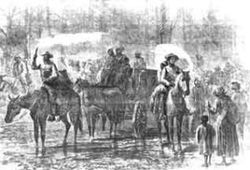
NYC_Slave_RevoltBetween twenty-five and fifty blacks congregated at midnight in New York City on April 6, 1712. With guns, swords and knives in hand the slaves first set fire to an outhouse then fired shots at several white slave owners, who had raced to scene to fight the fire. By the end of the night, nine whites were killed and six whites were injured. The next day the governor of New York ordered the New York and Westchester militias to “drive the island.” With the exception of six rebels who committed suicide before they were apprehended, all of the rebels were captured and punished with ferocity ranging from being burned alive, to being broken by a wheel.

But the swift punishment of the guilty was not enough to quell the concerns of slave owners and their political body. Within months, the New York Assembly passed “an act for preventing, suppressing and punishing the conspiracy and insurrection of Negroes and other slaves.” Masters were permitted to punish their slaves at their full discretion, “not extending to life or member.” Even the manumission of New York slaves was deterred by this bill; masters were required to pay two hundred pounds security to the government and a twenty-pound annuity to the freed slave. Despite these stringent laws, New York would escape slave rebellion for only twenty-nine years.

More here. (Note: One post every day throughout February will be dedicated to Black History Month.)

Monday, February 3, 2014

Perceptions

HV

Jaffer Kolb, Ang Li, Phoebe Springstubb. Horror Vacui, Lisbon Triennale 2013.

“Embedding architecture into critical economic systems was central to the installation Horror Vacui. The project paired local manufacturers with Autodesk to produce a large-scale façade made of thousands of tiles—each a photograph contributed by the public. From afar, the tiles aggregated as pixels into a reproduced image of the building façade behind. Up close, they could be read individually as discrete stories, an idea rooted in Lisbon’s blue-and-white tile murals depicting heroic narratives …”

From Wired UK: “The name (“fear of openness”) comes from a 15th century technique of making historical blue-and-white murals out of painted tiles. For a modern interpretation, Kolb and his associates replaced the façade with crowdsourced photos of Lisbon's interiors and exteriors printed on tiels. 'It was no longer about one man and one conquest, but about thousands of different stories which together form a kind of meta-mural', says Kolb.”

Valentina Ciuffi in Abitare: “from close-up the façade of the building, the ceramic skin that follows its external forms, looked at azulejo after azulejo, turns out to be a controlled journey into the “belly” of a thousand different buildings. This shift towards the intimacy of spaces is an even stronger spur to personal narration, a stimulus to interpret, to relate to the city in a less passive and perhaps in an “emotional” way. Something that Michel de Certeau would have loved to find in his streets.”

With permission from Jaffer Kolb.

Sunday, February 2, 2014

Jeopardy’s Controversial New Champion Is Using Game Theory To Win Big

Arthur-chu-jeopardy

Using game theory for actual games?!?!?… Eric Levenson over at Business Insider's The Wire (via Farhad Manjoo):

It's Arthur's [Chu] in-game strategy of searching for the Daily Double that has made him such a target. Typically, contestants choose a single category and progressively move from the lowest amount up to the highest, giving viewers an easy-to-understand escalation of difficulty. But Arthur has his sights solely set on finding those hidden Daily Doubles, which are usually located on the three highest-paying rungs in the categories (the category itself is random). That means, rather than building up in difficulty, he begins at the most difficult questions. Once the two most difficult questions have been taken off the board in one column, he quickly jumps to another category. It's a grating experience for the viewer, who isn't given enough to time to get in a rhythm or fully comprehend the new subject area. And it makes for ugly, scattered boards, like above.

However, Wednesday's game showed the benefits of that strategy. Arthur's searching was rewarded with all three of the game's Daily Doubles. Arthur was particularly fond of the “true” Daily Double, wagering all his money the first time (he lost it all) but quickly recovering with a massive wager later on another Daily Double. While most contestants are hesitant to go all-or-nothing, Arthur is happily taking those calculated risks.

One Daily Double, in which he wagered just $5, was particularly strange. Arthur's searching landed him a Daily Double in a sports category, a topic he knew nothing about. (Ever the joker, he tweeted he'd rather have sex with his wife than learn about sports). Most contestants will avoid their topics of weakness, but not Arthur. Instead, he wagered just $5 on the sports question, effectively making its specifics irrelevant. Trebek and the audience giggled, and when the question came, Arthur immediately blurted out “I don't know.” But that wasn't a waste of a Daily Double, as he kept that question out of the hands of the other contestants.

More here.

Social Animals: Pondering the limits of anthropomorphism

Wray Herbert in The Weekly Standard:

BOB.v19-21.Feb10.Herbert.Getty_I could, if I chose to, make this sentence go on and on and on—forever, really. Don’t worry: I’m not going to do that, but it’s noteworthy that I could. In fact, I have the ability to write a sentence that’s longer than the longest sentence previously written, just by adding another relative clause, then another, and so on.

That may seem like a cheesy way to play the longest-sentence game, but it’s actually linguistically clever—very clever. The longest sentence game is not just a parlor trick. It demonstrates an important linguistic principle. The fact that I can think to do this, and that you can understand what I am doing, reveals characteristics of language and of mind that are unique to humans. With a finite store of symbols, I am generating one novel combination after another, all of which you can more or less comprehend. I’m counting on you to understand what I’ve written here, which is in itself remarkable. My idea is now in your head, and, importantly, that pleases me.

I, in turn, am taking these ideas from the mind of Thomas Suddendorf, a psychologist at the University of Queensland, Australia, and author of this fine new book. Even though I have never met Suddendorf,and have never been even close to Australia, I can nevertheless comprehend his thinking and share it with you. Suddendorf’s main idea is that we humans are capable of cognitive feats to which no other animal—not even our impressive cousin the ape—comes close. We are able to imagine endless situations, to create scenarios and narratives about distant places, including the past and future. And, equally important, we have an insatiable drive to share those imaginings with other scenario-building minds. Our uniqueness, the author argues, rests on these two fundamental traits, but plays out in various domains of the human mind.

More here.

No Black Holes? Here’s What Stephen Hawking Actually Said

Laura Dattaro in Popular Mechanics:

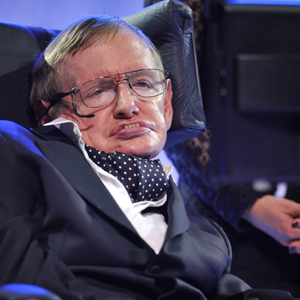
Hawking-mdnA four-page scientific paper about a theoretical physics question has been making the media rounds this week. That should be no surprise, though, given the author—Stephen Hawking—and the claim he appears to make: There are no black holes. But that's far from the end of the story.

The study, published on the open-access research site arXiv, does, in fact, include the words “there are no black holes.” But the sentence continues on: “—in the sense of regimes from which light can't escape to infinity. There are, however, apparent horizons which persist for a period of time.”

The problem of the black hole's event horizon, the boundary beyond which nothing can escape, is one Hawking raised in the 1970s. That's when he discovered, contrary to popular belief of the time, that black holes radiate energy. This means there is no such thing as a black hole from which nothing can escape.

So what is actually new about Hawking's latest paper?

“That's a really good question,” says Don Marolf, a theoretical physicist who studies black holes at the University of California, Santa Barbara. “Most people that I know that read the paper see this as an expression of his opinion on a current debate without necessarily adding new scientific ingredients.”

The debate comes down to a deceivingly simple question that has all kinds of implications for understanding the nature of the universe: If you drop information into a black hole, can you ever get it back?

More here.

William Dalrymple on Hamid Karzai

Isaac Chotiner in The New Republic:

ScreenHunter_480 Feb. 02 17.24To discuss Karzai’s tenure in office—set to end this year—and help make sense of the current disagreements between him and the Obama administration, I spoke on the phone with William Dalrymple, who recently interviewed Karzai for a profile in The New York Times Magazine, and who has written several books on Afghanistan and South Asia, the most recent of which is Return of a King: The Battle for Afghanistan, 1839-42. We discussed Karzai’s mental state, his anger at the United States, and what will happen after American troops depart.

Isaac Chotiner: What game is Karzai playing?

William Dalrymple: I think he’s actually playing a much cleverer game than he’s given credit for. It’s very clear. He knows the United States needs him so he doesn’t have to play to an American audience. America has invested too much in Afghanistan to just turn back and cut its losses–although the Obama administration is showing every sign of wanting to get out as fast as it possibly can. Therefore his concern is to leave a legacy, which he views as divorcing himself as much as he possibly can from the United States, while still gaining access to American money and arms.

More here.

Stem cell ‘major discovery’ claimed

James Gallagher at the BBC:

Stem_cell_research-splScientists in Japan showed stem cells can now be made quickly just by dipping blood cells into acid.

Stem cells can transform into any tissue and are already being trialled for healing the eye, heart and brain.

The latest development, published in the journal Nature, could make the technology cheaper, faster and safer.

The human body is built of cells with a specific role – nerve cells, liver cells, muscle cells – and that role is fixed.

However, stem cells can become any other type of cell, and they have become a major field of research in medicine for their potential to regenerate the body.

Embryos are one, ethically charged, source of stem cells. Nobel prize winning research also showed that skin cells could be “genetically reprogrammed” to become stem cells (termed induced pluripotent stem cells).

More here.

Mai Inspires Opera in Manhattan

Fabrice Coffrini in Newsweek Pakistan:

MaiTo those who complain that opera is an elitist indulgence served up to snobs in dinner jackets, New York’s latest world premiere may come as something of a shock. Inspired by the horrific gang rape of illiterate Pakistani woman Mukhtaran Mai on orders of a village council, Thumbprint is a $150,000 production currently having an eight-night run in a basement theater in Manhattan. One of the most infamous sex crimes against women in South Asia, Mai’s 2002 rape, survival and metamorphosis into an international rights icon is as far removed from opera-house pomp as possible. It may have earned a less-than-glowing review from The New York Times—“muted,” “not quite enough”—but the score is an alluring blend of South Asian and Western music, and the production starkly innovative. With a simple backcloth doubling up as a film projection screen, a few chairs and charpoys, the simple but powerful staging evokes the heat, the dust and the traditions of a Pakistani village. Mai, now in her 40s, was raped to avenge her 12-year-old brother’s alleged impropriety with a woman from a rival clan. Six men were sentenced to death for her rape in a landmark ruling. But five were later acquitted and the main culprit had his sentence reduced to life imprisonment: facts the opera omits. There is no staged recreation of the rape, which is instead portrayed by muffled shrieks of terror interspersed with a knife slashing open bags of sand.

Mai’s story has fresh resonance since the brutal gang rape of a student on a New Delhi bus and her death a little over a year ago sparked international outrage about the levels of violence against women in India

More here.

Sunday Poem

We Lived happily During the War

And when they bombed other people’s houses, we

protested
but not enough, we opposed them but not

enough. I was
in my bed, around my bed America

was falling: invisible house by invisible house by invisible house.

I took a chair outside and watched the sun.

In the sixth month
of a disastrous reign in the house of money

in the street of money in the city of money in the country of money,
our great country of money, we (forgive us)

lived happily during the war.

.
by Ilya Kaminsky
from Poetry International, 2013

Lord Dunmore’s Proclamation (1775)

From Blackpast.org:

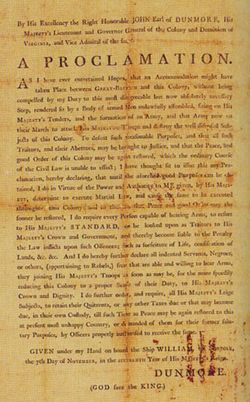
Lord_Dunmores_Proclamation_1775This historic proclamation, dated November 7, 1775 and issued from on board a British warship lying off Norfolk, Virginia, by royal governor and Scottish aristocrat John Murray, Earl of Dunmore, offered the first large-scale emancipation of slave and servant labor in the history of colonial British America. It grew out of Dunmore’s efforts to counter an impending attack on his capital of Williamsburg by patriot militia in the spring of 1775, when he several times threatened to free and arm slaves to defend the cause of royal government. By the time he retreated offshore he was already gathering slaves seeking refuge; his November proclamation commanding Virginians to support the crown or be judged traitors now formally offered freedom to all slaves and indentured servants belonging to rebels and able to bear arms for the crown. Within weeks, several hundred slaves, many with their families, had joined him. They enlisted in what Dunmore christened his “Ethiopian Regiment” and formed the bulk of the royal troops that first defeated patriot forces but then fell victim to disease and attack, evacuating the Chesapeake Region for New York by August 1776.

Dunmore’s proclamation offered freedom only to those who would flee from rebel masters and serve the crown.

More here. (Note: One post every day throughout February will be dedicated to Black History Month.)

Saturday, February 1, 2014

Personal Identity Is (Mostly) Performance

B747ed2f8

Jennifer Ouellette in The Atlantic:

“Surely you don’t believe in that nonsense.”

It was intended as a rhetorical question, uttered with an implied wink and a smirk. The speaker, an ardent skeptic who prided himself on his rational approach to life, meant no offense. He was merely surprised to find that I, a lover of science, tote a battered key chain embossed with my astrological sign: Taurus. I’ve carried it with me for twenty years, like a personal totem.

It was perfectly reasonable for my skeptical inquirer to assume my key chain says something about me. He was employing cue utilization. We all rely on cues to make snap judgments when we meet new people, and those judgments can often be accurate, at least in broad strokes. Physical attractiveness, race, gender, facial symmetry, skin texture, or facial expressions and body language are all factors that contribute to how we form our impressions of people. Those cues may also include our “stuff”: our choices in fashion, jewelry, tattoos, and key chains all provide clues about who we are, whether we intend them to do so or not.

Social psychologist Sam Gosling is interested in checking out our stuff, but not in a creepy, voyeuristic way. He has studied how we fill our spaces with material things, particularly offices and bedrooms, to better understand what those choices say about our personalities. For instance, certain items function as “conscious identity claims,” things we choose based on how we wish to be perceived by others—the posters, artwork, books, or music we display, for example, or the tattoos we ink onto our bodies. We also fill our personal spaces with “feeling regulators”: photographs of loved ones, family heirlooms, favorite books, or souvenirs from travel to exotic locales—anything that serves to meet some emotional need.

“If you are missing someone, you carry a photo in your wallet, or propped up next to your computer, or you value a necklace that somebody gave to you,” Gosling explained. “You do these things to connect to someone as a sort of proxy, until you see that person again.”

More here.

Fighting Incompleteness

Kitcher-Philip-Photo-21

David Auerbach interviews Philip Kitcher in 3:AM Magazine:

A long-time aficionado of modernism in general and James Joyce in particular, he wroteJoyce’s Kaleidoscope: An Invitation to Finnegans Wake (2007), an accessible and personal examination of Joyce’s daunting masterwork. He collaborated with prominent Nietzsche scholar Richard Schacht on Finding an Ending: Reflections on Wagner’s Ring (2004).Deaths in Venice is a penetrating examination of Thomas Mann’s Death in Venice that examines the novella philosophically, historically, and biographically, drawing connections to Plato through to Schopenhauer, Nietzsche, and in particular to the music of Gustav Mahler and Benjamin Britten.

I spoke with Kitcher about how he came to the project and some of the questions and dilemmas his book left with me.

Literature as Philosophy

3:AM: What drew you to Death in Venice as a starting point? Did you always know that you would end by discussing Mahler’s work, via Britten and Visconti’s adaptations of Death in Venice?

Kitcher: Sometime during the 1990s, when I was teaching philosophy at UCSD, my friend, colleague, and music teacher, Carol Plantamura, discussed the possibility of teaching a course together looking at ways in which various literary works (plays, stories, novels) had been treated as operas, and how different themes emerged in the opera and in its original. One of the pairings we planned to use was Mann’s great novella and Britten’s opera. Unfortunately, the course was never taught, but the idea remained with me. In the past decade, as I read Mann in German for the first time, the full achievement – both literary and philosophical – of Death in Venice struck me forcefully, so that, when I was invited to give the Schoff Lectures at Columbia, the opportunity to reflect on the contrasts between novella and opera seemed irresistible.

But it turned out rather differently from the way I’d anticipated. First, my frame of reference for the Britten opera shifted. I’d always thought of Britten’s approach in Death in Venice as another exploration of the plight of the individual whose aspirations are at odds with those of the surrounding community: his last opera returning to the themes of Peter Grimes. As I read and listened and thought, however, Billy Budd came to seem a more appropriate foil forDeath in Venice.

More here.

The Metaphysical Baggage of Physics

2443_24e27b869b66e9e62724bd7725d5d9c1

Michael Segal interviews Lee Smolin in Nautilus:

Your Cosmological Natural Selection hypothesis suggests that the laws of nature change in time. How can that be possible?

There are two kinds of explanations as to why some system is one way rather than another way. One is that it has to be that way because there’s some fundamental principle that makes it so. In fact, my generation was raised to find the unique set of laws which would satisfy the principles of relativity and quantum mechanics. We thought we would find a unique answer. But now we know that there are many, many different possible laws compatible with the principles of nature. The only other way in science that things get explained in a way that leads to testable hypotheses is if there’s some dynamical process acting in time, which makes the world come out the way it did.

What does that mean for our understanding of time?

The standard view in physics is that time isn’t fundamental, and that it emerges as an illusion out of the action of the laws. But if the laws evolve, that can’t be the case; time has to be more fundamental. If laws can change in time, then I take that almost as a definition of time being real. The arguments that Einstein and other people give for time being an illusion assume that the laws of nature never change. If they do change, the case that time is an illusion falls apart. It means that time is more fundamental than the laws of nature.

More here.