
Jinal Dadiya at Psyche:
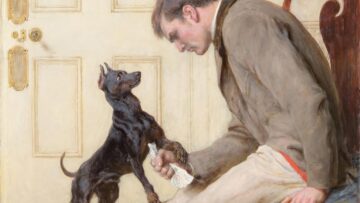 In the 19th and early 20th century, under English and Unites States law, jilted lovers could sue former partners for breaking their hearts. ‘Heartbalm torts’, which continue to be on the rulebooks of some US states to this day, were a category of legal actions that could be brought against romantic misconduct. The underlying idea was that wrongful romantic or sexual behaviour could cause harm that should be compensated by its causer. The sufferer of such harm, in turn, was entitled to receive damages, or solatium, from the inflictor. Most popular among the heartbalm torts were actions for broken engagements, adultery, and seduction.
A ‘breach of promise to marry’ suit could be brought against a former partner for dishonouring an engagement to marry. Usually brought by women abandoned by their male fiancés, it was understood that broken engagements would result in women losing chances at stability, marriage and potential financial security. At a time when women had limited opportunities for financial independence outside of marriage, monetary recoveries offered by the tort were of economic significance.
More here.
Enjoying the content on 3QD? Help keep us going by donating now.
 Two-thirds of the world’s food comes today from
  I
I Author
 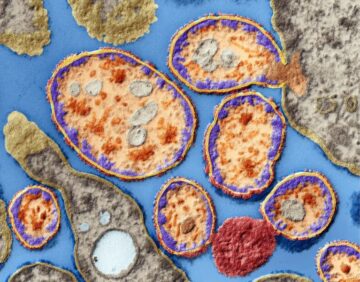 A scientist who successfully treated her own
  A
A BLVR: You’ve said you want to honor all the poets “whose rapturous ecstasy overwhelmed even language’s ability to transcribe it.” Many of those, I imagine, are the authors you included as the editor of The Penguin Book of Spiritual Verse: 110 Poets and the Divine. Spiritual and religious writing offers some of the deepest considerations of the ineffable but feels a little taboo in our increasingly secular culture.
 The second part, chiefly told from Johannes’s point of view, chronicles the eerie hours after he wakes up one morning, late in his old age. Johannes is a now retired fisherman. His wife, Erna, is long dead. His mornings are “sad and lonely”. Johannes makes coffee. He steps out of the house and everything he beholds seems different somehow. He meets his dead neighbour, and good friend Peter, and they go fishing. Johannes later bumps into his daughter Signe and “is seized with deep despair, because Signe cannot see him or hear him”. At the tale’s close, Peter accompanies Johannes to a place where nothing hurts and “everything you love is there”.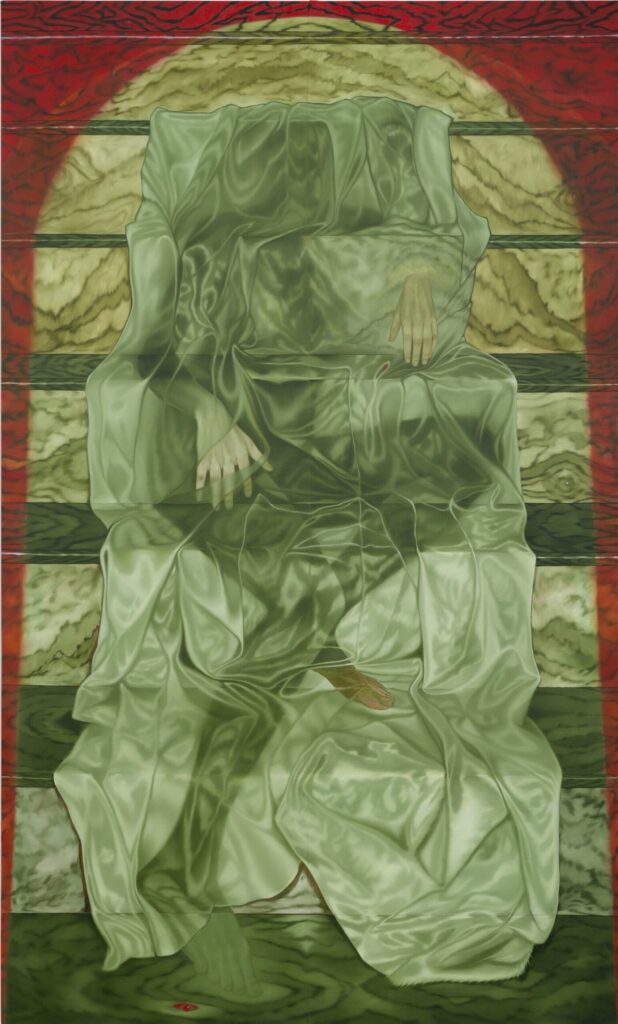
 It’s a good way to spend a Saturday morning—if, admittedly, a strange one. I wake up and pack a tote bag with leather gardening gloves, a water bottle, a towel, and headphones. Then I drive to one of Chicago’s
  I should say: It’s not just me. The photos I take end up on a website called
 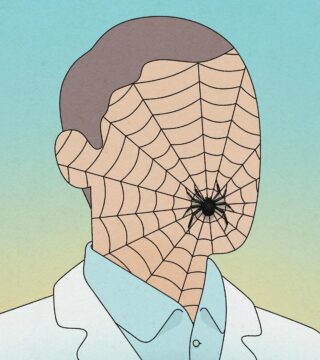 Laskowski revealed that her ambition had drawn her into the web of prolific spider researcher Jonathan Pruitt, a behavioural ecologist at McMaster University in Hamilton, Ontario. Pruitt was a superstar in his field and, in 2018, was named a Canada 150 Research Chair, becoming one of the younger recipients of the prestigious federal one-time grant with funding of $350,000 per year for seven years. He amassed a huge number of publications, many with surprising and influential results. He turned out to be an equally prolific fraud.