Innovation: The Government Was Crucial After All

Madrick_1-042414_jpg_600x696_q85 (1)

Jeff Madrick reviews Mariana Mazzucato's The Entrepreneurial State: Debunking Public vs. Private Sector Myths and William H. Janeway's Doing Capitalism in the Innovation Economy: Markets, Speculation and the State in the NYRB (image from Andrew Innerarity/Reuters):

[T]he respected Northwestern economist Robert Gordon reiterated the conventional view in a talk at the New School, saying that he was “extremely skeptical of government” as a source of innovation. “This is the role of individual entrepreneurs. Government had nothing to do with Bill Gates, Steve Jobs, Zuckerberg.”

Fortunately, a new book, The Entrepreneurial State, by the Sussex University economist Mariana Mazzucato, forcefully documents just how wrong these assertions are. It is one of the most incisive economic books in years. Mazzucato’s research goes well beyond the oft-told story about how the Internet was originally developed at the US Department of Defense. For example, she shows in detail that, while Steve Jobs brilliantly imagined and designed attractive new commercial products, almost all the scientific research on which the iPod, iPhone, and iPad were based was done by government-backed scientists and engineers in Europe and America. The touch-screen technology, specifically, now so common to Apple products, was based on research done at government-funded labs in Europe and the US in the 1960s and 1970s.

Similarly, Gordon called the National Institutes of Health a useful government “backstop” to the apparently far more important work done by pharmaceutical companies. But Mazzucato cites research to show that the NIH was responsible for some 75 percent of the major original breakthroughs known as new molecular entities between 1993 and 2004.

Further, Marcia Angell, former editor of The New England Journal of Medicine, found that new molecular entities that were given priority as possibly leading to significant advances in medical treatment were often if not mostly created by government. As Angell notes in her book The Truth About the Drug Companies(2004), only three of the seven high-priority drugs in 2002 came from pharmaceutical companies: the drug Zelnorm was developed by Novartis to treat irritable bowel syndrome, Gilead Sciences created Hepsera to treat hepatitis B, and Eloxatin was created by Sanofi-Synthélabo to treat colon cancer. No one can doubt the benefits of these drugs, or the expense incurred to develop them, but this is a far cry from the common claim, such as Gordon’s, that it is the private sector that does almost all the important innovation.

More here.
Thomas Piketty Is Right

Download (2)

Robert Solow reviews Thomas Piketty's Capital in The New Republic:

The key thing about wealth in a capitalist economy is that it reproduces itself and usually earns a positive net return. That is the next thing to be investigated. Piketty develops estimates of the “pure” rate of return (after minor adjustments) in Britain going back to 1770 and in France going back to 1820, but not for the United States. He concludes: “[T]he pure return on capital has oscillated around a central value of 4–5 percent a year, or more generally in an interval from 3–6 percent a year. There has been no pronounced long-term trend either upward or downward…. It is possible, however, that the pure return on capital has decreased slightly over the very long run.” It would be interesting to have comparable figures for the United States.

Now if you multiply the rate of return on capital by the capital-income ratio, you get the share of capital in the national income. For example, if the rate of return is 5 percent a year and the stock of capital is six years worth of national income, income from capital will be 30 percent of national income, and so income from work will be the remaining 70 percent. At last, after all this preparation, we are beginning to talk about inequality, and in two distinct senses. First, we have arrived at the functional distribution of income—the split between income from work and income from wealth. Second, it is always the case that wealth is more highly concentrated among the rich than income from labor (although recent American history looks rather odd in this respect); and this being so, the larger the share of income from wealth, the more unequal the distribution of income among persons is likely to be. It is this inequality across persons that matters most for good or ill in a society.

More here.

Katha Pollitt’s Quality Control

Sw1

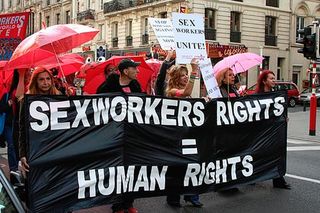
Heather Berg in Jacobin:

Why, under the banner of concern for “the women at the heart of the debate” (represented by a list of predictable tropes of abject sex workers) is Pollitt asking us to consider whether prostitution encourages men to feel entitled to sex without having to charm an unpaid woman in a bar? Because the women at the heart of this debate aren’t sex workers, but secondary consumers who might have to deal with male partners who are rude, socially awkward, or bad in bed.

Unpaid intimacy is a space of work too, and a Marxist feminist dialogue about how paid and unpaid sexual partners might struggle in solidarity would be wonderful. That would, however, require a radical departure from the “you’re not a worker because I don’t like what you produce” line of argument.

It’s rhetoric we’re all too familiar with. Catherine MacKinnon made the question of which women count painfully clear: “One does not have to notice that pornography models are real women to whom something real is being done … The aesthetic of pornography itself, the way it provides what those who consume it want, is itself the evidence.” Pollitt suggests that Gira Grant spends too much time taking easy shots at the “dead gray mare of 1980s anti-porn feminism.” “Was any cause ever so decisively defeated?” she writes.

But one of the more chilling aspects of that cause — the insistence that workers don’t matter, products are the point — is alive and well at The Nation.

I suggest the reverse: the nature of a product is irrelevant to how we should theorize, legislate, or organize the labor involved in producing it. Workers are not socially accountable for whatever may come from their work. To accept otherwise encourages the over-identification with work that management finds so efficient in getting us to do more for less. It allows capital to extract not only time, but also ethical responsibility from workers.

More here.

Karachi, You’re Killing Me!

Faiza Virani in Dawn:

SabaAyesha Khan, a young, single female reporter in Karachi, despises the elite in Pakistan. That much is clear from the onset of Saba Imtiaz’s debut novel, Karachi, You’re Killing Me!, as the protagonist mocks her boss / editor being gifted the newspaper she is employed at by his industrialist father on his 26th birthday “following a giant tantrum.” References to Agha’s and Okra follow suit, as the narrative is grounded into an us versus them tone while readers are introduced to the novel’s characters and plot. Imtiaz presents a gritty yet humourous narrative that takes the reader through the inner workings of a national newspaper, political rallies, literature festivals and socialites at fashion week. We experience all this through a reporter’s lens as Ayesha jets from pressers to rallies in rickshaws and taxis all the while working through her plentiful personal issues, topmost among which is finding a suitable man to date in the wasteland that is Karachi.

In describing life as usual, Imtiaz takes on the many serious issues facing journalists in the field today — safety (or lack thereof), the deficient infrastructure and support, and the alarming rate at which journalists are being recruited by political parties to report as required. The story is told uniquely, from an advantage point of Imtiaz’s years spent being a reporter in Karachi for one of the country’s leading newspapers. Imtiaz aptly packs Karachi’s myriad idiosyncrasies and nuances neatly into a narrative that spans everything that is relative to and reflective of Karachi’s inherent fabric — from the bomb blasts to terrorism reports, the CNG crisis, politicians’ tiresome and endless security detail and much more, highlighting what is necessary to grasp quickly all that is wrong with Karachi today.

More here.

Obesity

Tony Scully in Nature:

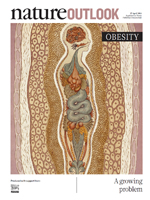
CoverFor a condition as prevalent and dangerous as obesity (see page S50), we know surprisingly little about its causes and cures. We have much to learn about how fat tissue stores and burns lipids; there may even be new types of human fat cell yet to be discovered (S52). And although it is clear that the types of microbe living in the gut correlate with body weight, we do not know whether changes in these populations are a cause of weight gain, or a consequence (S61).

The best way to lose weight is to eat less and exercise more. But as a strategy to combat obesity at the population level, this common-sense prescription is proving ineffective over the long term. Tailored treatment programmes that factor in the stresses and temptations of the real world, using insights from behavioural research, are showing some success. Drugs may also form part of the solution (S54). Or perhaps the pharmaceutical option should be a last resort, and society should instead use the power of government regulation to encourage healthier lifestyle options (S57). Of course, obesity does not result from the environment alone — it is one of our most strongly genetically influenced traits. Scores of genes have been implicated, but the evidence suggests that something other than genes accounts for whether someone is likely to become obese (S58). Controlling appetite is not just a matter of will power; much of our dietary behaviour is hardwired. Neuroscientists are using new techniques to map the neural circuits that control when and how much we eat (S64). But these appetite systems, which evolved to ensure we have enough of the right nutrients, are now being subverted by modern food processing (S66).

More here.

Monday, April 21, 2014

Sunday, April 20, 2014

Ditch the 10,000 hour rule! Why Malcolm Gladwell’s famous advice falls short

Peter Brown, Henry Roediger III and Mark McDaniel in Salon:

Malcolm_gladwell2-620x412Here’s a study that may surprise you. A group of eight-year-olds practiced tossing beanbags into buckets in gym class. Half of the kids tossed into a bucket three feet away. The other half mixed it up by tossing into buckets two feet and four feet away. After twelve weeks of this they were all tested on tossing into a three-foot bucket. The kids who did the best by far were those who’d practiced on two- and four-foot buckets but never on three-foot buckets. Why is this? We will come back to the beanbags, but first a little insight into a widely held myth about how we learn.

Most of us believe that learning is better when you go at something with single-minded purpose: the practice-practice-practice that’s supposed to burn a skill into memory. Faith in focused, repetitive practice of one thing at a time until we’ve got it nailed is pervasive among classroom teachers, athletes, corporate trainers, and students. Researchers call this kind of practice “massed,” and our faith rests in large part on the simple fact that when we do it, we can see it making a difference. Nevertheless, despite what our eyes tell us, this faith is misplaced. If learning can be defined as picking up new knowledge or skills and being able to apply them later, then how quickly you pick something up is only part of the story. Is it still there when you need to use it out in the everyday world? While practicing is vital to learning and memory, studies have shown that practice is far more effective when it’s broken into separate periods of training that are spaced out. The rapid gains produced by massed practice are often evident, but the rapid forgetting that follows is not. Practice that’s spaced out, interleaved with other learning, and varied produces better mastery, longer retention, and more versatility.

More here.

A Portrait of Twenty-First Century Delhi

Jon Stock in The Telegraph:

Delhiweb_2836372bI’ll always remember the early hours of April 30, 1999. I was living in Delhi, working as a foreign correspondent for this newspaper, when the news broke that a beautiful model called Jessica Lal had been shot dead in a bar. The Tamarind Court in Mehrauli, where Jessica was serving drinks, was just up the road from our house and her violent death felt too close to home. It also shocked the nation, seeming to confirm that Delhi’s lawless elite was running amok. The bar had just shut when Manu Sharma, the son of a wealthy Indian MP, walked up to Jessica and asked for a drink. He offered her 1,000 rupees but she refused, telling him that he couldn’t even have one sip of alcohol. “I could have a sip of you for a thousand rupees,” Sharma replied. He then pulled out a gun, fired one shot into the ceiling and another into the model’s head.

Rana Dasgupta recalls her murder in his compelling, often terrifying, new book, Capital: a Portrait of Twenty-First Century Delhi. The author, whose debut novel, Solo (2010), won the Commonwealth Writers Prize, moved from Britain to Delhi in 2000, the year I left the city, and has lived there ever since. In Capital he sets out to show how Delhi has changed since the country’s decision in 1991 to embrace the principles of free enterprise and open markets. Mixing polemical chapters on the city’s history – the arrival of the Mughals, the decision by the British to move their capital from Calcutta to Delhi – with intimate interviews with billionaire businessmen, drug dealers, gurus and slum dwellers, Dasgupta argues that globalisation has had catastrophic consequences for a once great city.

More here.

The Gandhian Moment

9780674065956

Karuna Mantena reviews Ramin Jahanbegloo’s “The Gandhian Moment” in the LA Review of Books:

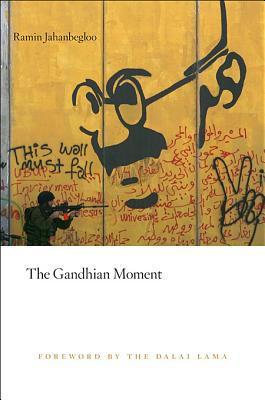
Jahanbegloo’s wager is that Gandhian politics offer a path to overcoming authoritarian rule while avoiding the pitfalls of revolution. Whether Gandhian politics did stabilize India’s postcolonial transition is itself a controversial question; one need only think of the brutal partition that accompanied Indian independence. Nevertheless, Jahanbegloo is right to reconsider Gandhi from this angle — he was extremely sensitive to the dilemmas of transition. Indeed, one could argue that this was at the center of his continual meditations on the nature of swaraj (true independence or self-rule).

Directing Gandhi’s thinking toward contemporary concerns in this manner is a fruitful line of inquiry, and Jahanbegloo’s considerations are insightful. The strength of his insights, however, is sometimes diluted when they are applied too broadly. In what is essentially a pamphlet-length work, Jahanbegloo moves too quickly from recovering concepts such as shared sovereignty and citizen agency to extolling Gandhian goals of spiritualizing politics, promoting dialogic and intercultural criticism, reconciling individualism and mutuality, and promoting the more general Gandhian values of responsibility, tolerance, civility, and humility. True, many of these notions may be attributed to Gandhi himself, but it is hard to see their interconnection. In the end, their importance can only be declared rather than persuasively demonstrated.

Jahanbegloo’s attempt to recover the “ethical” thrust of Gandhian politics, however, merits careful consideration. As he observes, Gandhian politics has become a genuinely global phenomenon — a diffusion at once unexpected and inevitable. From the struggles against apartheid in South Africa in the 1980s to the velvet revolutions in Eastern Europe in the late 1980s, to the Arab Spring more recently, nonviolence has grown in popularity as an effective tool in antiauthoritarian campaigns. Moreover, in the literature on nonviolence, this revival has spawned theoretical analyses that view nonviolent collective action as essentially democratic. (See especially Jonathan Schell’s seminal work, The Unconquerable World.) Jahanbegloo’s worry is that nonviolence’s global reach, though significant, may be only partial, or fragile because partial — hence the need to integrate the politics of dissent within something more holistic.

Gandhi himself may have come up with this line of thought when, on the eve of independence, he complained that the Indian National Congress seemed only to have embraced nonviolence in a tactical way. Countless Gandhians have since lamented the adoption of nonviolence as a strategy separated from a deeper, more philosophical commitment to nonviolence.

More here.

Sunday Poem

Song 2

When I leave this little town
Harmonicas will play all night long..
But I won’t be here..
I know that as I sleep
The words I use and the way I walk are pantomimed..
In the square a horse drags a wooden cart full of bread: clack, clack..
A cold bench
Makes me take a good hard look
Forces my eyes open..
And I feel that something’s afoot
That something has just happened, maybe yesterday..
All that remains is a deep, far-off rumbling..
But before your heart rouses
To the sound,
You must fall asleep
Give into a deep fatigue..
The horse with the wooden cart
Stubbornly fights time:
Clack, clack — today's fresh bread, warm..
Once I, too, struggled with time..
But it would only grab me in its whirlwind
And spin me high up above the rooftops..
Now I know it’s small, contained
Unseen, like the bread in the cart’s wooden heart.
.

by Oleh Lysheha
from The Big Bridge
publisher: Molodist', Kyiv, 1989
Translation: by author
from A Hundred Years of Youth:
A Bilingual Anthology of 20th Century Ukrainian Poetry

Publisher: Litopys, Lviv, 2000

GABRIEL GARCIA MARQUEZ AND FIDEL CASTRO: A COMPLEX AND NUANCED COMRADERIE

Joel Whitney at Al Jazeera:

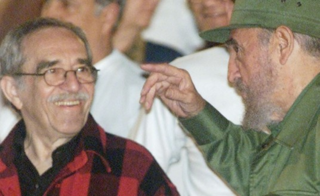
ScreenHunter_594 Apr. 20 09.44Gabriel Garcia Marquez’s 1967 novel “One Hundred Years of Solitude” is hailed as a masterpiece and harbinger of the literary genre, magical realism, a style of writing that influenced everyone from Isabel Allende to Salman Rushdie to Toni Morrison. With more than 30 million copies sold, the book is second only to Cervantes’s “Don Quixote” among Spanish-language novels. And Cervantes had, as one writer noted, a “four-century head start.”

But hours after the Nobel laureate died Thursday, the Cold War debate over his friendship with Cuba’s iconic revolutionary and former President Fidel Castro was rehashed as the singular stain on his otherwise glorious literary legacy.

While Castro’s revolution in its early days inspired admiration from the global left, his movement quickly became characterized by acts of repression and censorship. For the past four decades, Garcia Marquez had been criticized for maintaining his support even after Castro blessed the Soviet invasion of Czechoslovakia, with obituaries this week calling that support “scandalous” and a defense of “the indefensible.”

But the nuance of Garcia Marquez’s position was such that while he refused to break definitively with Castro, he never stopped criticizing Castro’s revolution, and even softened some of Castro’s roughest edges at a time when the Cuban leader was constantly under attack from the north.

More here.

Saturday, April 19, 2014

Counterpuncher

800px-Alexander_cockburn_2

Perry Anderson on Alexander Cockburn, in New Left Review (image from Wikimedia Commons):

No other person I have ever known was so deeply and productively marked by family background. The relationship of sons to fathers is rarely without conflict; and where there is none, the effect is more typically disabling than empowering, or neutral. For a father to be object at once of adoration, emulation and emancipation would seem a contradiction in terms. Yet so it was in the case of Alexander. Throughout his life Claud was a model for him—he once said he thought of him every day—and his career would follow an arc often uncannily like that of Claud’s. Yet far from being a psychological shackle, reducing him to imitation, it was as if the intensity of the bond was the condition of an individuality out of the ordinary. The paradox, of course, says much about the parent who made it possible.

Claud Cockburn recounted his own life—up to the age of fifty-seven—in an artful and entertaining trilogy that records a remarkable career. Born in Peking in 1904, where his father was secretary to the British Legation during the Boxer Uprising, as a youth he spent much of his time, during breaks from education in England, in Budapest, while his father sorted out Allied war claims on Hungary. After Oxford, Claud first worked free-lance for the Times in Berlin, before becoming a correspondent for the paper in New York. Arriving in the US on the eve of the crash of 1929, he resigned his post in early 1932, returning first to Central Europe again, and then to England. There he created The Week, a confidential newsletter, exposing intrigues and scandals in high places, read and feared not only in the clubs and country houses of the British oligarchy, but their counterparts across the Continent. In 1934 he started writing for the Daily Worker, while contributing concurrently to Time and Fortune. After 1936 he reported on Spain for the Worker, and England for Pravda. During the War, he was diplomatic correspondent for the Worker, but in 1947 quit for a life in Ireland with his wife Patricia. There he wrote his three volumes of memoirs; five novels, one of which was made into a film by John Huston; contributed to Punch; and became an inspiration and collaborator of Private Eye. He died in 1981.

For the richness of this trajectory and the personality behind it, there is no substitute for Claud’s own reminiscences. But retrospectively, certain strands of particular moment for Alexander can be indicated.

More here.

Alive in the Sunshine: On Environmentalism and Basic Income

Issue13_battistoni

Alyssa Battistoni in Jacobin (Illustration by Edward Carvalho-Monaghan):

[I]nternational disparities have, of course, long presented a challenge to those concerned with both domestic and global justice: how to acknowledge that America’s poor are wealthier than most of the world without simply concluding that they’re part of the problem? But while discussions of consumption tends to focus on a universal “we,” as epitomized by the famous Pogo Earth Day cartoon — “we have met the enemy, and he is us” — it’s important to look more closely within the rich world rather than simply heaping scorn on national averages.

Depictions of American consumerism tend to focus on the likes of Walmart and McDonald’s, suggesting that blame lies with the ravenous, grasping masses. Meanwhile it’s trendy for the wealthy to appear virtuous as they drive Priuses, live in homes that tout “green design,” and eat organic kale. But whether you “care about the environment,” believe in climate change, or agonize over your coffee’s origins doesn’t matter as much as your tax bracket and the consumption habits that go with it.

Consumption doesn’t correspond perfectly to income — in large part because of public programs like SNAP that supplement low-income households — but the two are closely linked. The US Congressional Budget Office estimates that the carbon footprint of the top quintile is over three times that of the bottom. Even in relatively egalitarian Canada, the top income decile has a mobility footprint nine times that of the lowest, a consumer goods footprint four times greater, and an overall ecological footprint two-and-a-half times larger. Air travel is frequently pegged as one of the most rapidly growing sources of carbon emissions, but it’s not simply because budget airlines have “democratized the skies” — rather, flying has truly exploded among the hyper-mobile affluent. Thus in Western Europe, the transportation footprint of the top income earners is 250 percent of that of the poor. And global carbon emissions are particularly uneven: the top five hundred million people by income, comprising about 8 percent of global population, are responsible for 50 percent of all emissions. It’s a truly global elite, with high emitters present in all countries of the world.

But that doesn’t mean America is off the hook altogether. The global wealthy may consume far more than the rest, but global consumption can’t be leveled out by bringing everyone up to even Western median levels; consumption in rich nations, even at relatively low levels of income, has to decline if we’re to achieve some measure of global equality.

For those in rich countries, this sounds suspiciously close to an argument for austerity: we’ve been profligate, and now the bill is coming due.

More here.

Thomas Piketty and Millennial Marxists on the Scourge of Inequality

Piketty_otu_img_0

Timothy Shenk in The Nation (Photo: Emmanuelle Marchadour)):

Chest-pounding about methodology and decrees on capitalism would be of little interest if they were not joined to substantive intellectual discoveries. Piketty’s contributions on this front come in three interlocking clusters: historical, theoretical and political. Relying chiefly on data from Britain, the United States and France, he casts his gaze over what the French historian Fernand Braudel, cited by Piketty as one of his inspirations, termed the longue durée. Much of Capital in the Twenty-First Century is, essentially, a history of the modern world viewed through the relationship between two factors: economic growth, with all its promises, and the return on capital, a reward that goes to the small fraction of the population that has mastered what Tina Fey’s character in 30 Rockreferred to as “that thing that rich people do where they turn money into more money.”

The rich perfected that art a long time ago. According to Piketty, the average return on capital, after adjusting for inflation, has hovered around 5 percent throughout history, with a slight decline after World War II. Whatever problems capitalists will face in the future, he suggests, a crisis generated by falling profits is not likely to be among them. Economic growth, by contrast, has a far more abbreviated chronology. According to the most reliable estimates—sketchy, but better than nothing—for most of human history, economic growth was on the order of 0.1 percent a year, provided there were no famines, plagues or natural disasters. This gloomy record began to change for part of the world during the Industrial Revolution. Judged by later standards, “revolution” might seem too generous a phrase for growth rates in per capita output that ran to under 1.5 percent in both Western Europe and the United States; but compared with the entire earlier history of human existence, those rates were astonishing.

More impressive developments were in store. The twentieth century, Piketty writes, was the moment when “economic growth became a tangible, unmistakable reality for everyone.” In the United States, which had benefited earlier from high growth rates, per capita output ticked up to just under 2 percent between 1950 and 1970. In the same period, growth in Europe doubled that; Asian countries averaged just a step behind Europe; and many African nations reached numbers closer to—but ahead of—the United States.

Piketty is less concerned with this global story, however, than with a concurrent development in Europe. In the nineteenth century, growth had done nothing to reduce income inequality. This was the world Marx diagnosed in Capital, and in crucial respects, Piketty thinks he got it right. Not that the entire apparatus of Marxist political economy holds, if it ever did. On the key issue of the tendency for wealth to accumulate in fewer hands, though, Piketty believes Marx arrived at a profound insight.

More here.

THE SELECTED LETTERS OF ELIA KAZAN

9780307267160.dWendy Smith at The Washington Post:

In his blisteringly candid but skewed 1988 autobiography, “Elia Kazan: A Life,” he claimed that he had been miserable during the years of his greatest success, “straining to be a nice guy so people would like me.” He implied that the “mask” he wore “to hide a truer feeling” kept him from working honestly with his collaborators and destroyed his pleasure in that work. It’s impossible to believe this entirely as we read his detailed letters to Tennessee Williams, firmly laying out the structural problems he sees in “Camino Real” and “Cat on a Hot Tin Roof.” Kazan comes across as a strong, self-confident artist, unafraid to voice opinions he knows may upset his friend.

His commitment and integrity are even more evident in correspondence with studio executives over censorship troubles with the film versions of “Streetcar,” “East of Eden” and “Baby Doll.” A leading player in the battle to make American movies more adult, Kazan urged Jack Warner in 1955, “as a matter of self preservation, to put on the screen . . . only what they cannot and will not ever see on their TV . . . we must be bold.”

more here.