Let the Past Collapse on Time!

Vladimir Sorkin in NY Review of Books:
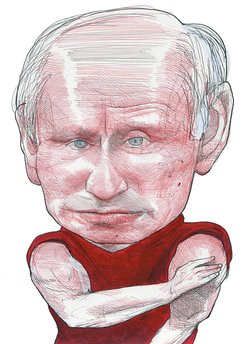
Putin_vladimir-050814_jpg_250x1294_q85In 2014, Lenins were felled in Ukraine and were allowed to collapse. No one tried to preserve them. This “Leninfall” took place during the brutal confrontation on Kiev’s Maidan Nezalezhnosti (Independence Square), when Viktor Yanukovych’s power also collapsed, demonstrating that a genuine anti-Soviet revolution had finally occurred in Ukraine. No real revolution has happened in Russia. Lenin, Stalin, and their bloody associates still repose on Red Square, and hundreds of statues still stand, not only on Russia’s squares and plazas, but in the minds of its citizens.

The fury of our politicians’ and bureaucrats’ response to the mass destruction of Soviet idols in Ukraine is revealing. You might think, why pity symbols of the past? But Russian bureaucrats understand that their beloved Homo sovieticus crumbled along with Lenin. “They are destroying monuments to Lenin because he personifies Russia!” one politician exclaimed. Yes: Soviet Russia and the USSR, the ruthless empire, built by Stalin, that enslaved whole peoples, created a devastating famine in Ukraine, and carried out purges and mass repressions. The recent Ukrainian revolution was indeed directed against the heirs of that empire—Putin and Yanukovych. It is telling that pro-Russian demonstrations in Crimea and eastern parts of Ukraine invariably took place next to statues of Lenin.

Unfortunately, what happened in recent weeks in Ukraine did not happen in Russia in 1991. Yeltsin’s revolution ended up being “velvet”: it did not bury the Soviet past and did not pass judgment on its crimes, as was the case in Germany after World War II. All those Party functionaries who became instant “democrats” simply shoved the Soviet corpse into a corner and covered it with sawdust. “It will rot on its own!” they said.

Read the rest here.
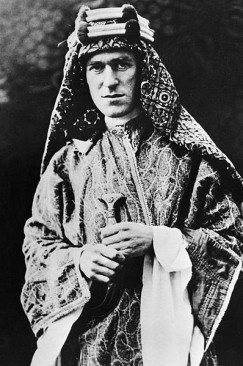
It Wasn’t Just a European War: WWI in Arabia

Shehryar Fazli in the Los Angeles Review of Books:

Lawerence-243x366If the year 1914 was once said to have inaugurated the 20th century, it appears now to have outgrown it. Its resilience lies not just in the many ways the war that began that year shaped the world, but in the basic mystery of how that war came to be in the first place. Debates about where and when a titanic clash of empires became inevitable, and whether it could have been avoided, are as lively 100 years on as they were in the early decades after its conclusion. What would have happened if a driver hadn’t made a treacherous wrong turn and instead left a dejected Gavrilo Princip to stay seated in a Sarajevo café? What could have happened differently after Princip’s assassination of Archduke Ferdinand to avoid the human and political carnage that followed? Last year, ahead of the war’s centenary, several leading scholars took a fresh crack at examining the origins of the Great War; while each is satisfying in its way — especially Christopher Clark’s superb Sleepwalkers and Margaret MacMillan’s The War That Ended Peace — the war’s inception will probably always remain in part a mystery.

More here.

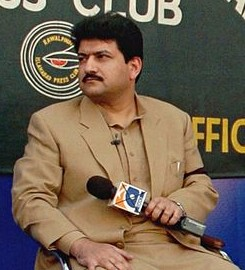
The Hamid Mir case: ‘In Pakistan, they used to censor journalists – now they shoot us’

On Saturday in Karachi, one of Pakistan's most famous journalists survived being shot six times. Soon after, the TV news channel he works for blamed the feared Inter-Services Intelligence agency for the attack. Author Mohammed Hanif reports on a fourth estate under siege.

Mohammed Hanif in The Guardian:

ScreenHunter_591 Apr. 25 12.35More than a hundred bouquets line the lobby of the private ward of Karachi's posh, private Aga Khan Hospital. Outside, dozens of policemen with bulletproof vests and automatic weapons look at every visitor suspiciously, officers speaking urgently into their walkie-talkies. The Karachi police force is really good at strutting about after a high-profile crime has happened. One of the largest bouquets in the lobby is from the force. “Get well Hamid Mir,” it says. “We may not be able to protect you,” it implies, “but we know where to order the best flowers.”

Mir is upstairs recuperating. He took six bullets – in the ribs, thigh, stomach and across his hand – in an assassination attempt on Saturday as he came out of the airport to present a special broadcast on Geo, Pakistan's largest news channel. Mir had warned about a possible assassination. He had also named his would-be killers. That's what his brother claims, that's what his colleagues and managers at the channel say. Geo, just after the attack, broadcast the allegation and, in an unprecedented move, also flashed the picture of the accused: the head of Pakistan's Inter-Services Intelligence chief, Lieutenant General Zaheer ul-Islam. In that picture he comes across as a big man. We are not supposed to know much about him except the fact that he is a very professional general. According to an internet myth very popular in Pakistan, the ISI has been rated as the world's No 1 intelligence agency: Mossad is No 5 and MI6 languishes at No 9. According to television ratings, the man with three bullets still in his body is Pakistan's top-rated TV journalist and one of the most vocal critics of Pakistan's military and intelligence agencies.

More here.

Friday Poem

Porpoise

Every year, when we're fly-fishing for tarpon
off Key West, Guy insists that porpoises
are good luck. But it's not so banal
as catching more fish or having a fashion
model fall out of the sky lightly on your head,
or at your feet depending upon certain
preferences. It's what porpoises do to the ocean.
You see a school making love off Boca Grande,
the baby with its question mark staring
at us a few feet from the boat.
Porpoises dance for as long as they live.
You can do nothing for them.
They alter the universe.

by Jim Harrison
from The Shape of the Journey
Copper Canyon Press, 1998

Thursday, April 24, 2014

The War on Reason

Paul Bloom in The Atlantic:

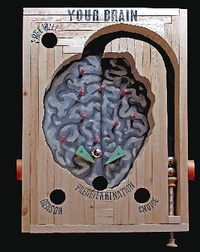
BrainAristotle’s definition of man as a rational animal has recently taken quite a beating. Part of the attack comes from neuroscience. Pretty, multicolored fMRI maps make clear that our mental lives can be observed in the activity of our neurons, and we’ve made considerable progress in reading someone’s thoughts by looking at those maps. It’s clear, too, that damage to the brain can impair the most-intimate aspects of ourselves, such as the capacity to make moral judgments or to inhibit bad actions. To some scholars, the neural basis of mental life suggests that rational deliberation and free choice are illusions. Because our thoughts and actions are the products of our brains, and because what our brains do is determined by the physical state of the world and the laws of physics—perhaps with a dash of quantum randomness in the mix—there seems to be no room for choice. As the author and neuroscientist Sam Harris has put it, we are “biochemical puppets.”

This conception of what it is to be a person fits poorly with our sense of how we live our everyday lives. It certainly feels as though we make choices, as though we’re responsible for our actions. The idea that we’re entirely physical beings also clashes with the age-old idea that body and mind are distinct. Even young children believe themselves and others to be not just physical bodies, subject to physical laws, but also separate conscious entities, unfettered from the material world.

More here.

DeLong on Piketty

451px-Thomas_Piketty

Brad DeLong over at his blog (image from Wikimedia commons):

How to sum up the argument of and the reaction to Thomas Piketty?…

In the communities in which I live and work, everybody is very impressed with Thomas Piketty's Capital in the Twenty-First Century. We are impressed with the amount of work that he and his colleagues have put into data collection, data assembly, and date cleaning. We are impressed with the amount of thought that has gone into the caddies attempt to understand the issue. Very impressed with how skillfully he has written his book. We are impressed with how much Arthur Goldhammer has sweated blood with the translation. And we are impressed with the intelligence with which he is constructed as arguments.

Now everybody has their complaints.

Everybody has 10-20% of the argument that they disagree with, and perhaps another 10 to 20% that they are unsure about. But it is a different 30% for everybody. There is not consensus but majority agreement that each piece of the book is roughly correct. And so there is rough near-consensus that the argument of the book is, broadly, right.

What are the serious complaints?

1. That Piketty tacks back-and-forth between a market value–the capitalized current value of all claims on income that are not brow-sweat– and a physical quantity conception of capital in a way that is not legitimate. That leads his argument astray in places, particularly in that it hides the fact that the capital accumulation that makes the rich so much richer also strengthens, or ought to strengthen, the bargaining power in the labor market of the not-so-rich, and so increased relative immiserization of the masses goes along (or ought to go along) with increased absolute prosperity.

2. That Piketty's framework conceptualizes the issues in an unclear and counterproductive way by speaking of “tendencies” that can be counteracted, rather than doing the normal MIT economics thing–calculating a steady-state equilibrium growth path to which the economy converges over time, and then calculating how that equilibrium steady-state growth path can and does jump in a comparative-statics should the background economic conditions that determine where it is located shift.

3. That Piketty has no theory of what determines the rate of profit, and he badly needs one. And since he doesn't have a real theory of the rate of profit, he doesn't have a real theory of the rate of wages.

4. That Piketty wants to assume that the rate of profit has a floor below which it will not fall–and so increased capital accumulation certainly reduce the labor share of income and may lead to little or no trickle-down to real wages from the increased productivity that ought to flow from increased wealth accumulation–but this argument needs to be spelled out.

More here.

When Hitler Was Curator

ID_IC_MEIS_DEGEN_AP_001

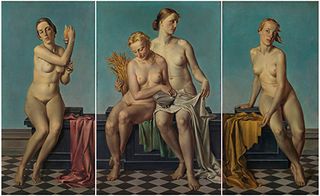
Morgan Meis in The Smart Set (image: “The Four Elements: Fire, Earth, and Water, Air,” Adolf Ziegler (1937) Pinakothek der Moderne, Bayerische Staatsgemaeldesammlungen, Munich Photo credit: bpk, Berlin/Art Resource, NY):

Hitler loved art. His taste tended toward classicism. The Greek ideal of beauty was his general standard in aesthetics. He once wrote the following memorandum about how he guaranteed that he would get “good” art for the Munich Museum. “I have inexorably adhered to the following principle,” Hitler wrote.

If some self-styled artist submits trash for the Munich exhibition, then he is a swindler, in which case he should be put in prison; or he is a madman, in which case he should be in an asylum; or he is a degenerate, in which case he must be sent to a concentration camp to be “reeducated” and taught the dignity of honest labor. In this way I have ensured that the Munich exhibition is avoided like the plague by the inefficient.

And it was. I suspect a number of contemporary curators and museum directors feel roughly the same way Hitler did about artists who “submit trash.” But what made Hitler, Hitler — and not just your average Museum Director — was that he was willing to go that extra mile. He did, actually, send artists to prison, the asylum, and the concentration camp.

The current show at the Neue Galerie in New York City (“Degenerate Art: The Attack on Modern Art in Nazi Germany, 1937”) mostly displays art that appeared in the now-infamous “Degenerate Art” exhibits organized by the Nazis in Munich and then taken to other cities around Nazi Germany. The point of the “Degenerate Art” exhibits was to demonstrate just how bad modern art had become, according to the Nazi sensibility.

In the late 1930s, Hitler made it Goebbels’ responsibility to purge art of degeneracy. Goebbels appointed Adolf Ziegler, who happened to be one of Hitler’s favorite painters, to the position of Director of the Reich Chamber of Visual Art. Ziegler looked around and declared many of the artworks of his time, “the products of insanity, of impudence, of ineptitude, and of decadence.” Ziegler went about the process of seizing much of this “degenerate” art, some of which appeared in the “Degenerate Exhibit” before being sold off to other countries or destroyed.

More here.

The GMO-Suicide Myth

Kieth Kloor in Issues in Science and Technology:

What we know is that many of the farmer suicides have been concentrated in five of India’s 28 states. (Anti-GMO activists call this the “suicide belt.”) At the conference, Anoop Sadanadan, a political economist at Syracuse University, identified the role of Indian banking policies, rather than the alleged GMO crop failure, in contributing to the suicides. In a paper forthcoming in the Journal of Developing Areas, he argues that “the increase in suicides among Indian farmers is an unanticipated consequence of the bank reforms the country undertook since the early-1990s. In particular, the entry of foreign and new generation private banks has made banking in India competitive and led to fewer loans to agriculture and farmers. With increased competition, banks saw lending to the farm sector as unprofitable and unreliable.”

Banking practices vary across India. Sadanadan found that states with the highest incidence of farmer suicides were those that offered the least institutional credit to farmers. This forced small farmers into the hands of private lenders who charge exorbitant interest rates (as high as 45%). In those states where farmers had better access to institutional credit and farm insurance, there were markedly fewer suicides. Indian banks also offer credit to farmers with irrigated land, as this makes farming more viable. “Irrigation does drive bank lending,” Sadanadan said at the panel. “In states where there is greater irrigation, they [banks] lend money to the farmer.”

In his upcoming paper, Sadanadan writes that he also found “no evidence to suggest that the cultivation of a particular crop was related to suicides in India.” Some states with high agrarian suicide rates do not include cotton farmers. “Further, cotton was cultivated in some 10 other states that did not witness high incidence of farmer suicides,” he writes.

I asked Sadanadan if there are sociocultural factors that might also explain why Indian farmers have taken their own lives? “So farmers have a choice,” he responded. “In America, a farmer could just default on a loan and say, ‘come after me.’ But in India, they commit suicide. Why? There has to be something cultural there. Is it shame?” But the proximate cause of many suicides, he reiterated, is the “debt burden” associated with the loan sharks, especially in states where farmer credit is tight.

More here.

The Hispanic states of America

Ea4103c0-caec-11e3-_750448hHenry Kamen at the Times Literary Supplement:

Our America is a brilliant, difficult book which seeks “to show that there are other US histories than the standard Anglo narrative” by focusing on “Hispanic influence in the country’s past and future”. A United States is revealed that has its origins not in the Pilgrim Fathers or Plymouth Rock, but over a century before that, with Ponce de León and the Fountain of Youth. Felipe Fernández-Armesto’s survey covers “the whole country from 1505 to the present”, an awesome timespan that would daunt most mortals but which the author handles with his customary fluency, humour and unremitting scholarship.

Who are the Hispanics? They have moved centre stage in recent decades because of their impressive and widely feared political clout. Not only are they the fastest-growing minority in the United States, numbering over 50 million overall, representing two-thirds of the population of Miami, nearly half of Los Angeles, and over one-fifth of New York and Chicago: they also fill important positions in government and state administration throughout the country. No political party dare approach the voters without making concessions to Hispanic priorities and taking account of Spanish – the second language of the US – in their publicity.

more here.

the beauty of bridges

Bridges_leadLucy Farmer and Garry Simpson at More Intelligent Life:

When you cross a bridge, it is the sweeping view or the rolling horizon that holds your attention, not the structure that makes the air solid beneath your feet. These wonders of engineering that cheat difficult terrain and smooth our passage are apt to be taken for granted. There are a few showmen—Sydney’s soaring Harbour Bridge, the romantic Rialto in Venice and London’s stately Tower Bridge—which are destinations in their own right. But there are many more dogsbodies that span rivers and ravines, stoically fulfilling their purpose.

For this photo essay Garry Simpson has captured bridges that have a quiet beauty. Some caught his eye during road trips between jobs, “not hero bridges, but ones off the beaten track”. We asked him to photograph a few more in England’s industrial north and the Swiss Alps—a land of mountains, valleys and exemplary engineering.

Simpson, who grew up at the other end of England in Bournemouth, was always a “right brain” kid, constantly drawing cartoons, mostly from “The Jungle Book”. His father gave him his first camera when he was 11. “A horrendous cliché” for a photographer, he admits with a grin. But the rest of his story is not so predictable. On leaving school in the 1980s, a creative career wasn’t an option for Simpson, so he joined the Royal Marines for eight years and hardly took a snap.

more here.

Confronting the Classics

BeardbookcoverJ. Kates at Harvard Review:

The other evening, sitting with friends, literate professional writers of my own generation, discussing boundaries between history and fiction, I made a reference to the ambiguities of Thucydides’ invention of historical speechifying. Suddenly, my table-mates looked at me as though I had sprouted a not particularly attractive horn. Thucydides! Where did that come from? A great gap seemed to yawn between what used to be called the Ancients and the Moderns, with the Ancients consigned to the “classics,” which are presumed to be in decline, and the Moderns content to talk about memoir workshops. At this point, I might be expected to bemoan the bemusement of my colleagues. But that bemusement is part of a conversation, not the end of one. There is no decline, and no lack of engagement, as Mary Beard demonstrates triumphantly in her collection of essays and reviews,Confronting the Classics (Liveright, 2013).

To put this as crisply as I can, the study of Classics is the study of what happens in the gap between antiquity and ourselves. It is not only the dialogue that we have with the culture of the classical world; it is also the dialogue that we have with those who have gone before us who were themselves in dialogue with the classical world. . . . it is we who ventriloquise, who animate what the ancients have to say.”

more here.

Gather and use genetic data in health care

Geoffrey Ginsburg in Nature:

Health1 More and more people are getting their DNA sequenced. But the use of genetic data to inform medical decisions is lagging. More than a decade since the Human Genome Project was declared complete, fewer than 60 genetic variants are deemed worthy for use in clinical care, most for severe conditions in very young children. These genetic variants can guide medical decisions (see ‘Genes that doctors use’). By some estimates, women with certain variants in the BRCA genes have about an 80% chance of developing breast cancer, leading some who carry the mutation to opt for preventive mastectomies. Screening for faulty genes involved in iron transport can alert affected individuals to a need to alter their diets to avoid developing haemochromatosis, a toxic build-up of iron that damages the liver, heart and other organs. Mutations in the EGFR gene can indicate whether lung cancer will respond to expensive drugs with fewer side effects than standard chemotherapy. But five years after EGFR tests were commercialized, only around 6% of appropriate US patients were being genotyped, partly because their physicians were unaware of the tests2. Clinical trials have been used to assess whether genomic information yields practical benefits. A study3 of nearly 2,000 patients with HIV showed that genetic screening for a variant called HLA-B*5701 could help to prevent toxic reactions to the AIDS drug abacavir — a fact that is now written into US treatment guidelines.

…Such 'pharmacogenomic' applications — in which genetic markers are used to fit drugs to patients — are among the most promising areas for collecting evidence during clinical care. In Thailand, about 12% of people have genetic predisposition to Stevens–Johnson syndrome, in which certain medications trigger a blistering, life-threatening rash. The government has sponsored a programme in which any Thai citizen can be genotyped to predict reactions to problematic drugs such as carbamazepine, commonly used to control seizures. Ramathibodi Hospital in Bangkok provides a health card for patients with risky genetic variants to present to pharmacists, alerting them to provide alternative medications. Whether decreased toxicity merits the use of less-effective drugs is being evaluated.

More here.

Thursday Poem

Wound

Your full force was first raised against me

Let these spear-tipped streams
flow . . . my gullied eyes greening your fields
Let this crop of pain ripen,
…….. this harvest from wounds

You and I? Let's
enjoin ourselves in friendship
Always!
…….. How engaging!

At dusk where the road forks
I ran into you. Before I knew what was happening,
you raped me. Then and there, witness of this cruel intimacy,
drops of virgin blood spread on the gravel of the crossroads
like an unclaimed corpse

At each moment
every day
be it morning or night
every minute
coming & going time & again
those stains return to me
my memory of you

Violation!

From the outset
….. your every thrust
blazed as fire,
….. tore through the skin as thorns do,
pierced as a blade
….. appeared as the night of the dark moon
But these days
….. your every stroke,
a mere touch
….. and as for my self
I've become
….. the oven that contains the flame,
the bush that raises up thorns
….. the sheath that holds the blade,
fangs for the cobra's deadly poison
….. darkness of the night that swallows the moon

Like a tigress tamed in the circus,
a female snake soothed by the charmer's tune,
wound, so quickly was I transformed in you

Now you and I
….. have become nail & flesh,
miser and money.
….. footpath and footsole

Tread upon me with all your thieves & robbers
For this is certain: you'll tire, not me!

Let the variegated wishes for life germinating in me
be winnowed by your stormy gusts. Finish it! Destroy!
Wound! Maul and smother me
Lick me with your slathering flames
For I convert your force. I'm hardened to it

Where you store your weaponry of thrust and violation,
I burrow and hide, grazed from all sides by your firing guns
flameburst upon flameburst everywhere in every corner

But it is surely so, violator

….. Violation! tearing your ears, listen

Your armory will be emptied –I will not
your armory will be emptied –I will not
.
by Banira Giri
from Jeevan Thayamaru (Life: No Place)
publisher: Sanjha Prakashan, Kathmandu, 1978
translation: Wayne Amtzis and Banira Giri, 2000

Wednesday, April 23, 2014

John Dewey’s Encounter with Leon Trotsky

Cover-John-Dewey-193x300

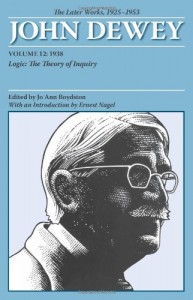
Richard J. Bernstein in Public Seminar (Book cover of The Later Works of John Dewey by John Dewey, edited by Jo Ann Boydston © Southern Illinois University Press | Amazon.com):

[A]lready in 1934, Dewey saw the parallels between what was happening in the U.S.S.R. and the growth of fascism in Italy and Germany. “As an unalterable opponent of Fascism in every form, I cannot be a Communist” (LW 9: 93).

What is distinctive and admirable about Dewey in the early 1930s is the combination of a sharp critique of the excesses of American capitalism and Soviet Communism combined with a passionate commitment to a vision of a radical democracy. Dewey practiced what he firmly believed. This became evident when Dewey agreed to be chair of Commission of Inquiry into the charges made against Leon Trotsky in the Moscow trials. Popular front liberals tended to down play the significance of these purges, but not Dewey. Dewey was not only severely attacked for agreeing to chair the Commission — there were even threats on his life. Dewey made it clear he was defending “Trotsky’s right to a public trial, although I have no sympathy with what seems to me abstract ideological fanaticism.” So Dewey, at the age of 78, set aside his work on his Logic, and made the arduous trip to Mexico City where he chaired the hearings in Coyocan, Mexico that consisted of thirteen sessions held between April 10 and 17. Strictly speaking, the inquiry was not a trial. The Commission sought to ascertain the veracity of the charges that had been made against Trotsky and his son in Stalin’s trumped up Moscow trials. As Dewey stated in the opening session, the Commission “is here in Mexico neither as a court nor as a jury. … Our sole function is to ascertain the truth as far as is humanly possible” (LW 11: 306). The transcript shows just how active Dewey was in carrying out its task. Ironically, for the all the criticism of the pragmatist conception of truth, Dewey before, during, and after the inquiry defended the importance of ascertaining the truth.

More here.

The Gay Marriage Story Jo Becker Needs to Hear

Rtrcsa5.jpg.CROP.promo-mediumlarge

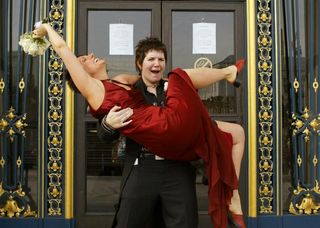
Nathaniel Frank in Slate (Photo by Kimberly White/Reuters):

“This is how a revolution begins,” commences Jo Becker, a Pulitzer Prize-winningNew York Times reporter, in her new book, explaining that the gay marriage movement had “languished in obscurity” until 2008, when a young political consultant named Chad Griffin grew impatient and deployed his “unique ability” to leverage his Hollywood connections to “rebrand a cause.” It was a cause, argues Becker, that had to be rescued from established gay advocates who had spent 40 years doing virtually nothing worth mentioning in a major history of the marriage-equality battle. The book, excerpted in Sunday’s New York Times Magazine, focuses on Ted Olson and, to a lesser extent, David Boies, two straight lawyers recruited by Griffin and funded, initially, by Hollywood stars to challenge California’s Proposition 8, the 2008 ballot initiative that revoked gay marriage in that state. Olson and Boies were on opposite sides of the 2000 Supreme Court battle that landed George W. Bush in the White House, and their teaming up to fight for gay marriage was a brilliant coup by Griffin. Olson’s conservative bona fides and eloquence in embracing the cause of gay marriage was enormously valuable in growing support for the cause just as it was reaching a tipping point.

Yet that’s a far cry from suggesting that this small, well-heeled group was responsible for bringing the nation gay marriage, or for a major leap in public approval, something that was in the works long before these players arrived on the scene, and which was jolted forward by widespread national anger against Prop 8, not just the anger of Chad Griffin and Ted Olson.

The actual revolution that led to gay marriage began, of course, not in a spacious San Francisco hotel suite in 2008 but on the streets of New York in 1969, when LGBTQ activists got tired of perpetual abuse and chose to fight a police raid at the Stonewall Inn. This remarkable uprising, which built on earlier efforts that can be traced back to the first gay rights organization in Chicago in 1924, led to gay marriage lawsuits in the early 1970s that were laughed out of court but were followed by the victorious 1993 Hawaii ruling that launched the gay marriage revolution.

And let’s be clear how we’re using revolution. This revolution began within the LGBTQ movement, which had been split over thoughtful, principled differences about the value and role of marriage in the social structure and, specifically, for the LGBTQ population.

More here.

Wednesday Poem

On Shakespeare
..after Iqbal

River mirrors the glow of dawn
Night silence mirrors night song

Rose mirrors the fame of spring
Bridal cup mirrors the virgin wine

Sun’s glory revealed in the sun
Your passionate speech mirrors my heart

Concealed from the world’s eyes
You revealed the world with your own

Nature protects her secrets so jealousy
Never again will there be such knowledge

.
By Rafiq Kathwari