“At no point in history has the written word been required more than in present times”

Amar Sindhu in Herald:

Fahmida-Riaz-by-Tahir-Jamal-WS-1024x682Fahmida Raiz, writer, human rights activist and the author of more than 15 books on fiction and poetry, has always remained at the centre of controversies. When Badan Dareeda, her second collection of verse, appeared, she was accused of using erotic and sensual expressions in her poetry. The themes prevalent in her verse were, until then, considered taboo for women writers. The feminist scholarship and women’s movement, however, not only acknowledged her expressions but welcomed them with applause. Riaz was also faced with challenges due to her political ideology. More than 10 cases were filed against her during General Ziaul Haq’s dictatorship. She was forced into exile during the same regime, only to return to Pakistan after Haq’s death in 1988. The poems from her collection Apna Jurm Sabit Hae are politically charged and reflect the torment her homeland experienced under dictatorship. In terms of using creative expression for political discourse, Riaz stands among literary greats such as Nazim Hikmet, Pablu Neruda, Sartre and Simone de Beauvoir. Following are excerpts of a conversation she had with Herald on her literary journey and issues confronting Pakistan’s literati.

Amar Sindhu: Does creativity need ideology?

Fahmida Riaz: Once creativity expands beyond the very personal, almost biological paradigms, it seeks some ground to stand upon. Creativity is very often rooted in some idea. Our folk songs and stories do not seem to be ideological but they seem to have ideas, when looked at closely. The question of ideology is raised mostly in the context of progressive literature that sees individuals in a web of external circumstances and class conflicts. Literary creativity does not have to emanate from this consciousness, nor does this consciousness hamper creativity. In the 20th century, great writers such as Pablo Neruda, Paul Nizan, Nazim Hikmet, Faiz Ahmed Faiz and Gabriel García Márquez declared themselves to be Marxists. An artist like Pablo Picasso, who revolutionised the world of painting, was a member of the Communist party of France. On the other hand, two literary giants before these writers, Leo Tolstoy and Dostoyevsky, saw the individual and the society in the context of Christian teachings and sought the answers of all human problems in Christ. You may notice, though, that too was a kind of ideology.

More here.
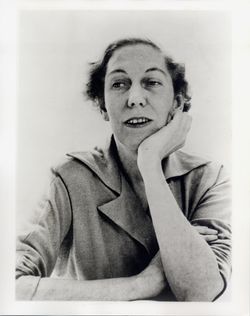
Eudora Welty’s job application to The New Yorker

Shane Parrish in Farnam Street:

In March of 1933, Eudora Welty, then 23 and looking for writing work, sent this beautiful letter to the offices of The New Yorker. “It’s difficult,” writes Shaun Usher in his introduction to the letter in Letters of Note, “to imagine a more endearingly written introduction to one’s talents.”

Eudora-weltyMarch 15, 1933

Gentlemen,

I suppose you’d be more interested in even a sleight-o’-hand trick than you’d be in an application for a position with your magazine, but as usual you can’t have the thing you want most.

I am 23 years old, six weeks on the loose in N.Y. However, I was a New Yorker for a whole year in 1930– 31 while attending advertising classes in Columbia’s School of Business. Actually I am a southerner, from Mississippi, the nation’s most backward state. Ramifications include Walter H. Page, who, unluckily for me, is no longer connected with Doubleday-Page, which is no longer Doubleday-Page, even. I have a B.A. (’ 29) from the University of Wisconsin, where I majored in English without a care in the world. For the last eighteen months I was languishing in my own office in a radio station in Jackson, Miss., writing continuities, dramas, mule feed advertisements, santa claus talks, and life insurance playlets; now I have given that up.

As to what I might do for you— I have seen an untoward amount of picture galleries and 15¢ movies lately, and could review them with my old prosperous detachment, I think; in fact, I recently coined a general word for Matisse’s pictures after seeing his latest at the Marie Harriman: concubineapple. That shows you how my mind works—quick, and away from the point. I read simply voraciously, and can drum up an opinion afterwards.

More here.

Campus Gun Control Works

Evan DeFilippis in the Boston Review:

DeFilippis-bannerAfter his son Christopher was gunned down near the campus of the University of California, Santa Barbara on May 23, Richard Martinez sounded what has become a famous plea.

“Why did Chris die?” he asked, choking back tears. “Chris died because of craven, irresponsible politicians and the [National Rifle Association]. They talk about gun rights. What about Chris’s right to live?” He went on, “When will this insanity stop? . . . We don’t have to live like this.”

In response to Martinez’s impassioned appeal for gun control, the cavalcade of bumper-sticker slogans rolled in—“guns don’t kill people, people kill people,” “control criminals, not guns,” “don’t punish law abiding citizens,” and so on.

The NRA has been silent on the shooting, as is its usual media strategy following high-profile gun violence. But we know its position: the solution to gun violence is always more guns.

Thus the express goal of the NRA and other pro-gun groups is to promote the concealed carrying of firearms on college campuses. As the NRA puts it, “Colleges rely on colorful ‘no gun’ signs, foolishly expecting compliance from psychopaths.”

To this end, the NRA and state legislators are pushing guns at every level of schooling. The lobby backed a new Indiana law that allows guns on school property, so long as they are contained within parked cars.“Teachers have to leave their 2nd Amendment rights at the front door when they go to work,” said Indiana Senator Brent Steele, explaining why he supported the measure, in spite of the fact that the courts have never wavered on the constitutionality of gun bans on school property.

More here.

Economics: The User’s Guide by Ha-Joon Chang

Zoe Williams in The Guardian:

Ha-Joon-Chang-011It is a mark of where we are in our political discourse that even to say “neoclassical economics is not the only school” seems radical. This is where Ha-Joon Chang starts, in a book that is more sober and less effervescent than his bestselling 23 Things They Don't Tell You About Capitalism, but is just as page-turning.

Since no single economic theory has beaten the others, it follows, Chang writes, that there is no objective truth on which every economist is agreed. Economics can never be a science in the way that physics is; it cannot reach a consensus on its fundamental questions, let alone what the answers are. This isn't some extended handwringing, a trashing of his discipline dressed up as a mea culpa. Chang isn't looking for a formula: fundamentally, he argues, economics is politics. As such, we shouldn't be thinking in terms of an ideal answer – the discussion should never close.

If there is a sense in which economics has “failed”, Chang argues, it is not because it should have “predicted” the crash and the disasters of the last seven years, nor for thoseKrugmanian reasons that range the state against the market, regulation against self-interest, cooperation against moral hazard. Rather, we are witnessing a failure of plurality. Our current landscape has been created by the acceptance of a few core principles – the individual as perfectly selfish, perfectly rational, able to create perfect markets by acting in her own interests; we have ignored plausible competing theories and have suffered for it.

More here.

Kara Walker Bursts Into Three Dimensions

A_560x0Jerry Saltz at New York Magazine:

Midway through my maiden visit to the derelict Domino Sugar refinery near the Williamsburg Bridge, while gaping in awe at Kara Walker’s great gaudy monstrosity, her towering naked sphinx with the head scarf and features of a black mammy, I had something like a vision. That’s the crazy comical power Walker’s best work can have. Particularly this work, elliptically and archaically titled A Subtlety: Or the Marvelous Sugar Baby, an Homage to the unpaid and overworked Artisans who have refined our Sweet tastes from the cane fields to the Kitchens of the New World on the Occasion of the ­demolition of the Domino Sugar Refining Plant. This behemoth, part Cecil B. ­DeMille parade float, part alien, is accompanied by a retinue of life-size deformed black figures, boys carrying bananas or baskets with parts of other boys, all made from molasses and brown sugar.

I imagined this mad theatrical 35-ton thing—more than 35 feet high and 75 feet long, fashioned in refined white sugar over blocks of Styrofoam—pulled across the United States by the crew of misshapen brown attendants. I saw its ambiguous anarchic meanings, its otherness, stunning all who saw it. I fancied this an American ghost ship, never coming to rest until … what? I don’t know.

more here.

voting in europe

Image_250896_galleryV9_smen_-e1401903341929Ryan Ruby at n+1:

It’s hard not to be sympathetic to the majority of the European population that doesn’t show up to the polls, whether out of discontent or apathy. The inherent logistical difficulties of coordinating the opinions and interests of more than a half a billion people in almost thirty countries who speak over twenty languages notwithstanding, the EU has never done a good job of erasing the so-called “democracy deficit” between it and its citizens.

The reason for this is partially historical. The EU doesn’t have its origins in popular movements, but in an expanding series of trade and travel liberalizations undertaken over the heads of the people by ministerial elites from the large Western European nations over a period of fifty years. However integrationist they may be on principle, the heads of the member states jealously guard their decision-making prerogatives, meaning that at best a European citizen’s relationship to EU legislation remains largely indirect, mediated by his or her national citizenship and national identity.

more here.

On Writing a Life of Coltrane

John_coltrane_1963-1024x864Sam Stephenson at The Paris Review:

“Trane” might as well have come from Krypton. The man “John Coltrane” is hard to locate in other people’s memories today, or in the existing studio or club recordings of his music, which document the known pinnacles, not the fits and starts and hours and years of rigor and anxieties. A list of facts doesn’t help much, either: his formative years in North Carolina are difficult to excavate and easy to summarize or skip over. Plus, the iconographic mid-century jazz photography makes Coltrane look seven feet tall (a 1947 Naval photograph shows him to be under five-foot-ten, a normal-size man). The legend is overwhelming.

Distance, distraction, and apathy make the devastating chaos of the 1960s and early seventies difficult to feel today, too. Malcolm X was assassinated in 1965. Martin Luther King was assassinated in 1968. The Vietnam War was going nowhere. The country was on fire, literally in some places, and reactionary forces clamped down, creating a weird climate of both chaos and torpor. In the 1972 presidential election, the sitting president, Nixon, carried forty-nine states.

more here.

“Spent” looks at why, when scientific research shows that more stuff doesn’t lead to more happiness, humans are driven to endlessly acquire

Jonathan Gottschall in Seed:

Spent_INLINEWhy do some people pay a 100,000 percent premium for a Rolex when a Timex is such a sleek and efficient timepiece? Why do others kill themselves at work just so they can get there in a Lexus? Why do we pay 1,000 times more for designer bottles of water when the stuff that gushes from our taps is safer (because it’s more regulated), often tastier, and better for the planet? And how do we convince ourselves that more stuff equals more happiness, when all the research shows that it doesn’t? In Spent, University of New Mexico evolutionary psychologist Geoffrey Miller contends that marketing—the jet fuel of unrestrained consumerism—“is the most dominant force in human culture,” and thus the most powerful shaper of life on Earth. Using vivid, evocative language, Miller suggests that consumerism is the sea of modern life and we are the plankton—helplessly tumbled and swirled by forces we can feel but not understand. Miller aims to penetrate to the evolutionary wellsprings of consumerist mania, and to show how it is possible to live lives that are more sustainable, more sane, and more satisfying.

Spent is about “display” consumerism. It leaves aside strictly utilitarian purchases like baloney or tampons. Understanding display consumerism, according to Miller, requires adding one part Thorstein Veblen to one part Darwin. From Veblen’s classic Theory of the Leisure Class (1899), Miller appropriates the concept of “conspicuous consumption,” whereby people live and spend wastefully just to flaunt the fact that they can. From Darwin, Miller appropriates sexual selection theory—“costly signaling theory” in modern parlance—whereby animals compete by sending signals of their underlying genetic quality. As with the gaudy displays of peacocks, purchasing decisions frequently represent attempts to advertise “fundamental biological virtues” like “bodily traits of health, fitness, fertility, youth, and attractiveness, and mental traits of intelligence and personality.” Why spend $160,000 on a prestigious university degree? To make a “narcissistic self-display” of one’s intelligence and diligence. Why stuff yourself into a push-up bra and smear pigment across your lips and cheekbones? To try to enhance—or fake—your fertility signals.

More here.

Friday Poem

Songbirds

There are songbirds
That live near-by
Whom I count as friends
& will sing goodbye
When I go down the road
And out of town

To this flock
This I ask
Sing high
Sing low
Continue to swoop, dart
Chase & play
Until you too, must go

No need to follow
My feathery friends
It is okay
This, my fate
Perhaps somewhere
Other songbirds wait.
.

by Terry McLarnan

Thursday, June 5, 2014

The Silencing of Egypt’s Jon Stewart

H. A. Hellyer in Foreign Policy:

ScreenHunter_679 Jun. 05 19.42Egyptians moved their clocks forward an hour a couple of weeks ago following a decision by the country's new rulers to reinstitute daylight saving time, which had been eliminated following Hosni Mubarak's ouster in 2011. For the rather embattled group of revolutionaries who reject the domination of both the military and the Muslim Brotherhood, this inspired a joke: “They are taking away the revolution's only lasting achievement!” It's dark humor, to be sure, but humor in itself can be something quite potent — and to some in Cairo, quite threatening.

Egypt just got a rude wake-up call about that fact. On Monday, Bassem Youssef — the man described as Egypt's “Jon Stewart,” who ran a program gleefully satirizing the country's predominant political narrative —announced that his show was, at least for now, over. The program, calledEl-Bernameg, had already been forced to suspend shooting a few weeks ago, under the pretext that it would unduly influence Egyptian voters in the run-up to the Egyptian presidential election in late May. Of course, all other television shows — including those that unapologetically tried to politically influence viewers — were left untouched. The program was nevertheless due to return on Friday, May 30 — but didn't.

This is the second time Youssef has stopped airing his program.

More here.

As Policy Works Against Them, Low-Income Students Struggle to Complete College

Mike Rose in the Boston Review:

ScreenHunter_678 Jun. 05 19.37It is early in the morning on a hazy Southern California day, and students are walking or riding old bicycles into the community college campus, headed for 7:00 a.m. classes in English or math, nursing or automotive technology. The college is packed into twenty-five acres on the economically depressed periphery of the city’s thriving financial core, and it draws on one of the poorest populations in the area. Men sleep under newspapers and blankets in doorways right outside the school. One block away a line is already forming along the wall of a social service agency. The short, bare walkway into the campus is for many a luminous road into another world.

This college could serve as ground zero for Suzanne Mettler’s important new book Degrees of Inequality: How the Politics of Higher Education Sabotaged the American Dream, which analyzes diminishing postsecondary educational opportunity over the past thirty years, particularly for students in the lower half of the income distribution. If they are not deterred from attending college, students face soaring tuition, inadequate financial aid, and increased debt. To make matters worse, most states have been slashing higher education budgets, forcing colleges to offer fewer classes and services. That trend is beginning to reverse, though spending still is below what it was a decade ago.

Mettler explains how this came to be: how our extreme political partisanship and the increasing influence of big money have contributed to this mess.

More here.

Stories about Millennials’ character flaws aren’t just wrong; they’re cover for the real perpetrators of crimes against the future

The following was adapted from a commencement speech delivered to the Independent Concentrators of Brown University at their diploma ceremony on Sunday, May 25, 2014, in Providence, Rhode Island. Miriam Markowitz is deputy literary editor of The Nation.

Miriam Markowitz in The Nation:

ScreenHunter_677 Jun. 05 17.38Dear graduates,

Standing here, looking at you today, I am in awe. Not of your accomplishments, which I believe are many, or your character, which I’ve no doubt is stalwart and true, but at the thing I can see with my own eyes: your youth.

Seriously, I’m impressed. Which can only mean one thing: I’m old.

I mean, not that old, just a decade further along than you lot. But at 32, a few centuries ago I’d be middle-aged, or older. Maybe close to dead. Now that 30 is the new 20—or something like that, I don’t know—there’s a lot of confusion these days about whom we consider “adults” and who are “just kids.” So let’s say, for now, that because I am standing at this lectern, having been asked to dispense some words of wisdom about life going forward, that I am an adult. And I am going to do one of the things adults like doing best: I’m going to talk at you.

By that I mean I’m going to tell you a story, and I’m hoping that it won’t be a boring one. It isn’t supposed to be, according to conventional wisdom, because it’s a story about what many adults would say is your favorite subject: yourselves.

More here.

Wilde’s world of journalism

Oscar-Wilde_c_1881_1072926hStefano Evangelista at the Times Literary Supplement:

Again and again, Wilde writes amusingly but passionately against small-mindedness and chauvinism, and is supremely irritated by dullness. He is a gifted polemicist, as his spats with the American painter Whistler demonstrate, and he is skilled at using polemics as a means of self-promotion. He has a positive passion for picking out banal statements, which he enjoys quoting with minimal commentary, hanging his victims out to dry. Even more crucially for a reviewer who worked largely on commissions, Wilde can always be trusted to make something interesting out of unpromising subject matter. So, of a collection by the American poet and artist Atherton Furlong, he writes that it is “a form of poetry which cannot possibly harm anybody, even if translated into French”; while J. Sale Lloyd’s Scamp is dismissed as one of those novels that “are possibly more easy to write than they are to read”. When Wilde was given boring books to review, he did something daring and brilliant with them: he turned them into Oscar Wilde.

One of the most rewarding ways of reading Wilde’s journalism is therefore as a giant workshop for the making of the Wilde that readers know better from his more famous writings of the 1890s. It is in the journalism that Wilde comes up for the first time with many of the ideas and phrases that he would reuse in critical essays such as “The Decay of Lying” or “The Critic as Artist”.

more here.

the 100th anniversary of James Joyce’s Dubliners

ID_PI_GOLBE_DUBLIN_AP_001Stefany Anne Golberg at The Smart Set:

In Dubliners there are three kinds of people: old people, young people, and priests. The priests are mysterious, inaccessible, with yellow teeth or yellowing faces in photographs that hang on the wall. Priests are never main characters in Dubliners. They are peripheral figures, topics of conversation. They are also, generally, dead. The priests of Dublin have a special role, or once did, and almost no one seems to know what it is.

The first priest we meet, Father Flynn (in “The Sisters”), is the priest with the most clues. His life story is told in fragments, in hearsay, by his neighbors and by his sisters after Father Flynn has gone. Father Flynn used to be rather interesting, we learn, but had grown tiresome. Something queer about him, uncanny, one of those peculiar cases, wide awake and laughing to himself in the confession box. “I am not long for this world,” Father Flynn often told the boy, before Flynn had his series of strokes. Flynn’s epiphany in the confession box led him directly to paralysis and finally, to death.

James Joyce didn’t have much use for priests; he thought that priests like Father Flynn had lost their sight, their ability to focus their spiritual eye. Joyce’s characters often say things like, “We are an unfortunate priest-ridden race and always were and always will be till the end of the chapter. … A priest-ridden Godforsaken race” (A Portrait of the Artist as a Young Man). Like the rest of the Dubliners, Father Flynn experiences his epiphanies, but is unable to reflect upon them, to know them. This is a task for artists.

more here.

Mad Music: Charles Ives, the Nostalgic Rebel

Denk_2-061914_jpg_250x1228_q85Jeremy Denk at the New York Review of Books:

If Ives’s music remains a source of doubt, doubt is also one of its great themes. The essential Ivesian gesture is an answer followed by a question. At a key juncture in the slow movement of the “Concord” Sonata, for instance, Ives builds to a climax on the famous four-note figure from the opening of Beethoven’s Fifth Symphony. In the wake of a thunderous C minor arrival, nearly inaudible wrong notes appear out of nowhere, “ruining” the achieved moment. They instill a double doubt, of understanding and perception; they represent harmonic uncertainty, but you also aren’t entirely sure that you heard them. The gesture feels almost comical at first, then acquires meaning: a delayed awareness of ambiguous overtones hiding in the clearest chords.

Many of Ives’s most important pieces are about blurred or doubtful perception. The beloved song “The Housatonic at Stockbridge” depicts a morning walk in haze and mist, while hearing a hymn from a church across the river. The loss of information, the disintegration of the tune, is essential to the beauty, like the crackle and hiss of old recordings: a failure that connotes authenticity.

more here.

How Maya Angelou became the voice of America

Laura Miller in Salon:

Maya_angelou4-620x412When Maya Angelou published her memoir “I Know Why the Caged Bird Sings” in 1970, it was not the first first-person account of an African-American woman’s life, but it was the first of a new breed of unflinchingly honest ones. In addition to offering a powerful testimony to the effect of racism on her childhood (the first of six volumes of autobiography, the book covers Angelou’s life from age 3 to 17), “I Know Why the Caged Bird Sings” dared to speak of the particular hardships suffered by black women within their own community; Angelou was raped by her mother’s boyfriend at age 7 and successfully testified against the man in court, although this trauma was followed by a five-year period of speechlessness. In the following decades, the aftermath of the civil rights movement, Angelou’s fearlessness helped pioneer a literary blossoming for African-American women that would encompass such figures as Alice Walker, Paule Marshall, Toni Cade Bambara and Nobel laureate Toni Morrison.

…As the years went by, Angelou’s poetry and public statements increasingly moved toward that most popular of all American literary forms, the uplifting and inspiring maxim. No doubt channeling the grandmother whose industry, self-reliance and ambition she admired so much, she licensed her name to a line of Hallmark cards. The poetry world might frown on such popularization, but the public adored her and found in her words both wisdom and comfort. Angelou’s is a style that lends itself well to the realm of social media, with its informal habit of sharing and passing along quotations and mottos, so it’s no surprise she maintained an active Twitter feed up until five days before her death. Her last message — “Listen to yourself and in that quietude you might hear the voice of God” — conveys the boundless warmth, hope and serenity that made her so beloved.

More here.

Thursday Poem

The Moment

The moment when, after many years
of hard work and a long voyage
you stand in the center of your room,
house, half acre, square mile, island, country,
knowing at last how you got there,
and say, I own this,

is the same moment the trees unloose
their soft arms from around you,
the birds take back their language,
the cliffs fissure and collapse,
the air moves back from you like a wave
and you can't breathe.

No, they whisper. You own nothing.
You were a visitor, time after time
climbing the hill, planting the flag, proclaiming.
We never belonged to you.
You never found us.
It was always the other way around.
.

by Margaret Atwood
from Eating Fire
Houghton Mifflin

Malnutrition in children mars gut microbiome

Jyoti Madhusoodanan in Nature:

BacteriaThe mix of microbes in people's gut gets established early on in childhood and plays a large part in keeping kids healthy. But starvation disrupts the development of a healthy microbiome, according to a study comparing the gut microbiota of healthy and severely malnourished children from the same slum area of Dhaka, in Bangladesh, in the crucial two years after birth. This disruption persisted even after the malnutrition was treated with high-nutrient foods. The results suggest the mix of gut microbiota, which is known to contribute to immune function and nutrient extraction, could play a significant role in the pathology of malnutrition.

To determine the composition of normal microbiota and how they develop, a team of researchers from the United States and Bangladesh, led by Jeffrey Gordon of Washington University in St Louis, Missouri, took monthly faecal samples from 12 healthy children from the slum over the first two years of life. Using DNA sequencing to distinguish the different bacteria present (the microbiome), the team compared the diversity and proportions of different species in the samples, and found that the relative abundances of 24 species in particular strongly correlated with the child's age when the sample was taken. Gordon and his colleagues found that the proportions of the 24 species changed as the children grew older, and that particular microbial compositions correlated with age across all the children. The team tested their model on 38 healthy, well-nourished children from the same area, and found that it accurately predicted these children's ages. When the researchers analysed the gut microbiota of starving children from the same part of Dhaka, however, they found that the microbial composition did not correspond to the children's actual age. Instead, it was that expected in a younger child.

More here.