The Common Roots of Misogynist Culture in Pakistan and the U.S.

Sonali Kolhatkar in TruthDig:

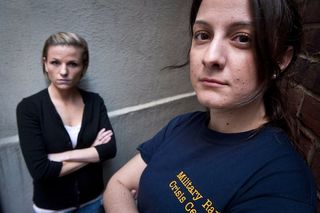
Sonalimisogyny_590The stoning to death of a pregnant woman named Farzana Iqbal by members of her family in broad daylight in Lahore, Pakistan, last week has prompted protests in that nation by human rights activists. Prime Minister Nawaz Sharif has announced an inquiry into the slaying that was apparently spurred by the 25-year-old woman marrying a man of whom her family did not approve. The man himself openly admitted to killing his first wife in order to marry Iqbal.

Just days after the horrific Pakistani incident, in neighboring India, two young girls were found raped and lynched in a village in Uttar Pradesh, shocking a nation already reeling from several high-profile rapes and killings of women.

In the wake of such sexual assaults in the Global South, American conservatives and liberals alike naively ask the question of what is it about the “cultures” of countries such as Pakistan, India and Afghanistan that generates such misogyny. Having been on the receiving end of such questions myself many times, I know how infuriating it is to have to explain patiently to well-meaning people that misogyny is not the unique purview of certain foreign cultures; rather, it is sadly universal. Furthermore, it is often U.S.-backed militarism that fosters it at home and abroad.

More here.

The mass of the Higgs boson may be telling us something profound and puzzling about the future of the universe

Jon Butterworth in The Guardian:

95c7f7af-70f5-42b6-878e-ccf7ac627b20-460x276Many explanations of the Higgs talk about wine bottles or Mexican hats. The idea is that the universe is rolling around in the lowest bit of an energy surface – in the dip in the brim of the hat, or at the outer edge of the base of the wine bottle, depending on your preferred analogy. The dip is the place where the energy is minimised. This makes the universe stable, since to go anywhere else on the surface would require an enormous amount of energy.

The masses of the fundamental particles, especially of the top quark and the Higgs boson, play a role in determining the shape of this surface. For some values of those masses, the brim of the hat is the lowest possible energy value and the universe is completely stable. For other values, the brim is the wrong shape and the universe is completely unstable. Since the universe seems to have lasted for 13.8 billion years, those values are in quite extreme contradiction with observation, even before you consider the particle masses.

There is a third possibility however, which is that the brim of the hat turns down again and there is another wiggle, another dip, which is even lower than the one the universe currently occupies. To get to this lower state, the universe has to go over a bump, which classically would require lots of energy, so the universe remains stable. But in quantum mechanics, there is a small possibility of “tunneling” through the bump, and finding the new, lower energy region. On a smaller scale, this tunneling effect is seen in radioactive decays and elsewhere.

More here.

Hitchens, Dawkins and Harris Are Old News: A Totally Different Atheism Is on the Rise

Chris Hall in AlterNet:

Screen_shot_2014-06-04_at_11.43.16_amMore and more, the strongest atheist voices are talking about nonbelief less as an end in itself, but as part of a larger conversation about social justice. It could hardly be any other way: atheism is growing not only in numbers, but in diversity. When Dawkins, Harris and Hitchens were at their most prominent, a frequent (and credible) criticism was that the faces of atheism were all white, male and affluent. To make the same claim now is to deliberately ignore some of the most vital atheist and skeptic voices that have emerged in the last 10 years.

Greta Christina, the author of Coming Out Atheist describes the changes in organized atheism: “[T]he movement has become much more diverse — not just in the obvious ways of gender, race, and so on, but simply in terms of how many viewpoints are coming to the table. The sheer number of people who are seen in some way as leaders… has gone up significantly…. And the increasing diversity in gender, race, class, and so on are important. We have a long way to go in this regard, but we're doing much, much better than we were. And that's showing up in our leadership. It's absurd to see Dawkins, Hitchens and Harris as representing all organized atheism — it always was a little absurd, but it's seriously absurd now.”

More here.

The Resurgence of Gender Inequality in China

Julia Lovell in The Guardian:

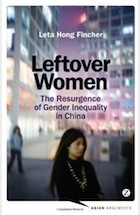
Leftover-Women-The-ResurgencLeftover Women should carry a health warning: this book will severely raise your blood pressure. Leta Hong Fincher's subject – researched through statistical analysis, sociological surveys and extensive first-hand interviewing – is the toxic vitality of sexism in China today.

The book's title is drawn from a vile state-sponsored media campaign of the same name, which is designed to browbeat educated, professional women into early marriages in the interests of safeguarding social stability. Since at least 2007, newspapers, magazines, websites and – perhaps most troublingly of all – the All-China Women's Federation (a government organisation founded in 1949 supposedly to defend women's rights) have aggressively pushed the idea that unmarried urban females over 27 are “leftover women”. These women may have university degrees and thriving careers but in the eyes of much of the state-controlled media they are essentially worthless without husbands and children. “Do leftover women really deserve our sympathy?” asked one article on the Women's Federation website. “Girls with an average or ugly appearance … hope to further their education in order to increase their competitiveness. The tragedy is they don't realise that, as women age, they are worth less and less, so by the time they get their MA or PhD, they are already old, like yellowed pearls.

More here.

the Harmonious Contradictions of Geoff Dyer

Kathryn Schulz in Vulture:

DyerConsider an F18 fighter jet: 60 feet from nose to tail, 45 feet from wing to wing, capable at full throttle of Mach 1.8—just a notch below 1,200 miles per hour—and currently aimed at the deck of an aircraft carrier, coming in to land. From its tail hangs a hook designed to catch a wire stretched across the landing area. The hook is six inches wide. The wire is an inch and a half thick. The plane will touch down at 234 feet per second. The runway is 780 feet long. If all goes well, the jet hits the deck, the hook hits the wire, and the plane stops dead in under three seconds. If all does not go well, it can go, as you would imagine, rather badly.

I have no evidence that Geoff Dyer opted to spend two weeks on an aircraft carrier out of a sense of existential identification. The way he tells it, no, it was simple: As a kid he loved model airplanes, military ones ­especially, Hurricanes and Spitfires and De Havillands and Phantoms. That kid grew up to be a constitutionally insubordinate British intellectual, but never mind; when a writers-in-residence program asked if there was a residence in which he might like to write, he requested an American aircraft carrier, and wound up on the USS George H.W. Bush, in the middle of the Arabian Sea. He should have felt right at home. Tom Wolfe, writing about the pioneers of the Space Age, famously described them as having the right stuff. But he got more specific about pilots who land on aircraft carriers: Those guys had “the will, the moxie, the illustrious, the all-illuminating stuff.” My thoughts exactly about Geoff Dyer, who has spent the last quarter­-century launching wildly improbable books out over the literary landscape. Occasionally, as with real jets, they miss and circle around. But mostly, electrifyingly, he lands them.

More here.

Sunday Poem

Con Brio

—i.m. Dolly Sayers

She blew in, a big noise from Odessa, turned
cradle, nursery, parlour, house into ever larger auditoria,
swelling with her belter alto through contralto
figure flowing from violin, viola via cello to double bass
twirled and slapped by dance hall players;
marriage jumped to the rhythm of her castanets,
percussionist in the kitchen, entire brass section
at social events, trumpeting achievements, major,
minor, of children, grandchildren, swung towards
you, a bell, the great clapper of her tongue, ringing
with amusement, indignation; youth’s smart glissandi
eventually slowing in age to adagio, notes lengthening,
diminishing until at last she sat, a breve upon a stave,
great mute bird on a wire feeling only its hum.

by John Sayers
from Magma Poetry

Saturday, June 7, 2014

Pope Francis Is Wrong About My Child-Free Life

1402048049487.cached

Amanda Marcotte in The Daily Beast (photo by Kim Kyung Hoon/Reuters):

My first instinct, as a deliberately childless person myself, upon reading Pope Francis’s remarks was to think, “If you think having children is so important, then why don’t you go first?” But while sarcasm is a satisfying hobby, it’s perhaps better to look to empirical science to answer the question of whether or not it’s actually true that childless people will be punished with loveless marriages and age into loneliness.

Luckily, there’s been a lot of research into both those questions. In fact, the question of whether or not having kids makes marriages happier or not is one that has been looked at again and again, to the point where you start to wonder if they’re trying to get a different result this time. The answer keeps coming back the same: Childless couples have happier marriages, on average.

Or, to be more specific, studies that measure the day-to-day satisfaction of parents shows that satisfaction with your marriage starts to decline rapidly when you have your first baby, goes up and down with the stresses of child-rearing (with a particular low point around adolescence), but it stays relatively low, only rising again after the kids move out of the house. The daily grind of child-rearing and the stress of sharing responsibility seem to be a big part of it. That may explain why mothers are less happy than fathers. After all,they spend more of their time with the children.

Nor is it true that childless people are doomed, as the pope warned, to be lonely and sad in their old age. A 2003 study that looked specifically at this question found that having children was no guarantee against loneliness in old age. After surveying nearly 4,000 people ages 50 to 84, researchers found no difference in the loneliness rates of people with children and people without children. Common sense should suggest the same. Relying on a phone call a week from your kids is hardly a panacea for loneliness. Non-lonely seniors are usually the ones with plenty of friends, and being able to make friends isn’t dependent on your status as a parent or not.

More here.

Mommy-Daddy Time

Download

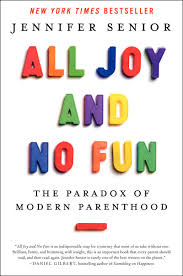
Zoë Heller reviews Jennifer Senior's All Joy and No Fun: The Paradox of Modern Parenthood, in the LRB:

The reputation of parenthood has not fared well in the modern era. Social science has concluded that parents are either no happier than people without children, or decidedly unhappier. Parents themselves have grown competitively garrulous on the subject of their dissatisfactions. Confessions of child-rearing misery are by now so unremarkable that the parent who doesn’t merrily cop to the odd infanticidal urge is considered a rather suspect figure. And yet, the American journalist Jennifer Senior argues in her earnest book about modern parenthood, it would be wrong to conclude that children only spoil their parents’ fun. Most parents, she writes, reject the findings of social science as a violation of their ‘deepest intuitions’. In fact, most parents – even the dedicated whingers – will say that the benefits of raising children ultimately outweigh the hardships.

Senior’s characterisation of parenthood as a wondrous ‘paradox’ – a nightmare slog that in spite of everything delivers transcendent joy – has gone down very well in America, where parents seem reassured to find a cheerful, pro-kids message being snatched from the jaws of sleep deprivation and despondency. The book spent six weeks on the bestseller list and has earned Senior the ultimate imprimatur of a lecturing gig at the TED conference. ‘All Joy and No Fun inspired me to think differently about my own experience as a parent,’ Andrew Solomon observed in his New York Times review. ‘Over and over again, I find myself bored by what I’m doing with my children: how many times can we read Angelina Ballerina or watch a Bob the Builder video? And yet I remind myself that such intimate shared moments, snuggling close, provide the ultimate meaning of life.’

It is possible, of course, that some parents are lying, or at least sentimentalising the truth, when they offer up this sort of rosy ‘end-of-the-day’ verdict on parenthood. (There are strong social and emotional incentives for not publicly expressing remorse about one’s reproductive choices.) But Senior rejects this surmise as unduly bleak. Having children, she contends, has always been a ‘high cost/high reward’ activity. If today’s parents appear to be having a horrible time, it is not because they aren’t getting the rewards, but because various aspects of modern life have conspired to make them feel the costs more acutely.

More here.

What It’s Like to Deliver Bad News for a Living

Carrie Seim in The Atlantic:

Badnews“I felt like the Grim Reaper,” said Brenda Christensen, recalling her role in the layoffs of thousands of employees from fallen computer giant Wang Laboratories back in the 1980s. At first her job had entailed awarding vacations and prizes to top sales performers. But on the verge of filing for bankruptcy protection, the company promoted her to inventorying assets in district offices (down to the pencils and staplers)—a sure harbinger of pink slips. “I went from Santa to Satan overnight,” she told me. “People knew why I was there. I was so feared and hated that some people literally ran out of their offices.” Receiving bad news is never one of life’s delights. But how is it for those whose job it is to deliver the bad news? How do they—consultants, oncologists, first responders, even wedding planners—survive doling out the rough stuff day after day?

Another study of more than 700 oncologists, presented by the American Society of Clinical Oncology in 2006, found 47 percent expressed negative emotions while breaking bad news to terminally ill patients, including feelings of depression, guilt, anxiety, stress, and emotional exhaustion. Additional research, including a 2013 study of 3,000 oncologists, shows increased burnout rates and cortisol levels, as well as immune system changes, in doctors delivering bad news.

…Experts who’ve studied the effects of bad news stress that a bungled, insensitive delivery can multiply its misery. “You can’t make it better,” said Dr. Nancy Davis, former chief of counseling services for the FBI. “But you can definitely make it worse.”

More here.

kinsley on greenwald

08KINSLEY-master675-1Michael Kinsley at The New York Times:

Greenwald doesn’t seem to realize that every piece of evidence he musters demonstrating that people agree with him undermines his own argument that “the authorities” brook no dissent. No one is stopping people from criticizing the government or supporting Greenwald in any way. Nobody is preventing the nation’s leading newspaper from publishing a regular column in its own pages dissenting from company or government orthodoxy. If a majority of citizens now agree with Greenwald that dissent is being crushed in this country, and will say so openly to a stranger who rings their doorbell or their phone and says she’s a pollster, how can anyone say that dissent is being crushed? What kind of poor excuse for an authoritarian society are we building in which a Glenn Greenwald, proud enemy of conformity and government oppression, can freely promote this book in all media and sell thousands of copies at airport bookstores surrounded by Homeland Security officers?

Through all the bombast, Greenwald makes no serious effort to defend as a matter of law the leaking of official secrets to reporters. He merely asserts that “there are both formal and unwritten legal protections offered to journalists that are unavailable to anyone else. While it is considered generally legitimate for a journalist to publish government secrets, for example, that’s not the case for someone acting in any other capacity.”

more here.

THE PLANETARY WRITING OF J. M. LEDGARD

PlanetaryJeffrey Zuckerman at The Quarterly Conversation:

The novels of J. M. Ledgard are, as he says in an interview with Philip Gourevitch, “an attempt at what I would call planetary writing.” In the shadow of “global novels” that only hint at an astonishingly interconnected world, it comes as a pleasant surprise to see that word: planetary. It seems scientific, but not clinical. Certainly not milquetoast nature writing: “it’s more political, more discarnate.” More conscious, perhaps, of the hundreds of forces that drive the visible world.

It is the planet we live on, more than any human consciousness or ambition, that anchors the two slim novels of J. M. Ledgard—Giraffe, which was acclaimed upon its 2006 publication, and Submergence, which despite its greater stature has been slower in finding an Anglophone audience since its British publication in 2011. Ledgard, who was born on the chilly Shetland Islands, has spent much of his working life writing forThe Economist and has been stationed thousands of miles away as a foreign correspondent in western America, central Europe, central Asia, and eastern Africa. It comes as no surprise, then, that Giraffe and Submergence owe their prose to the direct (and at times detail-dense) style of magazine reportage, nor that they’re set in various corners of the world—Kenya, France, the Czech Republic, Somalia. These books are every bit as cosmopolitan as their author.

more here.

Meadowland: The Private Life of an English Field

Patchwork-fields-012Tim Dee at The Guardian:

Halfway through this book, John Lewis-Stempel writes about a midsummer day he spent hand-scything a meadow on his farm in Herefordshire. He looks up and, surveying the scene, says: “Almost all the things I love are to do with grass. Geese, sheep, cows, horses. Even dogs eat grass.” On the same page he mentions two great farm-working poets, Robert Frostand John Clare, who found poems in the fields. “There is nothing,” he writes, “like working land for growing and reaping lines of prose.” And then, once again, he stoops to his tools until interrupted by a brown vole that tries to flee the scythe by running up his leg. The hay cutters “of yore”, he adds, tied string around their ankles to foil such rodent adventures.

Against the odds (agribusiness, the common agricultural policy, foot-and-mouth disease, bovine TB, the near extinction of the skylark and the lapwing), the pastoral is alive and (sort of) well in British letters. Western writing has been drawn to lines of mowers strung across a field since the first poems of Greece and, among the cutting men, there have long been those who went to mow seeking something other than a swath of useful drying grass. Pastoral literature grew up in fields such as Lewis-Stempel's and he joins an unlikely but distinctive parade of scythe-wielding, haymaking writers from the last 100 years that includes Tolstoy, DH Lawrence, John Fowles, John Berger, Ted Hughes and even, briefly, Franz Kafka.

more here.

An Inner Life

Barbara Kingsolver in The New York Times:

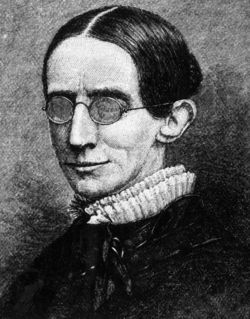
King“What Is Visible,” a fictional biography, opens with two disparate glimpses of one life. A year before her death, elderly Laura Bridgman meets a busy-handed child named Helen Keller. Next we witness a much earlier historic encounter when Laura, at 12, meets Charles Dickens. The elder Laura is grumpy; the adolescent loops between self-aggrandizement and epic self-doubt. We’re asked to forgive all, because of circumstances more dire than any invented by Dickens or borne by Keller. As a baby, Laura suffered an illness that took her sight, hearing, and senses of smell and taste.

Historical fiction may be the literary equivalent of cilantro; consumers tend to love or hate it irrationally, and rare is the artist who can rally a conversion. I’m of the former persuasion, keen for the surprise bits of fact that shake out of a well-researched story. The first-time novelist Kimberly Elkins has done her job here, giving the reader to know how the doilies on furniture arms earned the bizarre name “antimacassars”; that Braille was a French invention initially condemned by some American educators of the blind; that relations between congressional adversaries have been worse than they are now. (In 1856, on the Senate floor, Representative Preston Brooks beat Senator Charles Sumner nearly to death with his cane.) The novel dishes up dirt on a pantheon of 19th-century heroes of civil reform, including Samuel Gridley Howe, Julia Ward Howe, Sumner and Dorothea Dix. And it revives the memory of a forgotten public figure: 50 years before Helen Keller there really was a Laura Bridgman.

More here.

Four New York Times columnists and Malcolm Gladwell get really high: what could possibly go wrong?

Sarah Jeong in The Guardian:

Paul Krugman snorts up crushed Adderall and re-reads Thomas Piketty's Capital in the Twenty-First Century

Inequality in America is at an all-time high. The golden age of Keynesianism has dissolved into darkness. But no cadre of plutocrats can keep me or Thomas Piketty in check and holy shit I feel like a fucking champion right now.

Some may allege errors in Piketty's work, but their assertions are inherently fallacious. You see, I can out-analyze you with one hand tied behind my back while pacing frantically back and forth trying to pronounce Piketty's name while dry-mouthed. Pik-etty. Piketty Piketty Piketty Piketty.

Irregular data? I'll show you irregular. Feel my fucking heartbeat.

I'd hardly go so far as to claim that a certain columnist at the Financial Times is a lapdog for the oligarchic elite. But his irresponsible claims have been trumpeted throughout the media, despite fundamental fucking flaws in his data analysis … GOD I want to SHOUT at the TOP OF MY LUNGS RIGHT NOW.

Cui bono? The oligarchs. As I already told you, in 2008.

Hey, who wants to run down the street and jack Larry Summers's car?

More here.

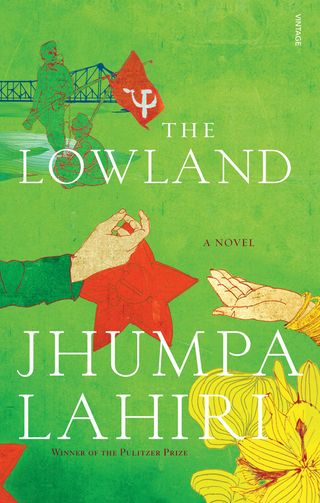
Reading Jhumpa Lahiri Politically

Nivedita Majumdar in Jacobin:

CovertJhumpa Lahiri does not like to be categorized as an immigrant writer, and her latest novel, The Lowland, is her strongest argument against that pigeonhole. Her discomfort with the label is understandable. After all, she has refreshingly little in common with diasporic writers like Salman Rushdie, Bharati Mukherjee, or Chitra Divakaruni. Unlike them, she does not brandish her immigrant status as an epistemologically superior vantage point, nor is she anxious to prove herself as a worthy native informant. Her writing is free of the exotic.

A second-generation immigrant, she is firmly grounded in the culture in which she was raised. Yet, growing up with parents for whom home would always be elsewhere, she gets the immigrant experience, especially its melancholia. Of what she knows, she writes masterfully. Indeed, prior to The Lowland, her fiction has been almost exclusively an engagement with immigrant angst in its many hues.

For The Lowland, partly set in Calcutta in the sixties and seventies, during the throes of the Maoist Naxalite movement, her ambitions are of a different order. She steps out of the sphere of navel-gazing immigrant fiction and frames the novel with a political movement of which she has no experiential knowledge.

More here.