Tuesday Poem

Brand New Ancients
.

In the old days
the myths were the stories we used to explain ourselves.
But how can we explain the way we hate ourselves,
the things we’ve made ourselves into,
the way we break ourselves in two,
the way we overcomplicate ourselves?

But we are still mythical.
We are still permanently trapped
somewhere between the heroic and the pitiful.
We are still godly;
that’s what makes us so monstrous.
But it feels like we’ve forgotten
.. we’re much more than the sum of all
the things that belong to us.

The empty skies rise
over the benches where the old men sit –
they are desolate
and friendless
and the young men spit;
inside they’re delicate, but outside
they’re reckless and I reckon
that these are our heroes,
these are our legends.
.
.
by Kate Tempest
from Brand New Ancients
Publisher: Picador, London, 2013

For the Monarch Butterfly, a Long Road Back

Liza Gross in The New York Times:

ButterDara Satterfield hadn’t planned to conduct experiments at the Texas State Fair, but that is where her study subjects showed up last month. She was still in Georgia when they arrived, so she hurriedly packed her car, then drove all night. As she pulled into the fairgrounds in Dallas the next morning, they were feasting on nectar-filled blossoms of frostweed alongside the Wild West Pet Palooza. The hungry travelers, like most monarch butterflies that migrate from breeding grounds in the northern United States and southern Canada, had stopped in Texas to consume enough calories to power the last leg of their flight to the oyamel fir forests of central Mexico and survive five months overwintering there. So many monarchs blanketed the frostweed that Ms. Satterfield, a 27-year-old doctoral student at the Odum School of Ecology at the University of Georgia, allowed herself to hope that one of the world’s most celebrated migrations could be revived.

Less than 20 years ago, a billion butterflies from east of the Rocky Mountains reached the oyamel firs, and more than a million western monarchs migrated to the California coast to winter among its firs and eucalypts. Since then, the numbers have dropped by more than 90 percent, hitting a record low in Mexico last year after a three-year tailspin. Preliminary counts of migrants this fall are encouraging. “But we’re definitely not out of the woods,” said Ms. Satterfield, who studies human effects on migratory behavior. “One good year doesn’t mean we’ve recovered the migration.” To make matters worse, she and her graduate adviser, Sonia Altizer, a disease ecologist at Georgia, fear that well-meaning efforts by butterfly lovers may be contributing to the monarch’s plight.

More here.

Monday, November 17, 2014

Huw Price to Judge 5th Annual 3QD Philosophy Prize

Update 22 Dec: Winners announced here.

Update 01 Dec: Finalists have been announced here.

Update 26 Nov: Voting round now closed, semifinalists announced here.

Update 20 Nov: Voting round now open, will close on 25 Nov 11:59 pm EST. Go here to vote.

Dear Readers, Writers, Bloggers,

We are very honored and pleased to announce that Huw Price has agreed to be the final judge for our 5th annual prize for the best blog and online-only writing in the category of philosophy. Details of the previous four philosophy (and other) prizes can be seen on our prize page.
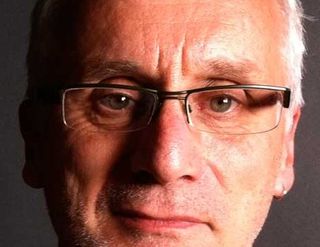
ScreenHunter_878 Nov. 10 11.42Huw Price is Bertrand Russell Professor of Philosophy and a Fellow of Trinity College at the University of Cambridge. He was previously ARC Federation Fellow and Challis Professor of Philosophy at the University of Sydney, where from 2002—2012 he was Founding Director of the Centre for Time. In Cambridge he is co-founder, with Martin Rees and Jaan Tallinn, of the Centre for the Study of Existential Risk.

His publications include Facts and the Function of Truth (Blackwell, 1988; 2nd. edn. OUP, forthcoming), Time's Arrow and Archimedes' Point (OUP, 1996), Naturalism Without Mirrors (OUP, 2011) and a range of articles in journals such as Nature, Science, Philosophical Review, Journal of Philosophy, Mind and British Journal for the Philosophy of Science. He is also co-editor (with Richard Corry) of Causation, Physics, and the Constitution of Reality: Russell's Republic Revisited (OUP, 2007). His René Descartes Lectures (Tilburg, 2008) have recently appeared as Expressivism, Pragmatism and Representationalism (CUP, 2013), with commentary essays by Simon Blackburn, Robert Brandom, Paul Horwich and Michael Williams.

He is a Fellow of the British Academy, a Fellow and former Member of Council of the Australian Academy of the Humanities, and a Past President of the Australasian Association of Philosophy. He was consulting editor for the Stanford Encyclopedia of Philosophy from 1995–2006, and is an associate editor of The Australasian Journal of Philosophy and a member of the editorial boards of Contemporary Pragmatism, Logic and Philosophy of Science, the Routledge International Library of Philosophy, and the European Journal for Philosophy of Science.

As usual, this is the way it will work: the nominating period is now open. There will then be a round of voting by our readers which will narrow down the entries to the top twenty semi-finalists. After this, we will take these top twenty voted-for nominees, and the editors of 3 Quarks Daily will select six finalists from these, plus they may also add up to three wildcard entries of their own choosing. The three winners will be chosen from these by Huw Price.

The first place award, called the “Top Quark,” will include a cash prize of 500 dollars; the second place prize, the “Strange Quark,” will include a cash prize of 200 dollars; and the third place winner will get the honor of winning the “Charm Quark,” along with a 100 dollar prize.

(Welcome to those coming here for the first time. Learn more about who we are and what we do here, and do check out the full site here. Bookmark us and come back regularly, or sign up for the RSS Feed.)

The schedule and rules:

November 10, 2014:

  • The nominations are opened. Please nominate your favorite blog entry by placing the URL for the blog post (the permalink) in the comments section of this post. You may also add a brief comment describing the entry and saying why you think it should win. Do NOT nominate a whole blog, just one individual blog post.
  • Blog posts longer than 4,000 words are strongly discouraged, but we might make an exception if there is something truly extraordinary.
  • Each person can only nominate one blog post.
  • Entries must be in English.
  • The editors of 3QD reserve the right to reject entries that we feel are not appropriate.
  • The blog entry may not be more than a year old. In other words, it must have been first published after November 9, 2013.
  • You may also nominate your own entry from your own or a group blog (and we encourage you to).
  • Guest columnists at 3 Quarks Daily are also eligible to be nominated, and may also nominate themselves if they wish.
  • Nominations are limited to the first 100 entries.
  • Prize money must be claimed within a month of the announcement of winners.

November 17, 2014

  • The nominating process will end at 11:59 PM (NYC time) of this date.
  • The public voting will be opened soon afterwards.

November 25, 2014

  • Public voting ends at 11:59 PM (NYC time).

December 1, 2014

  • The finalists are announced.

December 22, 2014

  • The winners are announced.

One Final and Important Request

If you have a blog or website, please help us spread the word about our prizes by linking to this post. Otherwise, post a link on your Facebook profile, Tweet it, or just email your friends and tell them about it! I really look forward to reading some very good material, and think this should be a lot of fun for all of us.

Best of luck and thanks for your attention!

Yours,

Abbas

Sunday, November 16, 2014

The Knowledge, London’s Legendary Taxi-Driver Test, Puts Up a Fight in the Age of GPS

Jody Rosen in NYTimes' T Magazine Blog:

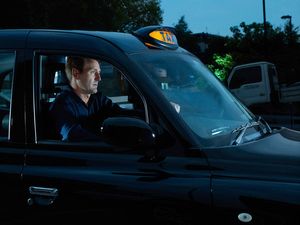
07knowledge-rosen-slide-NQK2-articleLarge-v2McCabe had spent the last three years of his life thinking about London’s roads and landmarks, and how to navigate between them. In the process, he had logged more than 50,000 miles on motorbike and on foot, the equivalent of two circumnavigations of the Earth, nearly all within inner London’s dozen boroughs and the City of London financial district. He was studying to be a London taxi driver, devoting himself full-time to the challenge that would earn him a cabby’s “green badge” and put him behind the wheel of one of the city’s famous boxy black taxis.

Actually, “challenge” isn’t quite the word for the trial a London cabby endures to gain his qualification. It has been called the hardest test, of any kind, in the world. Its rigors have been likened to those required to earn a degree in law or medicine. It is without question a unique intellectual, psychological and physical ordeal, demanding unnumbered thousands of hours of immersive study, as would-be cabbies undertake the task of committing to memory the entirety of London, and demonstrating that mastery through a progressively more difficult sequence of oral examinations — a process which, on average, takes four years to complete, and for some, much longer than that. The guidebook issued to prospective cabbies by London Taxi and Private Hire (LTPH), which oversees the test, summarizes the task like this:

To achieve the required standard to be licensed as an “All London” taxi driver you will need a thorough knowledge, primarily, of the area within a six-mile radius of Charing Cross. You will need to know: all the streets; housing estates; parks and open spaces; government offices and departments; financial and commercial centres; diplomatic premises; town halls; registry offices; hospitals; places of worship; sports stadiums and leisure centres; airline offices; stations; hotels; clubs; theatres; cinemas; museums; art galleries; schools; colleges and universities; police stations and headquarters buildings; civil, criminal and coroner’s courts; prisons; and places of interest to tourists. In fact, anywhere a taxi passenger might ask to be taken.

If anything, this description understates the case. The six-mile radius from Charing Cross, the putative center-point of London marked by an equestrian statue of King Charles I, takes in some 25,000 streets. London cabbies need to know all of those streets, and how to drive them — the direction they run, which are one-way, which are dead ends, where to enter and exit traffic circles, and so on. But cabbies also need to know everything on the streets. Examiners may ask a would-be cabby to identify the location of any restaurant in London. Any pub, any shop, any landmark, no matter how small or obscure — all are fair game. Test-takers have been asked to name the whereabouts of flower stands, of laundromats, of commemorative plaques. One taxi driver told me that he was asked the location of a statue, just a foot tall, depicting two mice sharing a piece of cheese. It’s on the facade of a building in Philpot Lane, on the corner of Eastcheap, not far from London Bridge.

If you go to LTPH headquarters, where the examinations are conducted, you will behold a grim bureaucratic scene, not much different than the one you might find in an office devoted to tax audits: nervous test-takers, dressed in suits, shuffling into one-on-one sessions with stone-faced examiners. But for more than a century, since the first green badge was issued to a hackney cabman piloting a horse-drawn carriage, the test has been known by a name that carries a whiff of the occult: the Knowledge of London.

Read the full article here.

My Hacker, My Source, My Snitch

Gabriella Coleman on Medium:

1-cK4e7bfrzUe7dH0SpWBRggFor six years I have been studying the protest ensemble Anonymous. Some challenges come with the job. By definition, Anonymous is a faceless collective. As many participants in this milieu conceal their identities carefully, it was impossible to tell who lay behind the mask.

Nevertheless, since most Anons engaged with each other using pseudonymous nicknames, I interacted with a stable cast of characters on the chat channels where I did the great bulk of my ethnographic research on Anonymous. People developed reputations, and their personalities and linguistic idiosyncrasies shone through their text-based conversations.

But Sabu was unique.

Even before his name, picture, and the details of his life were splattered on a FOX news article/website on March 6, 2012 — the day the bombshell news was released that this charismatic figure was working as an informant for the FBI — Hector Monsegur, better known as “Sabu,” clearly stood out. Both on Twitter and during chat conversations, Sabu exuded a sort of defiant and revolutionary attitude. His calls for people to rise up were routinely directed towards his “brothers” and “sisters.” He would liberally pepper his conversation with the word “nigger”; and while the term is popular among Internet trolls, Sabu used it without even a trace of irony or knowing political incorrectness. Rather than a rich, alienated, white, basement-dwelling teen, Sabu sounded like a street-hardened brother. Was it possible that his alienation and anger were borne not of middle-class anomie, but instead of poverty and racial marginalization?

The answer turned out to be a definitive yes.

Read the rest here.

What next for independence movements in Europe?

Eve Hepburn in openDemocracy:

10411733_10152275143571426_938398523678448511_n[1]What should the EU do? At the moment, the official position is to keep its head down and say nothing about the internal affairs of one of its valued member-states. But will this strategy work when more independence referendums – official or unofficial – add more cracks in the sovereignty of the EU’s currency member-states?

For Scotland and Catalonia are not the only cases of independence aspirations in the EU. The next country to watch, without a doubt, is Italy, whereby a poll released last month by Demos showed that 31% of Italians wanted their region to become independent, a figure that was significantly higher in several autonomist regions.

The highest was Veneto, a wealthy northern region of Italy with a strong identity, where 53% of survey participants preferred secession. This reflects the success of the nationalist parties in Veneto – most notably the governing Liga Veneta-Lega Nord (LV-LN) – in agitating for independence. The regional assembly passed a bill in June this year to hold a referendum on independence, and President of the Region Luca Zaia of the LNV promised that he would see this through.

These events follow an unofficial referendum in Veneto earlier this year in March, supported by several nationalist parties, whereby 89% of participants voted to leave Italy. While the legitimacy of the poll is questionable (as many Latin Americans of Venetian descent voted), another surveyby La Repubblica has confirmed the Demos poll, showing that about 55% of Venetians want independence. And if and when the plebiscite is held, given these high numbers in favour of secession, there may be a greater possibility of success than in Catalonia or Scotland. However, everything will ultimately down to the Italian Constitutional Court which, like its Spanish counterpart, views consultative referenda on the fragmentation of the Italian state as illegal.

An unofficial referendum was also held in the German-speaking province of South Tyrol in 2013, which lies on the northern periphery of Italy and which was previously annexed from Austria. Here, over 90% of participants expressed their support for self-determination, and the pro-independence Sud-Tiroler Freiheit went on to win its highest share of the vote in the subsequent regional elections. The issue of secession from Italy is unlikely to go away, not least because it is the ultimate goal of the South Tyrol People’s Party, which has ruled the province throughout the post-war period.

Read the original article here.

Should the United States Declare Books an ‘Essential Good’?

Each week in Bookends, two writers take on questions about the world of books. The French government has declared books an “essential good.” This week, Daniel Mendelsohn and Mohsin Hamid debate whether the United States should do the same.

Daniel Mendelsohn and Mohsin Hamid in the New York Times:

Daniel Mendelsohn:

13mendelsohn-bookends-tmagSFAs even big chains have faltered here, every block in central Paris seems to sprout at least two small, intelligently stocked bookshops.

“I hope this letter doesn’t give you the impression that I’ve quite lost my mind with delirium over Paris and France,” wrote Joseph Roth, the Austrian journalist and novelist, in a letter to his editor soon after being assigned to Paris in 1925. Some hope. “Paris,” he gushed about the city that would become his home, “is the capital of the world.”

It still feels that way if you’re a writer. “You’re going to feel like you’ve died and gone to heaven,” a novelist friend of mine, unconsciously echoing Roth, knowingly murmured in 2007, when one of my books came out in a French translation. I soon saw what he meant. In the United States, there is one nationally broadcast radio program that has significant coverage of books — NPR’s “Fresh Air,” which book publicists fight over like pi-dogs over a picked bone. In Paris, I soon lost count of how many in-depth radio and TV shows, some as long as an hour, I taped or broadcast live at the circular, weirdly sci-fi-looking Maison de la Radio…

Mohsin Hamid:

Bookends-Mohsin-Hamid-tmagSFIn the balance between our rights as consumers and as producers — as laborers — the pendulum has swung too far one way.

In France, books are treated as an “essential good” like food and utilities, subject to low taxes. At the same time, price discounts on books are limited to 5 percent and can’t be offered in conjunction with free shipping. As a result, it costs pretty much the same to buy a book everywhere in France, including online, and independent bookshops are holding their own against larger competitors.

It’s hard to imagine similar laws being enacted in the United States. Books have no privileged position in the American system of law and commerce. We, the workers of the book business — writers, agents, editors, designers, publicists, booksellers and others — often bemoan this fact. Books, it seems to us, are different. We forgo higher wages doing other things because we love what we do, because we believe in what we do. Surely our industry deserves special treatment…

More here.

Can Climate Change Cure Capitalism?

Elizabeth Kolbert in the New York Review of Books:

71kYW4vdiHL._SL1500_Every fall, an international team of scientists announces how much carbon dioxide humanity has dumped into the atmosphere the previous year. This fall, the news wasn’t good. It almost never is. The only time the group reported a drop in emissions was 2009, when the global economy seemed on the verge of collapse. The following year, emissions jumped again, by almost 6 percent.

According to the team’s latest report, in 2013 global emissions rose by 2.3 percent. Contributing to this increase were countries like the United States, which has some of the world’s highest per capita emissions, and also countries like India, which has some of the lowest. “There is no more time,” one of the scientists who worked on the analysis, Glen P. Peters of the Center for International Climate and Environmental Research in Oslo, told The New York Times. “It needs to be all hands on deck now.”

A few days after the figures were released, world leaders met in New York to discuss how to deal with the results of this enormous carbon dump. Ban Ki-Moon, the secretary-general of the United Nations, had convened the summit to “catalyze climate action” and had asked the leaders to “bring bold announcements.” Once again, the news wasn’t good. It almost never is.

“There is a huge mismatch between the magnitude of the challenge and the response we heard here today,” Graça Machel, Nelson Mandela’s widow, told the summit in the final speech of the gathering. “The scale is much more than we have achieved.” This mismatch, which grows ever more disproportionate year after year, summit after summit, raises questions both about our future and about our character. What explains our collective failure on climate change? Why is it that instead of dealing with the problem, all we seem to do is make it worse?

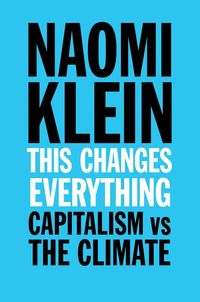
These questions lie at the center of Naomi Klein’s ambitious new polemic, This Changes Everything: Capitalism vs. the Climate. “What is wrong with us?” Klein asks near the start of the book. Her answer turns upside-down the narrative that the country’s largest environmental groups have been telling.

More here.

Extreme Wealth Is Bad for Everyone—Especially the Wealthy

Michael Lewis in The New Republic:

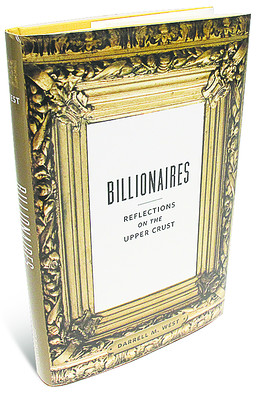
BN-EO922_bkrvbi_DV_20140917160406The grotesque inequality between the haves and the have-nots is seldom framed as a problem that the haves might privately help to resolve. Instead, it is a problem the have-nots must persuade their elected officials to do something about, presumably against the wishes of the haves. The latest contribution to the discussion comes from Darrell West, a scholar at the Brookings Institution. “Wealth—its uses and abuses—is a subject that has intrigued me since my youth in the rural Midwest,” West writes in the introduction to his study of billionaires. From his seat in Washington, D.C., he has grown concerned about the effects on democracy of a handful of citizens controlling more and more wealth.

Drawing on the work of Thomas Piketty and Emmanuel Saez, West notes that the concentration of wealth in the top 1 percent of American citizens has returned to levels not seen in a century. One percent of the population controls a third of its wealth, and the problem is only getting worse: from 1979 to 2009 after-tax income for the top 1 percent rose by 155 percent while not changing all that much for everyone else. By another measure of inequality, which compares the income controlled by the top 10 percent with that of the bottom 40 percent, the United States is judged to come forty-fourth out of the eighty-six nations in the race, and last among developed nations.

More here.

Bad reasons to read Shakespeare

Alka Sehgal Cuthbert in Spiked:

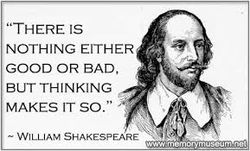
ImagesBad reason number one: Shakespeare’s good for activating neural activity. That’s right, certain academics have been conducting all manner of neuroscientific experiments on Shakespeare readers – they’ve even come up with a piece of research entitled Event-Related Potential Characterisation of the Shakespearean Functional Shift in Narrative Sentence Structure. I kid you not. By observing the amount and location of neural activity in people’s brains while reading Shakespeare compared to lesser playwrights, the study found that, lo and behold, there’s more going on in the brain when people read the bard. Apparently, this is because he uses words in unusual and unexpected combinations. You don’t need to be a neuroscientist or literary expert to see that this insight is banal at best. There are easier and quicker ways, I’m sure, to boost your neural activity if that’s what you really want to do. Bad reason number two: reading great literature can make us better people, more empathetic and more compassionate. For example, psychologists David Comer Kidd and Emanuele Castano applied ‘theory-of-mind techniques’ to people who had been randomly assigned either popular and non-fiction books or literary classics. They ‘found’ that the latter group was better at identifying emotions in others.

…An important and worthwhile aspect of reading literature is that it demands we interpret the work. This involves considering both its objective form and the contents of our subjectivity. It involves making judgements based on our interpretations. This capacity to interpret and understand for ourselves, rather than take something as given, is something we can bring to bear on other areas of life, including attempts by academics to justify art in terms of science or moral virtue. If we permit these bad reasons to dominate the way we understand and justify reading Shakespeare, we go against his own profound humanism.

More here.

How to Study the Brain

Marcus, Marblestone and Freeman in Chronicle of Higher Education:

“As humans, we can identify galaxies light years away, we can study particles smaller than an atom. But we still haven’t unlocked the mystery of the three pounds of matter that sits between our ears.” —President Obama, April 2, 2013

Photo_56389_wide_largeThe human brain contains roughly 86 billion neurons and trillions, perhaps hundreds of trillions, of intricate interconnections among those neurons. There are hundreds, maybe thousands of different kinds of cells within the brain. And—after nearly two centuries of research—exactly zero convincing theories of how it all works. Why is it so hard to figure out how the brain functions, and what can we do to face the challenges? The time to address these questions is now; the quotation above from the president came as he announced a projected 12-year project known as the BRAIN Initiative, and a few months earlier Europe announced big steps of its own, a 1.2-billion-euro effort to simulate the human brain. China, Japan, and a number of nations are also planning major investments. There is real reason to believe that the field is on the verge of a number of methodological breakthroughs: Soon we will be able to study the operation of the brain in unprecedented detail, yielding orders of magnitude more data than the field has ever seen before. And that is a good thing. On virtually any account, neuroscience needs more data—a lot more data—than it has.

…Neuroscience has been around for roughly two centuries, but progress remains painfully slow. We still don’t know how the brain works, and our categories for analyzing things like brain injuries and mental illness range from vague to antediluvian. As the neurosurgeon Geoffrey Manley, at the University of California at San Francisco, recently pointed out at a White House-sponsored meeting, traumatic brain injuries are still sorted into just three categories: “mild,” “moderate,” and “severe”; the field still has no reliable way of being more precise in predicting whether someone is likely to fully recover cognitively from a severe concussion. With over half a billion people around the world suffering from debilitating brain disorders, whether depression, schizophrenia, autism, Alzheimer’s disease, or traumatic brain disorder, it is no exaggeration to say that significant progress in neuroscience could fundamentally alter the world. But getting there will require more than just big data alone. It will require some big ideas, too.

More here.

Sunday Poem

Matins: Annunciation

Force eight from Lundy and the Irish Sea
in the dark moon of the solstice.
Alarmed awake at midnight, sleet slashing
across the window glass, blurring the street-lit world.
Packing the van in drenched Jack Pyke:
Lazerlight lamp-kit, slip-leads, dogs.
The long drive east to the ditch-cut flatlands.
Sleet strafing down. Wind howling in the hawthorns.
Shivering long-dogs, ears erect. The thousand foot
halogen beam. Green-eyes in hedge-bottoms.
Transfixed conies. Dogs running down the beam.
Conies dangling in the Deben double V.
Back to the van. Bag the necked and bladdered conies.
Towel and box the dogs. Peel off the drenched Jack Pyke.
The cold drive home in the dark moon of the solstice,
sleet slurring the view through the wiping-windscreen,
blurring the headlamped world.
.

by Steve Ely
From: Oswalds Book of Hours
Smokestack Books, Middlesborough, 2013

Saturday, November 15, 2014

Why Does Malala Yusufzai’s Nobel Bother So Many On The Left?

Pervez Hoodbhoy in Outlook:

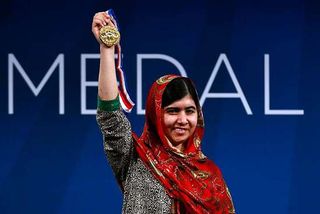
Malala-Yousafzai_20141022.jpgArundhati Roy’s charm and lucidity have iconized her in the world of left-wing politics. But, asked by Laura Flanders what she made of the 2014 Nobel Prize, she appeared to beswallowing a live frog:

“Well, look, it is a difficult thing to talk about because Malala is a brave girl and I think she has even recently started speaking out against the US invasions and bombings…but she’s only a kid you know and she cannot be faulted for what she did….the great game is going on…they pick out people [for the Nobel Prize].”

For one who has championed people's causes everywhere so wonderfully well, these shallow, patronizing remarks were disappointing.

Farzana Versey, Mumbai based left-wing author and activist, was still less generous last year. Describing Malala as “a cocooned marionette” hoisted upon the well-meaning but unwary,Versey lashed out at her for, among other things, raising the problem of child labour at her speech at the United Nations: “it did not strike her that she is now even more a victim of it, albeit in the sanitized environs of an acceptable intellectual striptease.”

But hang on a bit! This “kid” and “cocooned marionette” did not achieve world-wide admiration for opposing US-led wars or child labour or for a thousand and one other such good-and-great things. The bullet that smashed through her skull came because she opposed the Pakistani Taliban’s edict that all education for girls must end forever in the Swat valley after 15 September 2009, and her vigorous campaign for every girl child’s right to education.

It is perfectly clear why Malala has had to be damned to eternity by her left-wing critics: she has been photographed in the company of men judged to be villains: Barack Obama, Gordon Brown, Ban Ki Moon, Richard Holbrooke, and others. It is also obvious that she could not have won the Nobel peace prize—which is always an intensely political affair—but for support from the highest quarters in the western world. Consequently many on the left have easily dismissed her condemnation of drone strikes in Pakistan, as well as the $50,000 from her Nobel Prize money which she gave for rebuilding Gaza schools, as thin ploys aimed at image building.

More here.

‘Tennessee Williams,’ by John Lahr

16Bailey-master495Blake Bailey at the New York Times:

Tennessee Williams’s career began and ended very badly. The boffo finish of his first Broadway-bound play, “Battle of Angels” (1940), was a big onstage fire — a special effect that generated so much smoke a number of theatergoers fainted while others bolted for the exits. “If ever the professional debut of a major playwright was a greater fiasco,” John Lahr writes in his new biography of Williams, piquantly subtitled “Mad Pilgrimage of the Flesh,” “history does not record it.” Five years and a lot of crummy jobs later, Williams clawed his way back with a play that would make him famous, “The Glass Menagerie,” whose premiere almost proved an even bigger disaster. Laurette Taylor, plucked from a long alcoholic oblivion to play Amanda Wingfield, was found an hour and a half before opening curtain in an alley outside the stage door, soaking wet in the rain and all but dead drunk. Occasionally pausing to vomit in a bucket offstage, she gave the performance of her life and thus saved our greatest postwar playwright from almost certain ruin.

“Well, Mrs. Williams,” the raffish actress remarked to the author’s mother, Edwina, after the Chicago premiere, “how did you like yourself?” Whether Edwina had sufficient self-awareness to recognize her own maundering about (say) “seventeen! — gentleman callers!” is doubtful, but she was indeed Amanda in the flesh: a doughty chatterbox from Ohio who adopted the manner of a Southern belle and eschewed both drink and sex to the greatest extent possible.

more here.