THE TEENAGER’S SENSE OF SOCIAL SELF

Sarah-Jayne Blakemore in Edge:

Blakemore640I'm Sarah-Jayne Blakemore from University College London. Today I'm going to be talking about the adolescent brain, which is the focus of my lab's research. I'm going to talk about the history of this young area of science, and I'll also tell you about some of the current questions for the future in this area. I did my PhD on schizophrenia, and I also did a post-doc on schizophrenia. I became interested in the fact that schizophrenia is a devastating psychiatric disease that has its onset right at the end of adolescence. Normally people develop schizophrenia, on average, between about 18 and 25 years. This is interesting because it's a developmental disorder, but it develops much later than most developmental disorders. I became interested in whether that might be something to do with brain development during the teenage years going wrong in people who go on to develop schizophrenia.

This was about 12 years ago. Back then, I delved into the literature and, to my surprise, there was little known about how the human teenage brain develops. There were a handful of studies back in the year 2002, a small handful, but they were intriguing because even though there were only a few of them, they all pointed to significant and protracted development of the brain right throughout adolescence and into the 20s. This was an interesting finding because, prior to those papers, most neuroscientists would have assumed, and the dogma at the time I was an undergraduate and a graduate, was that the human brain stops developing some time in childhood and doesn't change much after mid to late-childhood. What these papers suggested was that the dogma was completely wrong. In fact, the human brain continues to develop significantly across almost the whole cortex throughout the teenage years, and even into the 20s.

More here.

Serial is showing white people how to talk about non-white people

Jeff Yang in Quartz:

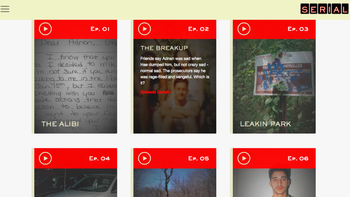
SerialThat’s one way of looking at Koenig’s enterprise—as pure cultural tourism, exploitative of the people and communities involved for the sake of streaming-audio melodrama. And it’s not an inaccurate one, either: There’s something deeply uncomfortable about how the show treats these people — the Korean American deceased, the Pakistani American convicted killer, the black friend whose testimony led to that conviction, and all of their friends and loved ones—as mere characters, “colorful” in both senses of the word, for the sake of engaging and enthralling millions of listeners each week. Families have been destroyed by this case. A young man has spent over a decade in prison. And there is, still and forever, a dead young woman, who no doubt would have liked to be remembered for more than just her death (and her Sweet Valley High-esque diary).

But as Kang himself writes, there’s a more charitable way to view the podcast—“one in which Koenig has been intentionally presented as a quixotic narrator with Dana, her occasional sidekick on the show, playing the role of Sancho Panza,” he notes, admitting that “There’s ample evidence that this is what’s the show is striving for.”

This, to me, is the core of the show’s appeal, and the reason why I, like millions of other listeners, have become obsessively fascinated with it. Yes, there’s something a little freaky and white-savior-complex-y about “Serial.” But throughout the series, Koenig has very consciously forefronted her ethno-cultural ignorance, the things that compromise her as a reporter and an actor in this drama, in ways that I think very few white journalists choose to do.

Read the full article here.

The Oxford Dictionaries Word of the Year is… vape

From the website of the Oxford Dictionaries:

ScreenHunter_878 Nov. 21 17.12So, what does vape mean? It originated as an abbreviation of vapour or vaporize. The OxfordDictionaries.com definition was added in August 2014: the verb means ‘to inhale and exhale the vapour produced by an electronic cigarette or similar device’, while both the device and the action can also be known as a vape. The associated noun vaping is also listed.

As e-cigarettes (or e-cigs) have become much more common, so vape has grown significantly in popularity. You are thirty times more likely to come across the word vapethan you were two years ago, and usage has more than doubled in the past year.

Usage of vape peaked in April 2014 – as the graph below indicates – around the time that the UK’s first ‘vape café’ (The Vape Lab in Shoreditch, London) opened its doors, and protests were held in response to New York City banning indoor vaping. In the same month, the issue of vaping was debated by The Washington Post, the BBC, and the British newspaper The Telegraph, amongst others.

More here.

Your Inner Feather

ScreenHunter_877 Nov. 21 15.14

Carl Zimmer in The Loom:

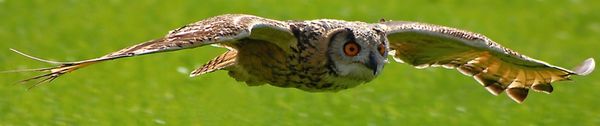
Feathers are like eyes or or hands. They’re so complex, so impressive in their adaptations, so good at getting a job done, that it can be hard at first to believe they evolved. Feathers today are only found on birds, which use them to do things like fly, control their body temperature, and show off for potential mates. The closest living relatives of birds–alligators and crocodiles–are not exactly known for their plumage. At least among living things, the glory of feathers is an all-or-nothing affair.

But the more we get to know feathers, the more we can appreciate how they evolved. The general rule is that complex things–be they feathers, hands, or eyes–take a very long time to evolve. As I wrote in National Geographic in 2011, the fossil record has gone a very long way in helping us to understand how feathers took on the form we see today. Birds evolved from dinosaur ancestors, and those ancestors already had feathers. Feathers started out as simple filaments, turning to fuzz, and then diversifying into a lot of different forms–including the ones that eventually let birds take to the air.

Now a new study in the journal Molecular Biology and Evolution offers an even deeper look into the history of feathers.

More here.

lord byron’s infidelity

From DelanceyPlace:

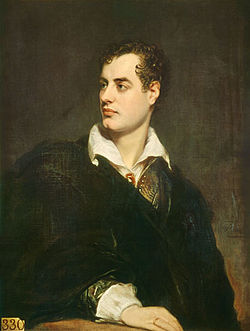
ByronToday's selection — from The Innovators by Walter Isaacson. George Gordon Byron (1788-1824), commonly known as Lord Byron was one of the greatest British poets, an aristocratic and flamboyant celebrity known for huge debts and numerous love affairs with both sexes. Romance was absent though when it came to his marriage. He needed money and married a wealthy aristocrat named Annabella Milbank. The marriage crumbled when Lady Byron discovered her husband's infidelity: “Lord Byron … noticed a reserved young woman who was, he recalled, 'more simply dressed.' Annabella Milbanke, nineteen, was from a wealthy and multi-titled family. The night before the party, she had read [his poem] Childe Harold and had mixed feelings. 'He is rather too much of a mannerist,' she wrote. 'He excels most in the delineation of deep feeling.' Upon seeing him across the room at the party, her feelings were conflicted, dangerously so. 'I did not seek an introduction to him, for all the women were absurdly courting him, and trying to deserve the lash of his Satire,' she wrote her mother. 'I am not desirous of a place in his lays. I made no offering at the shrine of Childe Harold, though I shall not refuse the acquaintance if it comes my way.'

“That acquaintance, as it turned out, did come her way. After he was introduced to her formally, Byron decided that she might make a suitable wife. It was, for him, a rare display of reason over romanticism. Rather than arousing his passions, she seemed to be the sort of woman who might tame those passions and protect him from his excesses — as well as help payoff his burdensome debts. He proposed to her halfheartedly by letter. She sensibly declined. He wandered off to far less appropriate liaisons, including one with his half sister, Augusta Leigh. But after a year, Annabella rekindled the courtship. Byron, falling more deeply in debt while grasping for a way to curb his enthusiasms, saw the rationale if not the romance in the possible relationship. 'Nothing but marriage and a speedy one can save me,' he admitted to Annabella's aunt. 'If your niece is obtainable, I should prefer her; if not, the very first woman who does not look as if she would spit in my face.' There were times when Lord Byron was not a romantic. He and Annabella were married in January 1815.”Byron initiated the marriage in his Byronic fashion. 'Had Lady Byron on the sofa before dinner,' he wrote about his wedding day. Their relationship was still active when they visited his half sister two months later, because around then Annabella got pregnant.

More here.

The Cretan Paradox

Morgan Meis in The Smart Set:

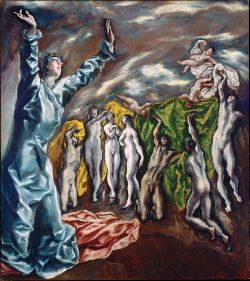
IC_MEIS_ELGRECO_AP_001El Greco is confusing. He is one of the few universally acknowledged great artists of history who does not fit into any of the established art movements or categories. Given his time period (late 16th – early 17th centuries), his art should fit into the early Baroque. But it does not. One characteristic of all the artists we now call Baroque is a fidelity to the physical presence of bodies. Think of Caravaggio’s light-splashed naturalism, the glow on the cheeks of the young boy-models that he dressed up in all manner of costumes. Or think of Rubens’ fleshy obsession with the might and heft of the human form, the huge canvases like giant meat towers made of bodies laboring at some common task.

El Greco, by contrast, painted unnatural bodies. They aren’t the sorts of bodies that exist in this, our world. El Greco’s bodies are longer and stretchier than those we encounter in daily life. He portrayed the human form as you might see it in a vision or a mystical trance. He looked at painting, it would seem, in the same way that his contemporary — the great mystic Saint Theresa of Ávila — looked at prayer. They were both seeking spiritual ecstasy.

Except, there is no evidence that El Greco had any interest in spiritual visions or mystical ecstasies. Instead, he read boring tracts of Counter-Reformation theology and studied Renaissance art theory (we still have his library). El Greco was no Baroque painter, but he was no mystic either.

What to do with an artist who slips through every explanation?

More here.

Dubliners at one hundred

6-two-gallants-13-webPaul Murray at the Paris Review:

It was a priest who first convinced me to read Dubliners. On the face of it, this might seem strange. Joyce had a lifelong hatred of clergymen, and claimed the sight of one made him physically ill; in “The Sisters,” the opening story of Dubliners, he chose a senescent priest as the first, and arguably most disturbing, of the many images of decay and paralysis that pervade the book. But in the Dublin of my teens, the priests were running the show; it was even possible for priests to be celebrities, and it was the most famous of these who took my class on retreat at the end of Transition Year, in June 1991.

Joyce writes about a religious retreat in A Portrait of the Artist as a Young Man, in which an unnamed preacher terrifies the boys with a lengthy description of the torments of hell. Ours wasn’t like that. There were beanbags and unlimited biscuits; the celebrity cleric, who had become famous in the sixties as the Singing Priest and latterly hosted a hugely popular radio show, spoke to us like we were his friends. Even though the retreat consisted for the most part of the usual list of prohibitions—don’t do drugs, don’t have sex—his gravelly voice and inner-city accent gave him a convincing authenticity.

more here.

EVERY NIGHT IS LIKE A DISCO: IRAQ 2003

Iraq-1_2505148bPaul Currion at White Review:

There were official trips, and there were unofficial trips. The official trips were faintly ridiculous, ‘assessment’ visits to the ‘field’ – in reality, twenty minute convoys to Sadr City, the Shi’ite district notorious for its poverty, to be surrounded by people as soon as we stepped out of those big white SUVs, and to step back in twenty minutes later when we realised we weren’t going to be able to assess a damn thing.

An old woman plucked at my sleeve and begged me to help her son find medical help, to help him get better, but I knew from looking at him that it wasn’t medical help that he needed. I recognised the look in his eyes, the stutter in his walk, the slump in his shoulders, from when I had worked with children with severe learning difficulties. He would never get better, and I didn’t know which – if any – of the NGOs descending on Iraq could offer that kind of help; it seemed unlikely that this poor boy and his mother would be a priority in this collapsing country.

The unofficial trips were paradoxically more rewarding: reminders that this was a country with a culture that went beyond the slums of Sadr City. That was easy to forget when you were skim-reading situation reports on the inbound flight from Amman, painfully aware of your own ignorance in the face of what you were being asked to do.

more here.

The cult of the Thirty-Seven Nats

Avaf_600Will Boast at Guernica:

The cult of the Thirty-Seven Nats is unique to Burma. A loose form of spirit worship has existed in this part of the world for countless centuries, but in the eleventh century, King Anawratha, the father of the Burmese nation, found himself in a reforming mood. A zealous Buddhist convert, Anawratha tried to outlaw his people’s popular folk religion—and succeeded instead in institutionalizing it. Acknowledging that the old beliefs wouldn’t die, he assembled a royal court of the spirits, bringing many of the best-known nats into the temples he’d begun building around Bagan and making them vassals to the Buddha. “Men will not come for the sake of new faith,” Anawratha reputedly said. “Let them come for their old gods and gradually they will be won over.” A thousand years later, Buddhism and nat worship exist side by side, one represented by gleaming, golden-spired pagodas and sprawling monasteries, the other by small shrines in homes and villages and along the sides of dirt roads. This highly local communion with the spirits

There is a pantheon of spirits in Burma, and at its top are the Thirty-Seven Nats, mytho-historical figures from the country’s ancient past. Stories about the Thirty-Seven often portray them as rebels and mischief-makers, nobles who willfully disobeyed their king and suffered death at his hand.

more here.

Thursday, November 20, 2014

Which Endangered Species Would You Save?

Carrie Arnold in Nautilus:
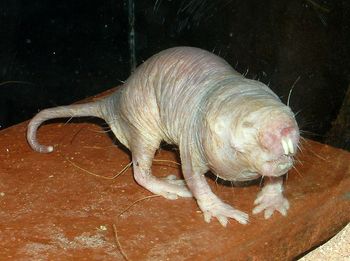
1024px-NacktmullYou have just been appointed Conservation Czar. But there is a catch. You can only save three animals…After you make your choices, you will learn about the endangered status of each animal.

If you chose to save the cuter animals rather than those less attractive, you are not alone. You are part of a conservation trend spotted by Simon Watt, a British evolutionary biologist, science writer, and founder of the Ugly Animal Preservation Society, a regular comedy show “dedicated to raising the profile of some of Mother Nature’s more aesthetically challenged children.” When it comes to saving species, Watt has found, humans choose the cute ones over the ugly ones, the panda over the stick insect, the tiger over the blobfish. While Watt has given conservation an injection of humor, the numbers support his message.

According to the International Union for the Conservation of Nature (IUCN), there are over 1,200 threatened mammalian species in the world, and over 300 are near threatened. But only 80 species are used by conservation organizations to raise funds and nearly all of them can be described as large, furry, and cute, according to a 2012 analysis by Bob Smith at the University of Kent in the United Kingdom.

Cute species get more research attention—and more studies are published about them. Between 1994 and 2008 over 100 studies were published on the cute and cuddly meerkat, but only 14 studies were published on the less cute African manatee, found ecologists Rudi van Aarde and Morgan Trimble. Maria Diekmann, founder and director of Namibia’s REST (Rare and Endangered Species Trust), whose conservation efforts focus on non-charismatic animals such as the Cape Griffon vulture and ground pangolin, says it’s hard to compete with the more majestic rivals for money. “These aren’t the dynamic, large, fundraising-appealing animals,” she says. “I wouldn’t say that other conservation organizations are rolling in money, but in general, if you’re working to save elephants or rhinos, you’re doing okay.”

Human impulse to preserve animals based on their aesthetic appearance is not a frivolous choice driven by an overload of panda posters and Facebook leopard pictures. Our desire to save the cuter creatures is caused by the illusion that we are assuring our own species’ survival. “The reason we are so attracted to cute animals appears to be the same mechanism that drives us to protect our babies,” says Janek Lobmaier, a psychologist at the University of Bern in Switzerland.

Read the rest here.

The Museum of the History of Polish Jews

28d02e6c-6ff3-11e4_1110033hZofia Stemolowska at the Times Literary Supplement:

One of the main challenges in creating a museum of Jewish life in Poland is to judge how much to say about non-Jewish citizens of Poland and, given the Shoah, about anti-Semitism throughout Poland’s thousand-year history. As I have argued in the TLS before (June 15, 2012), Poland has made enormous progress in acknowledging the devastating presence of historic anti-Semitism on its land, but there is still a long way to go. Although the museum itself is a public-private partnership, it was Warsaw’s Jewish Historical Institute that raised $45 million in donations and had responsibility for the core exhibition. The Institute selected first-rate historians to inform it, including Barbara Kirshenblatt-Gimblett and Antony Polonsky. Within the broadly well-judged parameters they set up, what you take away after a brief visit to such a dense exhibition is likely to reflect who you are and what you are looking for rather than what is on offer. If there is one nation that may leave the museum with a sense of grievance, it is perhaps the Ukrainians, whose most visible presence – though not the only one – is through the seventeenth-century Cossack uprising against Poland that was also a pogrom.

The museum itself is far more than its core exhibition. The scope of the project is breathtaking. The museum has an active online presence and a virtual shtetl portal that is an archive of documents of Jewish life. There is also a big and busy educational programme (currently sponsored by a multimillion dollar grant from Norway) that caters to teachers, pupils, families and even nurseries. A touring museum visits Polish towns, where it works with the councils to make the visit part of broader, well-advertised events. There are temporary exhibitions, films, performances, seminars (including one on another community destroyed by the war, the Roma), walks, bike rides and such initiatives as the wearing of a yellow daffodil badge in April to commemorate the Warsaw Ghetto Uprising.

more here.

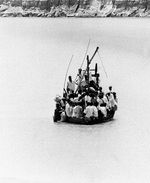
The contested history of one of Bangladesh’s worst wartime massacres

Blood-in-the-water_caravan-magazine_november-2014_01Salil Tripathi at Caravan:

IN THE WINTER OF 2012, when I drove along Jessore Road, it was a weather-beaten two-lane road with waterlogged fields on either side, the landscape occasionally interrupted by a few shops—a mechanical works, a petrol pump, or a tea stall. Jessore Road connects south-western Bangladesh to Kolkata, in West Bengal. During the war of 1971, it was one of the lifelines that connected refugees from East Pakistan, fleeing war and massacre, to India. Of those fateful eight months, as the world slowly realised that a massacre was underway in East Pakistan and sympathy and support began to trickle in from the West, the Beat poet Allen Ginsberg wrote in his lyrical anthem ‘September on Jessore Road’:

Millions of daughters walk in the mud
Millions of children wash in the flood
A Million girls vomit & groan
Millions of families hopeless alone

Millions of souls nineteen seventy one
homeless on Jessore road under grey sun
A million are dead, the million who can
Walk toward Calcutta from East Pakistan

more here.

the damaged philip larkin

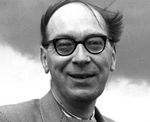
LarkinMagda Kay at the Dublin Review of Books:

After a selection of his letters was published in 1992, closely followed by a revelatory biography that let us see the worst of his personality, including material from unpublished letters and personal correspondence, Larkin’s reputation took a beating from which it hasn’t yet recovered. Ironically enough, this helped to secure his fame: a strikingly unglamorous character became the talk of the town. Outraged academics claimed they would never teach Larkin again or would make him a cautionary tale, an example of what not to be. Curiously, non-British readers took him as a case study of everything that is wrong with the English: insular, happily provincial, sentimental, reticent in all the wrong ways, and overly fond of bland food and drink, Larkin began to be seen as a living stereotype. Some detected a distasteful chauvinism in his work. A few went so far as to suggest that we could assess the sorry state of postwar English poetry by looking to Larkin as an example of what went wrong.

Except for the fact that other readers, equally sensitive, failed to see this chauvinism, failed to be shocked at his odd and evil ways, and failed to lose their admiration for his poems. An oft-cited 2003 poll by the Poetry Book Society and Poetry Library showed that Larkin was the most popular contemporary poet amongst British readers, whereupon The Guardian published a triumphant article claiming the poet had “survived his brief exile from literary fashion.” Not so quick. The damage had been done.

more here.

Review of Zadie Smith’s new book of essays

Sam Sacks in Open Letters Monthly:

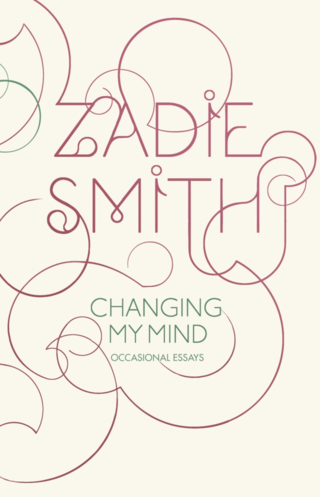
Lb_ChangingMyMind_5074I suspect that Zadie Smith is more alive than anybody to the ironic fact that her first collection of nonfiction was supposed to be called Fail Better, except that it fell through, and what she has published instead is titledChanging My Mind. Fail Better seems to have been pretty far along. It had been heralded by a rousing two-part manifesto (titled “Fail Better” and “Read Better”) in London’s Guardian. Smith discussed it in interviews in definite tenses. It even had one of those grandly didactic subtitles that publishing houses so adore: “The Morality of Fiction.”

The presentation of Changing My Mind, in comparison, is marked by chastened self-effacement. In her Foreward, Smith makes the unpromising remark that she didn’t even know she had the material for a book until someone pointed it out to her. The subtitle is simply “Occasional Essays.”

Such an evolution wouldn’t be worth noting if Changing My Mind were unremarkable. But in a short time Smith has made herself one of the most interesting and individual book reviewers to be found. There is enough great criticism in this book to belie the humble premise that what’s collected is only an ad hoc assortment of paid pieces.

More here.

Big Pharma Plays Hide-the-Ball With Data

Ben Wolford in Newsweek:

20141114cover600-x-800On the morning of March 2, 2005, a 14-year-old Japanese girl woke up scared. At first she thought someone was outside the house watching her, but then she decided the stranger must be inside. She wandered restlessly and, despite the cold weather, threw open all the windows. Later, over a meal, she declared, “The salad is poisoned.” Two days later, she said she wanted to kill herself.

This teenager with no history of mental illness was diagnosed with delirium. The night before the hallucinations started, she began taking an anti-influenza drug called Tamiflu (generic name: oseltamivir), which governments around the world have spent billions stockpiling for the next major flu outbreak.

But evidence released earlier this year by Cochrane Collaboration, a London-based nonprofit, shows that a significant amount of negative data from the drug’s clinical trials were hidden from the public. The Food and Drug Administration (FDA) knew about it, but the medical community did not; the U.S. Centers for Disease Control and Prevention (CDC), which doesn’t have the same access to unpublished data as regulators, had recommended the drug without being able to see the full picture. When results from those unpublished trials finally did emerge, they cast doubt over whether Tamiflu is as effective as the manufacturer says.

The revelation of hidden data bolstered a growing movement against what’s referred to within the research community as “publication bias,” in which scientists squirrel away mostly negative or inconclusive findings and broadcast only their positive ones. Concealing trial data—for which patients accept the risks of untested treatments for the greater good—is routine. As many as half of all clinical trials are never published, PLOS Medicine reported last year.

More here.

The Stoic egg

Massimo Pigliucci in Scientia Salon:

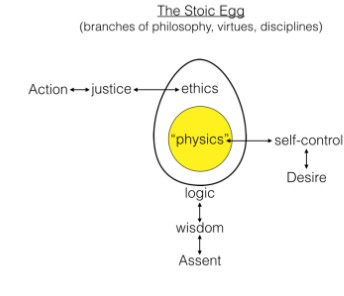
ScreenHunter_876 Nov. 20 16.37The annual Stoic Week is approaching [1], so it seems like a good time to return to my ongoing exploration of Stoicism as a philosophy of life. I have been practicing Stoicism since 4 October 2014 [2], and so far so good. I have been able to be more mindful about what I do at any particular moment in my day — with consequences ranging from much less time spent on electronic gadgets to more focused sessions at the gym; I have exercised self-control in terms of my eating habits, as well as with my emotional reactions to situations that would have normally been irritating, or even generating anger; and I feel generally better prepared for the day ahead after my morning meditation.

I have also spent some time reading Stoic texts, ancient and modern (indeed, I will probably offer a course on Stoicism “then and now” at City College in the Fall of ’15. Anyone interested?). Which in turn has led to an interest in exploring ways to update Stoicism to modern times not only in terms of its practice (where it’s already doing pretty well), but also its general theory, as far as it is reasonable to do so.

Now, before proceeding down the latter path, a couple of obvious caveats. First off, as a reader of my previous essay on this topic here at Scientia Salon [3] pointedly asked, why bother trying to develop a unified philosophical system? Isn’t life just too complicated for that sort of thing? To which my response is that any person inclined to reflect on his life strives for a (more or less) coherent view of the world, one that makes sense to him and that he can use to make decisions on how to live. One may not label such philosophy explicitly, or even think of it as a “philosophy” at all, but I’m pretty sure the reader in question has views about the nature of reality, the human condition, ethics, and so forth, and that he thinks that these views are not mutually contradictory, or at the least not too stridently so. In other words, he has, over the years, developed a philosophical system. Indeed, I would go so far as saying that even not particularly reflective people navigate life by way of what could be termed their folk philosophical system, whatever it happens to be. Why, then, not try to develop one more explicitly and carefully? And if so, Stoicism happens to be a good starting point, though by far not the only one (I have in the past played with Epicureanism, and also — in the specific realm of moral philosophy — with virtue ethics; other non religious people have adopted secular humanism, of course, or even secularized versions of Buddhism [4]).

Second caveat: beware of changing and re-interpreting things so much that what you are left with has little to do with anything that can reasonably be called Stoicism.

More here.

Vote for one of the nominees for the 3QD Philosophy Prize 2014

Browse the nominees in the list below and then go to the bottom of the post to vote.

Alphabetical list of nominated blog names followed by the blog post title:

(Please report any problems with links in the comments section below.)

For prize details, click here.

  1. 3 Quarks Daily: Do our moral beliefs need to be consistent?
  2. 3 Quarks Daily: Is applied ethics applicable enough? Acting and hedging under moral uncertainty
  3. 3 Quarks Daily: Locating Value in the Natural World
  4. 3 Quarks Daily: Nazis, Lies and Videotape
  5. 3 Quarks Daily: The Sense of Self: A Conversation
  6. A Bag of Raisins: An Excerpt from Plato's “Philosopher”
  7. Absolute Irony: Nāgārjuna, Nietzsche, and Rorty’s Strange Looping Trick
  8. Angela Roothaan: (Auto)biography and Derrida II (finished reading)
  9. A Philosopher's Take: Moral Resposibility and Volunteer Soldiers
  10. A Wondering Jew: The Sound of Silence
  11. Elisa Freschi: Veṅkaṭanātha’s contribution to Viśiṣṭādvaita Vedānta
  12. Flickers of Freedom: The Case for Libertarian Compatibilism
  13. Huffington Post: Muslims: WWJD (What Would Jefferson Do?)
  14. IJFAB: Constraints on Medical Autonomy for Pregnant Women
  15. Imperfect Cognitions: Epistemic Injustice and Illness
  16. Imperfect Cognitions: Sadder but Wiser? Interview with Jennifer Radden
  17. Imperfect Cognitions: The Representation of Agents in Auditory Verbal Hallucinations
  18. Indian Philosophy Blog: On the possibility and nature of neurophilosophical study of Indic traditions
  19. In medias PHIL: The Evils of OSO
  20. In-Sight: Rick G. Rosner
  21. Justin E. H. Smith: The Rio Linda Deep-Freeze
  22. New APPS: Art, Politics, Philosophy, Science: Does taking pictures sully our memories?
  23. New APPS: Art, Politics, Philosophy, Science: Mechanism, Salience, and Belief Change
  24. New York Times, Opinionator: The Dangers of Certainty: A Lesson From Auschwitz
  25. Philosophy@Birmingham: Perfect Me Again!
  26. Philosophy, et cetera: Rationality and the Rooted Amnesiac
  27. Practical Ethics: Female genital mutilation (FGM) and male circumcision: should there be a separate ethical discourse?
  28. Practical Ethics: Happiness, meaning and well-being
  29. Practical Ethics: Is Home Birth Really As Safe As Hospital Birth?
  30. Practical Ethics: Iterated in vitro reproduction and genetic orphans
  31. Practical Ethics: Political speech crime
  32. Practical Ethics: Prisoner disenfranchisement: the supposed justifications
  33. Practical Ethics: Terminal Illness and The Right Not to Know
  34. Practical Ethics: The Texas flautist and the fetus
  35. Practical Ethics: Two Tales of Marshmallows and their Implications for Free Will
  36. Practical Ethics: Why I Am Not a Utilitarian
  37. Proof I Never Want To Be President (Of Anything): Work Friends
  38. Psychiatric Ethics: Anosognosia and Epistemic Innocence: Lisa Bortolotti
  39. Rust Belt Philosophy: Variant Analysis: Optimized Punishments
  40. The Epicurean Dealmaker: Venn Diagram
  41. The Philosopher's Beard: The Case for Ethical Warning Labels on Animal Products
  42. The Philosopher's Stone: Three Cheers for Jeremy Bentham
  43. Think Tonk: Introducing (and solving?) a puzzle about rationality
  44. Towkow: The Computational Theory of the Laws of Nature
  45. TruthOut: The Despotic Chimpanzee and the Ultra-Rich
  46. TruthOut: The Evaporation of Democracy
  47. Vihvelin: How Not to Think About Free Will
  48. Warp, Weft, and Way: Interpreting an Alien Philosophy: What Works for Me
  49. Welcome God: The Horror, Terror and Society

If you are new to 3 Quarks Daily, we welcome you and invite you to look around the site after you vote. Learn more about who we are and what we do here, and do check out the full site here. Bookmark us and come back regularly, or sign up for the RSS feed. If you have a blog or website, and like what you see here, we would very much appreciate being mentioned there or added to your blogroll. Please don't forget!

Voting ends on November 25th at 11:59 pm NYC time.

Results of the voting round (the top twenty most-voted-for posts) will be posted on the main page on November 26th. The finalists will be announced on December 1st and winners of the contest will be announced on December 22nd, 2014.

PLEASE BE AWARE: We have multiple ways of detecting fraud such as multiple votes being cast by the same person. We will disqualify anyone attempting to cheat.

Now click here to vote.

Thank you.