Pope Francis, Radical Leftist?

Pope-FrancisElizabeth Stoker Breunig at The New Republic:

In any analysis of a public figure, partisan interests will influence one’s opinion, and there isn’t anything particularly productive about pointing out that conservatives tend to forgive in conservative leaders what they don’t in liberals. A more helpful question is this: Why has Pope Francis addressed political issues, such as climate change, inequality, poverty, and overpopulation? Is it evidence of abject partisan interest, or a covert dedication to communism, Marxism, or some other insidious ideology?

Or is it just that we now presume that “politics” belongs outside the Church’s purview—despite the Church’s historical record of considering and intervening in political affairs? To me, this appears to be the distortion at hand.

This is partly because the notion that “politics” can be neatly separated from daily life is a new one. For earlier political theorists, like Aristotle and Augustine, politics was just a natural extension of community life. But over time, a fantasy of “politics” wholly divorced from everyday life and experience has emerged in certain corners of liberal thought, producing with it the expectation that politics is a matter for professional politicians and their colleagues, while those in religious offices should simply avoid addressing politics altogether.

more here.
21 + 21 = 42

Carley Moore in TNB:

Carley-21-2-e1422065147403Last summer I turned 42 years old. On the morning of my birthday, my then-boyfriend asked me what I was doing when I was 21, half that age. I said, “Baking quiches, dropping acid, and chasing boys.” I imagined this retort as a tweet—short and to the point. I’d managed to get my life at that time down to 39 characters, and it was mostly accurate.

At 21 years old, I was obsessed with Molly Katzen’s Moosewood cookbook, The Enchanted Broccoli Forest. I was going to a state school in upstate New York, not far from the home of the Moosewood restaurant in Ithaca, which had always seemed to me a cultural mecca in a vast state of industrial depression and blight. Ithaca was the home of my favorite thrift shop, Zoo Zoos, and a lot of cute hippie musicians I dreamed of fucking. The cookbook was steeped in that same sexy, vintage, hippie musician lore. I imagined myself cooking for one of those musicians. I could be his “old lady” for a recipe or two. Many of my activities then were overlaid with a fantasy plot line, worthy of an episode of Laverne and Shirley or Three’s Company. I was rarely just doing something; I was doing that thing while imagining I was in the TV sitcom version of it. As a child, I’d made it through my sometimes chore of washing the dishes by pretending I was in a Dawn dish soap ad.

More here.

Unconscious thought not so smart after all

Alison Abbott in Nature:

MindIf you have to make a complex decision, will you do a better job if you absorb yourself in, say, a crossword puzzle instead of ruminating about your options? The idea that unconscious thought is sometimes more powerful than conscious thought is attractive, and echoes ideas popularized by books such as writer Malcolm Gladwell’s best-selling Blink. But within the scientific community, ‘unconscious-thought advantage’ (UTA) has been controversial. Now Dutch psychologists have carried out the most rigorous study yet of UTA — and find no evidence for it.

…A typical study probing UTA asks subjects to make a complex decision, such as choosing a car or a computer, after either mulling over a list of the object’s attributes or viewing the list quickly and then engaging in a distracting activity such as a word puzzle. However, such studies have drawn different conclusions, with about half of those published so far reporting a UTA effect and the other half finding none. Proponents of the theory claim that the effect is exquisitely sensitive to experimental variations, and often attribute the negative results to the fact that many research groups varied elements of the set-up, such as the choice of puzzle used for the distraction3. Critics say that the positive results came from having too few participants in the experiments. Psychologists Mark Nieuwenstein and Hedderik van Rijn at the University of Groningen in the Netherlands set out with their colleagues to determine which explanation was correct. They asked 399 participants — around ten times more than the typical (median) sample sizes in other studies — to choose between either 4 cars or 4 apartments on the basis of 12 desirable or undesirable features. They incorporated the full list of conditions that UTA proponents had reported as yielding the strongest effect, such as the exact type of puzzle used as a distraction. They found that the distracted group was no more likely than the deliberating group to choose the most desirable item.

More here.

Why free speech is fundamental

Steven Pinker in the Boston Review:

ScreenHunter_965 Jan. 28 12.54More than two centuries after freedom of speech was enshrined in the First Amendment to the Constitution, that right is very much in the news. Campus speech codes, disinvited commencement speakers, jailed performance artists, exiled leakers, a blogger condemned to a thousand lashes by one of our closest allies, and the massacre of French cartoonists have forced the democratic world to examine the roots of its commitment to free speech.

Is free speech merely a symbolic talisman, like a national flag or motto? Is it just one of many values that we trade off against each other? Was Pope Francis right when he said that “you cannot make fun of the faith of others”? May universities muzzle some students to protect the sensibilities of others? Did the Charlie Hebdo cartoonists “cross a line that separates free speech from toxic talk,” as the dean of a school of journalism recently opined? Or is free speech fundamental — a right which, if not absolute, should be abrogated only in carefully circumscribed cases?

The answer is that free speech is indeed fundamental. It’s important to remind ourselves why, and to have the reasons at our fingertips when that right is called into question.

More here.

Tuesday, January 27, 2015

Larry Sultan’s photos capture, tenderly, the paradise of Southern California – and the tensions and desires that complicate it

Morgan Meis in The Smart Set:

IC_MEIS_SULTAN_AP_000When I look at photographs by Larry Sultan I smell eucalyptus and lavender. Those are the plants I can name. I also smell the gnarled bushes and brown weeds, the nameless desert flowers that grew in the nooks and crannies of Laurel Canyon, in the places that hadn’t been watered and replanted by homeowners. Running around in the behind-spaces of the Hollywood Hills as a youth, I smelled all those smells, got them on my fingers. It is strange that a photograph, something that cannot be smelled or touched or tasted, could recall those sensations. But those dirt-dusted plant smells are in every frame of Sultan’s photographic series Pictures from Home (1982-92), The Valley (1998-2003), and Homeland (2006-9).

Larry Sultan died of cancer in 2009; the Homeland series constitutes his final testimony. The smelliest of the Homeland pictures is, for me, Creek, Santa Rosa (2007). Santa Rosa is actually up in Northern California, but Sultan shot it to look more or less the same as L.A.’s Valley. The picture shows a half-dried creek behind a housing development. A youngish Latino man crouches down with a bucket. Presumably, he is gathering water. Another man is heading up the hill behind, his bucket already full. In terms of content, the picture is not unlike something you might see in a 17th century painting. European villagers drawing water from a nearby river. Something painted, maybe, by Claude Lorrain.

But in a picture by Claude Lorrain, the villagers drawing the water are fully integrated into the landscape. With Claude, people belong to place and place belongs to people. The paintings work because everything holds together in a neo-classical pictorial oneness. It doesn’t work that way in a picture by Larry Sultan. The two men in Creek, Santa Rosa are drawing water from the creek because they don’t have access to the taps in the modern homes just behind them.

More here.

Raising Elvis

Allison Gehlhaus in Brain, Child:

SymbolsIt’s been an eye-opening twelve years. A time to examine some preconceived—literally—notions regarding the raising of boys and girls. Especially my own. I had been stunned and hurt by the comments I heard after the birth of our daughters. The nurses at the hospital told me that they hear a lot of women apologize to their husbands after giving birth to girls. Seriously. Right in the labor room. One nurse said, “Don’t they realize that it is the man who determines the sex of the baby?” Another quipped, “So maybe the men should apologize.”

So I shouldn’t have been surprised when visitors would say, “Maybe next time,” with a dismissive wave at our little pink bundles of joy. Or, “How soon are you going to try again?”

My brother-in-law actually said, “Three girls. That’s the pits.”

He’s lucky to be alive.

“Another girl? Is Hank mad at you?” a neighbor asked.

And when I answered, “Yeah, my husband’s furious, he’s kicking me out next week,” she didn’t even flinch.

Read the rest here.

Claude McKay Walks in Ferguson

David X. Noval in The Critical Flame:

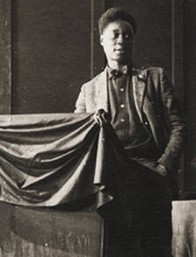
ScreenHunter_964 Jan. 27 19.53Claude McKay, born in Jamaica in 1890, is the first modern master of the sonnet form. Yeats of course had turned out a few—one a classic—as had Pound. Cummings wrote plenty of sonnets, but, because of their idiosyncrasies, they are more complications than masterworks. Wilfred Owen, if he had lived, might have rivaled McKay, as he was disposed to the sonnet and masterful in its usage. The only other serious contender, to my mind, would be Edna St. Vincent Millay, and perhaps later, Berryman. In the Selected Poems, first published in 1953, several years after his death, Max Eastman writes (with what McKay’s biographer, Wayne Cooper, generously describes as an “unconscious condescension”):

Claude McKay was most widely known perhaps as a novelist, author of Home to Harlem, a national best-seller in 1928. But he will live in history as the first great lyric genius that his race produced.

Why then has McKay’s work languished in relative obscurity? Eastman writes in 1953 that his “place in the world’s literature is unique and is assured.” Yet in his fifties, after a decade of illness, McKay sought to end his financial difficulties by taking on employment as a riveter—something he was not physically equipped to handle, and which surely contributed to a stroke at age fifty-three. He had turned down a “sizeable” book advance, explaining, “I haven’t been able to concentrate on a plot. It’s quite impossible when one’s mind is distracted. People can’t realize the state of one’s mind under such conditions, and the few I meet make me angry by telling me how happy I look.”

More here.

Remembering Robert Stone

RobertstoneStephen Goodwin at The American Scholar:

Robert Stone, who died on January 10, was a member of the all-but-vanished tribe of hard-living, two-fisted, wildly ambitious American novelists who grew up in Hemingway’s slipstream. In the 1960s, when Bob was writing his first novel, Hall of Mirrors, the elders were guys like Norman Mailer, William Styron, Saul Bellow, and Nelson Algren. They punched like heavyweights. They swung for the fences. They all stalked that shaggy beast, the Great American Novel.

Or so it seemed to an impressionable younger writer like me; I felt just enough younger to have missed out on something. Perhaps I romanticized the generation of writers ahead of me, but from the safety of the academy—I was on path of the writer-teacher—they did seem larger-than-life: more adventurous, more daring, more glamorous that the rest of us would ever be.

By the time I met Bob, he had already won the 1975 National Book Award for his second novel, Dog Soldiers, a thriller that linked the disastrous war in Vietnam with the drug culture that was epidemic on the home front. That book is richly populated with the kinds of characters who would become familiar to his readers: the druggies, the drunks, the psychopaths, the world-weary, the desperate, and the deluded, some of them so violent, cruel, or just plain loony that they could strike fear in your heart.

more here.

THE CREATOR, By Mynona

ImagesMichael Dirda at The Washington Post:

When I first picked up this eerie-looking paperback, attracted by the half-spider, half-human figure on the cover, its author was completely unknown to me. That doesn’t happen a lot (he said immodestly). I could see that Mynona was the German word for “anonymous” spelled backward, but that only fed my curiosity. So I turned to the dust jacket flap of “The Creator” and read the following:

“Mentioned in his day in the same breath as Kafka, Mynona, aka Salomo Friedlaender (1871-1946), was a perfectly functioning split personality: a serious philosopher by day (author of ‘Friedrich Nietzsche: An Intellectual Biography’ and ‘Kant for Kids’) and a literary absurdist by night, who composed black-humored tales he called ‘Groteske.’ His friends and fans included Martin Buber, Walter Benjamin, and Karl Kraus.”

I think it was “Kant for Kids”— the mind reels — even more than the mention of Kafka or literary absurdism that made me look further into this odd novella, originally published in 1920.

more here.

Michel Houellebecq Defends His Controversial New Book

M.-houellebecq-2010�sylvain-bourmeau-e1420217389165Michel Houellebecq interviewed at Paris Review:

Where did you get the idea for a presidential election, in 2022, that came down to Marine Le Pen and the leader of a Muslim party?

Well, Marine Le Pen strikes me as a realistic candidate for 2022—even for 2017 … The Muslim party is more … That’s the heart of the matter, really. I tried to put myself in the place of a Muslim, and I realized that, in reality, they are in a totally schizophrenic situation. Because overall Muslims aren’t interested in economic issues, their big issues are what we nowadays call societal issues. On these issues, obviously, they are very far from the left and even further from the Green Party. Just think of gay marriage and you’ll see what I mean, but the same is true across the board. And one doesn’t really see why they’d vote for the right, much less for the extreme right, which utterly rejects them. So if a Muslim wants to vote, what’s he supposed to do? The truth is, he’s in an impossible situation. He has no representation whatsoever. It would be wrong to say that this religion has no political consequences—it does. So does Catholicism, for that matter, even if the Catholics have been more or less marginalized. For those reasons, it seems to me, a Muslim party makes a lot of sense.

But to imagine that such a party might find itself poised to win a presidential election seven years from now

I agree, it’s not very realistic. For two reasons, actually. First—and this is the most difficult thing to imagine—the Muslims would have to succeed in getting along with each other. That would take someone extremely intelligent and with an extraordinary political talent, qualities that I give to my character Ben Abbes. But an extreme talent is, by definition, an unusual occurrence. But supposing he existed, the party could take off, but it would take longer than seven years.

more here.

Man Down: why men are ridiculous

Amanda Marcotte in Slate:

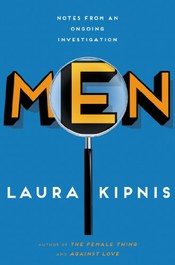
BookMen: Notes From an Ongoing Investigation may be the most provocative title in a long list of provocative book titles from essayist Laura Kipnis—a remarkable feat for a woman whose previous works include Against Love and Bound and Gagged.

…Repeatedly, she zeroes in on how keenly men are rankled by their revoked entitlement to female flattery, and it’s always hilarious. Christopher Hitchens’ fantasy that men and not women evolved humor for reproductive purposes, she writes, has “the slightly musty air of the 1960-ish Kingsley Amis, wrapped in nostalgia for the merry days when sexual conquest required an arsenal of tactics deployed by bon-vivantish cads on girdled, girlish sexual holdouts.” And in a particularly hilarious piece looking at right-wing male reactions to Hillary Clinton, she muses, “You’d think they were talking about their first wives.” Kipnis paints all this male anxiety in the face of women’s growing power as both humorous and poignant. Thankfully though, despite the residual chill girl tendencies, she never suggests that women should abandon feminism to calm men down.

More here.

Can This Treatment Help Me?

Austin Frakt and Aaron E. Carroll in The New York Times:

Health-articleLargeConsider aspirin for heart attack prevention. Based upon both modifiable risk factors like cholesterol level and smoking, and factors that are beyond one’s control, like family history and age, it is possible to calculate the chance that a person will have a first heart attack in the next 10 years. The American Heart Association recommends that people who have more than a 10 percent chance take a daily aspirin to avoid that heart attack. How effective is aspirin for that aim? According to clinical trials, if about 2,000 people follow these guidelines over a two-year period, one additional first heart attack will be prevented. That doesn’t mean the 1,999 other people have heart attacks. The fact is, on average about 3.6 of them would have a first heart attack regardless of whether they took the aspirin. Even more important, 1,995.4 people would never have a heart attack whether or not they took aspirin. Only one person is actually affected by aspirin. If he takes it, the number of people who remain heart attack-free rises to 1996.4. If he doesn’t, the number remains 1995.4. But for 1,999 of the 2,000 people, aspirin doesn’t make any difference at all.

…The Mediterranean diet, which is heavy in vegetables, fruits, nuts and olive oil; moderate in fish and poultry; and light in dairy, meat and sweets; has long been advocated as a means to avoid heart disease. In people who have never had a heart attack, but who are at risk, the N.N.T. is 61 to avoid a heart attack, stroke or death. And that is for people who adhere to the diet for about five years. For those at higher risk, who have already had a heart attack, to avoid one additional death, the N.N.T. is about 30. That’s the number of people who would have to adhere to the diet for four years so that one extra person survived. About 1.4 people out of 30 such people will die no matter what they eat; 27.6 will not die no matter what they eat. Only one will benefit from sticking to the diet.

More here.

Tuesday poem

Insomnia

I wake up in the middle of the night
hear the house settling, the ceiling creaking
realize I have no bottled water
canned food, flashlight, rifle or bullets
stored in the hidden room off of my office

my children can't live on
holiday decorations or bagged, off-season clothing
if the war comes
id the monsters come
if civilization slows to a standstill before
crumbling to dust

I think of my hands catching rabbits
and wonder if I could really
gut and skin a squirrel
if I could master the skills
of building fired and making traps
as my ancestors did
35,000 years ago

my husband snorts in irritation beside me
coming out of sleep as I twitch
in despair of our future helplessness
with my need to rush out of bed to fill empty milk jugs
with tap water, break coffee cups and plates to make
arrowheads and spears
.

by Holly Day
from CadillacCicatrix

Monday, January 26, 2015

Sunday, January 25, 2015

How will we crack the brain?

Adam J Calhoun in Medium:

ScreenHunter_959 Jan. 25 23.09If you would like see things straight out of a a science fiction movie, you should visit a neuroscience laboratory. Technology and science has advanced so quickly that I am not sure the public understands how advanced we are. Depending on the species, creating new transgenic animals — where you slip new genetic material into an organism — starts at ‘pathetically easy.’ During my PhD, there were days I would create the DNA for five or ten new transgenics in one go; creating the animals themselves was hardly a challenge. Light can be used as a physical force to move things around (“optical tweezers”). Scientists routinely create custom-made viruses to go forth into a chosen animal and label a precise set of neural cells. We can rain light down onto an animal to replay — or delete — memories. The recent creation of the CRISPR system allows genetic engineering to occur at unprecedented levels.

And the technology is advancing — fast. Things that seemed impossible five years ago are being commercialized right now. But for all that the brain is still largely a black box that we can prod and poke without understanding what it is actually doing, or how it got there. It begs us to ask the question: what are the directions neuroscience is heading to make a sense of this neural hydra?

More here.

Aggressive prayers, curses, and maledictions

Elizabeth McAlister in The Immanent Frame:

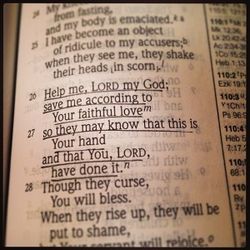
PrayerThis speech form is known as imprecatory prayer, from the Latin, imprecate, “invoking evil or divine vengeance; cursing.” The use of scripture as a form of imprecatory prayer has long been covertly practiced by both Christians and non-Christians. But the slogan to “Pray for Obama: Psalm 109.8” circulated openly on t-shirts and bumper stickers during the 2008 presidential race. Similarly, Reverend Wiley Drake, the second vice-president of the First Southern Baptist Church, issued in 2006 a statement claiming that his prayers for the death of a slain abortion provider George Tiller had been answered. These instances give us a rare display of imprecatory prayer in the US public sphere, and constitute prime examples of the use of negative prayer in American political life and beyond.

These bizarre cases caught my attention, since cursing and imprecation are usually associated in the popular imagination with my longtime area of research: the traditional Afro-Haitian religion called Vodou. The negative image of Vodou as sorcery is one that I and others have worked to dispel as part of a project of ethnographic redescription. We have worked to humanize Vodou and portray its full role in Haitian society, writing of elaborately developed prayers, liturgical rhythms, and songs, dances, and ritual that serve to mediate between life and death, to construct family, and to heal…

My research with Haitian spirit-workers reveals that instances of negative prayer are always concerned with a desire for justice or self-defense. For example, I once watched a Haitian spirit priestess in New York City offer her client a remedy for coping with sexual harassment in the workplace. “Pray Psalm 35, let destruction come upon him unawares,” she instructed, “and place a snakeskin in your shoe. You will tread soundlessly and slip away from him while he is destroyed by your guardian spirits.” In this instance, a new immigrant, vulnerable and perhaps undocumented, found in negative prayer a path of recourse against an insidious form of everyday injustice.

Read the full post here.

A.I. Has Grown Up and Left Home

2168_41e7637e7b6a9f27a98b84d3a185c7c0

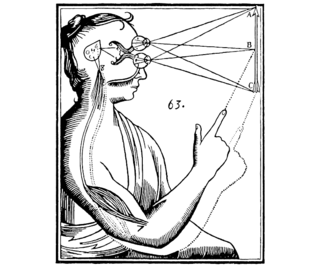
David Auerbach in Nautilus (René Descartes’ illustration of dualism.Wikimedia Commons):

Our approach to thinking, from the early days of the computer era, focused on the question of how to represent the knowledge about which thoughts are thought, and the rules that operate on that knowledge. So when advances in technology made artificial intelligence a viable field in the 1940s and 1950s, researchers turned to formal symbolic processes. After all, it seemed easy to represent “There’s a cat on the mat” in terms of symbols and logic:

ai_formula

Literally translated, this reads as “there exists variable x and variable y such that x is a cat, y is a mat, and x is sitting on y.” Which is no doubt part of the puzzle. But does this get us close to understanding what it is to think that there is a cat sitting on the mat? The answer has turned out be “no,” in part because of those constants in the equation. “Cat,” “mat,” and “sitting” aren’t as simple as they seem. Stripping them of their relationship to real-world objects, and all of the complexity that entails, dooms the project of making anything resembling a human thought.

This lack of context was also the Achilles heel of the final attempted moonshot of symbolic artificial intelligence. The Cyc Project was a decades-long effort, begun in 1984, that attempted to create a general-purpose “expert system” that understood everything about the world. A team of researchers under the direction of Douglas Lenat set about manually coding a comprehensive store of general knowledge. What it boiled down to was the formal representation of millions of rules, such as “Cats have four legs” and “Richard Nixon was the 37th President of the United States.” Using formal logic, the Cyc (from “encyclopedia”) knowledge base could then draw inferences. For example, it could conclude that the author of Ulysses was less than 8 feet tall:

(implies

(writtenBy Ulysses-Book ? SPEAKER)

(equals ?SPEAKER JamesJoyce))

(isa JamesJoyce IrishCitizen)

(isa JamesJoyce Human)

(implies

(isa ?SOMEONE Human)

(maximumHeightInFeet ?SOMEONE 8)

Unfortunately, not all facts are so clear-cut. Take the statement “Cats have four legs.” Some cats have three legs, and perhaps there is some mutant cat with five legs out there. (And Cat Stevens only has two legs.) So Cyc needed a more complicated rule, like “Most cats have four legs, but some cats can have fewer due to injuries, and it’s not out of the realm of possibility that a cat could have more than four legs.” Specifying both rules and their exceptions led to a snowballing programming burden.

More here.