Jumping DNA and the Evolution of Pregnancy

Ed Yong in Not Exactly Rocket Science:

ScreenHunter_970 Feb. 01 17.13About a decade ago, Vincent Lynch emailed Frank Grutzner to ask for a tissue sample from a pregnant platypus. He got a polite brush-off instead.

Then, around eight years later, Grutzner got back in touch. His team had collected tissues from a platypus that had been killed by someone’s dog. They had some uterus. Did Lynch still want some?

“Hell yes!”

The platypus was the final critical part of a project that Lynch, now at the University of Chicago, had longed to do since he was a graduate student. He wanted to study the evolution of pregnancy in mammals, and specifically the genetic changes that transformed egg-laying creatures (like platypuses) into those that give birth to live young (like us).

The platypus enjoys a short pregnancy. Its embryo sits in the uterus for just 2-3 weeks, surrounded by a thin eggshell, and nourished by a primitive placenta. It then emerges as an egg. Marsupials, like kangaroos and koalas, also have short pregnancies. But mothers give birth to live young, which live in a pouch until they’re big enough. Other mammals—the placentals, or eutherians—keep their babies in the uterus for as long as possible, nourishing them through a complex placenta. Their pregnancies can be marathons—up to two years in an elephant.

The move from egg-laying to live-bearing was huge. Mammals had to go from holding a shell-covered embryo for weeks to nourishing one for months. To understand how they made the leap, Lynch compared 13 different animals, including egg-layers like the platypus, marsupials like the short-tailed opossum, and eutherians like the dog, cow, and armadillo.

More here.
The Rougon-Macquart Novels of Emile Zola

Jack J. Woehr in Well.com:

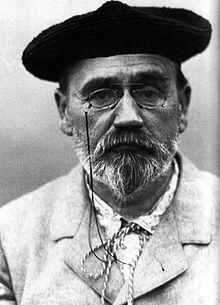
ZolaAt the peak of European power and culture, in the Third Republic era of French literary and artistic supremacy within Europe, Émile Zola (1840-1902) was the most popular and widely-read French novelist among French speakers. (Victor Hugo, his elder contemporary, is to this day probably more widely read in translation.) Zola wrote with a journalistic eye, filling notebooks with facts gathered by personal observation and by correspondence with his network of experts preparatory to his work of authorship. He would then write a sketch of the projected work, and finally, write daily and methodically, sometimes for years, to produce his “experimental” and “realistic” novels. Zola's novels deserve more attention today by English speakers, especially Americans, than in fact they receive: hence, this web page. Zola's most prominent work is the twenty-novel cycle (yes, 20!) Les Rougon-Macquart subtitled “Histoire naturelle et sociale d'une famille sous le Second Empire”, that is, “The social and natural (e.g, anthropological, genetic) history of a family under the Second Empire”. This series is not well known in the English-speaking world, though individual novels of the cycle have achieved popularity in translation, notably Germinal (1885) and L'argent (Money) (1891). The most popular in French are Germinal and L'assomoir (The Dram Shop). Many of the Rougon-Macquart novels have been made into movies in France and have circulated with subtitles in the English nations.

Each book in the Rougon-Macquart cycle is woven from four thematic threads:

  1. First, each novel has an intricate plot, generally an engaging story about people caught up in the struggles of life and love and tragedies of life.
  2. Secondly, there is always woven into the story a social concern. Zola points out some political or social injustice or abuse. The most notable example of this thread in the Rougon-Macquart series is Germinal (1885) which deals with the working and social conditions of coal miners in northern France under the Second Empire.
  3. Thirdly was Zola's systematic indictment of the Second Empire (1851-1870), the semi-despotic, semi-parliamentary kleptocracy of Louis Bonaparte (Emperor Napoléon III) established by the coup d'etat of December, 1851. Zola had already projected ten novels of the series, and was in the course of finishing the first for publication when the Second Empire suddenly collapsed in the Franco-Prussian war of 1870, the Emperor himself being personally captured near the front lines at Sedan.
  4. Finally, there is Zola's fascination with science, notably genetics, in exposition of which he follows two branches of a family stemming from a common ancestress wherein certain salient characteristics, particularly pathological psychological bents, repeat in individual members generation after generation. The Rougons are prosperous but given to immense appetites for money and/or power. The Macquarts are more human but full of failings, notably an inheritance of alcoholism. Any member of either family, as a descendant of the common ancestress Adelaïde Fouque, may be subject to “excessive nervosity”, i.e., congenital mental illness and breakdown at any time in life.

Though the novels of the Rougon-Macquart cycle all share common features, each nonetheless posesses one or more aspects which make the individual novel unique in the cycle.

More here.

George Johnson – The Whistling Coon – 1891 (The first recording by an African-American)

Rare Soul:

George Johnson's song Whistling Coon was one of the most popular of the Coon songs of the 1850-90s. While the records and the imagery that goes along with them are offensive, these are pioneering African-American recordings and songs. The amazing thing about the earliest of Johnson's recordings is that each one was unique. Each record was recorded and cut ON THE SPOT, so he had to do each take perfectly, and was then paid for the session. He made a decent living, but there weren't any copyright laws, or even any recorded industry at this point. It's said he did this song 56 times in one day.

(Verse 1)
Oh I've seen in my time some very funny folks
But the funniest of all I know
Is a coloured individual as sure as you're alive
As black as any black crow
You can talk until you're tired but you'll never get a word
From this very funny queer old coon
He's a knock-kneed, double-jointed hunky-punky mook*
but he's happy when he whistles in tune.

(Verse 2)
Oh he's got a pair of lips like a pound of liver, split
And a nose like an india-rubber shoe
He's a limpy, happy, chuckle-headed huckleberry nig
And he whistles like a happy killy* loon
He's an independent, free-and-easy bad and greasy ham
With a cranium like a big baboon
Oh I never heard him talk to anybody in my life
but he's happy when he whistles in tune.

(Verse 3)
Oh he'll whistle in the morning through the day and through the night
And he whistles when he goes to bed
He whistles like a locomotive engine in his sleep
And he whistled when his wife was dead
One day a fellow hit him with a brick upon the mouth
His face swelled like a big balloon
But it didn't faze the merry happy huckleberry nig
And he whistled up the same old tune.

More here. (Note: One post throughout February will be dedicated to Black History Month.)

Sunday Poem

Still Light

You picture your mother as a tree
– somehow that makes it easier.
A silver birch, undressing
unhurriedly, as though days were years,
while a fine rain plays
like jazz in her hair. She drops
her fine, white leaves
one by one. Her branches
are almost bare now. See,
how beautiful she is against the darkening sky.

by Shazea Quraishi
from I Am Twenty People
publisher: Enitharmon, London, 2007
.

Abida Parveen: ‘I’m not a man or a woman, I’m a vehicle for passion’

Nosheen Iqbal in The Guardian:

ScreenHunter_970 Feb. 01 12.36“My culture – our culture – is rich in spirituality and love,” she says, in a densely poetic Urdu. “Sufism is not a switch, the music isn't a show – it's all of life, it is religion. If I want to be recognised for anything, if we should be recognised for anything, it's the journey of the voice. And that voice is God's.”

Smoothing herself elegantly on to the sofa of a hotel suite in Manchester, Parveen gives a beatific smile. It would be eerie if it wasn't so soothing; anyone who has watched her on stage knows that this magnificent projection of calm often ends up a wild, sweaty, ecstatic mess. She has admitted to hallucinating while deep in performance and she regularly sends her audiences in Pakistan and India into swaying raptures, swooning and fainting being quite standard reactions. Her first US tour was in 1993 and she has since travelled across the world to perform at sold-out venues.

Björk counts Parveen as one of her greatest musical influences; composer John Tavener – who she performed with last Sunday night at Manchester international festival – said he had a gut-wobbling, primordial experience watching her in rehearsals for their one-off show together.

More here.

Israelpolitik, the Neocons and the Long Shadow of the Iraq War—A Review of Muhammad Idrees Ahmad’s book ‘The Road to Iraq: The Making of a Neoconservative War’

Danny Postel in Pulse:

41jxvo4gkl-_sy344_bo1204203200_I was reluctant to review this book. With all the dramatic developments in the Middle East today—the ISIS crisis, the siege of Kobanê, the deepening nightmare in Syria, the escalating repression in Egypt, the fate of Tunisia’s democratic transition, the sectarianization of regional conflicts driven by the Saudi-Iranian rivalry—delving back into the 2003 invasion of Iraq seemed rather less than urgent. It’s hard enough just to keep up with the events unfolding day-to-day in the region. Reading—let alone reviewing—a detailed study of the internal processes that led to the United States toppling Saddam Hussein over a decade ago seemed remote, if not indeed a distraction.

But I’m glad I set these reservations aside and took the assignment. This forcefully argued and meticulously researched (with no fewer than 1,152 footnotes, many of which are full-blown paragraphs) book turns out to be enormously relevant to the present moment, on at least three fronts…

More here.

Saturday, January 31, 2015

When the Waves Overturned Grief

Cp-tsunami100_600

Andrea Woodhouse in Guernica (Image by Charles Pertwee):

The root of the word catastrophe is Greek, katastréphō, and means to overturn. Ten years ago, on December 26, 2004, in the Indonesian province of Aceh, the Indian Ocean tsunami brought tens of thousands of people to their deaths, with waves so wild and vast they seemed to overturn the sea.

I was at home in Indonesia’s capital, Jakarta, when images of bodies and debris began to appear on television. They were shown in slow, fragmented loops, like dreams. In layers they gathered force. On screen, people’s bodies clogged up rivers, their limbs and heads bulbous like rag dolls. My mother asked how anyone could celebrate the new year with death so close.

The images disturbed me. When I learned that a friend of mine, Monica Tanuhandaru, was in Aceh working on the relief effort with the Indonesian government, I joined her.

In Aceh, I met a man who suffered terrible nightmares. Nek Beng and his wife lived in the ruins of the only house to survive the waves in Calang, a town down Aceh’s west coast. Their neighborhood was once a lively town center of about a thousand people, but I was told that only seventeen had survived. In colonial times, Dutch merchants drove through the streets smoking cigars, and later, when Nek Beng was growing up, the town was full of traders, fishermen, and thieves from Java and other parts of Sumatra.

When I visited, nothing of the original town was left but rubble and asbestos. Mounds of earth dotted a field nearby. They were burial sites, some the size of children, marked with white pebbles and faded scraps of cloth on sticks. Dry grass blew silently among the graves. And yet, life persisted. Disaster agencies had put up tents and wooden shacks, and tsunami survivors from elsewhere had moved in. The front part of Nek Beng’s house had been turned into a restaurant. Every evening it was full of people laughing and smoking cigarettes. Curries were piled up in large bowls by the window, and people sat eating noodles and gossiping under a bright electric light.

I wanted to know more about this—about life returning when the waters had scarcely retreated—and went to visit one afternoon with a student from the local university. The restaurant was closed, so we picked our way round to the back. Inside, a large set of stairs led up to the second floor. The banisters had been destroyed, leaving only rough cement steps; above them, a light bulb swayed from a wire. The waves had punched large holes in the walls, through which I could see palm trees and blue tarpaulin.

More here.

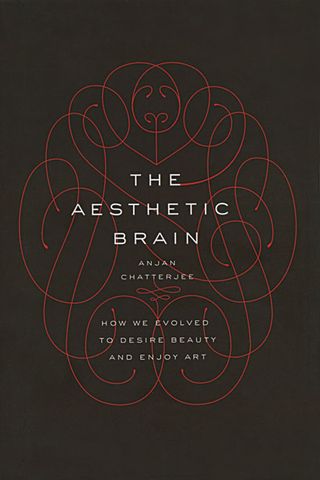
Can Science Tell Us What Beauty Is?

Bookshelf_aesthetic-brain

Gayil Nalls interviews Anjan Chatterjee in Nautilus:

In The Aesthetic Brain, Chatterjee tells us that our ability to have aesthetic experiences has its origins deep in our brains, in the orbitofrontal cortex and the nucleus accumbens, and is aided by neurotransmitters such as dopamine, opiates, and cannabibens, which control emotional responses. These responses developed, Chatterjee says, because they were useful for survival. But what happens to our aesthetic sense when the demands of survival are removed?

We caught up with Chatterjee last November at his office in the University of Pennsylvania’s Pennsylvania Hospital, where he is the new head of Neurology…

You’ve suggested that aesthetics stems from prioritizing liking over wanting. How?

When people talk about rewarding experiences in the brain, these tend to be carried out within deep structures of the brain—so parts of our emotional system, parts of the brain that are called the ventral striatum, or the frontal cortex, and the amygdala, and parts of the insula. So there’s this kind of network of brain structures within the brain that seem to be important for how we evaluate things and our reward systems.

Within that, there is a division of two systems that a neuroscientist at [the University of] Michigan named Kent Berridge has referred to as the “wanting and the liking” system. And the general idea there is that we typically like things we want and we want things we like, so these two systems operate in concert, as they should. But they have slightly different neurochemical bases and their anatomy is somewhat different. So one thing tends to be driven by dopamine. As an important neurochemical for our reward system, it’s important for learning, it’s important for movement—so people, for example, with Parkinson’s disease have a deficient state in dopamine and so their movements get constricted; they’re very slow. But [dopamine] is also important for learning and it’s important for our drive to get to things that we desire. Distinct from that is a separate system that is what Berridge calls the “liking” system and this is about the system that is purely the hedonic experience of something and that is mediated by cannabinoid and opioid receptors in the brain. So when people ingest cannabinoids or opioids, the kind of high you get from that is an exaggerated version of how these systems work in the normal brain.

So again, both systems tend to work together in most of our experiences—we want what we like and we like what we want—however, they can get dissociated. One example of a dissociation where you can have wanting without as much liking are in addictive states. So people as they progress and become quite addicted, crave their fix, so this desire to get their fix is extremely exaggerated. But it’s not clear that they enjoy the experience in the same way that they did. So that seems to be a dissociation that moves in one direction.

More here.

The Upper Middle Class Is Ruining America

150128_POL_MiddleClass.jpg.CROP.promo-mediumlarge

Reihan Salam in Slate:

We often hear about the political muscle of the ultrarich. Billionaires like the libertarians Charles and David Koch and Tom Steyer, the California environmentalist who’s been waging a one-man jihad against the Keystone XL pipeline, have become bogeymen for the left and right respectively. The influence of these machers is considerable, no doubt. Yet the upper middle class collectively wields far more influence. These are households with enough money to make modest political contributions, enough time to email their elected officials and to sign petitions, and enough influence to sway their neighbors. Upper-middle-class Americans vote at substantially higher ratesthan those less well-off, and though their turnout levels aren’t quite as high as those even richer than they are, there are far more upper-middle-class people than there are rich people. One can easily turn the Kochs or the Steyers of the world into a big fat political target. It’s harder to do the same to the lawyers, doctors, and management consultants who populate the tonier precincts of our cities and suburbs.

Another thing that separates the upper middle class from the truly wealthy is that even though they’re comfortable, they’re less able to take the threat of tax increases or benefit cuts in stride. Take away the mortgage interest deduction from a Koch brother and he’ll barely notice. Take it away from a two-earner couple living in an expensive suburb and you’ll have a fight on your hands. So the upper middle class often uses its political muscle to foil the fondest wishes of egalitarian liberals. This week offered a particularly vivid reminder of how that works. In the windup to his State of the Union address, Barack Obama released a proposal to curb the tax benefits associated with 529 college savings plans, which primarily benefit upper-middle-class families, to help finance the expansion of a separate tax credit that would primarily benefit lower-middle- and middle-middle-class families. Only 3 percent of households actually make use of these accounts, and 70 percent of the tax benefits go to households earning more than $200,000, so you can see why Obama might have thought no one would get too worked up about the proposal.

More here.

A paradise lost in Peshawar

Humeira Kazmi in The Nation:

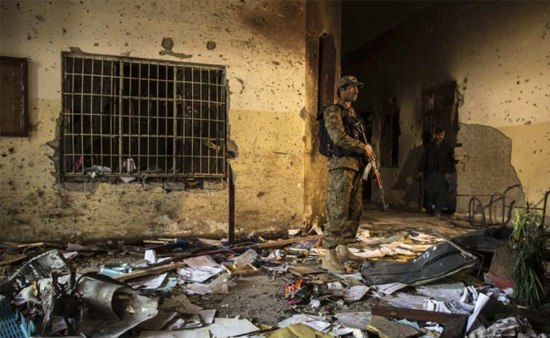
Let’s play a little game here that I was taught in school as part of our language arts class. We would be handed a photograph and asked to analyze it.

Take a look at this picture.

Peshawar_pakistan_school_reuters_650

What does the picture say to you? What do you see? A soldier in a war zone? What is the soldier thinking? What are you thinking as you look at his picture?

I’ll tell you what I see.

A soldier. But not in a war zone. In a school in Peshawar where 132 children were butchered by the Taliban to exact vengeance upon Pak Army. I think the soldier is thinking – this can’t be true. This cannot be a school in my country, this cannot be the blood of my children whom I vowed to protect. He’s trying to understand how this could happen. He’s looking at the debris of paper and mortar and bullet holes, staring at the blood splattered all over the walls, the floor and ceiling. Blood. So much blood, it soaks everything. He’s trying to make sense of the enemy’s motives. And he’s not sure of what he’ll do except bring the murderers to justice. I believe that about him. I trust that about him.

More here. [Thanks to Fawzia Naqvi.]

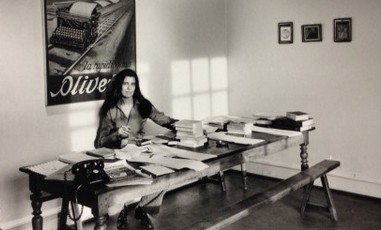
“Her exemplary effort to swallow the world”: Wasserman on Sontag, yesterday in Berlin

Cynthia Haven in The Book Haven:

ScreenHunter_969 Jan. 31 19.38My sole face-to-face encounter with Susan Sontag occurred at Stanford, when she was a visiting star sometime in the 1990s. She was dressed in the slightly dowdy “prison matron” threads that were her trademark, alleviated with a colorful scarf, another trademark. I had expected her to be physically towering; she was not. Obviously, that was the impression her books left on my psyche. I’m pretty certain she would say that had been the real encounter.

Steve Wasserman, editor at large for Yale University Press (and my former editor at the Los Angeles Times Book Review) got the double exposure of her books and her friendship. He recounted both yesterday in Berlin, in his keynote address, “Susan Sontag: Critic and Crusader” at a symposium at the Institute for Cultural Inquiry (Steve called it a “secular monastery”). He spoke to a standing-room-only crowd at the “Susan Sontag Revisited” symposium honoring the legendary cultural critic and author ten years after her death. He gave was a knockout address – one that should become the defining retrospective on the impact Susan Sontag has had on an entire generation.

His comments on her writing:

“Sontag’s style is her subject. For it is the way she thinks, how she goes about it, how she offers her readers the chance, as it were, to eavesdrop on a mind thinking as hard and as nimbly as it can that is most compelling about her work. Or, to put it another way, it is not so much her opinions that matter—though of course they do—but rather how she goes about arriving at them, how she renders them, the very warp and woof of her sentences.”

More here.

New Technique Reverses Aging By Decades In Cultured Human Cells

George Dvorsky in io9:

Uthnyn0bszitiiqhko5nScientists from Stanford Medical Center have devised a technique for extending the length of human telomeres. It's a breakthrough that could eventually result in therapies to treat a host of age-related diseases, including heart disease and diabetes. It could also result in longer, healthier lives.

Telomeres are those critical protective caps located on the tips of chromosomes. Think of them as those protective pieces of plastic on the ends of your shoelaces. Without them, the tips basically fall apart, which is kind of what happens with chromosomes over time; human telomeres, which are about 8,000 to 10,000 nucleotides long, get shorter and shorter with each cell division. Over time, they reach a critical length, and the cell stops dividing, or simply dies. At the macroscale, we experience this as senescence, or aging, as your body's cells progressively lose the ability to replenish.

So you can see why this breakthrough, in which the Stanford scientists rapidly and efficiently increased the length of human telomeres, is big news.

To do it, a research team led by Helen Blau delivered a bioengineered version of messenger RNA that encodes a telomere-extending protein to cultured human cells. In this case, the RNA contained a coding sequence called TERT, which is the active component of telomerase.

More here.

Why Rights Aren’t Wrong in Tough Times

Ken Roth in the Human Rights Watch World Report 2015:

ScreenHunter_968 Jan. 31 16.12The world has not seen this much tumult for a generation. The once-heralded Arab Spring has given way almost everywhere to conflict and repression. Islamist extremists commit mass atrocities and threaten civilians throughout the Middle East and parts of Asia and Africa. Cold War-type tensions have revived over Ukraine, with even a civilian jetliner shot out of the sky. Sometimes it can seem as if the world is unraveling.

Many governments have responded to the turmoil by downplaying or abandoning human rights. Governments directly affected by the ferment are often eager for an excuse to suppress popular pressure for democratic change. Other influential governments are frequently more comfortable falling back on familiar relationships with autocrats than contending with the uncertainty of popular rule. Some of these governments continue to raise human rights concerns, but many appear to have concluded that today’s serious security threats must take precedence over human rights. In this difficult moment, they seem to argue, human rights must be put on the back burner, a luxury for less trying times.

That subordination of human rights is not only wrong, but also shortsighted and counterproductive. Human rights violations played a major role in spawning or aggravating most of today’s crises. Protecting human rights and enabling people to have a say in how their governments address the crises will be key to their resolution. Particularly in periods of challenges and difficult choices, human rights are an essential compass for political action.

More here.

This is why they hate us: The truth about the roots of Muslim extremism

Sarah Chayes in Salon:

Abd al-Rahman Atiya, killed in a drone strike in 2011, conceded that the 9/11 attacks had been launched because of hatred for some aspects of Western culture, but the main rationale was the U.S. role enabling Arab kleptocracies.

Yes we hate the corruptive financial lifestyle that does not please God . . . But . . . the more important reason is their . . . appointing collaborative regimes for them in our countries. Then they support these regimes and corruptive governments against their people, who demand freedom and want to abide by Islam.

George_w_bush4This Western support for Middle Eastern kleptocracies was “the real reason that pushed the mujahideen to carry out these blessed attacks.” Atiya went on to blast the aspects of Western culture he deemed most objectionable—excesses that have seemed especially pronounced since the 1990s: “It is a corrupt, wayward, and unjust system . . . based on beastly behavior, and seven principles: greed, gluttony, injustice, selfishness, extreme materialism, abandonment of religion.” In this context—and recalling the history of Dutch Protestants ransacking the physical manifestations of Catholic kleptocracy—the choice of the Pentagon and the Twin Towers, near Wall Street, as the target of the 9/11 attacks may take on an enhanced meaning. Perhaps Al Qaeda’s main intent was not to kill large numbers of Americans so much as to visit a spectacular symbolic punishment upon the manifestations of what it saw as a criminal kleptocracy that controlled the most powerful instruments of force on earth. Perhaps Al Qaeda was in fact committing an act of iconoclasm: replicating the kind of sentences that the 1566 Protestants executed on churches and articles of devotion the length and breadth of the Low Countries. These roughly comparable instances, from diçerent centuries and religions, exemplify a persistent relationship between corruption and religious extremism. In periods of acute, self-serving behavior on the part of public leaders, Christians and Muslims alike have often sought a corrective in strict codes of personal behavior derived from the precepts of puritanical religion. And they have imposed it, if necessary, by force. Those who object to this remedy should look for other ways to cure the cause. These roughly comparable instances, from diçerent centuries and religions, exemplify a persistent relationship between corruption and religious extremism. In periods of acute, self-serving behavior on the part of public leaders, Christians and Muslims alike have often sought a corrective in strict codes of personal behavior derived from the precepts of puritanical religion. And they have imposed it, if necessary, by force. Those who object to this remedy should look for other ways to cure the cause.

More here.

Guantánamo Diary

Mark Danner in The New York Times:

DannerOn or about Sept. 11, 2001, American character changed. What Americans had proudly flaunted as “our highest values” were now judged to be luxuries that in a new time of peril the country could ill afford. Justice, and its cardinal principle of innocent until proven guilty, became a risk, its indulgence a weakness. Asked recently about an innocent man who had been tortured to death in an American “black site” in Afghanistan, former Vice President Dick Cheney did not hesitate. “I’m more concerned,” he said, “with bad guys who got out and released than I am with a few that, in fact, were innocent.” In this new era in which all would be sacrificed to protect the country, torture and even murder of the innocent must be counted simply “collateral damage.”

“Guantánamo Diary” is the most profound account yet written of what it is like to be that collateral damage. One fall day 13 years ago Mohamedou Ould Slahi, a 30-year-old electrical engineer and telecommunications specialist, received a visit at his house in Noakchott, Mauritania, from two officers summoning him to come answer questions at the country’s intelligence ministry. “Take your car,” one of the men told him, as Slahi stood in front of his house with his mother and his aunt. “We hope you can come back today.” Listening to these words, Slahi’s mother fixed her eyes on her son. “It is the taste of helplessness,” he writes, “when you see your beloved fading away like a dream and you cannot help him. . . . I would watch both my mom and my aunt praying in my rearview mirror until we took the first turn and I saw my beloved ones disappear.” That was Nov. 20, 2001. Slahi’s mother has since died. Her son has never returned.

More here.

Friday, January 30, 2015

RoboCorp: Get ready for companies that run themselves

Distribution-GS0720671

David Z Morris in Aeon (Photo by Gallery Stock):

Though retailers and service providers adopted Bitcoin en masse in 2014, financial servicers have been much more cautious. What this means is that there are still very few ways for users to convert Bitcoin or other cryptocurrencies into traditional currencies or commodities.

Partly in order to work around this, the BitShares trading platform offers participants no ownership of the commodities they’re nominally taking positions on. Instead, Larimer describes it as a ‘predictive market’, in which participants set commodity prices by taking positions – or, put more directly, by placing bets. BitShares is, for now, a digital version of the 19th-century bucket shops where the working classes would go to bet on stock‑market moves. This form of speculation is illegal in most US states, including Washington, California and Mississippi. But that could change quickly. As digital cash becomes integrated with more and more services, DACs [Distributed Autonomous Corporations] such as BitShares will almost certainly find ways to interface with real-world markets for gold, dollars and goods of all kinds. If those connections expand, the possibilities of DACs will expand with them.

Imagine, for instance, a bike-rental system administered by a DAC hosted across hundreds or thousands of different computers in its home city. The DAC would handle the day-to-day management of bikes and payments, following parameters laid down by a group of founders. Those hosting the management programme would be paid in the system’s own cryptocurrency – let’s call it BikeCoin. That currency could be used to rent bikes – in fact, it would be required to, and would derive its value on exchanges such as BitShares from the demand for local bike rentals.

Guided by its management protocols, our bike DAC would use its revenue to pay for repairs and other upkeep. It could use online information to find the right people for various maintenance tasks, and to evaluate their performance. A sufficiently advanced system could choose locations for new stations based on analysis of traffic information, and then make the arrangements to have them built.

More here.