Sunday, April 19, 2015

Monica Byrne: acclaimed novelist offers arresting visions of the future

The scientist turned author has just won the James Tiptree award for her first novel, The Girl in the Road, as she works toward a goal of ‘radical empathy’.

Lydia Kiesling in The Guardian:

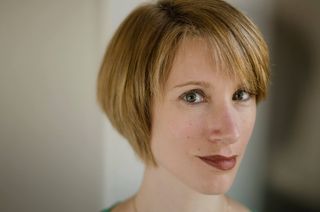
A3ec345d-ca2c-4923-9fc3-57a3c26127ab-bestSizeAvailableMonica Byrne is about to head to a coffee shop and sort 23,000 words’ worth of notes into the bones of a new novel when I speak with her. “Fifty per cent of novel writing is just organisation,” she tells me. “It’s like writing a thesis.” Byrne, who was lately awarded the James Tiptree award for her debut novel The Girl in the Road, has a master’s degree in geochemistry fromMIT and an alternative future in the sciences if writing doesn’t pan out. On off-days, she tells me, she reminds herself that if she doesn’t write, she’ll wind up “a lab tech for my whole life”.

Given her track record, this seems unlikely. Byrne’s first fiction efforts got her accepted into the prestigious Clarion Science Fiction and Fantasy Writer’s workshop, where she took a class with Neil Gaiman. She has a polymath’s assortment of interests and skills – pile “accomplished playwright” on to her résumé with the geochemistry degree. As she works on her new novel, set in Belize, she’s also writing a new play, an absurdist work called Such Cake, about two people trying to put on a good show despite the overwhelming evidence that, according to Byrne, “95% of all theater is bad”.

Her work has a kinetic quality that seems the natural habit of a quick mind, as difficult to pin down as the metallic hydrogen that forms a major plot point in The Girl in the Road. The novel travels nimbly from science to spirituality to geopolitics, claiming territory inside and outside of its genre.

More here.

Tiffanie Wen interviews Mohammed Dajani Daoudi

From Guernica:

Dajani_press201208_500Mohammed Dajani Daoudi’s ancestors include custodians of King David’s tomb, two mayors of Jerusalem, and an assassinated peace activist. Dajani, a Palestinian professor of political science, non-violent activist, and founder of al-Wasatia, a moderate Islamic movement, is actively upholding this lineage.

Born in Jerusalem in 1946, Dajani experienced the ramifications of the 1948 Arab-Israeli war firsthand. As Israelis took over Arab neighborhoods in Jerusalem, his family fled to Egypt, only to return as refugees in 1949. After the 1967 war, during which Dajani was separated from his family, he joined the ranks of Fatah, which advocated for the liberation of Palestine through armed struggle, and trained as a guerilla.

In 1970, Dajani’s passport was revoked by Jordan during the so-called Black September civil war, and in 1975 he was deported from Lebanon to Syria. Disappointed by the corruption he observed within Fatah, he took the opportunity to “divorce” politics and “marry” academics. He then, on an Algerian passport he was granted, traveled to the United States to complete a series of advanced degrees, including a master’s in social science at Eastern Michigan University, a PhD in government from the University of South Carolina at Columbia, and a PhD in political economy from the University of Texas at Austin. In 1985, King Hussein of Jordan issued Dajani a pardon, allowing him to return to Amman, where he worked at the Applied Science University as chair of the political science and diplomacy department.

More here.

The Vietnam War, as Seen by the Victors

Elisabeth Rosen in The Atlantic:

ScreenHunter_1147 Apr. 19 17.17Forty years ago, on April 30, 1975, Nguyen Dang Phat experienced the happiest day of his life.

That morning, as communist troops swept into the South Vietnamese capital of Saigon and forced the U.S.-backed government to surrender, the North Vietnamese Army soldier marked the end of the war along with a crowd of people in Hanoi. The city was about to become the capital of a unified Vietnam. “All the roads were flooded by people holding flags,” Nguyen, now 65, told me recently. “There were no bombs or airplane sounds or screaming. The happy moment was indescribable.”

The event, known in the United States as the fall of Saigon and conjuring images of panicked Vietnamese trying to crowd onto helicopters to be evacuated, is celebrated as Reunification Day here in Hanoi. The holiday involves little explicit reflection on the country’s 15-year-plus conflict, in which North Vietnam and its supporters in the South fought to unify the country under communism, and the U.S. intervened on behalf of South Vietnam’s anti-communist government. More than 58,000 American soldiers died in the fighting between 1960 and 1975; the estimated number of Vietnamese soldiers and civilians killed on both sidesvaries widely, from 2.1 million to 3.8 million during the American intervention and in related conflicts before and after.

In the United States, the story of America and South Vietnam’s defeat is familiar. But North Vietnam’s war generation experienced those events differently, and several told me recently what it was like to be on the “winning” side.

More here.

How Israel Hid Its Secret Nuclear Weapons Program

Avner Cohen and William Burr in Politico:

ScreenHunter_1146 Apr. 19 17.08For decades, the world has known that the massive Israeli facility near Dimona, in the Negev Desert, was the key to its secret nuclear project. Yet, for decades, the world—and Israel—knew that Israel had once misleadingly referred to it as a “textile factory.” Until now, though, we’ve never known how that myth began—and how quickly the United States saw through it. The answers, as it turns out, are part of a fascinating tale that played out in the closing weeks of the Eisenhower administration—a story that begins with the father of Secretary of State John Kerry and a familiar charge that the U.S. intelligence community failed to “connect the dots.”

In its final months, even as the Kennedy-Nixon presidential race captivated the country, the Eisenhower administration faced a series of crises involving Cuba and Laos. Yet, as the fall of 1960 progressed, President Dwight D. Eisenhower encountered a significant and unexpected problem of a new kind—U.S. diplomats learned and U.S. intelligence soon confirmed that Israel was building, with French aid, a secret nuclear reactor in the Negev Desert. Soon concluding that the Israelis were likely seeking an eventual nuclear weapons capability, the administration saw a threat to strategic stability in the Middle East and a nuclear proliferation threat. Adding fuel to the fire was the perception that Israel was deceitful, or had not “come clean,” as CIA director Allen Dulles put it. Once the Americans started asking questions about Dimona, the site of Israel’s nuclear complex, the Israelis gave evasive and implausible cover stories.

A little anecdote about an occurrence sometime in September 1960 sheds light on the development of U.S. perceptions that Israel was being less than honest about Dimona.

More here.

Sunday Poem

Eve of the Ascent

……….. —Yosemite National Park.

Neither level nor inhospitable.
near the summit the ridgeline gentles,
the bald rock ringed (unevenly) with pines.
We’re gathered by two campstoves
in the lee of giant boulders, our faces
sun-beatified gold-violet. We look up.
Half Dome steepens while we gaze
and seems farther away for how night-hikers
avoiding fees, spider through the trees
then disappear. Our day-sore muscles
ache against the stones—we’d sleep anywhere
and dream we were ascending.
For three days, our guides have warned us
if we slip outside the cables we will plummet
down the sheer rock face and die.
Alpine scalpel. Stilled bell. The campsite’s
eerie as a theater, the air is thin, and when
they tell us to set intentions, my demons
rise out of the valley in the massive,
granite forms to which I’ve fixed them—
the friends I’ve lost to wordless anger
crowd the switchbacks like anti-song,
pointing me back to the circuit path
that since I wanted it resolved leads
dully nowhere. I still want to believe
I acted justly. In Dante’s Purgatory, the wrathful
make their paces through a veil of smoke
they somehow need to see, then see through.
Pretty, bird-blue, iris-stinging smoke—
a thing that blocks the light you cannot cling to.
Behind gnarly junipers our white tent flaps
in wind that would lift it a mile over the valley
had we not weighed it down with heavy stones.
And what if what’s beyond this is no feeling?
We watch the midnight hikers’ headlamps
light the woods like water-ripple haloes.
Their voices echo as if across a lake, and I think
of swimming in late summer, late at night,
when I’d join my friends in the black waves naked,
and like I used to do on nights like this, I want to smoke,
or like the time twenty years ago when Carol and I
drove back from a summer in Seattle
and camped in Big Sky Country, trying to light
the bong we’d made from an empty can
of Country Time Lemonade. I took my contacts
out too soon, and couldn’t see the stars.
The miracle is friends who know you’re flawed
and love you anyway, like pilgrim Dante
who opened his arms to every penitent Italian
on the mountain. And while our fellow hikers
fall asleep in the shelter of our temporary city,
Carol imitates her Granny Ray, who like an angel
born in the state known from premium tobacco
suddenly appears, making us laugh so hard
we cannot breathe. Michael Wilson snores
three tents away, but we’re awake under gray stars
and the Dome looms, amplified in moonlight,
to the shape of what we cannot keep impossible.
.
.
by Katy Didden
from 32 Poems, Fall/Winter 2014

Did Affluence Spur the Rise of Modern Religions?

Bret Stetka in Scientific American:

GodAbout 2,500 years ago something changed the way humans think. Within the span of two centuries, in three separate regions of Eurasia, spiritual movements emerged that would give rise to the world's major moral religions, those preaching some combination of compassion, humility and asceticism. Scholars often attribute the rise of these moral religions—Buddhism, Judaism, Islam, Hinduism and Christianity included—to population growth, seeing morality as a necessary social stabilizer in increasingly large and volatile human communities. Yet findings from a recent study published in Current Biology point to a different factor: rising affluence.

The authors investigated variables relating to political complexity and living standards. Affluence emerged as a major force in the rise of moral religion, in particular, access to energy. Across cultures moral religions abruptly emerged when members of a population could reliably source 20,000 calories of energy a day, including food (for humans and livestock), fuel and raw materials. “This number appears to correspond with a certain peace of mind,” says lead author Nicolas Baumard, a research scientist at École Normale Supérieure in Paris. “Having a roof over your head, not feeling like the world is full of predators and enemies, knowing that you'll have enough to eat tomorrow.” As Baumard points out, psychology research shows that affluence appears to influence our motivations and reward circuitry away from short-term gain to also considering the benefits of long-term strategy. In other words, with a steady energy supply, we had more time to cooperate, cultivate skills and consider consequences. Affluence also allowed more time for existential pondering: maybe we have some greater moral responsibility; perhaps life has a purpose.

Baumard acknowledges that moral and ascetic qualities probably existed in humans before the major religions emphasizing them.

More here.

Saturday, April 18, 2015

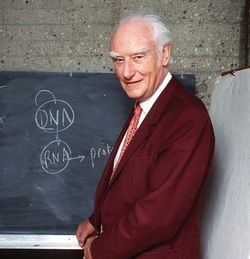
Freeman Dyson Interview

From the New York Times:

ScreenHunter_1145 Apr. 19 02.08What books are currently on your night stand?

“The Left Side of History,” by Kristen Ghodsee, and “The Parthenon Enigma,” by Joan Connelly. Two wonderful new books by friends of mine. Kristen is an anthropologist at Bowdoin College, writing about the history of the last hundred years as it is seen through the eyes of her informants in Bulgaria. History looks very different if you fought for national liberation and human progress under the banner of Communism. Joan is an archaeologist at New York University. She writes about the archaic Greek myths and rituals that became embodied in the statuary of the Parthenon. She has a startlingly new interpretation of the Parthenon as the centerpiece of the religious life of ancient Athens. Kristen and Joan are kindred spirits, working with different tools in different millennia, and finding a similar illumination. To understand either modern Bulgarians or ancient Greeks, you must enter their world of human self-sacrifice.

Who is your favorite novelist of all time?

Octavia Butler, a tall black lady who died in 2006. She wrote “Parable of the Sower” and “Parable of the Talents,” two books that are normally classified as science fiction but are more concerned with theology than with science. The main character in both stories is a black woman who survives apocalyptic disasters and becomes the founder of a new religion in California. The character is in many ways a self-portrait of Octavia. I once spent a day with her entertaining a crowd of Chicago inner-city schoolchildren. I answered the science questions. She answered all the others. She was the star of the show.

More here.

‘Infested,’ About Bedbugs

19ZUK-master315-v2Marlene Zuk at The New York Times:

A book about bedbugs is, by necessity, a book about nearly everything: about travel and adventure, about our ­relationship to nature, about how scientists solve problems, about trust and whether we view strangers as friends or foes. It is a book about what people will do under extreme circumstances, and about environmental politics, and art and mental illness. It is even a book about kinky sex.

Brooke Borel deftly takes us through this arthropod microcosm of the universe, as she traces the culture and biology of a resurgent scourge. The first page of each chapter is delicately spattered with ­ever-tinier drawings of bedbugs; at first you try to brush away what looks like specks of dust, just as you would similar blotches on your sheets, only to have realization dawn. You are infested.

Itchy New Yorkers who remember when staying in cheap hostels or dragging mattresses off the street happened with impunity might be skeptical, but the ­return of bedbugs “isn’t a fluke. It is a return to ­normal, an ­ecological homeostasis.”

more here.

Armenia’s genocide: death and denial

8ca97ea2-f1f5-4a89-b6bb-8b57bb6fe77dDavid Gardner at the Financial Times:

Last April, on the eve of the anniversary of the government deportations in 1915 that began the systemic massacres, then prime minister and now president Erdoğan, in a hedged but nonetheless unprecedented statement, offered his condolences for the mass murder, speaking of the “shared pain” of “millions of people of all religions and ethnicities [who] lost their lives in the first world war”. Yet the messaging is mixed. This year Turkey has chosen to mark the centenary of the allied landings in Gallipoli — a battle Mustafa Kemal was instrumental in winning — on the same date, April 24, as the remembrance of the Armenian genocide.

One can now find books in Turkey analysing these terrible events as a genocide but no official recognition that this was what it was. Erdoğan’s offer to open Ottoman archives to a panel of international scholars to determine the truth of what happened is superfluous in light of scholarship there for all to see.

The three newly published, and very different, books discussed here — and many previous works besides — can leave no one with a scintilla of doubt that what was done to the Ottoman Armenians (and the Assyrian Christians of eastern Anatolia) was genocide. They were annihilated, and the merciless drive against the Armenians was centrally directed by the Ottoman government under the Committee of Union and Progress (CUP) or Young Turks.

more here.

how will Günter Grass be remembered?

GRASS-articleInlineDavid L. Ulin at The LA Times:

“[W]riters,” he declared in his 1999 Nobel Prize lecture, “should consider the condition of permanent controversiality to be invigorating, part of the risk involved in choosing the profession. It is a fact of life that writers have always and with due consideration and great pleasure spit in the soup of the high and mighty. That is what makes the history of literature analogous to the development and refinement of censorship.”

Grass spent six decades operating out of such a premise, as a novelist and essayist, a playwright, artist and poet. (His final book, which has yet to appear in English, was a third volume of memoirs.) Beginning in the late 1950s, he wrote speeches for Berlin Mayor and West German Chancellor Willy Brandt; later, he was an outspoken opponent of reunification, arguing that because of its history, Germany had abdicated the right to be “strong and united.”

This sense of commitment unified his work and public posture, his stature as both artist and human being.

Or, as he explained in 1991: “Writers are involved not only with their inner, intellectual lives, but also with the process of daily life. … Both my writing and my drawing are invariably mixed up with politics, whether I want them to be or not.”

more here.

Broken on the wheel

Ken Armstrong in The Paris Review (via The Browser):

Calas3On the night of October 13, 1761, cries rang from the shop of Jean Calas, a cloth merchant who lived and worked in the commercial heart of Toulouse, in the South of France. The eldest of Calas’s six children, Marc-Antoine, a moody, handsome man who was fond of billiards and gambling, had just been found dead. The family said he had been murdered—perhaps stuck with a sword by someone who slipped into the darkened boutique from the cobblestone street.

A crowd gathered outside the front door as investigators were summoned. A doctor and two surgeons, called to examine the body, found only a “livid mark on the neck.” They signed a report refuting the family’s account of some intruder with a blade, concluding that Marc-Antoine, twenty-nine, had been “hanged whilst alive, by himself or by others.”

Those last five words, “by himself or by others,” began an enduring mystery and a true cause célèbre, one that might have been the “crime of the century” for the 1700s had the cliché been in use back then. Voltaire, the philosopher, dramatist and propagandist—“the greatest amuser of his age” and the greatest polemicist—became obsessed with the case, and for years worked to eradicate what he considered to be a stain on his country, church, and courts.

Finally, a panel of forty judges sat in Paris to hear the case against Calas once again. The verdict they issued, 250 years ago this week, “echoed and re-echoed” in Europe and beyond. Voltaire, by appealing directly to the people, helped established the power of public opinion as a tool to fight injustice. To some legal scholars, the infamous case also marked the first stirrings of the global movement to end capital punishment.

Read the rest here.

Tariq Ali on Eduardo Galeano

Tariq Ali in The Guardian:

ScreenHunter_1143 Apr. 18 14.07In Bertolt Brecht’s Galileo, the eponymous antihero is confronted by his student, who is livid that the great man has recanted: “Unhappy is the land that breeds no hero.” Galileo’s response is calm: “Unhappy is the land that needs a hero.” And he continues to work on his manuscript, which he then hands to his estranged pupil, who realises at the end of the play that what is really important has been achieved. The ideas will survive. My late friend and comrade, the Uruguayan journalist and historian Eduardo Galeano, who died this week, never recanted his beliefs in private or in public. Nor did he believe in heroes.

His entire work is suffused with the idea of mass democracy, whereby the poor and oppressed achieve self-emancipation through common action for limited or broader goals. Galeano was a modern-day Simón Bolívar, trying to achieve with his pen what the liberator had attempted with the sword: the unity of their continent against empires old and new. He spoke for the underground voices of the continent when US-backed military dictatorships crushed democracy in most parts of South America; he spoke for those being tortured, for indigenous people crushed by the dual oppression of empire and creole oligarchs.

Was he optimistic or pessimistic? Both, often together, but he never gave up hope.

More here.

Visiting Gore Vidal

James Campbell in The Times Literary Supplement:

VidalIn the summer of 1980, at the Edinburgh Writers’ Conference, precursor of the present festival, I was introduced to Gore Vidal as the editor of the New Edinburgh Review. “And how is Lord Jeffrey?” Vidal asked as he took my hand, referring to the first editor (1803–29) of the Edinburgh Review. “The wide eyes were alive with humour and so was the smiling mouth”, in the words of the memoir by the Austrian aristocrat Cecilia Sternberg, quoted, along with other passages in praise of himself, in Vidal’s memoir, Palimpsest. I was suitably charmed. Interviewed onstage, he answered questions with the amusing acerbity expected of him. When I included in my report for the TLS a characteristic witticism about Anthony Burgess (also present at the conference) writing for “an imaginary readership”, Vidal wrote a letter without smiling mouth to the Editor to deny that he had said any such thing. “How could I? I am part of Burgess’s audience and although I am often grotesquely imagined, I am not imaginary.”

I was chastened but puzzled. The joke had been repeated by more than one member of a delighted audience. After reading Sympathy for the Devil, I realize that I was not alone in being subject to the master’s morning-after revisionism. It was probably only Vidal’s affection for the TLS, to which at the time he was a regular contributor, that restrained him from instructing his lawyers to settle the potentially damaging calumny. (How could severed relations with Burgess harm him? But he would find a way.) In 2007, as Michael Mewshaw relates, the London Review of Books repeated a libel that had been originally issued in print many years earlier by Truman Capote who alleged that “a drunken Vidal had been bodily heaved from the White House by Bobby Kennedy”. After much expensive wrangling, Capote, a former friend of the wounded party, was obliged to pay damages and apologize, even though Vidal was often paralytically drunk and admitted in Palimpsest that Robert Kennedy “hated” him more than almost anyone.

More here.