What is Russia Doing in Syria?

Patrick Cockburn in counterpunch:

Plane_bomb_300915-510x383The military balance of power in Syria and Iraq is changing. The Russian air strikes that have been taking place since the end of September are strengthening and raising the morale of the Syrian army, which earlier in the year looked fought out and was on the retreat. With the support of Russian airpower, the army is now on the offensive in and around Aleppo, Syria’s second largest city, and is seeking to regain lost territory in Idlib province. Syrian commanders on the ground are reportedly relaying the co-ordinates of between 400 and 800 targets to the Russian air force every day, though only a small proportion of them come under immediate attack. The chances of Bashar al-Assad’s government falling – though always more remote than many suggested – are disappearing. Not that this means he is going to win.

The drama of Russian military action, while provoking a wave of Cold War rhetoric from Western leaders and the media, has taken attention away from an equally significant development in the war in Syria and Iraq. This has been the failure over the last year of the US air campaign – which began in Iraq in August 2014 before being extended to Syria – to weaken Islamic State and other al-Qaida-type groups. By October the US-led coalition had carried out 7323 air strikes, the great majority of them by the US air force, which made 3231 strikes in Iraq and 2487 in Syria. But the campaign has demonstrably failed to contain IS, which in May captured Ramadi in Iraq and Palmyra in Syria. There have been far fewer attacks against the Syrian branch of al-Qaida, Jabhat al-Nusra, and the extreme Islamist group Ahrar al-Sham, which between them dominate the insurgency in northern Syria. The US failure is political as much as military: it needs partners on the ground who are fighting IS, but its choice is limited because those actually engaged in combat with the Sunni jihadis are largely Shia – Iran itself, the Syrian army, Hizbullah, the Shia militias in Iraq – and the US can’t offer them full military co-operation because that would alienate the Sunni states, the bedrock of America’s power in the region. As a result the US can only use its air force in support of the Kurds.

The US faces the same dilemma in Iraq and Syria today as it did after 9/11 when George Bush declared the war on terror. It was known then that 15 of the 19 hijackers were Saudis, Osama bin Laden was a Saudi and the money for the operation came from Saudi donors.

More here.

Friday, October 30, 2015

More Evidence that Income Inequality Sucks

David Sloan Wilson in Social Evolution Forum:

ScreenHunter_1478 Oct. 30 20.21The world is slowly reaching the conclusion that income inequality is toxic for human welfare. Books such as The Spirit Level, Why Nations Fail, and Capital in the 21st Century make the case at the macro scale by chronicling the fate of nations. In the United States of America, income inequality has swung like a slow pendulum, reaching an extreme during the Gilded Age and today. Well-being has swung in the reverse direction, as shown in this remarkable graph compiled by Evolution Institute Vice President Peter Turchin (go here for details).

A new study1 provides more evidence for the toxic effects of inequality, if more is needed. A team of economists led by Robert H. Frank measured changes in income inequality in each of the states and in the 100 most densely populated counties in America during the period 1990-2000. Income inequality was measured in two ways—the familiar GINI index and the ratio of the 90th percentile household income to the 50th percentile household income (P9050ratio). Well-being measures included non-business bankruptcy rates, the proportion of the adult population that is divorced, and the proportion of workers whose daily commute is an hour or more. The first two measures are obviously indicative of financial and other forms of stress. The rationale for the third measure is that most people do not want to commute more than an hour to work if they can afford to live closer. As with all good research of this sort, a host of other variables were controlled for.

The results spoke loud and clear: The states and counties that experienced the largest increases in income inequality between 1990-2000 also experienced the largest increases in bankruptcies, divorces, and long commutes.

More here.

The most important woman in Turkey: Meet Figen Yuksekdağ, whose party tries in vain to keep Erdoğan honest

Alec Scott in Politico:

ScreenHunter_1476 Oct. 30 20.12Figen Yuksekdağ would be a superstar in a country less suffocated by macho politics.

As co-chair of the party which unexpectedly robbed the Justice and Development Party (AKP) of its ruling majority in June, Yuksekdağ is one of the most important politicians in Turkey today. She is also the embodiment of the leftist Peoples’ Democratic Party’s (HDP) commitment to gender equality, in a country that ranks 120 of 136 on the Global Gender Gap Index. All positions in the HDP are split between a woman and a man as a matter of policy, but it would be ludicrous to view Yuksekdağ as “the token woman.”

Since the age of 17, when she was arrested for the first time in a street protest in southeast Turkey, she earned her political stripes with decades of activism before becoming co-chair of the party at its formation three years ago. She is also the kind of politician who dismisses Tansu Çiller, Turkey’s first — and only — female prime minister, as “a cheap copy of Margaret Thatcher.” It is safe to say Yuksekdağ is not a cheap copy of anyone.

More here.

Woody Allen is a phenomenon but a foul dust floats in his wake

PA-2760389Sam Tanenhaus at Prospect Magazine:

In truth, glimpses of Allen’s other self had been visible all along. Kael had asked: “What man in his forties but Woody Allen could pass off a predilection for teenagers as a quest for true values?” The reference was to Manhattan, with its coltish 17-year-old co-star, Mariel Hemingway. The movie was a Pygmalion story. So was Annie Hall, and to some extent Hannah and Her Sisters. Allen was not just the director of that last film. He also “picked the wardrobe and hairdo for each actress, checking the makeup and rechecking, even reshooting a scene if he felt a minor detail of their appearance was wrong,” Shone notes. Such fussing isn’t uncommon among filmmakers. DW Griffith did it with the white-goddess Gish sisters. Hitchcock made it the premise of Vertigo. But few harboured delusions about those cold auteurs. Allen was different. He had all but invented the movie mensch who seemed “to get” women. His relationship with Farrow was itself a Manhattan fairy tale—exposed now as dreams always were in his films, only in this instance Allen stood before us, the malign sorcerer disrobed.

This is the foul dust that floats in the wake of Allen’s comedy. He has said, time and again, that the “Woody” onscreen is nothing like himself. But that is only partly true. Each of the many Woodys, surrogates for their creator, enact their different rituals of Zelig-like flight. It is the same impulse that drives him now, not just to make film after film, but to speed through each, as if he wants to be rid of it. Woody Allen’s art springs as much from rage as from hope. It offers not freedom, but escape—fleeting, delicious, the violent release of laughter in the dark.

more here.

William Morris and the demise of printing

87ec15ec-7d61-11e5_1187920hJan Marsh at the Times Literary Supplement:

In 1893 William Morris predicted the end of the book, saying “within fifty years printing books would be an extinct art – we should be carrying all our books about in bottles with patent stoppers. While there was still a chance, [we] should try and produce a few specimens of what was really good printing”.

At the time the Kelmscott Press was in its third year and Morris had been asked to speak on printing for the Arts & Crafts Exhibition Society. His talk “On the Printing of Books” took place on November 2, 1893 at the New Gallery in Regent Street, and was reported in The Times on November 6. Morris, who was received with cheers at the beginning and end of the lecture, “demonstrated by means of lantern slides the various stages which printing had passed through from the time of its invention until the third decade of the 16th century” and concluded with illustrations from Caxton’s Golden Legend and Historyes of Troy, printed at the Kelmscott Press.

When published, the lecture traced the origins of European printing with moveable metal type when “it was a matter of course that . . . when the craftsmen took care that beautiful form should always be a part of their productions whatever they were, the forms of printed letters should be beautiful, and that their arrangement on the page should be reasonable and a help to the shapeliness of the letters themselves”.

more here.

How to see yourself in a world where only math is real

Book-ad_TegmarkMax Tegmark at Nautilus:

The idea of spacetime does more than teach us to rethink the meaning of past and future. It also introduces us to the idea of a mathematical universe. Spacetime is a purely mathematical structure in the sense that it has no properties at all except mathematical properties, for example the number four, its number of dimensions. In my book Our Mathematical Universe, I argue that not only spacetime, but indeed our entire external physical reality, is a mathematical structure, which is by definition an abstract, immutable entity existing outside of space and time.

What does this actually mean? It means, for one thing, a universe that can be beautifully described by mathematics. That this is true for our universe has become increasingly clear over the centuries, with evidence piling up ever more rapidly. The latest triumph in this area is the discovery of the Higgs boson, which, just like the planet Neptune and the radio wave, was first predicted with a pencil, using mathematical equations.

That our universe is approximately described by mathematics means that some but not all of its properties are mathematical. That it is mathematical means that all of its properties are mathematical; that it has no properties at all except mathematical ones. If I’m right and this is true, then it’s good news for physics, because all properties of our universe can in principle be understood if we are intelligent and creative enough. It also implies that our reality is vastly larger than we thought, containing a diverse collection of universes obeying all mathematically possible laws of physics.

more here.

Friday Poem

The Roads of Western Europe

The roads of Western Europe hum
like parachute lines stretched taut:
there you see the patches of Central Europe –
a cup of poison, a few ravines with grapevine,
and here is Eastern Europe, a partly rotted watermelon . . .
Some put the blame on Tartars, some on Communism.

It was not long ago that bashful Franz,
a pariah with his earlocks shaved off,
wandered amidst the pines and churches
of Europe where you will never find
a mate for a one-night stand, a man to share
a drink of pure alcohol with. He should have fled
to our land of tolstoys and dostoyevskys, where
the red hag trots in the deathly foam of sweat,
where he would write and shine until the day
they would do him in . . .
.

by Bakhyt Kenzjejev
from Nevidimye
publisher: OGI, Moscow, 2004

translation: 2011, Steven Seymour

The Radical Ellen Willis

Emily Greenhouse in Dissent:

EmilyFor those of us born in the eighties and nineties, unpleasantly called Millennials, prosperity has long seemed out of reach. We who rushed into the economy right as the “lesser Depression” peaked were worse off by nearly every metric possible: income, employment, mobility, home ownership, student loan debt. In 2012, according to the New York Times, the median household income for twenty-five- to thirty-four-year-olds was about the same, adjusted for inflation, as it was in 1980—and almost $8,000 less than it was in 2000. By last year’s measure, around 14 percent of my demographic—that’s 2.5 million people—were living with their parents. Of those, 43 percent would be below the poverty line if they moved out on their own. Plainly, we should not expect what our parents had: we will not be getting it. Better educated though our generation may be, the opportunities out there are increasingly slim. For all the facetious mewling we confront—the mainstream knocking of spoiled liberal arts grads by people confused by Lena Dunham’s persistent nudity—the chance to make our way, creating and thinking, is slimmer than ever. In twenty years’ time, how many significant literary fiction writers will have grown up working class? How many career artists at all who weren’t endowed with a trust fund?

Maybe we’re oblivious, or maybe just stretched thin, but not enough people are talking about this. The late cultural critic Ellen Willis did—and years before the worst of it hit. With a clarity of thought and the kind of fury that pangs and never scabs over, she diagnosed, snarled, and illuminated what she considered a central plague of her day: the way our economy limits our creative expressions. As she put it in her essay “Intellectual Work in the Culture of Austerity”: “On the crudest level, the lives of American intellectuals and artists are defined by one basic problem: how to reconcile intellectual or creative autonomy with making a living.” Willis, who died at the age of sixty-four in 2006, did not set out to write about austerity and economic inequality. But she couldn’t stand to see folks around her struggling, being denied what, in her mind—“in a rich postindustrial economy like ours”—should be guaranteed: job (and income) security, freedom of expression, time off. This insistence on everyone’s right to full and free human satisfaction was at the center of her politics from the get-go. How women were denied this satisfaction became her subject.

More here.

The Path To Immune Burnout

Jason Tetro in Popular Science:

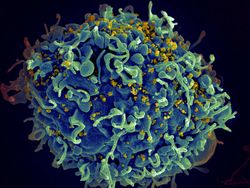
TcellYou have to hand it to the immune system. The collection of specialized cells works endlessly throughout our lives to keep us safe. They are involved in almost every aspect of our daily life and are the front lines of defense against infection.

Normally, when a pathogen enters the body, an able immunity is capable of defeating most invasions. B-cells, T-cells, macrophages, neutrophils and others work in combination with one another to eliminate the threat and restore us back to health. It’s not always an easy process, however, and at times can lead to exhaustion. When this happens, our ability to fend off other invaders decreases. We essentially become more susceptible to other ailments. One of the most common causes of exhaustion happens with chronic viral infection, such as human immunodeficiency virus (HIV) or hepatitis C virus (HCV). Both of these pathogens have the ability to evade the defenses and maintain a presence for years. As this happens, the immune system continues to fight without any progress towards victory.

A vital immune cell in the fight against viral infection is called the CD8 T-cell. It has the task of finding these tiny pathogens and purging them from the body. The cell accomplishes this by either signaling an infected cell to kill the virus or, more viciously, to kill the infected cell altogether. Depending on the type of signal they receive their population can be controlled such that the response is just right for the situation. Once an infection is cleared, most of the cells die but some are kept around to serve as memory for any future viral attacks. Unfortunately, when a chronic infection happens to occur, this process is interrupted and some of the CD8 T-cells lose their ability to function. This is known as exhaustion and can cause significant detriment against the current infection and worse, any new ones that happen to arrive. In HIV and HCV positive individuals, exhaustion is a serious concern as it may be the basis for even greater susceptibility to secondary infections.

More here.

Thursday, October 29, 2015

The Myth of Basic Science

Matt Ridley in the Wall Street Journal:

ScreenHunter_1474 Oct. 29 20.18Innovation is a mysteriously difficult thing to dictate. Technology seems to change by a sort of inexorable, evolutionary progress, which we probably cannot stop—or speed up much either. And it’s not much the product of science. Most technological breakthroughs come from technologists tinkering, not from researchers chasing hypotheses. Heretical as it may sound, “basic science” isn’t nearly as productive of new inventions as we tend to think.

Suppose Thomas Edison had died of an electric shock before thinking up the light bulb. Would history have been radically different? Of course not. No fewer than 23 people deserve the credit for inventing some version of the incandescent bulb before Edison, according to a history of the invention written by Robert Friedel, Paul Israel and Bernard Finn.

The same is true of other inventions. Elisha Gray and Alexander Graham Bell filed for a patent on the telephone on the very same day. By the time Google came along in 1996, there were already scores of search engines. As Kevin Kelly documents in his book “What Technology Wants,” we know of six different inventors of the thermometer, three of the hypodermic needle, four of vaccination, five of the electric telegraph, four of photography, five of the steamboat, six of the electric railroad. The history of inventions, writes the historian Alfred Kroeber, is “one endless chain of parallel instances.”

It is just as true in science as in technology. Boyle’s law in English-speaking countries is the same thing as Mariotte’s Law in French-speaking countries. Isaac Newton vented paroxysms of fury at Gottfried Leibniz for claiming, correctly, to have invented the calculus independently. Charles Darwin was prodded into publishing his theory at last by Alfred Russel Wallace, who had precisely the same idea after reading precisely the same book, Malthus’s “Essay on Population.”

Increasingly, technology is developing the kind of autonomy that hitherto characterized biological entities.

More here.

David Deutsch: Philosophy will be the key that unlocks artificial intelligence

David Deutsch in The Guardian:

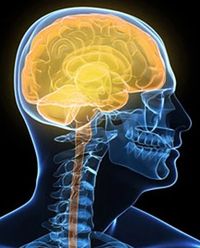
ScreenHunter_1473 Oct. 29 20.12To state that the human brain has capabilities that are, in some respects, far superior to those of all other known objects in the cosmos would be uncontroversial. The brain is the only kind of object capable of understanding that the cosmos is even there, or why there are infinitely many prime numbers, or that apples fall because of the curvature of space-time, or that obeying its own inborn instincts can be morally wrong, or that it itself exists. Nor are its unique abilities confined to such cerebral matters. The cold, physical fact is that it is the only kind of object that can propel itself into space and back without harm, or predict and prevent a meteor strike on itself, or cool objects to a billionth of a degree above absolute zero, or detect others of its kind across galactic distances.

But no brain on Earth is yet close to knowing what brains do in order to achieve any of that functionality. The enterprise of achieving it artificially – the field of “artificial general intelligence” or AGI – has made no progress whatever during the entire six decades of its existence.

Despite this long record of failure, AGI must be possible. That is because of a deep property of the laws of physics, namely the universality of computation. It entails that everything that the laws of physics require physical objects to do can, in principle, be emulated in arbitrarily fine detail by some program on a general-purpose computer, provided it is given enough time and memory.

So why has the field not progressed?

More here.

The Neuroscience of Bass: New Study Explains Why Bass Instruments Are Fundamental to Music

From Open Culture:

Fender_Marcus_Miller_Jazz_Bass_Japan_autographed_by_Marcus_Miller_-_body_with_white_pickguard_from_bottom_rightAt the lower of range of hearing, it’s said humans can detect sound down to about 20 Hz, beneath which we encounter a murky sonic realm called “infrasound,” the world of elephant and mole hearing. But the truth is most of us can’t actually hear frequencies below the 40-60 Hz range. Instead, we feel these sounds in our bodies, as we do many sounds in the lower frequency ranges—those that tend to disappear when pumped through tinny earbuds or shopping mall speakers. Since bass sounds don’t reach our ears with the same excited energy as the high frequency sounds of, say, trumpets or wailing guitars, we’ve tended to dismiss the instruments—and players—who hold down the low end (know any famous tuba players?).

In most popular music, bass players don’t get nearly enough credit—even when the bass provides a song’s essential hook. As Led Zeppelin’s John Paul Jones joked at his Rock and Roll Hall of Fame induction ceremony in 1995, “thank you to my friends for remembering my phone number.” And yet, writes Tom Barnes at Mic, “there’s scientific proof that bassists are actually one of the most vital members of any band…. It’s time we started treating bassists with the respect they deserve.” Research into the critical importance of low frequency sound explains why bass instruments mostly play rhythm parts and leave the fancy melodic noodling to instruments in the upper range. The phenomenon is not specific to rock, funk, jazz, dance, or hip hop. “Music in diverse cultures is composed this way,” says psychologist Laurel Trainor, director of the McMaster University Institute for Music and the Mind, “from classical East Indian music to Gamelan music of Java and Bali, suggesting an innate origin.”

More here.

On Eka Kurniawan

Cover00Hilary Plum at Bookforum:

There is something deeply affecting about Kurniawan’s portrayal of the women in his novels, whom he lets us see at first through others’ oft-dismissive eyes—the prostitute; the timid, abused wife and mother—but who then assume their place at the story’s center, commanding the fullest empathy. In translation, Kurniawan’s mode of politically incisive fabulism may place him in the company of such writers as George Saunders and Kate Bernheimer—the latter, especially, shares his focus on the violence of women’s lives, as refracted through the lens of fairytale.

Like other great fabulists, Kurniawan has ducked the conventions of E. M. Forster’s classic distinction between “round” and “flat” characters, avoiding the focus on individual psychology that has dominated the tradition of the novel in English. With his keen sense of voice and perspective, combined with a freedom from realism and bold use of exaggeration, he is able to portray collective as well as individual experience, to make both at once the subject of his fiction. In interviews, Kurniawan has discussed how the form and tone ofBeauty Is a Wound was influenced by the all-night shadow-puppet performances known aswayang. To read it is to be reminded that while the novel may be a solitary form—born of one experience of solitude, and offering another—the folktale is always communal. The audience gathers round, and the story must bind them there together, tell them who they are to one another. What good fortune that English-speaking readers may now find ourselves enchanted, confronted, and perhaps transformed by Kurniawan’s work.

more here.

on Margaret Thatcher: strength and self-delusion

3980674-3x4-700x933Chris Patten at The New Statesman:

Benjamin Disraeli, Margaret Thatcher’s 19th-century predecessor as prime minister and leader of the Conservative Party, hinted that he preferred biographies to history books on the grounds that biography is “life without theory”. At the risk of provoking unrest among any surviving members of the Primrose League, I am not sure that this is correct. There is plenty of theory about biography, above all the question of whether there are great leaders who shape history or whether such figures are simply history’s foundlings, at most listening out, as Bismarck said, for “the rustle of God’s cloak”.

That this question comes immediately to the fore on reading the second volume of Charles Moore’s superb biography of Margaret Thatcher – covering the period of her pomp, from the aftermath of the Falklands campaign in 1982 to her third election victory in 1987 – reflects how she was the most partisan and domineering British prime minister in the period since the Second World War. You can avoid having a view on most people and things (even, unless you are Australian, on Marmite). But I know no one who does not have a view on Lady Thatcher, from those who in Ian McEwan’s phrase “liked disliking her”, some of them celebrating her death, to those for whom she has been a totemic focus of almost spiritual devotion and inspiration. The forceful expression of these judgements brings to mind the tripartite distinction of strong opinions offered by the authors of Yes Minister: “I am principled. You are an ideologue. He is a mindless fanatic.”

more here.

A history of science at its intricate best: Ivan Pavlov’s story of Marxism, digestion, excitation and terror

E4104584-7d50-11e5_1187907kStephen Lovell at the Times Literary Supplement:

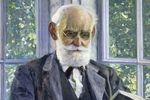
The twists and turns of Pavlov’s biography were matched by the tensions in his personality. Although himself a convinced atheist, in 1881 he married a devout fellow provincial who had come to St Petersburg to study on the recently established pedagogical courses for women. In the days of their courtship, he had to reckon with her enthusiasm for the messianic Fyodor Dostoevsky, swapping impressions of The Brothers Karamazov as it first came out. Much later, after more than twenty years of impeccably patriarchal family life, he formed a romantic attachment that would last the rest of his days. Pavlov’s lover and confidante after 1912 was Maria Petrova, by then only nominally the wife of the celebrity priest Grigory Petrov, who had thrown herself into a medical career in her late twenties and became Pavlov’s most devoted lab worker. Although Pavlov adhered to a strict daily routine, professed the value of self-discipline, and envisaged his labs as the domain of dispassionate rationality, he was possessed of a volcanic temper and regularly browbeat assistants who had the temerity to disagree with him or to follow their own hunches. Pavlov’s near fanatical pursuit of orderliness in his domestic and professional lives was evidently a way of taming his tempestuous nature and of minimizing the effects of the “random events” (sluchainosti) that he identified as the source of much human unhappiness.

More interesting still is the extent to which these tensions were also present in Pavlov’s thinking. Like most other scientists of his generation, he professed the absolute authority of the “fact”. The task of the scientist was to accumulate a large amount of data from rigorously controlled and meticulously conducted experiments. The conclusions would then take care of themselves.

more here.

How Proust’s ‘madeleine moment’ changed the world forever

Simon Heffer in The Telegraph:

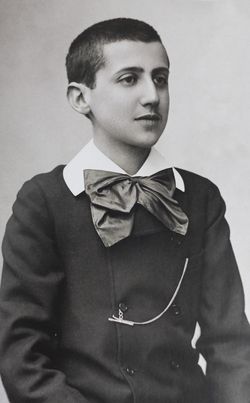
Young-proust-xlargeIn one respect Marcel Proust is like Richard Wagner: each created one world-famous work of such scope and depth that people hesitate to explore them. Complexity should never be a barrier to intellectual curiosity, especially when the pleasure and enlightenment to be obtained are of the magnitude both these artists offer. Wagner's Ring cycle, around 16 hours of drama and music in four separate operas, is one of the greatest achievements in music and also one of the most rewarding. Likewise, the sequence of seven novels that make up Proust's À la recherche du temps perdu is to my mind the finest work of fiction ever written in any language. It leaves the reader with an altered understanding of the nature of reality, human relationships and perceptions. Proust wrote the novels between 1909 and his death in 1922 at the age of 51. One wonders what he might have accomplished had he lived a normal span. In one sense he was a late casualty of the Franco-Prussian war of 1870-71: he was born not long after the lifting of the Siege of Paris to a mother whose considerable wealth had not helped her, in those circumstances, find sufficient food to sustain her during her pregnancy. Her baby was a weakling and it was feared he would not live. Throughout his life Proust was subject to ill health, its effect made worse by his resolute hypochondria.

…The novels were hugely influential on writers all over the world, in that they introduced the idea of writing about “streams of consciousness”. Through Proust's ubiquitous narrator, they relay in great detail not just what is perceived, but also what is remembered, and the repeated and constant links between perception and memory. Even those who have not read the novels are aware of the journey of memory on which the narrator goes when he tastes a madeleine dipped in tea; it has become “the Proustian moment”.

More here.

Paradigms lost

David P Barash in Aeon:

BarashComing from a scientist, this sounds smug, but here it is: science is one of humanity’s most noble and successful endeavours, and our best way to learn how the world works. We know more than ever about our own bodies, the biosphere, the planet and even the cosmos. We take pictures of Pluto, unravel quantum mechanics, synthesise complex chemicals and can peer into (as well as manipulate) the workings of DNA, not to mention our brains and, increasingly, even our diseases.

Sometimes science’s very success causes trouble, it’s true. Nuclear weapons – perhaps the most immediate threat to life on Earth – were a triumph for science. Then there are the paradoxical downsides of modern medicine, notably overpopulation, plus the environmental destruction that science has unwittingly promoted. But these are not the cause of the crisis faced by science today. Today science faces a crisis of legitimacy which is entirely centred on rampant public distrust and disavowal. A survey by the Pew Research Center in Washington, DC, conducted with the American Association for the Advancement of Science, reported that in 2015 a mere 33 per cent of the American public accepted evolution. A standard line from – mostly Republican – politicians when asked about climate change is ‘I’m not a scientist’… as though that absolved them from looking at the facts. Vaccines have been among medical science’s most notable achievements (essentially eradicating smallpox and nearly eliminating polio, among other infectious scourges) but the anti-vaccination movement has stalled comparable progress against measles and pertussis.

How can this be? Why must we scientists struggle to defend and promote our greatest achievements?

More here.