
New ‘MIND’ diet may significantly protect against Alzheimer’s disease

From KurzweilAI:

MIND-dietA new diet known by the acronym MIND (Mediterranean-DASH Intervention for Neurodegenerative Delay) could significantly lower a person’s risk of developing Alzheimer’s disease (AD) — even if the diet is not meticulously followed, according to a paper published in the journal Alzheimer’s & Dementia: The Journal of the Alzheimer’s Association.

…The MIND diet is also easier to follow than, say, the Mediterranean diet, which calls for daily consumption of fish and three to four daily servings of each of fruits and vegetables, Morris said. The MIND diet has 15 dietary components, including 10 “brain-healthy food groups” — green leafy vegetables, other vegetables, nuts, berries, beans, whole grains, fish, poultry, olive oil and wine — and (because it was tracking what people actually eat, rather than what they should) five unhealthy groups that comprise red meats, butter and stick margarine, cheese, pastries and sweets, and fried or fast food. The MIND diet includes at least three servings of whole grains, a salad and one other vegetable every day — along with a glass of wine. It also involves snacking most days on nuts and eating beans every other day or so, poultry and berries at least twice a week and fish at least once a week. Dieters must limit eating the designated unhealthy foods, especially butter (less than 1 tablespoon a day), cheese, and fried or fast food (less than a serving a week for any of the three), to have a real shot at avoiding the devastating effects of Alzheimer’s, according to the study.

More here.

Tuesday, March 24, 2015

The Road from Westphalia

Mathews_1-031915_jpg_600x701_q85

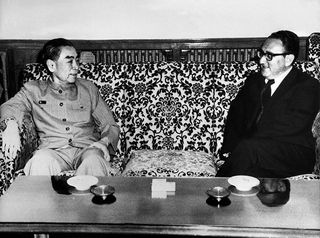
Jessica T. Mathews reviews Henry Kissinger's World Order and Bret Stephens's America in Retreat: The New Isolationism and the Coming Social Disorder, in the NYRB (photo AFP/Getty Images):

Since the US took on international leadership at the close of World War II, the debate over interests and values has become entangled with others that are importantly, if subtly, different. One is whether the US should usually choose to act alone, or try instead to achieve the greater legitimacy—and restrictions—that accompany multilateral action. Unilateralist views reached a new high in the George W. Bush administration. Those of John Bolton, briefly ambassador to the UN, were characteristic:

It’s a big mistake for us to grant any validity to international law, even when it may seem in our short-term interest to do so—because, over the long term, the goal of those who think that international law really means anything are those who want to constrict the United States.

Setting aside the matter of legitimacy, even a cursory look at the vast body of international law developed over the past seventy-five years—from trade and banking to human rights and arms control—reveals how deeply American interests have been served by it.

Closely related to that debate is the argument over American exceptionalism. American contributions to international security, global economic growth, freedom, and human well-being have been so self-evidently unique and have been so clearly directed to others’ benefit that Americans have long believed that the US amounts to a different kind of country. Where others push their national interests, the US tries to advance universal principles.

At its extreme, this reasoning holds that the US should not be bound by international rules, even those it has itself developed, but should occupy a position above the rest. In this view, it is in the world’s interest, not merely the American interest, for the US to do so. A month after the attacks of September 11, 2001, Max Boot of The Wall Street Journal called on America to unambiguously “embrace its imperial role.” “The organizing principle of empire,” according to the like-minded Stephen Rosen in The National Interest, “rests on the existence of an overarching power that creates and enforces the principle of hierarchy, but is not itself bound by such rules.”

Weaving together these and similar themes in America in Retreat, Stephens argues that the US must now shoulder the responsibility for establishing and maintaining a global Pax Americana. All the alternatives, including traditional balance of power and collective security, have been tried and failed. Americans “mainly want to be left alone,” but instead have to “sharply increase military spending to upwards of 5 percent of GDP” (i.e., by a third or more from today’s 3.8 percent); “once again start deploying forces globally in large numbers”; and be prepared to undertake “short, mission-specific, punitive police actions” around the globe.

The basis for such a drastic shift is his belief that international security is skidding downhill. The evidence suggests otherwise.

More here.

on the late, lamented L.A. Times Book Review

Wasserman2-300x300Cynthia Haven at The Book Haven:

Well, this is just one of the many reasons I loved the late, lamented L.A. Times Book Review. Steve also had the courage to publish my piece on Irma Kudrova‘s remarkable work on Marina Tsvetaeva, Death of a Poet,which had not yet been published in English (my long ago piece is here). The book was published by Overlook Press as a result of the interest. Kudrova, one of those lifelong devotees every Russian poet of any stature attracts, had access to Lubyanka prison interrogation records during the brief period they were made available to the public in pre-Putin Russia, which makes her record even more imperative.

The excerpt above is from Steve’s essay, “In Defense of Difficulty,” appearing in the The American Conservative, a notable departure for this staunchly left-wing writer who contributes regularly to Truthdig – I applaud his attempt to fight our current ideological segregation; it’s high time people learn to actually talk to one another again, especially on issues that should concern us all. Although he has described a telling incident from his L.A. Times days, the subject of his article is not self-promotion (I can do that for him) but rather the disappearance of serious criticism in our culture: “the ideal of serious enjoyment of what isn’t instantly understood is rare in American life. It is under constant siege. It is the object of scorn from both the left and the right. The pleasures of critical thinking ought not to be seen as belonging to the province of an elite. They are the birthright of every citizen. For such pleasures are at the very heart of literacy, without which democracy itself is dulled. More than ever, we need a defense of the Eros of difficulty.” (Cough, cough, Geoffrey Hill, cough, cough.)

more here.

In search of time gained

Qdx7nub6gaxoqe77m493The Editors at n+1:

THE CULTURAL CONSEQUENCES of a world in which labor is saved, and at the same time displaced and enlarged, have been registered since the dawn of what we could call modernity. One of these cultural consequences was the novel, which was born out of an acceleration society and now appears to be suffering from its success. In the 18th century, what precipitated the “rise of the novel” was consumption: unlike other types of literature that asked for slower reading, novels began to be purchased and read at great speed. Demand produced supply. The enormous titles of earlier 18th-century novels (The Fortunes and Misfortunes of the Famous Moll Flanders, &c., Who Was Born in Newgate, and during a Life of continu’d Variety for Threescore Years, besides her Childhood, was Twelve Year a Whore, five times a Wife (whereof once to her own Brother) Twelve Year a Thief, Eight Year a Transported Felon in Virginia, at last grew Rich, liv’d Honest, and died a Penitent) dwindled to single words (Emma), and the books themselves dealt with a small number of protagonists.

Most of these new novels were despised by cultural critics for their speedy delivery of cheap sensations, barely earned shocks, and maudlin sentimental ideas. Samuel Johnson: “They are the entertainments of minds unfurnished with ideas, and therefore easily susceptible of impressions, not fixed principles, and therefore easily following the current of fancy; not informed by experience and consequently open to every false suggestion and partial account.”

more here.

A reporter’s journey to My Lai and the secrets of the past

150330_r26308-690Seymour Hersh at The New Yorker:

I visited My Lai (as the hamlet was called by the U.S. Army) for the first time a few months ago, with my family. Returning to the scene of the crime is the stuff of cliché for reporters of a certain age, but I could not resist. I had sought permission from the South Vietnamese government in early 1970, but by then the Pentagon’s internal investigation was under way and the area was closed to outsiders. I joined the Times in 1972 and visited Hanoi, in North Vietnam. In 1980, five years after the fall of Saigon, I travelled again to Vietnam to conduct interviews for a book and to do more reporting for theTimes. I thought I knew all, or most, of what there was to learn about the massacre. Of course, I was wrong.

My Lai is in central Vietnam, not far from Highway 1, the road that connects Hanoi and Ho Chi Minh City, as Saigon is now known. Pham Thanh Cong, the director of the My Lai Museum, is a survivor of the massacre. When we first met, Cong, a stern, stocky man in his late fifties, said little about his personal experiences and stuck to stilted, familiar phrases. He described the Vietnamese as “a welcoming people,” and he avoided any note of accusation. “We forgive, but we do not forget,” he said. Later, as we sat on a bench outside the small museum, he described the massacre, as he remembered it. At the time, Cong was eleven years old. When American helicopters landed in the village, he said, he and his mother and four siblings huddled in a primitive bunker inside their thatch-roofed home. American soldiers ordered them out of the bunker and then pushed them back in, throwing a hand grenade in after them and firing their M-16s. Cong was wounded in three places—on his scalp, on the right side of his torso, and in the leg.

more here.

You Belong To Me

Laura Miller in Vulture:

06-styles-harryStyles-castingAnnie Proulx got ficced. In a recent interview in the Paris Review, the Pulitzer Prize–winning author confessed that she wishes she’d never written her most famous work, the short story “Brokeback Mountain,”about the star-crossed romance between two cowboys. Having fans is a good thing, especially for authors of ­quiet, spare realism — not exactly a cohort with a healthy surplus of readers. But in the last few years, writers, filmmakers, and other artists have seen fans seize control of their creations and re­imagine them as fan­fiction, or fic, as its aficionados like to call it. Proulx first got ficced when a whole new audience came to “Brokeback” after the Academy Award–winning film adaptation was released in 2005. Less reverent than her typical reader, these fans have busily set themselves to producing what Proulx has termed “pornish” fiction based on her story’s two main characters, Jack Twist and Ennis Del Mar. “Unfortunately,” she said, “the audience that ‘Brokeback’ reached most strongly … can’t bear the way it ends — they just can’t stand it. So they rewrite the story, including all kinds of boyfriends and new lovers and so forth after Jack is killed.” The resulting stories, Proulx grumbled, “just drive me wild.”

Proulx is far from the only mainstream artist being dragged unwillingly into a new, fan-dominated world. Once exiled to obscure corners of the internet, fanfiction — amateur fiction based on characters from preexisting works or real-life celebrities — has lately become a force driving popular culture. As Proulx realized, fans these days aren’t satisfied to just sit back and consume. They want to participate. They want to create. And they don’t want to wait for anyone else’s permission to do it.

Read the rest here.

What is wrong with playing god?

Kenan Malik in Pandaemonium:

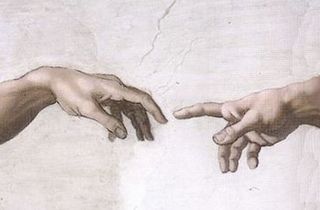
God-adam-handsThe British Parliament can be an archaic, backward-looking institution, wedded to tradition, and not known for taking a revolutionary stance. Yet its members have just made a groundbreaking decision, one that no other legislature has so far been willing to contemplate. They approved legislation that makes Britain the first country formally to allow the creation of what many call ‘three-parent babies’. Supporters say the procedure will enable women to avoid passing on certain severe and even deadly genetically inherited diseases. But many regard the new law as an unwise, even immoral, move — the first step toward the creation of ‘designer babies’. Some even see it as a new experiment in eugenics.

‘Three-parent babies’ is a sensationalized term to describe a special form of in vitro fertilization, or IVF, that is better labeled ‘mitochondrial transfer’ or ‘mitochondrial donation’. Every human cell comprises two main parts: the nucleus and the cytoplasm. The nucleus contains the DNA, the genetic code that helps shape inherited traits. The cytoplasm is the workshop of the cell, where most day-to-day functions occur. Among its constituent parts are mitochondria, tiny organelles whose job it is to provide energy. Each mitochondrion contains tiny amounts of its own DNA, some 37 genes compared with the 20,000 or so in the nucleus. (It is thought that way back in evolutionary history, a free living bacterium became trapped in a host cell, where it boosted the cell’s capacity to produce energy; over time, it evolved into an organelle, an intimate part of the cell, but retained its own DNA.)

Mitochondrial DNA plays no part in determining an individual’s inherited traits, such as those that shape appearance or talents. But if it malfunctions, it can cause terrible conditions like muscle weakness, seizures, blindness, deafness, organ failure and even death.

More here.

Israel: The Stark Truth

David Shulman in the New York Review of Books:

ScreenHunter_1099 Mar. 24 13.13Benjamin Netanyahu has won again. He will have no difficulty putting together a solid right-wing coalition. But the naked numbers may be deceptive. What really counts is the fact that the Israeli electorate is still dominated by hypernationalist, in some cases proto-fascist, figures. It is in no way inclined to make peace. It has given a clear mandate for policies that preclude any possibility of moving toward a settlement with the Palestinians and that will further deepen Israel’s colonial venture in the Palestinian territories, probably irreversibly.

Netanyahu’s shrill public statements during the last two or three days before the vote may account in part for Likud’s startling margin of victory. For the first time since his Bar Ilan speech in 2009, he explicitly renounced a two-state solution and swore that no Palestinian state would come into existence on his watch. He promised vast new building projects in the Palestinian territories, including East Jerusalem. He made it clear that Israel would make no further territorial concessions, anywhere, since any land that would be relinquished would, in his view, immediately be taken over by Muslim terrorists.

And then there was his truly astonishing, by now notorious statement on election day itself, in which he urged Jewish voters to rush to the polls because “the Arabs are voting in droves.”

More here.

This is how Fox News spreads hate

Paul Rosenberg in Salon:

Hannity_jindal_maherIt may be hard to fathom or remember, but in the immediate aftermath of 9/11 the American public responded with an increased level of acceptance and support for Muslims. President Bush—who had successfully courted the Muslim vote in 2000—went out of his way to praise American Muslims on numerous occasions in 2001 and 2002. However, the seeds were already being planted that would change that drastically over time. Within a few short years, a small handful of fringe anti-Muslim organizations—almost entirely devoid of any real knowledge or expertise, some drawing on age-old ethno-religious conflicts—managed to hijack the public discourse about Islam, first by stoking fears, grabbing attention with their emotional messaging, then by consolidating their newfound social capital, forging ties with established elite organizations, and ultimately building their own organizational and media infrastructure.

How this all happened is the subject of a fascinating new book, “Terrified: How Anti-Muslim Fringe Organizations Became Mainstream,” by sociologist Christopher Bail, of the University of North Carolina. The book not only lays bare the behind-the-scenes story of a momentous shift in public opinion, it employs cutting-edge computer analysis techniques applied to large archives of data to develop a new theoretical outlook, capable of making sense of the whole field of competing organizations struggling to shape public opinion, not just studying one or two the most successful ones. The result is not only a detailed account of a specific, significant, and also very pernicious example of cultural evolution, but also a case study in how to more rigorously study cultural evolution more generally in the future. In the process, it sheds considerable light on the struggles involved, and the difficulties faced by those trying to fight back against this rising tide of misdirected fear, anger and hatred.

More here.

Diary of a Surgery

Angelina Jolie Pitt in The New York Times:

AngelinaLOS ANGELES — TWO years ago I wrote about my choice to have a preventive double mastectomy. A simple blood test had revealed that I carried a mutation in the BRCA1 gene. It gave me an estimated 87 percent risk of breast cancer and a 50 percent risk of ovarian cancer. I lost my mother, grandmother and aunt to cancer. I wanted other women at risk to know about the options. I promised to follow up with any information that could be useful, including about my next preventive surgery, the removal of my ovaries and fallopian tubes. I had been planning this for some time. It is a less complex surgery than the mastectomy, but its effects are more severe. It puts a woman into forced menopause. So I was readying myself physically and emotionally, discussing options with doctors, researching alternative medicine, and mapping my hormones for estrogen or progesterone replacement. But I felt I still had months to make the date. Then two weeks ago I got a call from my doctor with blood-test results. “Your CA-125 is normal,” he said. I breathed a sigh of relief. That test measures the amount of the protein CA-125 in the blood, and is used to monitor ovarian cancer. I have it every year because of my family history. But that wasn’t all. He went on. “There are a number of inflammatory markers that are elevated, and taken together they could be a sign of early cancer.” I took a pause. “CA-125 has a 50 to 75 percent chance of missing ovarian cancer at early stages,” he said. He wanted me to see the surgeon immediately to check my ovaries. I went through what I imagine thousands of other women have felt. I told myself to stay calm, to be strong, and that I had no reason to think I wouldn’t live to see my children grow up and to meet my grandchildren.

I called my husband in France, who was on a plane within hours. The beautiful thing about such moments in life is that there is so much clarity. You know what you live for and what matters. It is polarizing, and it is peaceful.

More here.

Monday, March 23, 2015

The Winners of the 3QD Politics & Social Science Prize 2015

PolWinner2015 Strange 2015 P SSc Politics Charme Quark 2015

Kenneth Roth has picked the three winners from the nine finalists:

  1. Top Quark, $500: Kenan Malik, Assimilation vs. Multiculturism
  2. Strange Quark, $200: Xavier Marquez, The Saudi Monarchy as a Family Firm
  3. Charm Quark, $100: Omar Ali, Blasphemy, blasphemy laws, Pakistan, Charlie Hebdo…

Here is what Ken had to say about them:

It was a pleasure to read an extraordinary group of essays, but it was difficult to rank them, since all deserve recognition. Still, in my view, three essays stand out, and even suggest an ordering:

I give the top prize to Pandaemonium: Assimilation vs. Multiculturism. It takes on a timely, important and difficult topic—how should European nations adjust to their increasingly diverse societies, particularly their growing numbers of Muslims? The essay elegantly contrasts British multiculturism and French assimlationism, but instead of finding one superior, it sees each as flawed, though in different ways. Its critiques are clear and astute, and instead of stopping there, it goes on to prescribe an approach of “lived diversity” rather than treating people by rigid categories, and encourages a revival of civil society organizations that cross ethnic and religious boundaries. European (and other) leaders would do well to read the article and learn from it.

The second prize goes to Abandoned Footnotes: The Saudi Monarchy as a Family Firm. After placing the Saudi monarchy in a global perspective of other monarchies and family dynasties, it insightfully analyzes the workings of this complex family business: how it chooses the CEO aka king, how it curtails any penchant to excessive reform or divisive politicking, how it keeps in touch with popular sentiments without such dangerous institutions as elections or a free press, and how it manages to keep the vast number of competing princes feeling they have more to gain from upholding the family business than from the fratricide common to other monarchies. I left with a far better understanding of how this remarkably resilient institution has managed to weather the difficult political currents shaking the region.

The third prize goes to Brown Pundits: Blasphemy, blasphemy laws, Pakistan, Charlie Hebdo…. It focuses mainly on Pakistan's blasphemy laws, which have been the source of executions, lynching, and long jail sentences, often against seemingly arbitrary victims, usually religious minorities. The article begins by placing these laws in context: far worse than both the relatively constrained laws left by British colonialists and the superficially comparable laws maintained elsewhere to defend other religions. The article is at its most perceptive in explaining why, despite the increasingly global conversation permitted by the Internet, which would seem to make acceptance of “blasphemous” statements an unavoidable necessity, powerful interests in Pakistan are pushing to maintain the blasphemy prohibition, whether as a tool to suppress “uppity” minorities or as a way to discourage possible secularist rapprochement with India that might threaten the rationale for the military's budget and prerogatives.

My thanks to 3QD for giving me the honor of serving as judge. And, foremost, my gratitude to these and the many other writers who make 3QD such an essential stop for any serious reader on the Web.

Congratulations also from 3QD to the winners (remember, you must claim the money within one month from today—just send me an email). And feel free, in fact we encourage you, to leave your acceptance speech as a comment here! And thanks to everyone who participated. Many thanks also, of course, to Ken Roth for doing the final judging and for his liking of 3QD.

The three prize logos at the top of this post were designed by me, Sughra Raza, and Carla Goller. I hope the winners will display them with pride on their own blogs!

Details about the prize here.

Sunday, March 22, 2015

Mel Brooks: The comic genius and legend of stage, film and TV, for whom it’s still springtime

Tim Walker in The Independent:

Mel-Brooks-Lauren-CrowIt sounds like the set-up for a joke: what does Mel Brooks have in common with Audrey Hepburn, Whoopi Goldberg and Sir John Gielgud? But the punchline is deadly serious: they’re all among just a dozen show-business professionals ever to have achieved Egot status, single-handedly winning all four major American entertainment awards: an Emmy, a Grammy, an Oscar and a Tony. Brooks – actor, director, writer, producer, songwriter – is perhaps best known for the run of classic comedies he made between the 1960s and 1980s, from The Producers to Spaceballs. With his 1974 spoof Western, Blazing Saddles, he perfected the parody genre. The following year, Playboy magazine heralded a new boom in movie comedy, and described Brooks as “one of the very few movie-makers since Charlie Chaplin who is unarguably a comic genius”.

He has also produced several straight-faced features, including The Elephant Man, which was awarded the Bafta for Best Film in 1981. (Does that make him a “Begot”?) Yet he started his comedy career in stand-up, and now, at 88, it is the stage to which he has returned. On Sunday, at the Prince of Wales Theatre in London, Brooks will perform his first, and probably his last, UK one-man show, an “introspective retrospective” reflecting on his life and career, with jokes. Theatre promoter Delfont Mackintosh has been criticised for charging more than £500 for stalls seats at Brooks’s show, the most expensive ticket ever for a West End performance. Several US stars, such as Al Pacino, Sylvester Stallone and John Travolta, have similarly waxed nostalgic on the British stage in recent years. But Brooks has a longer and more varied history than any of them, which is perhaps why he can command such a high price to hear it.

More here.

The Legacies of Idealism

S200_terry.pinkard

Richard Marshall interviews Terry Pinkard in 3:AM magazine:

3:AM: You’re a leading expert on German Idealism, Hegel and their legacies. You think the context out of which all this happened is important don’t you – the fact that that there wasn’t really a Germany when it all started, the aftermath of the Seven Year War was something that shaped the development of this movement (and earlier, the Thirty Years War and the treaty of Westphalia etc). Could you perhaps sketch out what was most salient about the situation out of which these philosophical ideas emerged.

TP: Well, there’s lots going on there, but here are some highlights. Germany after 1648 was highly fragmented, and it was a place where, although the grip of the old regime was firmly in place, the mores of the people were changing rapidly, so there was a real and obvious gap between theory and practice. The way some began to think of it, “Germany” seemed to resemble more the plurality of ancient Greek states united only by a common culture, unlike its big neighbor, France. Furthermore, one of the very few all-German institutions in fragmented and still highly localized Germany was the German professor, since the professors went to wherever the jobs were. You thus had conceptually ambitious people armed with a certain authority with some of them thinking of themselves, however vaguely, as the new Greeks in a situation in which the gap between subjective life and social rules was deeply felt. That was a combustible mixture. Once you stirred the Scottish Enlightenment into the mix, as Kant did, the octane level of the coming conceptual explosion got raised even higher. Likewise, for those growing up in Württemberg, with its leanings toward France, the Kantian philosophy’s obvious debt to Rousseau was a plus. The arrival of the young Goethe on the scene with the Sorrows of Young Werther was a sign to those younger Germans that the times, they were indeed changing. The mixture created by all of these things managed to form an ignitable background for philosophy, especially Kant’s, to take the lead. With the French Revolution in 1789, the combustible mixture in German intellectual life exploded. Those things coming together set the stage for a certain discovery, as we could call it, of spontaneity and self-determination. And here we are, still living in that backwash.

More here.

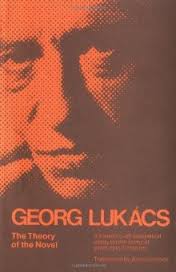
Lukacs’s Theory of the Novel: Centenary Reflections

Luckas

Franco Moretti in NLR:

When György Lukács is still mentioned nowadays in connection with the study of the novel, it is either for The Theory of the Novel, composed between 1914 and 1916, or for The Historical Novel, written exactly twenty years later. Either, or: because the two books couldn’t be more different. The Historical Novel is a very good book—a very useful book—written by a serious Marxist professor. The Theory is not useful at all. It is an ‘attempt’ [ein Versuch], declares the subtitle; but ‘Essay’ would be more to the point. The essay: the ‘ironic’ form, where ‘the critic is always talking about the ultimate questions of life’, Lukács had already written in Soul and Forms (1911), but ‘in such a tone, as if it were just a matter of paintings or books’. And in fact, whenever the Theorytalks about the ‘novel’, the reader senses that—through the oblique refraction of ‘books’—something much more momentous is at stake. But what? What is the ‘ultimate question’ that the Theory is trying to address?

*

An initial answer could be: it is the transformation of social existence—at some unspecified moment between Dante and Cervantes—into a ‘world of convention’ whose abnormality Lukács tries to capture through the metaphor of the ‘second nature’. Nature, because the ‘all-embracing power’ of convention subjects the social world to ‘laws’ whose ‘regularity’ can only be compared to that of physical nature: ‘strict’ laws, ‘without exception or choice’, that are—this is the decisive passage—‘the embodiment of recognized but meaningless necessities’.

*

Meaningless necessities. That is to say: in second nature, ‘meaning’ is present only in the recollection of its loss. It’s the disenchantment of the world first diagnosed by German culture around 1800. When the earth was still ‘the abode of the Gods’, wrote Novalis in the fifth Hymn to the Night:

Rivers and trees,
Flowers and beasts
Had human meaning

But now ‘the Gods have vanished’—they live ‘in another world’, echoes Hölderlin’s Bread and Wine, written in the same years—and ‘human meaning’ has vanished with them. ‘Lonely and lifeless / Stood nature’, continues Novalis:

Deprived of its soul by the violent number
And the iron chain
Laws had come into being
And in concepts
As in dust and draught
Disintegrated the unmeasurable flowering
Of manysided life.

More here.

France’s baby boom secret: get women into work and ditch rigid family norms

Fertility-rate-007

Anne Chemin in The Guardian (Photograph: Camille Tokerud/Getty):

Over the past 10 years the offices of France’s National Institute for Demographic Studies (Ined) have seen a steady stream of Korean policymakers and Japanese academics, determined to crack the mystery of French fertility. Scientists present their birthrate graphs and explain the broad lines of French public policy. “In the past four or five years we’ve had over 10 Korean delegations,” says demographer Olivier Thévenon with a smile. Haunted by the threat of population decline, these Asian experts are keen to understand the recipe that has given France the highest fertility rate in Europe, alongside Ireland.

Since the early 2000s France has consistently topped European rankings. After two decades of decline, in the 1970s-80s, the fertility rate started picking up again in the late 1990s. Since then the country has registered scores just short of the mythical threshold of 2.1 children per woman, which would secure a steady population. Its fertility rate in 2014 was 2.01. “For the economy Germany is the strong man of Europe, but when it comes to demography France is our fecund woman,” says demographer Ron Lesthaeghe, member of the Belgian Royal Academy of Sciences and emeritus professor of Brussels Free University.

Much of central and southern Europe has subsided into a strange demographic winter. Fifty years after the postwar baby boom, the fertility rate in the European Union has fallen in recent years to 1.58 live births per woman. Year in, year out the Mediterranean countries contradict the clichés about Roman Catholic culture. In recent years Spain, Portugal and Italy have witnessed a dramatic fall in the number of births (registering 1.4 or even 1.3 births per woman). German-speaking countries – Germany and Austria – have fared scarcely any better, much as most former eastern bloc countries – Poland, the Czech Republic, Slovakia and Hungary. Policymakers all over Europe are concerned about such decline.

Yet there is nothing mysterious about the approach that is working in both France and Scandinavia. It combines the idea of a modern family based on gender equality and powerful government policies. “Nowadays, both ingredients are needed to sustain the population,” Lesthaeghe asserts. “At first sight it seems a simple recipe, but it’s far from easy to put into practice: it takes a lot of time to design and establish a new family model.”

More here.

Why Islam Needs a Reformation

Ayaan Hirsi Ali in the Wall Street Journal:

ScreenHunter_1097 Mar. 22 18.42“Islam’s borders are bloody,” wrote the late political scientist Samuel Huntington in 1996, “and so are its innards.” Nearly 20 years later, Huntington looks more right than ever before. According to the International Institute for Strategic Studies, at least 70% of all the fatalities in armed conflicts around the world last year were in wars involving Muslims. In 2013, there were nearly 12,000 terrorist attacks world-wide. The lion’s share were in Muslim-majority countries, and many of the others were carried out by Muslims. By far the most numerous victims of Muslim violence—including executions and lynchings not captured in these statistics—are Muslims themselves.

Not all of this violence is explicitly motivated by religion, but a great deal of it is. I believe that it is foolish to insist, as Western leaders habitually do, that the violent acts committed in the name of Islam can somehow be divorced from the religion itself. For more than a decade, my message has been simple: Islam is not a religion of peace.

When I assert this, I do not mean that Islamic belief makes all Muslims violent. This is manifestly not the case: There are many millions of peaceful Muslims in the world. What I do say is that the call to violence and the justification for it are explicitly stated in the sacred texts of Islam. Moreover, this theologically sanctioned violence is there to be activated by any number of offenses, including but not limited to apostasy, adultery, blasphemy and even something as vague as threats to family honor or to the honor of Islam itself.

It is not just al Qaeda and Islamic State that show the violent face of Islamic faith and practice. It is Pakistan, where any statement critical of the Prophet or Islam is labeled as blasphemy and punishable by death. It is Saudi Arabia, where churches and synagogues are outlawed and where beheadings are a legitimate form of punishment. It is Iran, where stoning is an acceptable punishment and homosexuals are hanged for their “crime.”

More here.