Surrogate Transcendence: Terry Eagleton’s Culture and the Death of God

Eagleton-culture

Dustin Illingworth in 3:AM Magazine:

Shrill and appalling, the words still hold something of their concussive effect: “God is dead.” A particular strain of modern agony, crystallized. But if Thus Spake Zarathustraheralded deicide, it was only in the context of a larger rebuttal of metaphysical tradition. Indeed, Nietzsche’s most quotable proclamation has the dubious distinction of also being his most vulgarly misunderstood. Popularly accepted as an incursion on religious belief as such, Zarathustra’s famous utterance has seen the broader implications of its meaning dissolved within a caricatured nihilism. For Nietzsche, God was dead – but so, too, was German Idealism, the polished systems of Hegel and Schelling, to say nothing of the Enlightenment project of an eminently rational progress. It was a disintegration of the reigning spiritual and intellectual frameworks as much as it was a rooting out of God from his many hiding places: morality, culture, grammar and art, to name but a few. Surmounting the God-shaped void, our lonely hero knew, was a task for a theorized posthumanity (or, at the very least, a hardier variety of late European).

The enormous difficulty of this challenge – of discovering a surrogate commensurate with the social, moral and political power of a departed Almighty – is the provenance of Terry Eagleton’s bracing intellectual history Culture and the Death of God. Its central argument – that genuine atheism is both difficult and rare – seems at first blush a bit of wishful apologism, the death rattle of a proud but exhausted cultural model. After all, the diminishment of the sacred is no longer merely the overbold conjecture of an intellectual fringe element. Withered by the profound secularization of capitalist culture, and bolstered by positivism’s new vogue beneath the banners of Dawkins and Harris, God seems, if not dead, than irreparably reduced – something approaching an antiquated curio, or the equivalent of a harmless knocking on dusty wood.

And yet, by way of an ironically Darwinian feat of cultural adaptation, He remains alive and well – if, admittedly, much transformed. His many secular guises constitute and complicate the last 300 years of European thought – from Enlightenment rationalism, to Romantic intuition, to the Modernist culture industry. Eagleton’s oeuvre, a formidable body of literary and cultural criticism deeply informed by his Marxist-Catholic convictions, can be taken as a hostile interrogation of this secularizing tradition. His lively 2009 book Reason, Faith, and Revolution: Reflections on the God Debate, adapted from his Yale lectures, was a polemical broadside against the liberal-humanist prejudices of New Atheism. Culture and the Death of God can be usefully read as a kind of companion volume to this previous work, as it guides the reader through a brisk circuit of recent European history to compile a damning index of secular failure.

More here.

An Astonishing Time of Great Boldness: On the Politics of Recognition and Redistribution

Fraser_fortunes_468w

Jo Littler interviews Nancy Fraser, in Eurozine (Photo: Scott Robinson. Source: Flickr):

JL: In your work you've often warned against trading-in a truncated economism for a truncated culturalism, and stressed the importance of combining both approaches. How would you locate yourself in relation to that paradigm? How have you yourself been shaped by the politics of recognition and redistribution?

NF: I grew up in Baltimore, Maryland in the days when it was a Jim Crow segregated city. The formative experience of my life, in my early teenage years, was the struggle for racial desegregation – to dismantle Jim Crow. This was a struggle for recognition of the most compelling and obviously just kind. And like many people of my generation, I moved in quick sequence from there to anti-Vietnam War struggles. I encountered Marxism in unorthodox, democratic, New Left form. That gave me a way to try and think conceptually about the various battles against different forms of domination that were so intense in that period. And soon second-wave feminism erupted and came in to the mix. Now, all of this was going on in a time of relative prosperity. I don't think we in the New Left and the early second-wave feminist movement worried very much about how we would support ourselves. Of course we were young, and we often didn't have children; but there was very much a sense – which proved to be an illusion, but was a felt sense nonetheless – that the first-world model of Keynesian capitalist prosperity would continue. We certainly had a perspective about class, and we understood very well that racism correlated with poverty and exploitation. But we thought, looking through a quasi-Marxian socialist-feminist analytical lens, that what seemed to be a secure social-democratic drift meant that redistribution was relatively unproblematic, and that what we had to do was to fight to introduce the importance of recognition into the forms of traditional Marxism and economistic thinking that dominated even social democracy at the time. That proved to be wrong. I soon found myself getting more and more nervous, as the 1980s wore on into the 1990s, that the critique of political economy was being lost amongst the new social movements, the successor movements to the New Left – including feminism. I felt we were getting a one-sided development of the politics of recognition. To me, recognition always only made sense when it was connected to the political economic dimension of society. Otherwise – as with feminism – you get women put on a pedestal and lots of lip service about how important care work is, but it's a sentimentalized, almost Victorian ethos unless you connect it to political economy. That's when I started saying “We had a great critique of economism of a vulgar sort – let's not make the same mistake and end up ourselves with some kind of a vulgar culturalism”.

Above all in the US, but also elsewhere throughout the world, there was a paradigm shift towards the dimension of recognition, and it arose exactly at the moment – it's quite ironic – when the Keynesian social-democratic formation was beginning to unravel. We got the astonishing resurrection of liberal free-market ideas that everyone had assumed were in the dustbin of history forever.

More here.

Don Page on God and Cosmology

Sean Carroll in Preposterous Universe:

Cor_Don_Page_2

Don Page

Don Page is one of the world’s leading experts on theoretical gravitational physics and cosmology, as well as a previous guest-blogger around these parts. (There are more world experts in theoretical physics than there are people who have guest-blogged for me, so the latter category is arguably a greater honor.) He is also, somewhat unusually among cosmologists, an Evangelical Christian, and interested in the relationship between cosmology and religious belief.

Longtime readers may have noticed that I’m not very religious myself. But I’m always willing to engage with people with whom I disagree, if the conversation is substantive and proceeds in good faith. I may disagree with Don, but I’m always interested in what he has to say.

Recently Don watched the debate I had with William Lane Craig on “God and Cosmology.” I think these remarks from a devoted Christian who understands the cosmology very well will be of interest to people on either side of the debate.

More here.

rereading Jack London

248f476c-d2e9-11e4_1138388hMichael Caines at the Times Literary Supplement:

In 1902, Jack London lost himself in the East End of his urban namesake. This Klondike adventurer’s temporary disappearance from relatively polite society – of oyster pirates and tramps, among others – was the result of a fateful improvisation on his part. Deeply in debt and love with the socialist writer Anna Strunsky, London had been due to undertake a journalistic commission in South Africa. The commission fell through, however, and, as Earle Labor relates in his biography, London negotiated with his publisher for him to write a book instead, about life in what was reputed to be one of the worst slums on earth. This, characteristically, the young author knew he had to see from the inside.

On August 9, 1902, in the guise of an American sailor down on his luck, London walked into Trafalgar Square and joined the crowds celebrating the coronation of Edward VII. Heading east, he quickly found himself immersed in a “human hellhole” – “a vast shambles”, “utterly unnatural”, “a huge killing-machine”. Malnutrition, cramped and unhygienic lodgings (or no lodgings at all), hopeless insobriety, even the thought that the slightly better-off are unlikely to bequeath any security in life to their children: all of this London notes in horror, while counting his own blessings and reminding the reader of the unspeakable affluence to which the city is also home.

more here.

reassessing dylan thomas

B-millsBilly Mills at The Dublin Review:

There is a well-established Dylan Thomas myth that goes something like this: early brilliance as an instinctive versifier drunk on words, which was then wasted through more conventional drunkenness, redeemed somewhat by the glamour associated with an early death. Thomas both recognised and helped fuel it by his ironic self-description as the “Rimbaud of Cwmdonkin Drive”. The myth fed into the centenary celebrations of his birth last year, which became a kind of year-long Bloomsday, a celebration more of Thomas the character than Thomas the obscure, often difficult, experimental poet.

Thomas’s public reputation rests mainly on the enduring popularity of Under Milk Wood, “A Child’s Christmas in Wales” and a handful of anthology-piece poems. His critical reputation, such as it is, is that of a somewhat marginal figure who was overshadowed in his youth by Auden and the New Country poets and then dismissed after his premature death by the Movement. Indeed, such is the legacy of this dismissal that he is now often bracketed with the poets of the “dismal 40s”, despite the fact that the bulk of his poems were written and published in the 1930s.

However, centenaries can also be occasions for reappraisal, a time when texts are republished and critically re-examined in the light of current scholarship. In the case of Thomas, the most significant act of rediscovery was the publication of this New Centenary Edition of the collected poems, the most comprehensive of the four collecteds to appear to date, and the first since 1988.

more here.

rediscovering raymond williams

2015_10_raymond_williamsGeoff Dyer at The New Statesman:

Williams’s legacy and influence, which had once seemed assured, have gradually shrunk. If, more than a quarter-century after his death, he is to become a vital rather than remembered or spent force it is necessary to do two things that might appear contradictory: to concede that, with the exception ofBorder Country, the fiction to which he devoted so much energy was dull; and to free the rest of his work from the once-modish tundra of cultural studies, let alone the pack ice of theory. Perhaps then he will be read with the same passion and adoration that still attends the discovery of John Berger.

A perverse and ironic fate: Williams, the internationalist, is seen as the worthy relic of a vanished, pre-Thatcherite Britain, a socialist writer read by a diminishing audience of Marxists, academics and students. It was the least surprising thing in the world to see, in the Occupy Camp at St Paul’s a few years ago, a much-pierced protester reading Berger’s Hold Everything Dear; it was equally unsurprising that no one was holding Williams’s The Country and the City.

more here.

All aboard the Super Savari Express: an armed tour bus for crime-ridden Karachi

Maryam Omidi in The Guardian (h/t Chapati Mystery):

E219328a-f7b7-4171-8c04-6dc012132627-1020x612Dubbed “the world’s most violent megacity”, armed muggings, carjackings and extortion are part of everyday life in Karachi, where political and criminal forces vie for ownership of the city. The result is a pervasive sense of fear – one that prevents many Karachiites from even leaving their own neighbourhoods, which are carved along wealth and ethnic lines.

“The culture of driving, and the security issue, disable you from visiting these other places,” says Farzana Mukhtar, an HR consultant. It’s 8am on Sunday, and the places Mukhtar is referring to are the streets of Saddar Town, Karachi’s former colonial centre. In contrast to the mid-week traffic, it is virtually deserted, leaving Mukhtar and his group of camera-wielding tourists to admire the remnants of the city’s colonial architecture and daily life with a sense of wonderment: the few hawkers who have woken early, and the tea shop owners preparing for the breakfast crowd. It’s a scene common to tourist sites everywhere; what’s unusual about this group is that many of them are from Karachi itself, on a tour to explore their own city.

Mukhtar and the group are part of a city bus tour organised by Super Savari Express, the first of its kind in the city. At 2,000 Pakistani rupees per ticket (£13), the tour, which launched late last year, attracts a relatively wealthy clientele: Mukhtar, who lives in Clifton, one of the city’s most affluent neighbourhoods, is typical.

“We have about 30 to 40 people on each tour, and they all know the political situation and the safety situation – and yet they’re here because they’re hungry to see they can explore,” says Atif bin Arif, managing director of Super Savari Express. “These are the same people who fly to the Vatican to see the Sistine Chapel, even though we have beautiful churches here; or go to India to see temples, when we have Hindu temples here.”

Read the rest here.

Computing in the Classroom

Sophia Nguyen in Harvard Magazine:

Ed_tech_1On November 11, 1953, psychology professor B.F. Skinner sat in a fourth-grade math class, perturbed. It was Parents Day at his daughter Deborah’s school. The lesson seemed grossly inefficient: students proceeded through the material in lock-step, at the same pace; their graded assignments were returned to them sluggishly. A leading proponent of what he called “radical behaviorism,” Skinner had devoted his career to studying feedback. He denied the existence of free will and dismissed inner mental states as explanations for outward action. Instead, he focused on the environment and the organism’s response. He had trained rats to push levers and pigeons to play Ping-Pong. A signed photo of Ivan Pavlov presided over his study in Cambridge. Turning his attention to a particular subset of the human animal—the schoolchild—Skinner invented his Teaching Machine.

Roughly the size and shape of a typewriter, the machine allowed a student to progress independently through a curriculum, answering test items and getting instant feedback with a few pulls of a lever. “The student quickly learns to be right. His work is pleasurable. He does not have to force himself to study,” Skinner claimed. “A classroom in which machines are being used is usually the scene of intense concentration.” With hardly any hindrance from peers or teachers, thousands of students could receive knowledge directly from a single textbook writer. He told The Harvard Crimson, “There is no reason why the school room should be any less mechanized than the kitchen.” Sixty years later, Skinner’s reductionist ideas about teaching and learning continue to haunt public education—especially as it’s once again being called upon to embrace technology. In December 2014, as part of a nationwide event promoting computer-science education called Hour of Code, Barack Obama hunched over a laptop alongside a group of New Jersey middle-schoolers, becoming the first president to write a line of code. The public-policy world frames computer science in K-12 education as a matter of economic urgency. Digital fluency is often called a twenty-first-century skill, equally necessary for personal workplace success and for the maintenance of America’s competitive edge.

Teaching machines with capabilities beyond Skinner’s imagining have proliferated in this century.

More here.

Ayaan Hirsi Ali: You can’t bomb bad ideas out of people’s heads

Tunku Varadarajan interviews Ayaan Hirsi Ali in the New York Times:

ScreenHunter_1102 Mar. 26 10.53Ayaan Hirsi Ali is Islam’s best known—her critics would say most incendiary—dissident in the West. Born in Somalia, she escaped an arranged marriage by seeking asylum in the Netherlands, where she studied furiously, assimilated with a vengeance, and became a member of the Dutch parliament. Her political views attracted scandal from the very start. She was blunt in her condemnation of Islam and Islamists, earning her the ire not just of the Muslim objects of her criticism, but also of a liberal political establishment that found her vehemently pro-Western views impossible to digest.

Her life changed forever in November 2004: Theo Van Gogh, a Dutch filmmaker with whom she had collaborated on “Submission,” a film that excoriated the treatment of women in Islam, was stabbed to death in broad daylight by an Islamist assassin. Pinned by a knife to Van Gogh’s chest was a note that threatened Hirsi Ali with death. Not long after, she moved to the United States, where she now lives under round-the-clock protection.

Hirsi Ali is the author of four books, the most recent being Heretic: Why Islam Needs a Reformation Now…

More here.

Wednesday, March 25, 2015

Possible Creatures

Aeon plato

Andreas Wagner in Aeon:

Classification requires comparison. In the process, we see how deeply similar the legs of birds and lions are, or the flowers of roses and marigolds. Such resemblances form a cornerstone of Darwin’s great insight that all life forms a grand family. Yet scientists such as Cuvier rejected the idea of evolution’s great chain of living beings, drawing support from the large gaps that then existed in the fossil record. ‘If the species have changed by degrees,’ he wrote in 1827, ‘we should find some traces of these gradual modifications.’ If he had seen the intermediate steps that we have now seen, perhaps he would have changed his mind.

But perhaps not. For the reasons to reject evolution go deeper than incomplete knowledge. In fact, we can follow them all the way back to Plato, whose influence looms so large that the 20th-century thinker Alfred North Whitehead could relegate the entirety of European philosophy to a ‘series of footnotes’ to his work.

For Plato, the perceptible material world is like a faint shadow of a higher reality. What really matters is the realm of abstract concepts. To a Platonist, the essence of soccer balls, golf balls and tennis balls is their ball-like shape. It is this pure, abstract and unchanging essence that is real, not the physical balls, whose existence is as fleeting and impermanent as a shadow.

A systematist’s task might be daunting, but it becomes manageable if each species is distinguished by its own Platonic essence. For example, a legless body and flexible jaws might be part of a snake’s essence, different from that of other reptiles. The task is to find a species’ essence. Indeed, the essence really is the species in the world of Platonists. To be a snake is nothing other than to be an instance of the form of the snake.

The only problem: the glass lizard. And hundreds of other creatures that defy easy categorisation, such as Eupodophis, from the late Cretaceous period, a snake with rudimentary hind legs. In an ever-changing Darwinian world, species incessantly spew forth new species whose traits can shade into one another. The 20th-century biologist Ernst Mayr called Plato the ‘great antihero of evolutionism’, and in fact it was Mayr who replaced the essentialist concept of species with a modern biological alternative, based on individuals in the same population that can interbreed.

But as has happened many times before, Plato might have the last word. We just need to look deeper than the ephemeral appearance of living things.

More here.

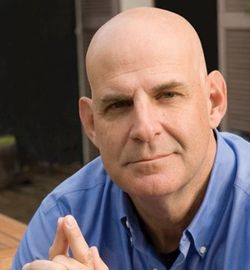
He’s sold more books than most of your favourite authors combined, but the master of the suburban thriller, Harlan Coben, isn’t getting complacent

Lydia Kiesling in The Guardian:

ScreenHunter_1101 Mar. 25 15.30“I’m in a self-hatred mode right now, actually,” the New York Times-bestselling author Harlan Coben tells me on the phone. “I’m writing a little slower than I want to be writing.”

It’s odd to hear this from a man whose biography is studded with the kind of numbers that torture the more penurious sort of writers. He’s written 27 novels, seven of them New York Times No 1 bestsellers. He has 60m books in print in 41 languages, and his advances are well into seven figures. He’s won the big three in mystery awards – the Edgar, the Shamus and the Anthony. The blockbuster French film based on his novel, Tell No One, was nominated for nine Cesars.

In short, Harlan Coben has more readers, and makes more money, than every writer I follow on Twitter combined.

Readers first fell in love with Coben in the 1990s through Myron Bolitar, a hapless former basketball star who solves mysteries with a waspy sociopath named Win.Coben’s atmospheric, twist-laden stand-alone novels cemented his popularityand earned him an annual spot at the top of the bestseller lists. The latest of these, The Stranger, which comes out in the United States and United Kingdom today, documents desperate acts in a serene suburban hamlet populated with lacrosse moms, and grapples with technological and moral dilemmas taken straight from the headlines.

Coben’s gregarious and voluble personality stands in a direct contrast to his occasionally grim books.

More here.

Bretton Woods, 1944: J. M. Keynes and the Reshaping of the Global Economy

Matthew Bishop in the New York Times:

Thesummitcover-318x494For many people, Bretton Woods stands for that rarest of moments: when governments and experts come together to restore order to a chaotic global economy. After the financial meltdown of 2008, the president of the World Bank and the financier George Soros joined Bill Clinton’s and Tony Blair’s earlier call for a “new Bretton Woods.” It didn’t happen. The world and especially America may yet come to regret that.

To its admirers, many good things were achieved at the Bretton Woods conference over three hectic weeks in the summer of 1944. As the Allies made their final push to liberate Europe, 730 representatives of 44 countries gathered in New Hampshire to set the rules for the postwar economy. Crowded into the half-restored grandeur of a hotel named after nearby Mount Washington, they agreed to create two new institutions to oversee the world economy, the International Monetary Fund and World Bank, and to establish a managed system of exchange rates.

Anchored semi-rigidly to the dollar (which was pegged to the price of gold), this new system was intended to be fairer and more economically rational than the old gold standard, which had collapsed in 1933. It would also be more orderly and sustainable than the endless beggar-thy-neighbor currency devaluations of the subsequent foreign-exchange market free-for-all. In agreeing to this, according to the fans of Bretton Woods, the Allied governments had learned important lessons after World War I, when the determination of the victors to punish the vanquished, rather than rebuild their devastated economies, only added to the pressures that resulted in World War II.

“The Economic Consequences of the Peace,” John Maynard Keynes’s pamphlet pointing out the likely disastrous consequences of the victor-friendly policies adopted after World War I, had turned Keynes into the century’s first celebrity economist. At Bretton Woods, he led the British delegation. He was the dominant intellectual force at the conference, though that did not stop him from losing many of the crucial political battles to his American counterpart, Harry Dexter White. A Jew from a rough part of Boston with a dislike for British elitism, White was later accused of spying for the Soviets, but only after he had won some notable victories over the Cambridge don.

More here.

Forget Assad

Bente Scheller at the Heinrich Böll Stiftung:

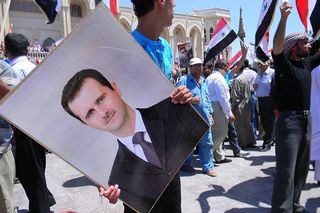
7718153052_3aed043702_zIf you cannot overthrow the tyrant, co-operate with him – after four disastrous years in Syria this seems to be the conclusion the international community has arrived at. While back in 2011 Bashar al-Assad’s days appeared to be drawing to a close, a growing number of people are now suggesting to see him as part of the solution, as illustrated recently by UN Special Envoy Staffan de Mistura in Vienna.

The more methodical and brutish Syria’s dictator disregards human rights, the more he seems to assume the role of a potentially reliable partner in the eyes of some. That is primarily due to the Islamist terror army ISIS. Albeit there are few atrocities with civilian victims the regime is not responsible of committing and although it commits these crimes to a much greater, deadlier extent – Assad is readily seen as the “lesser evil”.

The implication that the situation in Syria could be pacified through a co-operation with Assad in the battle against terrorism is as plain as it is ill-conceived when it comes to the actual implementation. The fight against ISIS requires three things: the means, the will and a strategy.

Assad’s regime is subject to international sanctions. However, it has been receiving vast amounts of financial and military support by Iran and Russia. How likely would Damascus’ current allies be to maintain this support if Assad was rehabilitated by the West? In view of the weak rouble and the economic consequences of the oil price decrease for Iran it would be of interest for both to scale down the liability caused by their involvement in Syria. Particularly the history of Russian-Syrian relations indicates furthermore that it was only of interest for Moscow to co-operate with Syria if this meant making a political statement against the West. A rehabilitation of Syria would come at an exorbitantly high price, politically as well as financially. How much is the West prepared to pay?

More here.

Wednesday Poem

Approaching Those ‘Ruddy’ Belisha Beacons
Near the Post Office Again

You can see them from a long way off, Belish Beacon
From when you pass the half-visible ponies
In the field where the school was

By the bus shelter with the bloke in it,
The bloke whose face is lit by his iPhone
Like a tallow-maker’s face is lit in an old master.

One Belisha Beacon off. One Belisha Beacon on.
Small parcels of light sent first class to each other;
Moons chucking glowing balls across the road’s net.

A car slows by the Post Office and a woman jumps out
And gives me a letter. ‘Can tha stick this in’t box for mi?’
She asks. I will, in a minute. Jogger walks by, gasping-gasp.

First I’ll hold the envelope up to the Belisha Beacon.
Not to read the letter inside, you understand,
Just to gaze at light on paper, light on writing.

by Ian McMillan
first published on Poetry International, 2014

Editor’s Note:

A Belisha beacon (/bəˈliːʃə/) is an amber-colored globe lamp on a tall black and white pole, marking pedestrian crossings of roads in the United Kingdom, Ireland and in other countries influenced by Britain

Colombey-les-deux-Mosquées

61aNyd1IbFL

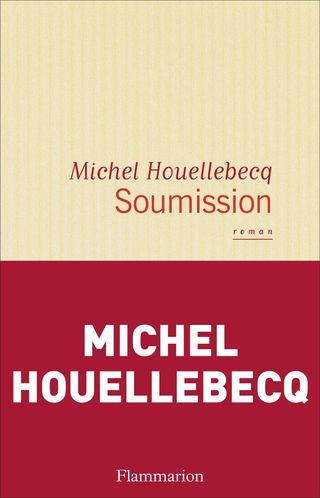
Adam Shatz reviews Soumission by Michel Houellebecq in the LRB:

Michel Houellebecq’s novel about a Muslim takeover of France is a melancholy tribute to the pleasure of surrender. It’s 2022, a charismatic Islamist politician called Mohammed Ben Abbes has become president, and France has fallen under his spell. Houellebecq’s timing could hardly have been better: Soumission was published on 7 January, the day of the Charlie Hebdo massacre. The novel was hailed by the right as a prophetic warning, a fictional cousin of Eric Zemmour’s anti-Muslim tirade, Le Suicide français, and attacked by the left, in the words of Alain Jakubowicz, as ‘the best Christmas gift he could have given to Marine Le Pen’. Both Houellebecq’s admirers and his detractors assumed that he still believed Islam was what he’d once called it: ‘the stupidest religion’. But Houellebecq has had second thoughts, and although his novel is deeply reactionary, it is not Islamophobic.

Houellebecq is not the first to imagine an Islamic France. In 1959, three years before he presided over the end of Algérie française, Charles de Gaulle told his confidant Alain Peyrefitte that France would have to withdraw from Algeria, because the alternative – full French citizenship for the indigènes – would turn it into an Islamic state:

Do you believe that the French nation can absorb 10 million Muslims, who tomorrow will be 20 million and the day after 40 million? If we adopt integration, if all the Arabs and Berbers of Algeria were considered as Frenchmen, what would prevent them from coming to settle in mainland France where the standard of living is so much higher? My village would no longer be called Colombey-les-Deux-Eglises, but Colombey-les-deux-Mosquées!

Two decades later, when Peyrefitte revealed de Gaulle’s remarks, the hero of the Resistance sounded a lot like Jean-Marie Le Pen. But fear of Islam, and of Muslims, has never been the exclusive property of the far right in France: it has always been rooted in the widespread demographic nightmare of being overrun by Muslims, of the coming ‘Eurabia’.

Houellebecq’s novel is sprinkled with winking allusions to anti-Muslim conspiracy theorists like Bat Ye’or, the doyenne of Eurabia literature. But in Soumission, France’s Islamisation isn’t brought about by the Muslim birthrate, the rage of the banlieue or the excesses of multiculturalism – the unholy trinity of the far right – and it isn’t something to be feared, much less resisted. Rather, it’s born of a marriage (arranged, of course) between a rudderless political establishment and a peaceful Islamist party. The Muslim Fraternity is led by Ben Abbes, a Muslim de Gaulle (Houellebecq’s comparison) who towers above his rivals. Houellebecq says his novel should be read as ‘the book of a sad historian’, but the way it observes the passing of French secularism is more bemused than sad. There is never any question in Soumission that France doesn’t deserve its fate.

More here.

How Mexico City Saved Me from Grief

9bd64ea7-ed51-4df3-bee7-e259bb1a1464-bestSizeAvailable

Francisco Goldman in The Guardian (photo Rachel Cobb):

The seemingly anarchic chaos and confusion of the city’s traffic had always intimidated and even terrified me: intersections and roundabouts like wide demolition derby arenas, cars crisscrossing simultaneously from all directions and all somehow missing each other, streaming through each other like ghosts; busy cross-streets without traffic lights or stop signs; one way streets that change direction from one block to another; jammed multi-lane expressways and looping overpasses, where a missed exit inevitably means a miscalculated turn on to another expressway or avenue heading off in some unknown direction, or a descent into a bewildering snarl of streets in some neighbourhood you’ve never been to or even heard of before.

My greatest fear was getting lost on an expressway, on the Anillo Periférico or the Circuito Interior, during one of the torrential summer rains, thunder and lightning in the low flat heavy sky like sonic sledgehammers falling on the car roof, and the rain, dense, blinding, trapping you inside a steady frenetic metallic vibration, and even welting hail menacing the windshield, and in a panic making for the first near exit and descending into drain-clogged streets that are suddenly and swiftly flooding, crap-brown water engulfing stalled cars, the tide rising to door handles; newspapers publish photographs of those routine calamities all summer long.

Every year, it has seemed to me, grief changes, persisting in shape-shifting ways that, as the years go by, become more furtive. But as that fifth anniversary of Aura’s death approached – a year that would mark a period in which I’d now been mourning Aura longer than I’d known her – the intensity of my grief was, unsurprisingly, resurgent, weighing on me in a new and at times even somewhat frightening way that I didn’t know how to free myself from. There was maybe not much logic to this, but I felt there was a problem or riddle I had to solve and that somehow Mexico City held a solution. Sometimes I told myself that one logical step would be to leave the city and begin anew somewhere else, a city I’d never lived in before, one free of memories and associations with Aura but also one in which I’d be able to escape my complicated role as private but also rather public widower. But whenever I thought it over, I’d decide that leaving was an inconceivable step and that maybe the solution lay in staying. And not merely staying, but going further in, embracing with more force what I’d been tempted to flee, maybe that was how to find a way to live in Mexico City without Aura.

More here.

This is why you shouldn’t believe that exciting new medical study

Julia Belluz in Vox:

Shutterstock_67006843.0.0In 2003, researchers writing in the American Journal of Medicine discovered something that should change how you think about medical news. They looked at 101 studies published in top scientific journals between 1979 and 1983 that claimed a new therapy or medical technology was very promising. Only five, they found out, made it to market within a decade. Only one (ACE inhibitors, a pharmaceutical drug) was still extensively used at the time of their publication.

One.

It’s a fact that all studies are biased and flawed in their own unique ways. The truth usually lies somewhere in a flurry of research on the same question. This means real insights don't come by way of miraculous, one-off findings or divinely ordained eureka moments; they happen after a long, plodding process of vetting and repeating tests, and peer-to-peer discussion. The aim is to make sure findings are accurate and not the result of a quirk in one experiment or the biased crusade of a lone researcher.

As science is working itself out, we reporters and our audiences seize on “promising findings.” It's exciting to hear about a brand new idea that maybe — just maybe — could revolutionize medicine and stop some scourge people suffer through. We're often prodded along by overhyping scientists like Zamboni, who are under their own pressure to attract research funding and publications.

We don't wait for scientific consensus; we report a little too early, and we lead patients and policymakers down wasteful, harmful, or redundant paths that end in dashed hope and failed medicine.

Read the rest here.

The Forgotten Handmaid’s Tale

Sophie Gilbert in The Atlantic:

Lead30 years ago, the Canadian author Margaret Atwood published The Handmaid’s Tale, a dystopian feminist novel set in a futuristic America run by religious fundamentalists. Pollution and sexually transmitted diseases have rendered the large majority of people infertile; the few women who can still reproduce are trained as “handmaids” and forcibly sent to serve wealthy and powerful men by bearing them and their wives' children. The novel, Atwood’s best-known work, has since become a modern classic, and a staple on English literature reading lists. It’s sold millions of copies and “appeared in a bewildering number of translations and editions,” as Atwood wrote in The Guardian earlier this year. The book has been adapted into plays, and even an opera. In March 1990, five years after its release, The Handmaid’s Tale was released as a movie, with a script by Harold Pinter, and stars including Natasha Richardson, Faye Dunaway, and Robert Duvall. But while the novel hasn’t been out of print in the three decades since its debut, the film has been almost entirely forgotten, to the point where copies of it are so rare they sell for upwards of $100 on Amazon.

In many ways, the movie adaptation was ill-fated from the start, even with the wide acclaim the book had received. In 1986, Atwood sold the rights to the producer Daniel Wilson, partly because Wilson had tapped Pinter and the director Karel Reisz to lead the project. The playwright had previously worked with Reisz on The French Lieutenant’s Woman, which starred Meryl Streep as a strong-willed woman condemned as promiscuous by a repressive society, and was nominated for five Academy Awards. But despite the talent attached and the success of Pinter and Reisz’s previous collaboration, no studio wanted to touch it. “During the next two and a half years, Wilson would take the Pinter script to every studio in Hollywood, encountering a wall of ignorance, hostility, and indifference,” writes the Canadian journalist Sheldon Teitelbaum. Movie executives declined to back the project, stating “that a film for and about women … would be lucky if it made it to video.”

More here.