
Category: Recommended Reading
The Woman Who Froze in Fargo
Mike Powell in Grantland:

About a week earlier, she had checked into a Holiday Inn in Bismarck, North Dakota. The morning after she arrived in Bismarck, a man had seen her wandering around a landfill and offered help. Konishi didn’t speak English, so the man took her to the police, where Konishi showed officers a crudely drawn map of a tree and a road and started repeating a word that soon everyone came to hear as “Fargo.”
Fargo: A city nearly 200 miles east of Bismarck on the border of North Dakota and Minnesota, best known for a 1996 Coen brothers movie in which a car salesman hires two men to kidnap his own wife for ransom. Things go wrong (things always go wrong in Coen brothers films) and one of the men ends up killing the other with an ax after an argument about a 1987 Cutlass Ciera, but not before the ax victim buries the ransom in a briefcase in the snow.
A story about Konishi emerged: Here was a woman who had traveled a very long way under the great misunderstanding that the movie Fargo was real. Only one of the officers at the Bismarck Police Department had seen the movie, which, incidentally, opens with a title card that reads: THIS IS A TRUE STORY.
Read the rest here.
Why Scientists Need to Give Up on the Passive Voice
Jacob Brogan in Slate:

By contrast, Elliott argues that scientists should use the passive voice in order to highlight their results. She writes, “The main advantage of the passive voice, in my opinion, is that it allows the writer to put the important concepts, ideas, findings, principles, and conclusions first. …” In other words, the passive voice allows us to discuss discoveries rather than the scientists who discovered them. In theory, it plays an important rhetorical function, because it insists on the factual truth of discoveries by minimizing the role that fallible human subjects play in the equation. Ultimately, however, scientists may be doing themselves a disservice by downplaying their place in the scientific process. Sainani holds that there’s something slightly untrustworthy about passive constructions, writing, “It’s more accurate and honest to say, ‘We found that …’ since this emphasizes the role that the experimenters played in designing, conducting, and interpreting the experiments.”
More here.
Mini enzyme moves gene editing closer to the clinic
Heidi Ledford in Nature:
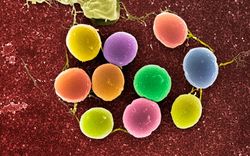
…Gene-therapy researchers often harness a virus called AAV to shuttle foreign genes into mature human cells. However, most laboratories use a gene encoding the Cas9 protein that is too large to fit in the snug confines of the AAV genome alongside the extra sequences necessary for Cas9 function. Feng Zhang of the Broad Institute of MIT and Harvard in Cambridge, Massachusetts, and his colleagues decided to raid bacterial genomes for a solution, because the CRISPR system is derived from a process that bacteria use to snip unwanted DNA sequences out of their genomes. Zhang’s team analysed genes encoding more than 600 Cas9 enzymes from hundreds of bacteria in search of a smaller version that could be packaged in AAV and delivered to mature cells. The gene encoding Cas9 in Staphylococcus aureus — a bacterium best known for causing skin infections and food poisoning — was more than 1,000 DNA letters smaller than the one for the commonly used Cas9. The researchers packed it into AAV along with RNAs that would target the enzyme to modify a cholesterol regulatory gene in the liver. Within a week of injecting mice with the modified virus, the team found that more than 40% of liver cells contained the modified gene.
More here.
Would the World Be a Better Place Without Religion?
Over at Rationally Speaking:

Atheists often take it as a given that the world would be better off without religion. But what does the evidence so far really say? In this episode, Massimo and Julia discuss a recent article in the Skeptical Inquirer presenting research that shows a moderate correlation between religiosity and prosocial traits like altruism. Should we doubt the research? And if not, are there other reasons to suspect that religion's net effect on the world is negative?
The Melian Dilemma: Varoufakis, Thucydides and game theory
Neville Morley over at The Sphinx Blog:
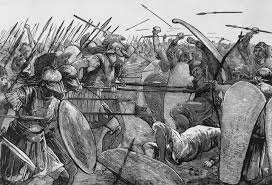
The Melian Dialogue in Thucydides has been of interest to game theorists since the earliest development of the field; it was discussed on several occasions by John von Neumann, generally accepted founder of this approach, and it appears in the work of a leading game theorist like Thomas Schelling. It’s entirely understandable: the dialogue presents two sides in a high-stakes, zero-sum conflict, pursuing very different strategies with a limited number of possible outcomes, and – if you want to push the boundaries of game theory a bit further, it also offers interesting examples of how each side seeks to anticipate and influence the decision-making of the other, and raises some fundamental questions of rationality. I fully expect to find lots of other examples when I have time to pursue this theme in depth, but for today I want to focus on one case of a game theoretical discussion of the Dialogue, written by the current Greek Finance Minister Yanis Varoufakis (1997; revised version 2014: 262-83). It is in itself an interesting reading of the situation, in relation both to Thucydides and to the normal assumptions of game theory, but there are also some striking implications for the current negotiations between Greece and the EU, especially Germany, which I will consider in the final section.
1. Varoufakis on Thucydides
Varoufakis speaks of Thucydides with familiarity and confidence, and knows him well enough to offer his own translations rather than relying on a standard version. These are generally close to the conventional readings, though with occasional interesting variations. The passages quoted are as follows, in order of their mention:
5.89: On the one hand the principles of justice, encompassed in human reason, hinge on the equal capacity to compel, yet on the other hand, the strong actually do what is possible and the weak suffer what they must.
Varoufakis here echoes (if not follows) Crawley in seeing the weak as ‘suffering’ rather than simply ‘accepting’ what they have to; and is in the tradition of emphasising that the strong ‘do’ what they are able to do rather than, more narrowly, ‘exact’ what they are able to exact. His choice of the phrase ‘encompassed in human reason’ isn’t wholly clear; I feel uncertain whether he wants to emphasise the human element (the idea that, as other translations make clearer, discussions of justice in debased human terms rest on issues of strength and power whereas true, divine justice operates by different rules) or the rational element (which edges into the neo-realist assumption that Thucydides here describes presents lawless anarchy as the true and reasonable state of things, rather than as something to be deplored). Finally, Varoufakis is the only translator I can recall off-hand who seeks to contrast the two parts of the sentence – justice depends on equal power and yet the strong exact and the weak endure – rather than seeing these as consecutive – justice depends on equal power and so the strong exact and the weak endure (i.e. there is no equality and so no justice).
More here.
In Absentia: Where are India’s conservative intellectuals?
Ramachandra Guha in Caravan Magazine:
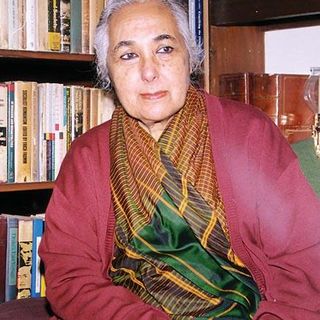
THERE IS A PARADOX at the heart of Indian public life today: that while the country has a right-wing party in power, right-wing intellectuals run thin on the ground. This makes India an exception among the world’s established democracies. The United States, the United Kingdom and Germany all have a long lineage of first-rate intellectuals on the right, who continue to provide ballast to parties such as the Republicans in America, the Conservatives in Britain, and the Christian Democrats in Germany. On the other hand, while the Bharatiya Janata Party enjoys political power in India, it can command the support of few well-known or widely published intellectuals.
The shortage became strikingly apparent last August, when Y Sudershan Rao was appointed the chairman of the Indian Council of Historical Research. It has further manifested itself in the growing influence over school curricula of Dina Nath Batra. Rao’s publication list is meager—he wrote one little-noticed book 25 years ago, and has no publications in peer-reviewed journals. From the statements he has made since assuming office, it is clear he does not know the difference between fact and fiction, or between history and myth. Batra’s claims to scholarship are even more tenuous. He is of the view that when god made man, he placed the various strands of humanity in an oven—the strain taken out too early became the whites, the strain taken out too late became the blacks, the strain taken out at just the right time became the brown Indians, perfectly coloured and destined thereafter to rule the world.
Both Rao and Batra have long-standing connections with the Rashtriya Swayamsevak Sangh. Although the RSS describes itself as a cultural organisation, it is in fact intensely ideological and deeply political. Its ultimate goal is the construction of a Hindu rashtra, a state run by and for Hindus. The RSS has very close ties with the BJP—as it did with the party’s predecessor, the Jana Sangh—supplying it with cadres, ministers, and an unending stream of advice.
Rao and Batra’s influence over public policy is based not on their claims to scholarship but on the strength of their links to the RSS. Their statements and proposals have attracted a fair amount of criticism, largely merited, in the media. This could have been avoided if, instead of Rao and Batra, the new government had promoted and patronised scholars with political views congenial to the ruling dispensation and with a string of books and research papers to their name. That alternative, alas, was not available, since intellectuals who meet this twin desiderata do not exist.
More here.
Wednesday, April 1, 2015
Stranger Still: Kamel Daoud and Algeria

Adam Shatz in the NYT (photo: Ferhat Bouda/Agence Vu, for The New York Times):
What impressed me about Daoud’s writing, both his journalism and his novel, was the fearlessness with which he defended the cause of individual liberty — a fearlessness that, it seemed to me, bordered on recklessness in a country where collectivist passions of nation and faith run high. I wondered whether his experience might provide clues as to the state of intellectual freedom in Algeria, a peculiar hybrid of electoral democracy and police state. Late last year, I had an answer of sorts. Daoud was no longer merely a writer. He was now someone you had to take a side on, in Algeria and in France.
His ordeal began on Dec. 13, during a book tour in France, where “Meursault” received rapturous reviews, sold more than 100,000 copies and came two votes shy of winning the Prix Goncourt, the nation’s most prestigious literary prize. He was on a popular late-night talk show called “On n’est pas Couché” (“We’re Not Asleep”), and he felt, he would tell me later, “as if I had all of Algeria on my shoulders.” He insisted to the French-Lebanese journalist Léa Salamé, one of the guests on the program, that he considered himself an Algerian, not an Arab — a view that’s not uncommon in Algeria, but that is opposed by Arab nationalists. He said that he spoke a distinct language called “Algerian,” not Arabic. He said that he preferred to meet with God on foot, by himself, rather than in an “organized trip” to a mosque, and that religious orthodoxy had become an obstacle to progress in the Muslim world. Daoud said nothing on the program that he hadn’t said in his columns or his novel. But saying it in France, the country that ruled Algeria from 1830 to 1962, got him noticed by people back home who tend to ignore the French-language press.
One of them was an obscure imam named Abdelfattah Hamadache, who had reportedly been an informer for the security services. Three days after Daoud’s appearance on French television, Hamadache wrote on his Facebook page that Daoud — an “apostate” and “Zionized criminal” — should be put on trial for insulting Islam and publicly executed. It was not quite a call for Daoud’s assassination: Hamadache was appealing to the state, not to freelance jihadists. But Algeria is a country in which more than 70 journalists were murdered by Islamist rebels during the civil war of the 1990s, the so-called Black Decade. Those murders were often preceded by anonymous threats in letters, leaflets or graffiti scrawled on the walls of mosques. Hamadache’s “Facebook fatwa,” as it became known, was something new, and uniquely brazen, for being signed in his own name.
More here.
Pound’s Metro
William Logan in The New Criterion:
As he recalled it,
I got out of a train at, I think, La Concorde and in the jostle I saw a beautiful face, and then, turning suddenly, another and another, and then a beautiful child’s face, and then another beautiful face. All that day I tried to find words for what this made me feel. That night as I went home along the rue Raynouard I was still trying. I could get nothing but spots of colour. I remember thinking that if I had been a painter I might have started a wholly new school of painting. . . . Only the other night, wondering how I should tell the adventure, it struck me that in Japan, where a work of art is not estimated by its acreage and where sixteen syllables are counted enough for a poem if you arrange and punctuate them properly, one might make a very little poem which would be translated about as follows:—
“The apparition of these faces in the crowd :
Petals on a wet, black bough.”
—“How I Began,” T.P.’s Weekly, June 6, 1913
Early in March 1911, Ezra Pound arrived in Paris. By late May he had moved on. The specters in the Métro obviously haunted him. The lines were finished by fall the following year, when he sent Poetry a batch of poems that, he hoped, would “help to break the surface of convention.” When these “Contemporania” were published at the head of the April 1913 issue, the poem appeared in this fashion:
In a Station of the Metro
The apparition of these faces in the crowd : Petals on a wet, black bough .
The first thing striking about the couplet is the subject—beauty discovered underground.
More here.
Evidence-based medicine: Save blood, save lives
Emily Anthes in Nature:
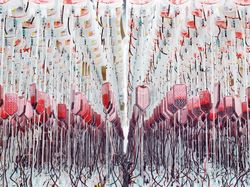
The results, detailed in two papers published in the past 18 months1, 2, were dramatic. The number of red-blood-cell transfusions dropped by 24% between 2009 and 2013, representing an annual savings of $1.6 million in purchasing costs alone. And as transfusion rates fell, so did mortality, average length of stay and the number patients who needed to be readmitted within 30 days of a transfusion. By simply asking doctors to think twice about transfusions, the hospital had not only reduced costs, but also improved patient outcomes. Transfusions are common procedures, at least in developed nations. In 2011, US doctors transfused 21 million units of blood and blood products; in the United Kingdom, the number was nearly 3 million. But although transfusions can be lifesaving, they are often unnecessary and are sometimes even harmful. “I think we were kind of brainwashed into thinking that blood saves lives, and the more you give the better,” says Steven Frank, an anaesthesiologist and director of the blood-management programme at the Johns Hopkins Health System in Baltimore, Maryland. “We've gone 180 degrees, and now we think that less is more.”
More here.
TALKING TASTE, WITH ROBERT PINSKY
From Jam Tarts:
How has your experience as a professor of creative writing and literature influenced your personal tastes? How has what you've taught – and perhaps who you've taught – over the years challenged or even transformed your sense of what’s pleasing and what’s not?
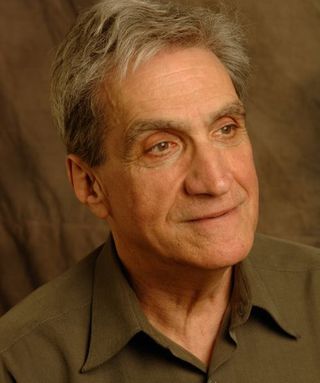
A kind of secret function of that exercise has been to develop and expand my taste. The student anthologies are scouts for me, keeping my taste limber, I think. Sometimes, there’s the plausible mediocrity that the young poets (or their teachers) are reading in a particular decade, or lustrum, or year. But sometimes I get some free education. Not only contemporary finds (it may have been in one of those anthologies that I first read a poem by Terrance Hayes or Katie Peterson) but poets translated from other languages. And re-discoveries: some very hip, rather experimental young poet types out “Lycidas” and I realize I’ve sort of underestimated it as a dusty, ornate perennial.
More here.
How We Age
From The Scientist:
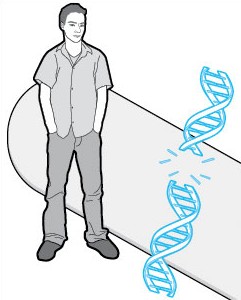
“We age so completely and in so many different ways,” says stem cell biologist Derrick Rossi of Harvard University. “We are programmed to die.”
The aging process can be traced down to the level of cells, which themselves die or enter senescence as they age, and even to the genomic level. Accumulation of mutations and impairments in DNA repair processes are highly associated with symptoms of aging. In fact, disorders that cause premature aging are typically caused by mutations in genes involved in the maintenance of our DNA. And at the cellular level, decreases in stem cells’ proliferative abilities, impairments in mitochondrial function, and proneness to protein misfolding can all contribute to aging. As scientists continue to detail these various processes, says Paul Robbins of the Scripps Research Institute, “the big question is, ‘At what step along all these pathways is the best place to intervene to try to promote healthy aging?’”
While diverse strategies—from caloric restriction to genetic manipulation—have proven to extend life span in model organisms in the lab, these animals are not necessarily enjoying longer periods of health. (See “Quantity or Quality?”) In the end, researchers studying aging must learn not just how to extend life, but how to prevent age-related disease and physical decline.
More here.
Economic Inequality: It’s Far Worse Than You Think
Nicholas Fitz in Scientific American:
In their 2011 paper, Michael Norton andDan Ariely analyzed beliefs about wealth inequality. They asked more than 5,000 Americans to guess the percentage of wealth (i.e., savings, property, stocks, etc., minus debts) owned by each fifth of the population. Next, they asked people to construct their ideal distributions. Imagine a pizza of all the wealth in the United States. What percentage of that pizza belongs to the top 20% of Americans? How big of a slice does the bottom 40% have? In an ideal world, how much should they have?
More here.
What’s Wrong with the Economy—and with Economics?
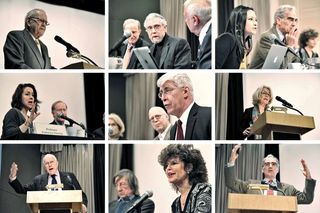
Over at the NYRB (photo by Katherine Cecil):
On March 14–15, 2015, The New York Review of Books Foundation, Fritt Ord, and the Dan David Prize held a conference, “What’s Wrong with the Economy—and with Economics?” at Scandinavia House in New York. We are pleased to present the following video footage of the event.
The Crash of 2007-2008 was an acute crisis of market disequilibrium which has imposed itself upon an economics discipline still giving pride of place to models where market forces nudge economies in the very opposite direction—towards equilibrium. Crises of disequilibrium have occurred with increasing frequency over the past thirty years: with the Latin American debt crises of the 1980s, the American Savings and Loans collapse of the late 1980s, the Scandinavian banking crisis of the early 1990s, the Asian and Russian financial crises of the late 1990s, the American “dot-com” bust of 2000, and the Crash of 2007-2008 itself which has been global in impact.
Yet treating these crises as a series of near-identical events susceptible to economic modelling does not, on the face of it, do justice to the complexity and singularity of the forces which combined to bring them about. Many of these influences seem to have had their origins well beyond the home territory of economics. Doing justice to these outside forces may require a knowledge of ethics, anthropology, contemporary history and politics, public policy, and an understanding of the beliefs, frequently delusional, which seized many of the economic actors before and during the crises.
Among these disciplines it is, unsurprisingly ethics which intrudes questions of value deepest within the territory of economics, and forces a reappraisal of where the discipline stands in the disciplinary continuum between the humanities and the natural sciences. The overwhelming preference of economists themselves is to be as closely aligned as possible with the natural sciences. But with the intrusion of such ethically charged issues as the human fallout from the Crash, and the unrelenting growth of economic inequality in the US and most European countries, the scientific and the normative in economics are becoming increasingly difficult to keep apart.
Disputes between economists which seem to derive from disagreements about data and methodologies may on closer examination be rooted in profound disagreements about values.
Videos of the panels can be found here.
Juggun Kazim: Creativity and Constraint

The Singular Universe and the Reality of Time
Massimo Pigliucci in Scientia Salon:
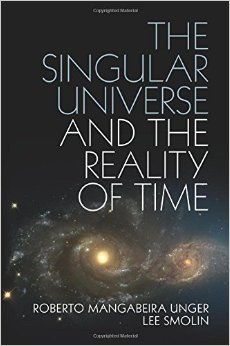
I have devoted a serious amount of time to reading the new book by Roberto Mangabeira Unger and Lee Smolin, The Singular Universe and the Reality of Time: A Proposal In Natural Philosophy [1]. Indeed, this review actually pertains to the first part of the book, written by Unger, the philosopher in the pair. Eventually I will come back to it with a second review, focusing on the part written by Smolin, the physicist. They make the same argument, but one goes at it from a broad, philosophical perspective, the other from a more empirical, scientific point of view.
It is an ambitious book, bound to be controversial both among philosophers and among scientists, but it is worth the effort, if nothing else in order to expose one’s mind to a fairly radical way of conceiving of metaphysics, physics, and mathematics — and this despite the fact that the first part, written by Unger, is somewhat slow going and repetitious, compared to Smolin’s contribution.
Before we get to what the authors set out to accomplish, it is worth discussing a more basic premise of the book: they see it as an exercise in what they call (a revived form of) “natural philosophy.” Of course, natural philosophy was the name by which science went before it became a field of inquiry independent of philosophy itself. Descartes, Galileo, Newton and even Darwin thought of themselves as natural philosophers (the word scientist, in fact, was invented by Darwin’s mentor, William Whewell, in 1833 [2]). But what’s the point of going back to the old term, aside from a bit of historical nostalgia and perhaps intellectual pretentiousness?
Actually, Unger & Smolin (henceforth, U&S) make a very good case for it, which begins with the observation that many of their colleagues have indeed engaged, often stealthily, or perhaps without recognizing it, in precisely this sort of activity.
More here.
Wednesday Poem
Genetics
My father’s in my fingers, but my mother’s in my palms.
I lift them up and look at them with pleasure –
I know my parents made me by my hands.
They may have been repelled to separate lands,
to separate hemispheres, may sleep with other lovers,
but in me they touch where fingers link to palms.
With nothing left of their togetherness but friends
who quarry for their image by a river,
at least I know their marriage by my hands.
I shape a chapel where a steeple stands.
And when I turn it over,
my father’s by my fingers, my mother’s by my palms
demure before a priest reciting psalms.
My body is their marriage register.
I re-enact their wedding with my hands.
So take me with you, take up the skin’s demands
for mirroring in bodies of the future.
I’ll bequeath my fingers, if you bequeath your palms.
We know our parents make us by our hands.
.
by Sinead Morrissey
from The State of the Prisons
publisher: Carcanet, Manchester, 2005
Casual Sex May Be Improving America’s Marriages
Helen Fisher in Nautilus (scene from Before Sunrise):
One-night stands; hooking-up; friends with benefits; living together; pre-nups; civil unions. These all spell caution. But they also spell logic—because our brain is soft-wired to attach slowly to a partner.
The basic circuits for romantic love lie in primitive regions of the brain, near those that orchestrate thirst and hunger. Romantic love is a drive—one of three basic brain systems that evolved to direct our fundamental human mating and breeding strategy. The sex drive predisposes you to seek a range of mating partners; romantic love enables you to focus your mating energy on a single individual at a time; and feelings of attachment incline you to form a pair-bond at least through the infancy of a single child. Feelings of romantic love and deep attachment to a partner emerge in a pattern highly compatible with the spirit of the times—that is, with slow love.
I say this because my colleagues Lucy Brown, Art Aron, Bianca Acevedo, and I have put new lovers into a brain scanner (using functional Magnetic Resonance Imaging, or fMRI) to measure neural activity as these men and women gazed at a photo of their sweetheart. Those who had fallen madly in love within the past eight months showed activity in brain regions associated with energy, focus, motivation, craving, and intense romantic love. But those who had been passionately in love for eight to 17 months also showed activity in an additional brain region associated with feelings of attachment.
Romantic love is like a sleeping cat; it can be awakened at any time. Feelings of deep attachment, however, take time, and they can endure. In another of our studies, led by Acevedo, we put 17 men and women in their 50s and early 60s into the brain scanner. These participants had been married an average of 21 years, and all maintained that they were still madly in love with their spouse. Their brains showed that they were: They were deeply attached as well.
We have even begun to map some of the brain circuitry responsible for this marital happiness. In our study of long-term lovers, those who scored higher on a marital satisfaction questionnaire showed more activity in a brain region linked with empathy, a trait they had most likely retained from their initial passion. Moreover, when psychologist Mona Xu and her team used my original research design to collect similar brain data on 18 young men and women in China, she found that those who were in love long term showed activity in a brain region associated with the ability to suspend negative judgment and over-evaluate a partner, what psychologists call “positive illusions.” Much like men and women who have just fallen madly in love, these long-term partners still swept aside what they didn’t like about their mate and focused on what they adored.
Because feelings of attachment emerge with time, slow love is natural. In fact, rapidly committing to a new partner before the liquor of attachment has emerged may be more risky to long-term happiness than first getting to know a partner via casual sex, friends with benefits and living together. Sexual liberalism has aligned our courtship tactics with our primordial brain circuits for slow love.
More here.
Tuesday, March 31, 2015
Would Telepathy Help?
Kat McGowan in Aeon (Anthony Quinn and Anna Karina on the set of 'The Magus'. 1976. Photo by Eve Arnold/Magnum):
Every modern generation has had its own idiosyncratic obsession with telepathy, the hope that one human being might be able to read another person’s thoughts. In the late 19th century, when spiritualism was in vogue, mind-reading was a parlour game for the fashionable, and the philosopher William James considered telepathy and other psychic phenomena legitimate subjects of study for the new science of psychology. By the 1960s, the Pentagon was concerned about Soviet telepathy research and reports that they had established remote communications with submarine commanders. In the 1970s, one ambitious Apollo 14 astronaut took it upon himself to try broadcasting his brainwaves from the moon.
In our technologically obsessed era, the search for evidence of psychic communication has been replaced by a push to invent computerised telepathy machines. Just last year, an international team of neurobiologists in Spain, France and at Harvard set up systems that linked one brain to another and permitted two people to communicate using only their thoughts. The network was basically one massive kludge, including an electroencephalography cap to detect the sender’s neural activity, computer algorithms to transform neural signals into data that could be sent through the internet and, at the receiving end, a transcranial magnetic stimulation device to convert that data into magnetic pulses that cross another person’s skull and activate certain clusters of neurons with an electrical field. With this contraption, the researchers were able to send a signal of 140 bits (the word ‘ciao’) from one person’s brain to another.
This apparatus is complex, expensive and extremely low-bandwidth, achieving a speed of about two bits per minute. Nonetheless, this study and others like it inspire a wave of hope that it might one day be possible to read another person’s thoughts. It’s easy to see why people won’t give up on the idea. Telepathy promises an intimate connection to other human beings. If isolation, cruelty, malice, violence and wars are fuelled by misunderstandings and communication failures, as many people believe, telepathy would seem to offer the cure.
More here.
Faith, Hope, and Chemistry
In my first year as a medical student I thought I had a pretty good notion of what medicine was all about. I saw it as a branch of mechanical engineering, like building bridges, say, but inside the human body. If you want to build a bridge across a river, you’d have to take measurements and make calculations, choose building materials and then construct your bridge. Doesn’t matter whether you are working in Timbuktu, in Marseille, or on the moon.
Medicine is not like that at all. In Timbuktu it’s a completely different enterprise than in Marseille and on the moon there is no medicine. This multifariousness of medicine was brought home to me when Professor B., after describing a very complicated surgical procedure, concluded the demonstration by adding, “Of course I would never do this type of operation in a patient who is above eighty.”
I was shocked. What’s wrong with patients older than eighty? Aren’t they worth the trouble? It took me quite some time before I realized that that was not the point. Humans form a biological population, which means that every individual is a little different from all the others. Without this variety there would be nothing to select within the evolutionary process. Every face is different. Every fingerprint, every nose, every tone of voice—they are all different. The same goes for all the potatoes and roses of one kind. They are all different from each other.
more here.