
Category: Recommended Reading
Malala Yousafzai’s Fight Continues
Nicholas Kristoff in The New York Times:

…Malala is determined not to be used as window dressing by world leaders, and her advice to presidents and prime ministers is to focus not on elementary school or middle school but on 12 full years of education. “Your dreams were too small,” she tells U.N. members. “Your achievements are too small. Now it is time that you dream bigger.” She scolded Nigeria’s president at the time for not helping girls abducted by Boko Haram. She told President Obama at the White House that drones were counterproductive and that he should invest in education. Just eight days of global military spending, she notes, would pay to get all remaining kids in school worldwide. “No world leader would want nine years of education for their children,” she told me. “Every world leader wants quality education for their children. They need to think of the rest of the world’s children as their own children.”
More here.
Saturday, September 26, 2015
What Can We Learn From TV Coverage of Feminism in 1970?
Bonnie J. Dow in Women's Media Center:

In 1970, network news coverage of feminism was a surprising mix of positive and negative reporting. Most reports, for instance, treated abortion rights and the ERA as reasonable, even commonsensical, demands.
More here.
Walter Benjamin’s legacy, 75 years on
John Dugdale in The Guardian:
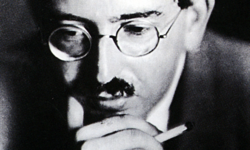
Yet Edward Stourton, in Cruel Crossing: Escaping Hitler Across the Pyrenees, notes “there are all sorts of unanswered questions surrounding Benjamin’s death. His travelling companions remembered him carrying a heavy briefcase containing a manuscript he described as ‘more important than I am’. No such manuscript was found after his death … A Spanish doctor’s report gave the cause of death as a cerebral haemorrhage, not a drugs overdose. There has been persistent speculation that he was actually murdered, perhaps by a Soviet agent who had infiltrated his escaping party.” By the time Arendt wrote her memoir (later used as the introduction to Illuminations) in 1968 the chaotic freelance critic she evoked, pinballing between temporary homes, disparate obsessions and the incompatible views of his friends Adorno, Brecht and Gershom Scholem, was fast emerging a la Orwell as a giant figure with an unexpectedly substantial estate in print – his collected writings were published in Germany in 1955, eventually followed by a four-volume Harvard edition in English – and formative power in multiple fields.
More here.
Silicon Valley shouldn’t let China strong-arm it into spying
Ken Roth in Quartz:

To date, these efforts have found Silicon Valley allied with its users. But with companies under mounting pressure in places like Russia andChina to aid abusive government surveillance, the industry must decide whether to stand up for their most vulnerable users—those in countries where peaceful dissent can lead to serious reprisals—even if that may affect its business opportunities.
This month’s state visit by Chinese President Xi Jinping is a major test. Xi’s visit opened with US tech executives in Seattle. Chinese officials like Internet czar Lu Wei will also join companies at the US-China Internet Industry Forum, an annual meeting organized by Microsoft and the Internet Society of China. Media reports indicate that executives from Apple, Facebook, Google, Uber and Cisco are invited.
These meetings come at a time when China is considering a raft of new laws—ostensibly about security and counter-terrorism—that would expand digital surveillance and censorship.
More here.
The Tea Twister
translating ‘The Dirty Dust: Cré na Cille’ by Máirtín Ó Cadhain
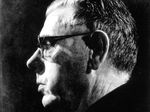
Long have I labored in the temples of translation, if not as a cleric, then let us say as a graying vestal. In those drop-ceiling’d holy sites, papered with grant applications and hung with the leathered hides of forgotten interns, rumors have long persisted of the great untranslated Irish-language novel Cré na Cille, its title traditionally English’d as “Graveyard Clay.” Now called The Dirty Dust (the better to retain author Máirtín Ó Cadhain’s alliterative original, says its introduction), it has at last been made available to Anglophones thanks to translator Alan Titley and the Yale Margellos World Republic of Letters.
“An influence on Finnegans Wake!” was one commonly heard refrain concerning this as-yet obscure object of desire, never mind that the two novels’ respective dates of publication make this a strained point at best. “In a league with Flann O’Brien!” was another, more reasonable, certainly more accurate line. To complete the trifecta, I even heard a few variations on “Beckett loved it!”—presumably unsubstantiated, but nonetheless tantalizing. Whether or not Ó Cadhain’s prose could really match or anyway trot sans embarrassment alongside the mighty strides of this Holy Trinity, the book’s premise was enough to lend credence to the rumors. Cré na Cille comes with an unbeatable “elevator pitch” that rhymes most deliciously with the work of its author’s best beloved countrymen: it’s none of your garden-variety narratives, following a protagonist or protagonists through which- and whatever conflicts and experiences, no. It’s 100% dialogue, and not just any dialogue, but a chorale of dead souls, every character already having snuffed it and been stuffed into their graves. À la an Our Town or Spoon River cross-pollinated with No Exit, however, these corpses are perpetually, rather hellishly awake, aware, and gabbing in Ó Cadhain’s wonderfully unsplendid hereafter.
more here.
‘The Invention of Nature,’ by Andrea Wulf

Alexander von Humboldt was the pre-eminent scientist of his time. Contemporaries spoke of him as second in fame only to Napoleon. All over the Americas and the English-speaking world, towns and rivers are still named after him, along with mountain ranges, bays, waterfalls, 300 plants and more than 100 animals. There is a Humboldt glacier, a Humboldt asteroid, a Humboldt hog-nosed skunk. Off the coast of Peru and Chile, the giant Humboldt squid swims in the Humboldt Current, and even on the moon there is an area called Mare Humboldtianum. Darwin called him the “greatest scientific traveler who ever lived.”
Yet today, outside Latin America and Humboldt’s native Germany, his name has receded into near oblivion. His insights have become so ingested by modern science that they may no longer seem astonishing. As Andrea Wulf remarks in her arresting “The Invention of Nature: Alexander von Humboldt’s New World,” “it is almost as though his ideas have become so manifest that the man behind them has disappeared.”
This formidable genius was born in 1769 to a Prussian court official and a forceful mother of Huguenot descent. He was brought up in the shadow of his precocious elder brother, Wilhelm, a linguist and philosopher, but Alexander flowered into a brilliant polymath: a slight, apparently delicate man driven by furious ambition and insecurity.
more here.
‘Portraits: John Berger on Artists’, by John Berger

At its best, there is a sort of poetry about Berger’s mix of storytelling and critique, and his receptiveness to literature of all stripes, which consistently enriches this account. An outstanding example is essays on Velázquez and the harsh “Spanish landscape of the interior”, which connect to a musing on unpaintable landscapes worldwide (“if we tend to forget this it is the result of a kind of Eurocentrism”) and — verging bravely, provocatively, on fraught orientalist territory — on the “special place” in Arab poetry of the blade, knife, sword, dagger.
“In the Sahara one enters the Koran,” Berger writes. “Islam was born of, and is continually reborn from, a nomadic desert life whose needs it answers, whose anguish it assuages . . . the blade was a reminder of the thinness of life. And this thinness comes, very materially, from the closeness in the desert between sky and land . . . In the thin stratum of the living laid on the sand like a nomad’s carpet, no compromise is possible because there are no hiding places; the directness of the confrontation produces the emotion, the helplessness, the fatalism.”
Berger’s vision of geography shaping history shaping art and life is almost always infused with such imaginative empathy. When, rarely, it is not, the absence is also revealing: the artists with whom Berger struggles are those seeming to him to lack that empathy, their focus on existential alienation excluding them from social constructs and connections. Giacometti’s “extreme proposition” that no reality could ever be shared “reflects the social fragmentation and manic individualism of the late bourgeois intelligentsia”.
more here.
Friday, September 25, 2015
Why some scientists are worried about a surprisingly cold ‘blob’ in the North Atlantic Ocean
Chris Mooney in the Washington Post:

Indeed, last week we learned from the National Oceanic and Atmospheric Administration that the first eight months of 2015 were the hottest such stretch yet recorded for the globe’s surface land and oceans, based on temperature records going back to 1880. It’s just the latest evidence that we are, indeed, on course for a record-breaking warm year in 2015.
Yet, if you look closely, there’s one part of the planet that is bucking the trend. In the North Atlantic Ocean south of Greenland and Iceland, the ocean surface has seen very cold temperatures for the past eight months:
What’s up with that?
More here. [Thanks to Ali Minai.]
In Memoriam: Yogi Berra
Akim Reinhardt in his blog, The Public Professor:
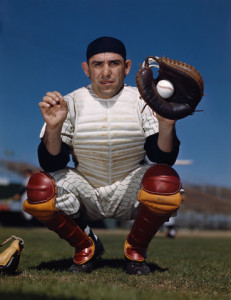
Nearly every game aired on channel 11 WPIX, and I watched as many as I could, which was nearly all of them.
The Yankees are by far the most successful team in the history of American sports. Not even close. They’re probably the most successful team in the world. For this reason, rooting for the Yankees has often been equated with rooting for a large, wealthy corporation like IBM or GM. I’ve always thought it’s a very poor analogy.
Rooting for the Yankees is actually like rooting for the United States. Each in their own way, the Yankees and United States are the 300 lb. gorilla, that most powerful of entities winning far more than anyone else. Their wealth creates many advantages. Supporters expect them to win, and they usually do. Opponents absolutely revel in their defeats.
All that success means you will be adored by some non-natives who are tired of losing and want to bask in your glory, even if it must be from afar. But mostly you are hated. Anywhere you go in America, some people love the Yankees and many more hate them. Just like the United States is either loved or hated everywhere else in the world.
Who hates IBM?
More here.
What Can ‘Star Trek’ Teach Us About American Exceptionalism?
John Feffer in The Nation:

The “prime directive,” designed to govern the conduct of Kirk and his crew on their episodic journey, required non-interference in the workings of alien civilizations. This approach mirrored the evolving anti-war sympathies of series creator Gene Roddenberry and many of the show’s scriptwriters. The Vietnam War, which raged through the years of its initial run, was then demonstrating to more and more Americans the folly of trying to reengineer a society distant both geographically and culturally. The best and the brightest, on Earth as on the Enterprise, began to have second thoughts in the mid-1960s about such hubris.
Even as they deliberately linked violent terrestrial interventions with celestial ones, however, the makers of Star Trek never questioned the most basic premise of a series that would delight fans for decades, spawning endless TV and movie sequels. Might it not have been better for the universe as a whole if the Enterprise had never left Earth in the first place and if Earth hadn’t meddled in matters beyond its own solar system?
More here.
The not-quite-romance of Eudora Welty and Ross MacDonald

Some friendships hover between romantic and platonic, anchored to the latter by circumstance or fate. It’s a sitcom trope: the will-they-or-won’t-they couple, always teetering at the edge of love. But though TV demands a tidy resolution—the answer is almost always that they will, and do—in life such friendships often remain in limbo indefinitely, stretching on for years, even decades.
Such was the case for Eudora Welty and Ross MacDonald. By the time they became acquainted, in 1970, both were well established in their fields—Welty in that nebulous genre called Southern literature, and MacDonald in hard-boiled detective fiction. Welty’s stories and novels captured the voice of small towns in Mississippi; MacDonald, the pen name for Ken Millar, set his novels in Southern California, where he and his wife, Margaret, had settled. His books explored, through his Philip Marlowe–equivalent Lew Archer, the ways in which the dream of suburbia could turn twisted and nightmarish.
Welty was an avid reader of crime fiction, so much so that the now-defunct Choctaw Books in Jackson used to keep a pile of paperbacks on hand for when she stopped by.
more here.
Langton’s Ant
In whose service does a painter paint, or a critic criticize?

When Buchloh derides more or less all of modernist and contemporary representational art, from Giorgio de Chirico’s pittura metafisica to Neo-Expressionism circa 1980, as “a masquerade of alienation from history, a return of the repressed in cultural costume,” the vehemence of his condemnation is impressive until one considers how all-encompassing it is, and how easily it might be turned into praise. After all, maybe the repressed should be encouraged to return—and who’s to say that being alienated from history is categorically bad? Yet as slippery as Buchloh’s rhetoric may be, the object of his fulminations is, at times, clear enough. Klein is an easy target, given that he was an incorrigible mystifier who really did take a reactionary political stance. But Buchloh, who maintains that it’s impossible to “evaluate any artistic production without considering at the same time its manifest political and ideological investments”—and who also feels certain that he can detect its unconscious agenda—forgets that the artist’s politics are not necessarily those of his art. That Balzac was a royalist did not prevent his writing from having a revolutionary effect, or so Marx and Engels believed. Buchloh, by contrast, thinks he’s made his case by citing Klein’s “crypto-fascist statements.” He accuses Donald Judd, who admired the Frenchman’s blue monochrome paintings, of a “patently formalist” approach, and—pot calling the kettle black—considers Judd’s promulgation of autonomous art as an “authoritarian prohibition” of his own brand of Ideologiekritik. But while Buchloh would be happy to prohibit Judd’s attentiveness to form, the latter at least accounts for why Klein is still worth talking about today.
more here.
Did william styron reserve his best work for non-fiction?

Styron remains a dimly realized figure in his personal essays. We are told repeatedly the same facts about his childhood in Tidewater, Virginia, his grandmother who owned two slaves, his enlistment in the Marine Corps, his annus mirabilis in 1952 when his first novel was published and he went to France, found a circle of friends who would start The Paris Review, and met his wife. Of course any writer serially engaged in autobiographical accounts will be forced to repeat material; but Styron never rethinks or questions any of it. He uses practically the same language each time. It isn’t that he’s dishonest, but his public presentation of self lacks a more probing honesty: he always seems to be holding back. To get a sense of Styron the man you would have to turn to his daughter Alexandra Styron’s perceptive, frank portrait, Reading My Father (TLS, September 30, 2011). She claims her father had a wicked sense of humour, but there is precious little in evidence here, except maybe for a tongue-in-cheek takedown of Flo Aadland’s pop tell-all about Errol Flynn, The Big Love, and a sweet, whimsical piece about walking his dog, previously uncollected.
In the fallow decades when Styron struggled to bring off a new novel after the success of Sophie’s Choice, he dedicated considerable, if reluctant, energy to non-fiction. Many of the best pieces here, including the brilliant “This Quiet Dust” about how he was moved to write the story of the Negro slave, Nat Turner, appeared in the 1982 collection of that name. Styron was taken to task for The Confessions of Nat Turner by a group of African American critics, who objected to his having had the temerity to write a novel in the voice of a historic black rebel. He seems never to have got over the sting of that controversy, as evidenced by his follow-up piece, “Nat Turner Revisited”. In a tribute to Philip Roth, he singles out Roth’s having been the target of censorious rabbis as his point of identification.
more here.
Friday Poem
The Unnamable River
1.
Is it in the anthracite face of a coal miner,
crystallized in the veins and lungs of a steel
worker, pulverized in the grimy hands of a railroad engineer?
Is it in a child naming a star, coconuts washing
ashore, dormant in a volcano along the Rio Grande?
You can travel the four thousand miles of the Nile
to its source and never find it.
You can climb the five highest peaks of the Himalayas
and never recognize it.
You can gaze though the largest telescope
and never see it.
But it's in the capillaries of your lungs.
It's in the space as you slice open a lemon.
It's in a corpse burning on the Ganges,
in rain splashing on banana leaves.
Perhaps you have to know you are about to die
to hunger for it. Perhaps you have to go
alone in the jungle armed with a spear
to truly see it. Perhaps you have to
have pneumonia to sense its crush.
But it's also in the scissor hands of a clock.
It's in the precessing motion of a top
when a torque makes the axis of rotation describe a cone:
and the cone spinning on a point gathers
past, present, future.
Tiny mitochondria play outsized role in human evolution and disease
From PhysOrg:
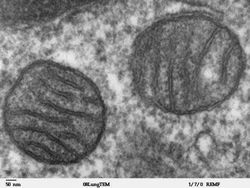
Wallace and colleagues previously showed in the late 1970s that human mitochondrial DNA is inherited exclusively through the mother. They then used this knowledge to reconstruct the ancient migrations of women by comparing variation in mtDNA among populations throughout the world. From such studies, scientists have concluded that humans arose in Africa about 200,000 years ago and that only two mtDNA lineages successfully left Africa about 65,000 years ago to colonize the rest of the world.
More here.
Extreme altruism: should you care for strangers at the expense of your family?
Larissa Macfarquhar in The Guardian:

For instance: there is family and there are strangers. The do-gooder has a family, like anyone else. If he does not have children, he has parents. But he holds himself to moral commitments that are so stringent and inflexible that they will at some point conflict with his caring for his family. Then he has to decide what to do. To most people, it is obvious that they owe far more to family than to strangers; caring for the children of strangers as much as your own, say, would seem not so much difficult as unnatural, even monstrous. But the do-gooder does not believe his family deserves better than anyone else’s. He loves his more, but he knows that other people love their families just as much. To a do-gooder, taking care of family can seem like a kind of moral alibi – something that may look like selflessness, but is really just an extension of taking care of yourself.
More here.
Thursday, September 24, 2015
How termites ventilate
Peter Reuell in the Harvard Gazette:

Despite such limitations, the insects have managed to develop structures that are efficiently ventilated, a challenge that’s still a struggle for human builders.
Led by L. Mahadevan, Lola England de Valpine Professor of Applied Mathematics, of Organismic and Evolutionary Biology, and of Physics, a team of researchers that included postdoctoral fellow Hunter King and MIT grad student Samuel Ocko has for the first time described in detail how termite mounds are ventilated. The study, described in an Aug. 31 paper in theProceedings of the National Academy of Sciences, reveals that the structures act similarly to a lung, inhaling and exhaling once a day as they are heated and cooled.
“The direct measurements essentially overthrow the conventional wisdom of the field,” said Mahadevan. “The classic theory was that if you have wind blowing over the mounds, that changes the pressure, and can lead to suction of CO2 from the interior … but that was never directly measured.
“We measured wind velocity and direction inside the mounds at different locations. We measured temperature, CO2 concentrations … and found that temperature oscillations associated with day and night can be used to drive ventilation in a manner not dissimilar to a lung. So the mound ‘breathes’ once a day, so to speak.”
More here.