How Wasps Use Viruses to Genetically Engineer Caterpillars

Ed Yong in The Atlantic:

Lead_960This is a story about viruses that became domesticated by parasitic wasps, which use them as biological weapons for corrupting the bodies of caterpillars, which in turn can steal the viral genes and incorporate them into their own genomes, where they protect the caterpillars from yet more viruses. Evolution, you have outdone yourself with this one.

The wasps in question are called braconids. There are more than 17,000 known species, and they're all parasites. The females lay their eggs in the bodies of still-living caterpillars, which their grubs then devour alive.

As early as 1967, scientists realised that the wasps were also injecting the caterpillars with some kind of small particle, alongside their eggs. It took almost a decade to realise that those particles were viruses, which have since become known as bracoviruses. Each species of braconid wasp has its own specific bracovirus, but they all do the same thing: They suppress the caterpillar’s immune system and tweak its metabolism to favour the growing wasp. Without these viral allies, the wasp grubs would be killed by their host bodies.

So, the viruses are essential for the wasps—but the reverse is also true. Unlike most other kinds of virus, these bracoviruses cannot make copies of themselves. They are only manufactured in the ovaries of the wasps, and once they get into the caterpillars, their life cycle ends. Some might say they’re not true viruses are all. They're almost like secretions of the wasp’s body.

More here.

Margo Jefferson’s ‘Negroland: A Memoir’

20SMITH-blog427Tracy K. Smith at the New York Times:

In her new memoir, Margo Jefferson, a former critic at The New York Times, chronicles a lifetime as a member of Chicago’s black elite, a world she celebrates and problematizes by christening it (and her book) Negroland. “Negroland,” she writes, “is my name for a small region of Negro America where residents were sheltered by a certain amount of privilege and plenty. Children in Negroland were warned that few Negroes enjoyed privilege or plenty and that most whites would be glad to see them returned to indigence, deference and subservience. Children there were taught that most other Negroes ought to be emulating us when too many of them (out of envy or ignorance) went on behaving in ways that encouraged racial prejudice.”

That warning — that manner of instilling in children the understanding that with privilege comes responsibility — strikes me as the true impetus for Jefferson’s book. For once we become accustomed to delicious glimpses of Negroland’s impeccable manners and outfits, the meticulously orchestrated social opportunities and fastidiously maintained hairstyles, what we begin to notice is the cost and weight of this heavy collective burden.

Jefferson’s memoir pushes against the boundaries of its own genre. Yes, it begins with a scene from the author’s childhood. And yes, we learn about Jefferson’s older sister, Denise, and their parents: a father who was the longtime head of pediatrics at Provident, once the nation’s oldest black hospital; and a mother who was an impeccably dressed socialite. But it quickly swerves into social history; a good 30 pages of the book’s opening are dedicated to defining and chronicling the rise of America’s black upper class.

more here.

Patrick Modiano’s many detours into echoes, longings and tension

La-ca-jc-patrick-modiano-20150920-001David L. Ulin at the LA Times:

Patrick Modiano opens his most recent novel, “So You Don't Get Lost in the Neighborhood,” with an epigraph from Stendhal: “I cannot provide the reality of events, I can only convey their shadow.” It's an almost perfect evocation of the book, not to mention Modiano's career.

The French writer, who won the Nobel Prize last year for a body of work as deft and beautiful as any in postwar European literature, is an excavator of memory — not only his own or those of his characters (many of whom bear, as J.D. Salinger once observed of his fictional alter ego Seymour Glass, “a striking resemblance to — alley oop, I'm afraid — myself”), but also that of Paris.

That's why his fiction resonates so deeply; it occupies an elusive middle ground between place and personality. At its center is the legacy of the German occupation, which Modiano, who was born in 1945, refers to in his memoir “Pedigree” as “the soil — or the dung — from which I emerged.” What he's suggesting is that history is both personal and collective, that identity is dependent, at least in part, on circumstance. This can refer to family — Modiano's mother, an actress, met his father, a black marketeer, in the morally blank landscape of Vichy Paris — but it also has to do with how the past appears to rise up from the streets around us, mingling with the present until we are no longer sure where (or when) we are.
more here.

an intensely personal history of porcelain

Af847877-1357-4422-8afa-f1b34066a19dAN Wilson at the Financial Times:

In The White Road, de Waal turns his attention to porcelain — from its Chinese origins to Meissen, Wedgwood and the present day — and to humanity’s obsession with producing whiter than white ceramics. As with the earlier book, this becomes a scorchingly personal story. Every stage in the material’s history becomes a pilgrimage, as de Waal follows in the footsteps of the potters and travellers who discovered the clay and stone that porcelain is made of, and celebrates the beautiful objects that humanity has fashioned from this ingenious conjunction.

Readers who had only heard of, but not read, The Hare with Amber Eyes might have wondered what was so interesting about how a collection of little bibelots moved from pillar to post; those who had read the book could reply that what made it a page-turner was de Waal’s skill at explaining human passion as it survives in objects. Likewise the new book is no dry history of old pots. It is a story about — well, about skills and artistry, certainly, and about politics too. It is also a disquisition on whiteness, and its different meanings. “I’ve read Moby-Dick,” de Waal writes. “So I know the dangers of white. I think I know the dangers of an obsession with white, the pull towards something so pure, so total in its immersive possibility that you are transfigured, changed, feel you can start again.”

more here.

It’s OK to Be a Luddite

David Auerbach in Slate:

LudditeTechnology will save us! Technology sucks! Where today’s techno-utopians cheer, our modern-day Luddites, from survivalists to iPhone skeptics to that couple that dresses in Victorian clothing and winds its own clock, grumble. Understanding the former urge is pretty easy: It’s a fantasy of a perfect world. The Luddite impulse, however, isn’t so clear—and we shouldn’t automatically dismiss it as one that scapegoats technology for society’s ills or pines for a simpler past free of irritating gadgets. Rather, today’s Luddites are scared that technology will reveal that humans are no different from technology—that it will eliminate what it means to be human. And frankly, I don’t blame them. Humanity has had such a particular and privileged conception of itself for so long that altering it, as technology must inevitably do, will indeed change the very nature of who we are. To understand the appeal of being a Luddite, you need only read these words of Leon Trotsky:

To produce a new, “improved version” of man—that is the future task of Communism. Man must see himself as a raw material, or at best as a semi-manufactured product, and say: “At last, my dear homo sapiens, I will work on you.”

This vision, promptly disposed of by Stalin, is so intuitively unappealing that even with the return of authoritarianism to Russia, neither Vladimir Putin nor any of his associates have revived the idea of scientifically perfecting man. Such language brings back bad memories of eugenics, Nazi experiments, Tuskegee, and worse. Yet those fears don’t stop us from using technology to become those new, improved versions of ourselves—from buying up iPads and smartphones and storing the digital residue of our lives in the cloud.

More here.

The Rationality of Rage

Matthew Hutson in The New York Times:

AngerANGER is a primal and destructive emotion, disrupting rational discourse and inflaming illogical passions — or so it often seems. Then again, anger also has its upsides. Expressing anger, for example, is known to be a useful tool in negotiations. Indeed, in the past few years, researchers have been learning more about when and how to deploy anger productively. Consider a forthcoming paper in the November issue of the Journal of Experimental Social Psychology. Researchers tested the effectiveness of expressing anger in three types of negotiations: those that are chiefly cooperative (say, starting a business with a partner), chiefly competitive (dissolving a shared business) or balanced between the two (selling a business to a buyer). In two experiments, negotiators made greater concessions to those who expressed anger — but only in balanced situations. When cooperating, hostility seems inappropriate, and when competing, additional heat only flares tempers. But in between, anger appears to send a strategically useful signal.

What does that signal communicate? According to a 2009 paper in Proceedings of the National Academy of Sciences, anger evolved to help us express that we feel undervalued. Showing anger signals to others that if we don’t get our due, we’ll exert harm or withhold benefits. As they anticipated, the researchers found that strong men and attractive women — those who have historically had the most leverage in threatening harm and conferring benefits, respectively — were most prone to anger. The usefulness of anger in extracting better treatment from others seems to be something we all implicitly understand.

More here.

Saturday Poem

Motion
.
You're crying here, but they're dancing,
there they're dancing in your tear.
There they're happy, making merry,
they don't know a blessed thing.
Almost the glimmering of mirrors.
Almost candles flickering.
Nearly staircases and hallways.
Gestures, lace cuffs, so it seems.
Hydrogen, oxygen, those rascals.
Chlorine, sodium, a pair of rogues.
The fop nitrogen parading
up and down, around, about
beneath the vault, inside the dome.
Your crying's music to their ears.
Yes, eine kleine Nachtmusik.
Who are you, lovely masquerader.
.

by Wistlawa Szymborska
from Map, Collected and last poems
Houghton Mifflin Harcourt
translation: Clare Cavanagh and Stanislaw Baranczak

Friday, September 18, 2015

The trouble with putting too much weight in a bioethicist’s opinion

Sally Satel in Pacific Standard:

MTMzMDI3NDI2NjY5MjA1OTgyLast month, Steven Pinker, cognitive psychologist and public intellectual, argued in a Boston Globe op-ed that bioethicists—those who weigh the ethical implications of biological research—had a moral imperative to “get out of the way” of research. Pinker's assertion was nothing short of a live grenade lobbed into the field of bioethics. While perhaps harsh, there is a sizable kernel of truth in his case.

“A truly ethical bioethics,” Pinker wrote, “should not bog down research in red tape, moratoria, or threats of prosecution based on nebulous but sweeping principles such as 'dignity,' 'sacredness,' or 'social justice.' Nor should it thwart research that has likely benefits now or in the near future by sowing panic [about] Nazi atrocities, armies of cloned Hitlers, or people selling their eyeballs on eBay.” We must not succumb, in other words, to science-fiction scenarios that have little likelihood of materializing.

Pinker's disquisition was spurred by calls for a moratorium on research involving a new technology called CRISPR, a revolutionary gene editing method that is cheap, quick, and easy to use. With the ability to modify small segments of the DNA of eggs and sperm or of the embryo itself—the so-called germ line—scientists hope to eventually use CRISPR to cure certain genetic diseases, by replacing the genes that cause them. But some bioethicists fear that the technology will work too well, thus raising the specter of “eugenics.” Such research, they claim, is “contrary to human dignity” because “the human germ line should be treated as sacred.”

More here.

Why Don’t We Know the Age of the New Ancient Human?

Ed Yong in The Atlantic:

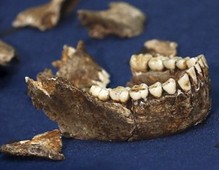
ScreenHunter_1372 Sep. 18 19.22Last Thursday, the world said hello to Homo naledi, a new species of ancient human discovered in South Africa’s Rising Star cave. As I reported at the time, scientists extracted 1,550 fossil fragments from the cave, which were then assembled into at least 15 individual skeletons—one of the richest hauls of hominid fossils ever uncovered.

But one significant problem clouded the excitement over the discovery: The team doesn’t know how old the fossils are. And without that age, it’s hard to know howHomo naledi fits into the story of human evolution, or how to interpret its apparent habit of deliberately burying its own kind. Everyone from professional paleontologists to interested members of the public raised the same question: Why hadn’t the team dated the fossils yet?

The simple answer is: Because dating fossils is really difficult. Scientific papers and news reports about new fossils so regularly come with estimates of age that it’s easy forget how hard-won such data can be. I asked John Hawks, a biologist at the University of Wisconsin and one of the heads of the Rising Star expedition, to talk me through the various available methods—and why they have been difficult to apply to the latest finds.

More here.

A Queer Excess: the Supplication of John Wieners

Nat Raha in The Critical Flame:

ScreenHunter_1371 Sep. 18 19.13The poetry of John Wieners is lyric, bold, shameless. It is a poetry of dereliction in the face of the artist’s almost religious devotion to verse and its inherent magic. His early work—the era between The Hotel Wentley Poems (1958) to Ace of Pentacles (1964)—swings with blues and sexual desire, the glamour of drugs and counter-cultures, gay subculture, celebrities and starlets, and tarot, all sources to feed his magical art. Wieners’s work in subsequent years contends with romantic loss and poverty, juxtaposed with moments of pleasure in sexual and gender transgression, and a political awakening in the face of state harassment and psychiatric incarceration. In his 1958 breakthrough volume, Wieners announces his radical poetics coolly, almost objectively:

I find a pillow to
muffle the sounds I make.
I am engaged in taking away
from God his sound.

The erasure of God’s articulation is achieved by the young poet’s flawed articulation of worlds that negate the very premise of an all-loving God—worlds that the popular morality of that era would certainly describe as vice-ridden, worlds that were outside the bounds of sanctioned activities. Supplication to lyric poetry, in light of the failure of God, is a necessity of survival, the “last defense” of the poet.

More here.

Why the Rich Are So Much Richer

James Surowiecki in the New York Review of Books:

Surowiecki_1-092415_jpg_250x1887_q85Today, the landscape of economic debate has changed. Inequality was at the heart of the most popular economics book in recent memory, the economist Thomas Piketty’sCapital. The work of Piketty and his colleague Emmanuel Saez has been instrumental in documenting the rise of income inequality, not just in the US but around the world. Major economic institutions, like the IMF and the OECD, have published studies arguing that inequality, far from enhancing economic growth, actually damages it. And it’s now easy to find discussions of the subject in academic journals.

All of which makes this an ideal moment for the Columbia economist Joseph Stiglitz. In the years since the financial crisis, Stiglitz has been among the loudest and most influential public intellectuals decrying the costs of inequality, and making the case for how we can use government policy to deal with it. In his 2012 book, The Price of Inequality, and in a series of articles and Op-Eds for Project Syndicate, Vanity Fair, and The New York Times, which have now been collected in The Great Divide, Stiglitz has made the case that the rise in inequality in the US, far from being the natural outcome of market forces, has been profoundly shaped by “our policies and our politics,” with disastrous effects on society and the economy as a whole. In a recent report for the Roosevelt Institute called Rewriting the Rules, Stiglitz has laid out a detailed list of reforms that he argues will make it possible to create “an economy that works for everyone.”

Stiglitz’s emergence as a prominent critic of the current economic order was no surprise. His original Ph.D. thesis was on inequality. And his entire career in academia has been devoted to showing how markets cannot always be counted on to produce ideal results. In a series of enormously important papers, for which he would eventually win the Nobel Prize, Stiglitz showed how imperfections and asymmetries of information regularly lead markets to results that do not maximize welfare.

More here.

How the Future Will Tell Bill Cosby’s Story

Christina Cauterucci in XXFactor:

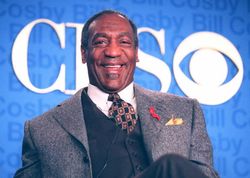
BillIt’s been nearly a year since a joke from Hannibal Buress’ stand-up routine—augmenting a February Gawker post—reminded the public of the many women who’ve accused Bill Cosby of sexual assault. Since dozens more allegations and a damning deposition testimony have surfaced, it’s hard to believe there were days when we still wondered if Cosby’s legacy could survive the alleged monstrosities of his past. Thursday night, A&E will premiere an hourlong special about the conservative apologist’s fall from public favor. Framed by a chronological telling of his career arc, it plays as a damning biographical documentary—a profoundly unflattering look back at how, at every step in his professional life, Cosby used his money, fame, and paternal reputation to manipulate young women.

It also offers a glimpse at how future cultural critics might analyze his life. Video is an effective means of exposing Cosby’s hypocrisies: Disturbing personal accounts from 13 women he allegedly assaulted cut even deeper when paired with audio of his 1960s stand-up (including one boding bit about slipping women a purported aphrodisiac, Spanish fly) and footage from his moralizing speeches, in which he’d vilify pregnant black teens for having sex. Viewed from above, Cosby’s downfall seems inevitable from the start, even though plenty of other men in power have gone peacefully to their graves after a history of physical and sexual abuse.

More here.

fights about object-oriented ontology

OOOSymposiumPosterGraham Harman and Andrew Cole at Artforum:

THERE ARE SEVERAL strange elements in Andrew Cole’s recent polemic against speculative realism and object-oriented ontology [Artforum, Summer 2015]. First, in a piece written specifically for Artforum, Cole never bothers to address our views on art, choosing instead to treat the magazine’s readership to a long lesson on the philosophy of Immanuel Kant. Second, after trying to make us look disrespectful by likening us to vandals who spray-painted “Kant is a moron” on a house in Kaliningrad, Russia, Cole himself takes a crude and macabre dig at Kant’s personal life: “Yes, Kantian moral philosophy leaves something to be desired, as when the philosopher exemplifies the categorical imperative by asking readers to imagine having sex near the gallows—easy to say for a person who never got laid.” It’s also strange that while Cole only cites one of my publications (The Quadruple Object [2011]) by name, he laments unanswered questions that are addressed not only in other publications, but even in the one book that he seems to have read.

Forgetting for now these unsettling signals, let’s briefly consider Cole’s argument, which is really an attempted counterpoint of two separate arguments. The first is that we have either misunderstood Kant or deliberately distorted his ideas to conceal the fact that we have stolen most of our insights from him. The second—always a crowd-pleaser—is that object-oriented philosophy is hopelessly complicit with capitalism and the “commodity fetishism” that Marx linked with the capitalist system. Cole handles the second point more impressionistically than the first, and a similar argument was already made by his sometime collaborator Alexander R. Galloway in a widely read but dreadful 2013 Critical Inquiry article entitled “The Poverty of Philosophy: Realism and Post-Fordism.” In what follows, I will therefore focus on Cole’s remarks on Kant.

more here.

on Colm Tóibín’s ‘ON ELIZABETH BISHOP’

Colm_cover_3261518aFiona Green at the Times Literary Supplement:

“What must it be to be someone else?” Gerard Manley Hopkins wondered. It is a question that has occupied Colm Tóibín before, whether the someone else was Henry James, or the mother of Christ. What must it be to be someone else in a book that is not a novel, and in which the someone else is a poet who specialized in solitariness, who could be “chilly” in person, and who did not hesitate to turn away uninvited guests. When Mary McCarthy threatened to visit Elizabeth Bishop, she replied: “I’d be grateful if you didn’t come over”.

Tóibín’s On Elizabeth Bishop introduces the poet in new company – he likens her to James Joyce, and more persuasively to Thom Gunn – and alongside old acquaintances (Robert Lowell, Marianne Moore). Mostly, Tóibín recognizes in Bishop aspects of himself. Both writers are drawn to grey, muted coastlines; both invest feeling in “things withheld”. Like Bishop, Tóibín found himself returned to childhood by the experience of “elsewhere”: Bishop’s fifteen-year sojourn in Brazil prompted her to recall and reimagine Nova Scotia; having “escaped Ireland” to write his first novel in Southern Europe, Tóibín found his proper “melancholy tone” in memories of Wexford. These childhood haunts were, for both writers, places of profound loss. Tóibín is particularly good on estrangement, and puts his finger right on it when he says that Bishop’s life in Brazil – at least as retold in her letters and poems – seemed “a parody of ‘normal life’”, “a comedy she had invented”.

more here.

fear

Robinson_1-092415_jpg_600x627_q85Marilynne Robinson at the New York Review of Books:

There is something I have felt the need to say, that I have spoken about in various settings, extemporaneously, because my thoughts on the subject have not been entirely formed, and because it is painful to me to have to express them. However, my thesis is always the same, and it is very simply stated, though it has two parts: first, contemporary America is full of fear. And second, fear is not a Christian habit of mind. As children we learn to say, “Yea, though I walk through the valley of the shadow of death, I will fear no evil, for Thou art with me.” We learn that, after his resurrection, Jesus told his disciples, “Lo, I am with you always, to the close of the age.” Christ is a gracious, abiding presence in all reality, and in him history will finally be resolved.

These are larger, more embracing terms than contemporary Christianity is in the habit of using. But we are taught that Christ “was in the beginning with God; all things were made through him, and without him was not anything made that was made….The light shines in the darkness, and the darkness has not overcome it.” The present tense here is to be noted. John’s First Letter proclaims “the eternal life which was with the Father and was made manifest to us.” We as Christians cannot think of Christ as isolated in space or time if we really do accept the authority of our own texts. Nor can we imagine that this life on earth is our only life, our primary life. As Christians we are to believe that we are to fear not the death of our bodies but the loss of our souls.

more here.

Use of personalized cancer drugs runs ahead of the science

Asher Mullard in Nature:

TrialAs the costs of genetic sequencing fall, oncologists are starting to prescribe expensive new drugs that target the genetic profiles of their patients’ tumours, even when those treatments have not been approved for the particular cancer involved. But such 'off-label' use is running ahead of the state of scientific knowledge, suggests the first randomized clinical trial to test the idea. The study, published in Lancet Oncology, found that using personalized cancer drugs off-label provides no benefit over conventional chemotherapy1. “This study is important because many oncologists have already adopted the personalized approach,” says Daniel Catenacci, an oncologist at the University of Chicago, Illinois, who was not involved in the trial. “Why have they abandoned the science?” Lead author of the study Christophe Le Tourneau, an oncologist at the Curie Institute in Paris, says that he sees such off-label treatments “quite often” in practice. “I understand why it happens: patients want to live and physicians want to offer help,” he says. But Le Tourneau adds that patients whose tumours have genetic alterations that might be targeted by a non-approved drug are better served by entering clinical trials.

Precision treatments

A small but growing number of personalized cancer drugs have been approved for treating particular cancers that involve specific mutations, but oncologists hope that these drugs will also work against related mutations in other cancers. By some counts, more than 30% of cancer drugs are prescribed off-label2, 3. To test the benefits of off-label tailored drug regimens, researchers at eight French hospitals analysed their patients’ tumours to look for genetic or molecular abnormalities that might be amenable to precision medicine. The researchers randomly assigned 195 suitable patients either to one of 10 potentially relevant targeted treatment regimens, or to chemotherapy. There was no significant difference between the effects of the treatments.

More here.

Thursday, September 17, 2015

The Truth about Mass Incarceration

Correctional-facility-2

Stephanos Bibas makes the conservative case for prison reform, in National Review:

Two centuries ago, the shift from shaming and corporal punishments to imprisonment made punishment an enduring status. Reformers had hoped that isolation and Bible reading in prison would induce repentance and law-abiding work habits, but it didn’t turn out that way. Now we warehouse large numbers of criminals, in idleness and at great expense. By exiling them, often far away, prison severs them from their responsibilities to their families and communities, not to mention separating them from opportunities for gainful work. This approach is hugely disruptive, especially when it passes a tipping point in some communities and exacerbates the number of fatherless families. And much of the burden falls on innocent women and children, who lose a husband, boyfriend, or father as well as a breadwinner.

Even though wrongdoers may deserve to have the book thrown at them, it is not always wise to exact the full measure of justice. There is evidence that prison turns people into career criminals. On the one hand, it cuts prisoners off from families, friends, and neighbors, who give them reasons to follow the law. Responsibilities as husbands and fathers are key factors that tame young men’s wildness and encourage them to settle down: One longitudinal study found that marriage may reduce reoffending by 35 percent. But prison makes it difficult to maintain families and friendships; visiting in person is difficult and time-consuming, prisons are often far away, and telephone calls are horrifically expensive.

On the other hand, prison does much to draw inmates away from lawful work. In the month before their arrest, roughly three quarters of inmates were employed, earning the bulk of their income lawfully. Many were not only taking care of their children but helping to pay for rent, groceries, utilities, and health care. But prison destroys their earning potential. Prisoners lose their jobs on the outside. Felony convictions also disqualify ex-cons from certain jobs, housing, student loans, and voting. Michigan economics professor. Michael Mueller-Smith finds that spending a year or more in prison reduces the odds of post-prison employment by 24 percent and increases the odds of living on food stamps by 5 percent.

Conversely, prisons are breeding grounds for crime. Instead of working to support their own families and their victims, most prisoners are forced to remain idle. Instead of having to learn vocational skills, they have too much free time to hone criminal skills and connections. And instead of removing wrongdoers from criminogenic environments, prison clusters together neophytes and experienced recidivists, breeding gangs, criminal networks, and more crime. Thus, Mueller-Smith finds, long sentences on average breed much more crime after release than they prevent during the sentence. 

More here.

Fear

Robinson_1-092415_jpg_600x627_q85

Marilynne Robinson in the NYRB:

Calvin had his supernumeraries, great French lords who were more than ready to take up arms in his cause, which was under severe persecution. He managed to restrain them while he lived, saying that the first drop of blood they shed would become a torrent that drowned France. And, after he died, Europe was indeed drenched in blood. So there is every reason to suppose that Calvin would have thought his movement had lost at least as much as it gained in these efforts to defend it, as he anticipated it would. Specifically, in some degree it lost its Christian character, as Christianity, or any branch of it, always does when its self-proclaimed supporters outnumber and outshout its actual adherents. What is true when there is warfare is just as true when the bonding around religious identity is militantly cultural or political.

At the core of all this is fear, real or pretended. What if these dissenters in our midst really are a threat to all we hold dear? Better to deal with the problem before their evil schemes are irreversible, before our country has lost its soul and the United Nations has invaded Texas. We might step back and say that there are hundreds of millions of people who love this nation’s soul, who in fact are its soul, and patriotism should begin by acknowledging this fact. But there is not much fear to be enjoyed from this view of things. Why stockpile ammunition if the people over the horizon are no threat? If they would in fact grieve with your sorrows and help you through your troubles?

At a lunch recently Lord Jonathan Sacks, then chief rabbi of the United Kingdom, said that the United States is the world’s only covenant nation, that the phrase “We the People” has no equivalent in the political language of other nations, and that the State of the Union Address should be called the renewal of the covenant. I have read that Americans are now buying Kalashnikovs in numbers sufficient to help subsidize Russian rearmament, to help their manufacturers achieve economies of scale. In the old days these famous weapons were made with the thought that they would be used in a land war between great powers, that is, that they would kill Americans. Now, since they are being brought into this country, the odds are great that they will indeed kill Americans. But only those scary ones who want to destroy all we hold dear. Or, more likely, assorted adolescents in a classroom or a movie theater.

I know there are any number of people who collect guns as sculpture, marvels of engineering. When we mount a cross on a wall, we don’t do it with the thought that, in a pinch, we might crucify someone. This seems to be a little different when the icon in question is a gun.

More here.