
The Owl and the Lightning
— Brooklyn, NY
No pets in the projects,
the lease said,
and the contraband salamanders
shriveled on my pillow overnight.
I remember a Siamese cat, surefooted
I was told, who slipped from a window ledge
and became a red bundle
bulging in the arms of a janitor.
This was the law on the night
the owl was arrested.
He landed on the top floor,
through the open window
of apartment 14-E across the hall,
a solemn white bird bending the curtain rod.
In the cackling glow of the television,
his head swiveled, his eye black.
The cops were called, and threw a horse blanket
over the owl, a bundle kicking.
Soon after, lightning jabbed the building,
hit apartment 14-E, scattering bricks from the roof
like beads from a broken necklace.
The sky blasted white, detonation of thunder.
Ten years old at the window, I knew then that God
was not the man in my mother’s holy magazines,
touching fingertips to dying foreheads
with the half-smile of an athlete signing autographs.
God must be an owl, electricity
coursing through the hollow bones,
a white wing brushing the building.
by Martin Espada
from Touching the Fire
Anchor Books 1998
Enjoying the content on 3QD? Help keep us going by donating now.
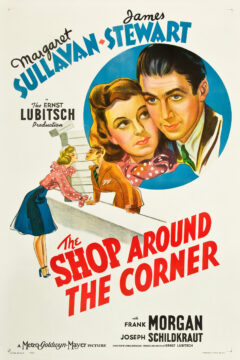 Lubitsch scholars have often remarked on the simplicity of The Shop Around the Corner. This is true in a technical sense. There are no trick angles, long shots, travelings, flashbacks, elaborate sets. The story was filmed sequentially in less than a month. In an interview in the New York Sun, Lubitsch called it “a quiet little story that seemed to have some charm.” His remark alludes to the comical, error-ridden romance between two shop employees. But there is a second storyline, less discussed, whose protagonist is Matuschek (Frank Morgan), the owner of the shop. If one watches through his eyes, one sees a different movie than the romantic comedy that it’s universally taken to be. From this perspective, there is nothing funny or romantic about the film. Pauline Kael distinguished between the plays and the screenplays of Samson Raphaelson, who wrote the script, by noting that the former are not lighthearted: “They aspired to be more than comedies; there was always a serious kernel.” His screenplay for The Shop Around the Corner is an exception to Kael’s rule, for the Matuschek material contains a kernel of seriousness buried inside a comedy.
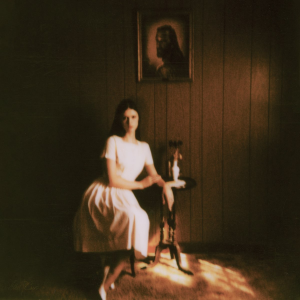 If you want to make it big as a musician today, there are several criteria you might try to meet. A clearly defined aesthetic. A readiness to become an “icon”. And songs easily truncated for social media posts, preferably with references to the zeitgeist or memorable lyrics that can themselves help to shape it.
 Philosophers have not been particularly attentive to stones. This might be surprising given the myth of the philosopher’s stone—a magical rock that, when ground into a powder or made into an elixir, was said to grant immortality or turn things to gold. Alchemy was at the heart of the ancients’ infatuation with stones. In our modern era of chemistry, physics, and the scientific method, such ideas are considered outlandish. We’ve grown too rational for alchemy. Stones are simply stones. Stony. Not magic. Not babies.
 The paper adds to a small but growing body of evidence that today’s most advanced AI models are becoming capable of strategic deception. Earlier in December, the AI safety organization Apollo Research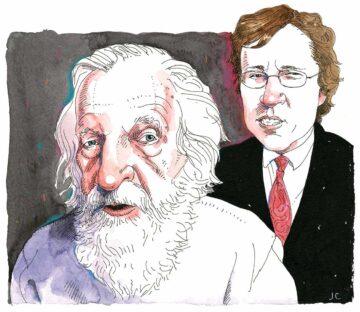
 D
D D
D F
F
 When I came to
 The technology firm OpenAI made headlines last month when its latest experimental chatbot model, o3, achieved a high score on a test that marks progress towards