
Category: Recommended Reading
The fundamentalist Christian preacher who became an atheist
Ralph Jones in New Humanist:
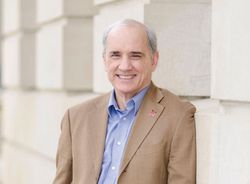
In Arizona, a woman approached him, looking for faith healing to cure her of an illness. The two prayed together and when, inevitably, it did nothing, he said, “Let it be unto you according to your faith” (a reference to a line originally found in Matthew 8:13). “In other words,” Barker says, “it was her fault. She walked out of that meeting not only not healed but feeling chastised. It’s not a kind way to treat another human being.” In his mid-twenties, he counselled a woman who was struggling with an abusive husband. Barker told her to persevere with him because, as the Bible says, he would eventually see the light. “So I counselled a woman to stay in an abusive relationship, because the Bible says that you are married for life.” What would he say if she approached him with the same problem now? “I would tell her to run for the nearest shelter and get out of there.” Barker may have left religion behind but he is still a preacher of sorts. His latest book, God: the Most Unpleasant Character in All Fiction, draws on his knowledge of scripture to attack the Bible’s claim to moral authority.
…I am interested in Barker’s views on Donald Trump, the man taking alarmingly large strides up the escalator of US politics. “It seems to me that there’s an awful lot of shallow support for people like Trump,” he says. The Republican candidate has appealed to the supposed “Christian” character of the US as a way to mobilise prejudice against Muslims. His followers seem to believe that he is a Christian but Barker sees this more as identity politics than evangelism. “He doesn’t know that much about the Bible. He doesn’t speak the Christian lingo.”
More here.
Ouch! An Interview with Entomology’s King of Sting
Jennifer Hackett in Scientific American:

In his new book The Sting of the Wild, which came out this week and was published by Johns Hopkins University Press, Schmidt explains the roles of stings in insect society in great detail. He devotes chapters to how different insects inflict their respective flavors of pain, covering creatures from fire ants to tarantula hawk wasps to honeybees. For the first time, Schmidt’s full sting pain index and his thoughts on each experience—including such comments as “like coffee, but oh so bitter” for a low-level sting or “like spilling a beaker of hydrochloric acid on a paper cut” for a higher one—is published at the end of the book. Even though the pain-laced topic might leave you wincing, Schmidt’s engaging and entertaining writing makes for a tale worth reading.
More here.
Afternoon in Siena
—After Cavafy
Soon I will know this room.
It will have become familiar.
Then sometime after I’ve left
they’ll rent it to another writer
or student, a couple on holiday
for a long weekend.
For now I’ll try to fix it in my mind,
this ordinary room with its cold
tile floor without a rug,
the low chair and ugly wardrobe
with its foxed glass,
the shuttered windows that open
onto the narrow street where
in the evening a small dog yaps
and yelps beneath the washing line,
the purple canopy of wisteria.
And in the corner, of course,
the messy bed, where in another life
we might have made love –
the afternoon sun
bathing us in liquid light –
if only I knew who you were.
by Sue Hubbard
.
Monday, May 23, 2016
Perceptions

S. Abbas Raza. Untitled, 2016.
Digital photograph.
CATSPEAK
by Brooks Riley
Sunday, May 22, 2016
That’s Inspiration!: Rereading Annie Dillard
Melissa Holbrook Pierson in the Los Angeles Review of Books:
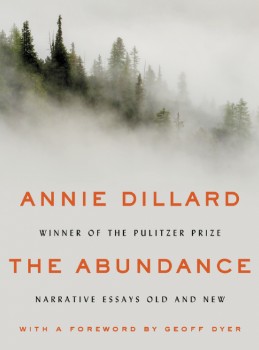
Pilgrim blew apart what I knew about writing at age 16: up until I read it, my notions were based on the usual pack of novels, poetry, philosophy, and exposition, all of which stayed neatly in their categories. This book, though, bled across lines (sometimes quite literally; it included plenty of death and injury): it refused to be held to one purpose. It coursed like a river swollen with snowmelt in spring from thing to thing, from inner life to outer. Or, rather, it found the edge where mind meets world. Annie Dillard sang this line, loud and imperative.
I’d thought the stuff I had spent my youth doing was something I’d come up with all on my own, and (to the mind of a self-doubting girl) must therefore be unimportant; but now I’d found someone who made a literature of wandering alone in the woods, watching, listening, poking at flora and fauna, describing views and pieces of nature, and trying to make a whole of her experience.
More here.
Noam Chomsky on Donald Trump: ‘Almost a death knell for the human species’
As he appears in new documentary The Divide, the great intellectual explains why Brexit is unimportant, why Trump’s climate change denial is catastrophic – and why revolution is easier than you think.
Leo Benedictus in The Guardian:
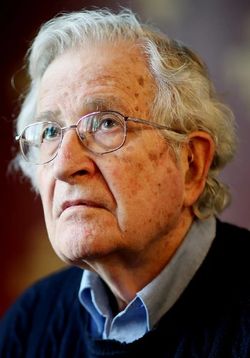
Do you not feel you’ve had enough sometimes? It’s like seeing a child in the street and a truck coming rapidly. Do you say, “Look, I’m too busy thinking about interesting questions, so I’ll let the truck kill the child”? Or do you go out into the street and pull the child back?
But if it was another child, every day, for decades? It doesn’t matter. I remember the philosopher Bertrand Russell was asked why he spent his time protesting against nuclear war and getting arrested on demonstrations. Why didn’t he continue to work on the serious philosophical and logical problems which have major intellectual significance? And his answer was pretty good. He said: “Look, if I and others like me only work on those problems, there won’t be anybody around to appreciate it or be interested.”
More here.
Epigenetics Has Become Dangerously Fashionable
Brian Boutwell & J.C. Barnes in Nautilus:

Social scientists’ excitement surrounds what we can refer to broadly as transgenerational epigenetics. To understand why social scientists have become enamored with it, we must first consider basic genetics. Many metaphors exist for describing and understanding the genome; they all capture the reality that genes provide the information for building and running biological machinery like the human body.
From the moment sperm manages to infiltrate an egg cell, genes (segments of our DNA that ultimately produce proteins) are at work knitting together the necessary components to make life possible. This requires exquisite coordination. Even though every cell in your body (minus red blood cells) carries your complete genetic code, not every gene is “turned on” all at once all over the body.
More here.
Robert Epstein’s empty essay
Sergio Graziosi in his blog:
Dr. Epstein recently published a badly misguided essay on Aeon, entitled “The empty brain“, the subtitle makes it clear what the intended take home message is: “Your brain does not process information, retrieve knowledge or store memories. In short: your brain is not a computer“.
Unfortunately, the essay is systematically wrong: virtually every key passage is mistaken, and yet, overall, it tries to make an argument that is worth making. Thus, I grew annoyed by the mistakes and misrepresentations (my immediate comment was “this is so wrong it hurts”), and then descended into angerbecause Epstein is actually damaging the credibility of an approach that I find promising, but is all too often misunderstood or straw-manned.
In what follows, I will blatantly ignore the first rule of civilised debate: I will not try to give a charitable reading of the original essay. I won’t because it would effectively hide the reasons for writing my reply. Instead, I will report the key arguments proposed by Dr. Epstein, explain why I think they are wrong, and then finish off by outlining why I nevertheless sympathise with some of the science it endorses (as I understand it).
More here. [Thanks to Sean Carroll.]
Jacques Rivette’s ‘Merry-Go-Round’
1967 CBS NEWS SPECIAL REPORT: “THE TENEMENT”
morley safer (1931 – 2016)
The equations of love
Marten Scheffer in Nature:
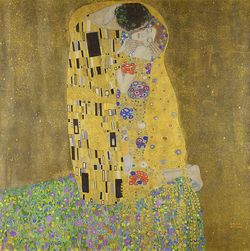
The tales and poems chosen masterfully illustrate a range of mathematical features. The limit cycle, known for driving the oscillating dynamics of many economic or biological systems, is linked, for instance, to one of the greatest love stories in Western culture. That is, the cyclical 21-year platonic relationship between fourteenth-century Italian humanist and poet Francesco Petrarca (Petrarch) and the married Laura (possibly the Provençal noblewoman Laure de Noves), charted in Petrarch’s celebrated collection Il Canzoniere. If three variables are mixed in the differential equations of passion, chaotic dynamics can arise. This is illustrated vividly in Henry-Pierre Roché’s semi-autobiographical 1953 novel Jules et Jim (which inspired François Truffaut’s 1962 film of the same name). Roché documents the love triangle between himself, the brilliant and charming journalist Helen Grund and her shy husband Franz Hessel, his best friend. As with the weather, the course of these dynamics is fundamentally unpredictable in the long run, as the smallest event can put things on a different trajectory. This phenomenon is also known as ‘the butterfly effect’, hinging on the idea that the flap of a butterfly’s wing may eventually lead to a hurricane in a distant place.
More here.
Sunday Poem
.
Tonight I've watched
the moon and then
the Pleiades
go down
The night is now
half-gone; youth
goes; I am
in bed alone
.
by Sappho
.
Saturday, May 21, 2016
An unorthodox anthropologist goes face to face with ISIS. Is the payoff worth the peril?
Tom Bartlett in the Chronicle of Higher Education:

The least jittery member of the team is its leader, Scott Atran, an anthropologist who floats among several institutions, including the University of Michigan and the John Jay College of Criminal Justice, part of the City University of New York. He’s also a founder of the Centre for the Resolution of Intractable Conflict, at the University of Oxford. He’s normally the one arguing to go a little farther afield, to challenge the group’s comfort zone, perhaps to cross over into Syria. While sitting around the hotel he appears restless and testy, headed toward ISIS territory he is in his element, enlivened and unfazed. “We don’t want to drive off the road, because it’s probably mined on both sides,” he warns casually from the passenger seat, the way you might note a change in speed limit or a forthcoming rest stop.
Atran is known as an expert on terrorism, a title he doesn’t particularly want and a word he doesn’t find useful. He views his work, broadly, as examining what motivates people to do things beyond themselves, for good or ill. These days he focuses on the ill, specifically ISIS.
More here.
Eske Willerslev Is Rewriting History With DNA
Carl Zimmer in the New York Times:
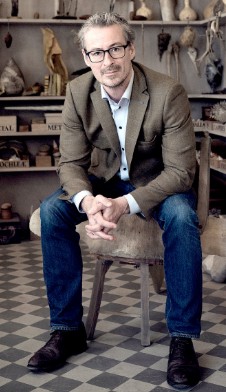
Dr. Willerslev led the first successful sequencing of an ancient human genome, that of a 4,000-year-old Greenlander. His research on a 24,000-year-old Siberian skeleton revealed an unexpected connection between Europeans and Native Americans.
Dr. Willerslev was one of the early pioneers of the study of ancient DNA, and today he remains at the forefront of an increasingly competitive field. His colleagues credit his success to his relentless work and to his skill at building international networks of collaborators.
“His role is that of catalyst, choreographer, conductor and cajoler — and sometimes all at once,” said David J. Meltzer, an archaeologist at Southern Methodist University.
The scientific enterprise that Dr. Willerslev helped invent now sometimes crosses into culturally sensitive terrain.
More here.
Thomas Pogge, one of the world’s most prominent ethicists, stands accused of manipulating students to gain sexual advantage
Katie J.M. Baker in BuzzFeed:
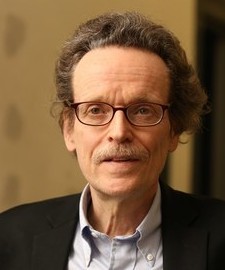
A self-identified “thought leader,” Pogge directs international health and anti-poverty initiatives, publishes papers in leading journals, and gives TED Talks. His provocative argument that wealthy countries, and their citizens, are morally responsible for correcting the global economic order that keeps other countries poor revolutionized debates about global justice. He’s also a dedicated professor and mentor, at Yale University — where he founded and directs the Global Justice Program, a policy and public health research group — as well as at other prestigious institutions worldwide. By Pogge’s own count, he’s taught 34 graduate seminars, given 1,218 lectures in 46 countries, and supervised 66 doctoral dissertations.
But a recent federal civil rights complaint describes a distinction unlikely to appear on any curriculum vitae: It claims Pogge uses his fame and influence to manipulate much younger women in his field into sexual relationships. One former student said she was punished professionally after resisting his advances.
Pogge did not respond to more than a dozen emails and phone calls from BuzzFeed News, nor to a detailed letter laying out all the claims that were likely to appear in this article.
More here.
Julia Galef: Why “scout mindset” is better than “soldier mindset”
Sabahattin Ali’s ‘Madonna in a Fur Coat’
When it was first published in Istanbul in 1943, it made no impression whatsoever. Decades later, when Madonna in a Fur Coat became the sort of book that passed from friend to friend, the literary establishment continued to ignore it. Even those who greatly admired the other works of Sabahattin Ali viewed this one as a puzzling aberration. It was just a love story, they said – the sort that schoolgirls fawned over. And yet, for the past three years, it has topped the bestseller lists in Turkey, outselling Orhan Pamuk. It is read, loved and wept over by men and women of all ages, but most of all by young adults. And no one seems able to explain quite why.
The story begins in 1930s Ankara, the Turkish Republic’s newly appointed capital. The narrator has fallen on hard times, and it is only with the help of a crass and belittling former classmate that he is able to find work as a clerk at a firm trading in lumber. Here he meets the sickly, affectless Raif Bey, who is, we’re told, “the sort of man who causes us to ask ourselves: “What do they live for? What do they find in life? What logic compels them to keep breathing?” When at last they make friends, it becomes clear that Raif’s reason for living cannot be his family. The relatives assembled under his roof treat him with the utmost contempt. And yet he welcomes their derision. Even on his deathbed, he seems to accept it as his due. But there is also a notebook, hidden in his desk drawer at work, which he asks his friend to destroy.
more here.