JULIAN BARNES AND THE SHOSTAKOVICH WARS

Books-read-2016Nikil Saval at The New Yorker:

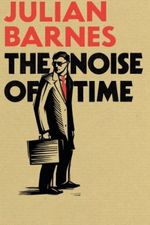
Julian Barnes’s new novel, “The Noise of Time,” is about Shostakovich, and it begins with the composer enduring the humiliation and misery of his exclusion from musical life, in 1936. “All that he knew was that this was the worst time,” the first part opens. Barnes has Shostakovich repeat it twice more, at the beginnings of the novel’s two other sections, in response to fresh sources of persecution in 1948 and 1960, bringing to mind Edgar from “King Lear”: “The worst is not / So long as we can say, ‘This is the worst.’ “ The novel’s title comes from the nineteenth-century poet Alexander Blok, who used the phrase to describe history. The Soviet poet Osip Mandelstam chose it for the title of his memoir, published in 1923—Mandelstam, who would indeed suffer Stalin’s worst. For Barnes’s Shostakovich, “the noise of time” is counterposed to “that music which is inside ourselves—the music of our being—which is transformed by some into real music.” Real artists, Barnes has Shostakovich say, protect that private part of themselves against history, but if the music “is strong and true and pure enough to drown out the noise of time” it is “transformed into the whisper of history.” So we watch as Shostakovich struggles to live a life devoted to music, with history constantly intervening.

What Shostakovich’s music had to do with history has been one of the most fraught questions in the history of music. He lived through the most terrifying decades of the Soviet Union to become its most celebrated composer. Despite his transgression with “Lady Macbeth,” many of his compositions—such as the Seventh Symphony (“Leningrad”), performed in 1942 in the midst of the devastating siege and broadcast over loudspeakers into no man’s land—served the purposes of official propaganda (though the music itself was more multilayered than its use would suggest).

more here.
a review of ‘the violet hour’ by katie roiphe

The-violet-hour-roipheThom Cuell at 3:AM Magazine:

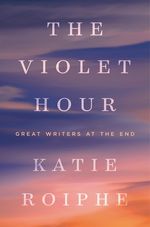
“Either the wallpaper goes or I do.” “A certain butterfly is already on the wing”. “I haven’t had champagne for a long time.” We love to package celebrity deaths up with a final quote, a summing up of the subject’s life and character – a way to process the messiness of mortality into something clean and understandable. In 2016, this year of notable deaths, we are updating the symbolic language surrounding death for the social media age: there is the temporary Facebook profile filter – the digital equivalent of the Victorian widow’s weeds – the hashtag, the contrarian newspaper columnist’s cynical response, the street party. In her new book The Violet Hour, Katie Roiphe looks at the reality behind these tropes, exploring the process of death through biographical essays on six writers who were notable for their engagement with mortality: Susan Sontag, Sigmund Freud, John Updike, Dylan Thomas, Maurice Sendak and James Salter.

Each of these writers worked in the shades of the prison-house; as Roiphe describes it, her chosen subjects are “especially sensitive or attuned to death… [writers and artists] who have worked through the problem of death in their art, in their letters, in their love affairs, in their dreams”. Through close examination of their final days, Roiphe aims to find some insight into the way the artist’s mind responds to impending mortality. Underlying her work are the questions of whether creativity can have a palliative function, and whether an artistic engagement with the subject can prepare us for the reality of death. Although fans of Roland Barthes (himself the victim of a bizarre, disputed death, run over by either a laundry van or a milk float, depending on who you believe) might query the close identification between the writer and the work, Roiphe hopes that “it is in the specifics, the odd, surprising details, the jokes, the offhand comments, that some other greater story is told and communicated”.

more here.

The political passion of Eva Longoria: Hispanics could decide the outcome of America’s next presidential election

David Rennie in 1843Magazine:

EvaIt started with this book. I read this book, and I wrote to the author, and he said ‘come and meet me’,” says Eva Longoria, recalling her political awakening. The book is “Occupied America” by Rodolfo Acuña, a firebrand professor of Chicano studies, (as some call Mexican-American studies, notably since 1960s and among the West Coast left). His book is a densely argued blast written to awaken his students to centuries of colonial oppression and white racism. Longoria met Acuña, and he suggested that she should take his introductory course. “I was so unfamiliar with the word ‘Chicano’. Growing up in Texas where ‘Tejano’ was the term. And also ‘Chicano’ was a very politicised term.” She took Chicano 101 and only became more curious. “So then the next semester he said, you should take a Chicano feminism class, so I took Chicano feminism, and Chicano art.” At the time, Longoria was filming “Desperate Housewives”, then the biggest TV show in the world. “From the set of ‘Desperate Housewives’ I would drive an hour to the school, take a class from seven to ten at night, then be on set at six in the morning. I would be doing my homework behind the sets.”

Even in today’s Hollywood, where liberal politics is de rigueur and activism fashionable, Eva Longoria is unusual. She has campaigned for Democratic presidential contenders since 2004. In 2012 she was a co-chair of President Barack Obama’s re-election campaign, speaking at the Democratic National Convention, and, at the height of the campaign in Florida, she addressed seven cities in one day. Political types, Longoria says wryly, call every election the most important of their lifetimes. But in 2016 she is sure that the stakes are unusually high. This time one of the Republican front-runners, Donald Trump, says he would build a wall on the Mexican border and make Mexico pay for it and claims – fantastically – that his government would deport the estimated 11m immigrants in America without legal papers. His chief Republican rival, Senator Ted Cruz of Texas, whose own father arrived as a penniless student from Cuba, has promised to rescind the executive orders with which Obama has shielded millions of migrants from deportation, notably those brought to America as children and educated in the country. But the election will also be a test of confident predictions that Hispanics will soon be a demographic block capable of deciding who occupies the White House. The Pew Research Centre, a non-partisan think-tank, predicts that a record 27.3m Hispanics will be eligible to vote in the elections of 2016 – with enough of them concentrated in a series of battleground states to swing the election results in places such as Nevada, Colorado and Florida. Yet Hispanics have, so far, failed to realise their potential power. Turnout among Latinos is woeful.

Longoria hopes to change that.

More here.

EAST WEST STREET: On the Origins of “Genocide” and “Crimes Against Humanity”

Bernard-Henri Levy in The New York Times:

Levi“A man’s home is his castle,” Joseph ­Goebbels told the League of Nations in 1933, so “we will deal as we see fit” with our various “opponents” and, in particular, “our Jews.” At the time, Goebbels’s view was almost universally shared. However shocking, detestable and morally indefensible it might seem today, no one dreamed of contesting it then. ­Sovereignty — a term that muddled people’s right to decide for themselves and the right of despots to decide for their people — was the first and last word in international relations. If the same cannot be said today, if dictators are no longer seen to hold the power of life or death over their subjects, if the archcriminals of Cambodia, Sudan and Rwanda are ­indicted and sometimes even punished, in short, if the idea of international justice has gradually gained a semblance of meaning, we owe it to two ideas, or more precisely two concepts — as well as to the two men who brought them to life: Hersch Lauterpacht for the concept of the crime against humanity and Raphael Lemkin for that of genocide. Philippe Sands, a professor of law at University College London, recounts the life and work of both men in “East West Street: On the Origins of ‘Genocide’ and ‘Crimes Against Humanity.’ ”

Sands begins by drawing distinctions between the two concepts. He is careful to show how, despite their complementarities, the two rest on different, even opposing, notions of rights. One is ­rooted in individual rights, the other in the rights of groups. One places at the top of the scale of offenses those perpetrated on individual men and women, the other the intention to annihilate the population or community from which those individuals spring.

More here.

Saturday Poem

What is the Difference

Stein asked what is the difference. She did not ask what is the
sameness. Did not ask what like is. Or proximity. Resemblance.
Did not ask what child of what patriarch what height what depth
didn’t use a question mark but still wondered at the difference
what mutinies it carries over what vast Arctic what far shore.

What is the difference between blind and bond. Between desk
and red. Between capsize and sail. Between commodity and
question. A lively thing, a fractured thing. To smile at the difference.

(Such gray clouds passing over. Thick, wet sky.)

What is the difference between mutiny and dust. Between noose
and edge. Between brittle and obey.

Between shunned and stun. What is the difference.

As now, Mary Shelley’s monster flees to the north, his sack of
books his lone companions.

by Laurie Sheck
from the Academy of American Poets

b

Friday, May 27, 2016

China and India have a huge problem with racism toward black people

Ishaan Tharoor in the Washington Post:

ScreenHunter_1977 May. 27 18.40Just minutes before his birthday, Masonda Ketanda Olivier was beaten to death. The Congolese national was confronted by a mob of men late at night last Friday in New Delhi and killed. Police said the incident was a dispute over the hiring of an autorickshaw; Olivier's friend, an Ivorian national, said it was a clear hate crime, with racial epithets repeatedly invoked.

This week, irate African diplomats in the Indian capital pointed to Olivier's murder as evidence of wider discrimination and bigotry against black people who visit and live in India. Olivier, who reports indicate was about to turn 24, was teaching French.

“The Indian government is strongly enjoined to take urgent steps to guarantee the safety of Africans in India including appropriate programmes of public awareness that will address the problem of racism and Afro-phobia in India,” Alem Tsehage, the Eritrean ambassador and the diplomat representing other African envoys in New Delhi,said in a statement. They also warned against new batches of African students enrolling in Indian universities.

More here.

If I ruled the world: Marcus du Sautoy

Marcus du Sautoy in Prospect:

Rexfeatures_4272778a_web-487x800If I ruled the world, the first thing I would do is to make sure that everyone understood Euclid’s proof that there is an infinity of prime numbers. To some people that might seem like a strange suggestion, so let me explain. In itself, Euclid’s proof is not particularly useful for anything. But what it shows is the power of analytical thinking and the magic of mathematics. Studying Euclid would plant a seed in people’s minds that would grow into an appreciation of how this extraordinary tool can help us to navigate the world. Mathematics helps us predict the future. We know about climate change, for example, because of mathematical equations.

Mathematics is not only about utility—it’s also about wonder and beauty. This goes to the heart of the problems with mathematical education in the UK. Governments want to teach mathematical skills that will be useful to the person on the street. But most of the stuff pupils learn at school—quadratic equations, trigonometry—they are never going to use. What they are being taught is the power to string together a logical argument, to see patterns in behaviour. With Euclid’s proof, you see how a finite series of logical arguments can get you to an extraordinary revelation: that you can conceive of the infinite. That, for me, is an amazing breakthrough in human thought.

More here.

Anthony Bourdain: SIX TRUE THINGS ABOUT DINNER WITH OBAMA

Static

From Li.st:

  • The President is very comfortable with chopsticks. He handled the sticky, hard to separate noodles that accompany the pork and the broth components of Bun Cha skillfully. He even went in for seconds.
  • The President is an Asiaphile. He spoke wistfully of his time in Indonesia and his memories of the smells and flavors of street food there. He clearly enjoyed sitting on a low plastic stool eating bun Cha.
  • It felt to me like his night off. Even with Secret Service lurking nearby.

More here.

Why Some Cultures Frown on Smiling

Lead_960Olga Khazan at The Atlantic:

Russians’ fondness for the gentle scowl seems even more unusual to expats than its actual, climatic cold. And the cultural difference cuts both ways: Newcomers to America often remark on the novelty of being smiled at by strangers.

So why is this? Why do some societies not encourage casual smiling? I got my answer, or at least part of one, when I stumbled across a new paper by Kuba Krys, a psychologist at the Polish Academy of Sciences. In some countries, smiling might not be a sign of warmth or even respect. It’s evidence that you’re a fool—a tricky fool.

Krys focused on a cultural phenomenon called “uncertainty avoidance.” Cultures that are low on this scale tend to have social systems—courts, health-care systems, safety nets, and so forth—that are unstable. Therefore, people there view the future as unpredictable and uncontrollable.

Smiling is a sign of certainty and confidence, so when people in those countries smile, they might seem odd. Why would you smile when fate is an invisible wolf waiting to shred you? You might, in those “low-UA” countries, even be considered stupid for smiling.

more here.

How Philip Guston Completely Reinvented the Sublime

24-guston-painter-3.nocrop.w529.h373Jerry Saltz at New York Magazine:

The change comes slowly at first; Guston is always fighting it. As Jasper Johns put it about being an artist, “If you avoid everything you can avoid, then you do what you can't avoid doing, and you do what is helpless, and unavoidable.” Guston did that. The opening gallery shows his first steps — so small you might not see them, thinking, Oh, he’s getting choppier, is all. I guess that triangle could be a hood or something. In 1957, Guston’s colors turn more opaque; warm tones turn frosty and muddy; odd, armlike shapes appear, torsos or trunks, hillocks, shadowy head configurations. But nothing definite. Being figurative was so strictly verboten that at one point Guston said he painted a can with paintbrushes in it, lost his nerve and scraped it off. It was just too much. In the next gallery, Guston’s backgrounds turn blocky. The shimmery thing is gone. So are the little snaky strokes. Things are thickening. A huge maroon hand thing emerges from the top of one canvas. Compositions get optically bolder. In Garden of M, named after his wife and daughter (both named Musa), we spot something like a patchy garden grid, or maybe two lumpy figures clutching each other in bed. Sooty grays, yellows, and crimsons abound. But things stay abstract. What’s happening is that Guston is looking for every way possible not to make a figurative painting. He couldn't just paint that single thing inside a canvas, a head, or even a can, without retreating back into abstraction. It must have been hellish. These works are almost ugly.

more here.

Wittgenstein’s Handles

Handle-wittgenstein-crop-1Christopher Benfey at the New York Review of Books:

What was it about handles—door-handles, axe-handles, the handles of pitchers and vases—that transfixed thinkers in Vienna and Berlin during the early decades of the twentieth century, echoing earlier considerations of handles in America and ancient Greece?

Ludwig Wittgenstein, as everyone knows, abandoned philosophy after publishing his celebrated Tractatus Logico-Philosophicus in 1921. He took up gardening instead, in a monastic community on the outskirts of Vienna, where he camped out for a few months in a toolshed. It was in part to draw him back into “the world” that his sister Margarete (Gretl) invited him to join the architect Paul Engelmann in designing her new house, a rigorous Modernist structure that, much changed, now houses the Bulgarian Embassy.

Wittgenstein’s participation in the project was relatively limited, his biographer Ray Monk maintains (though Engelmann himself, from professional modesty or perhaps ambivalence about the final product, claimed the collaboration was more extensive):

His role in the design of the house was concerned chiefly with the design of the windows, doors, window-locks and radiators. This is not as marginal as it may at first appear, for it is precisely these details that lend what is otherwise a rather plain, even ugly, house its distinctive beauty. The complete lack of any external decoration gives a stark appearance, which is alleviated only by the graceful proportion and meticulous execution of the features designed by Wittgenstein.

more here.

Evolution Puts on the Best Freak Show Going

Sheherzad Raza Preisler in Nautilus:

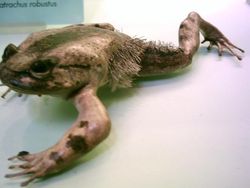
ToadSuicide-bombing ants. Bone-breaking frogs. Spit-flinging arachnids. Back-birthing toads. And bone-dissolving worms. What do all of the above have in common? Specialized adaptations. They’ve become so accustomed to their distinct habitats that they’d be more likely to perish, compared to their more generalist relatives, if moved to a slightly different locale. Each of them, as a result, make the variety of beak sizes among Darwin’s famous finches seem mundane by comparison. That’s because each of these five species below illustrates the seemingly eccentric paths evolution can take groups of organisms on—they’ve become, with time and struggle, distinctive offshoots of their less-specialized ancestors.

The Wolverine Frog (Triobatrachus robustus)

Native to Cameroon, Africa, the Wolverine Frog boasts an uncommon adaptation for living amphibians: claws. Scientist David C. Blackburn and his team released a study on the frog in 2008, explaining that these claws are unique due to their lack of keratinous covering. It was initially believed that these talons existed purely to provide a better grip for the frogs as they were about to leap, but Blackburn postulated that they were actually for defense, as they had the capacity to create deep punctures. Cameroonians hunt the frog using machetes and spears to not get injured handling them directly. These claws emerge from the frog’s extremities by breaking through their ventral skin, resulting in a “traumatic wound in which the skin is torn.” It’s still unknown whether or not the original connection between the bony nodule and terminal phalanx regenerates once the claws are retracted.

More here.

Thursday, May 26, 2016

John Freeman talks shop with Julian Barnes

John Freeman in Literary Hub:

ScreenHunter_1976 May. 26 22.00With each new book, the size and scale of Julian Barnes’ curiosities continue to grow.

As he begins his seventies, they show no sign of diminishment. Barnes won the Man Booker Prize five years ago for The Sense of Ending, the tale of a man looking back on a botched moment of youth, but to begin reading Barnes here might be misleading.

He has written novels about aviators and detectives, Flaubert and theme-park life, short stories about aging, riffs on life in the kitchen, journalism about French politics, translations of the great diarist Alphonse Daudet, dozens of expertly argued reviews of modern art, tales of sex and revenge, and—for a brief period—a mystery series under the name Dan Kavanagh.

Barnes’s latest novel expands the territory even further. The Noise of Time is a harrowing, swift novel about the composer Dmitri Shostakovich and his attempt to compose music under Stalin. The book begins with the agonized Dmitri smoking a cigarette outside his apartment door, so terrified of the knock in the night he begins sleeping with his clothes on. And then not sleeping at all, just waiting in the hall. He doesn’t want to wake his wife.

More here.

When Islamic atheism thrived

Amira Nowaira in The Guardian:

ScreenHunter_1975 May. 26 21.56Freethinking is perhaps not one of the strongest suits of modern Islam. For one thing, the list of books that have been banned for challenging prevalent religious orthodoxies and sensibilities during the past hundred years is disconcertingly long.

Modern Islamic clerics and scholars in various Muslim countries are often highly selective of which part of the Islamic heritage to emphasise and bring to light. Out of the countless and varied sources from centuries of vigorous debates, commentaries and controversies, they seem to dig out, and revel in, interpretations that are hopelessly conservative or frustratingly and grotesquely at odds with the life of modern Muslims.

It may therefore come as a surprise to many people that there is a long and vibrant intellectual tradition of dissidence and freethinking going back to the Middle Ages. The Islamic thinkers of the early medieval period expressed ideas and engaged in debates that would appear strangely enlightened in comparison with the attitudes and views adopted by modern Islamic scholarship.

This is the basic argument presented by From the History of Atheism in Islam by the renowned Egyptian thinker Abdel-Rahman Badawi. Published in Arabic in 1945, the book was reprinted only once in 1993. It discusses the work of the Islamic philosopher-scientists of the medieval period and the way they upheld reason, freedom of thought and humanist values, while questioning and often refuting some basic Islamic tenets.

More here.

How The Washington Post Embarrassed Itself Badly

Akim Reinhardt in his own blog:

Cher-199x300Did I ever tell you about the four years I spent in prison back in the late 1990s?

Well, actually, it was just two hours on Thursday afternoons as a volunteer with the Native men’s group at Nebraska State Penitentiary in Lincoln, Nebraska.

I could gussy up the experience and say I was teaching inmates. But mostly I was just hanging out. Many prisoners, particularly those who’ve been in a while, are starved for new faces and happy to get some fresh conversation.

Sometimes I’d talk to people about serious issues. Other times we’d just shoot the breeze. One day while inside, I was talking to a guy. Nothing serious. I don’t even remember about what. He asked something of me. I said, “You got it, chief.”

Now here’s the thing. Growing up in New York City, “chief” was (and still is) in the same class of words as “boss” and “buddy.” They’re all informal monikers one man might casually give another if you don’t actually know each other’s names, or as a temporary nickname even when you do. It’s a sign of modest respect and affection in the moment. In a typical New York City context, they’re all completely harmless words and have zero racial connotation.

But the moment “chief” slipped out of my mouth in prison, I immediately remembered that of course this particular word has a very heavy connotation for Native people, particularly men.

More here.

How wikipedia is fast replacing the reference book

2000px-Wikipedia-logo-v2-en.svg-1Peter Thonemann at The Times Literary Supplement:

The all-conquering encyclopedia of the twenty-first century is, famously, the first such work to have been compiled entirely by uncredentialled volunteers. It is also the first reference work ever produced as a way of killing time during coffee breaks. Not the least of Wikipedia’s wonders is to have done away with the drudgery that used to be synonymous with the writing of reference works. An army of anonymous, tech-savvy people – mostly young, mostly men – have effortlessly assembled and organized a body of knowledge unparalleled in human history. “Effortlessly” in the literal sense of without significant effort: when you have 27,842,261 registered editors (not all of them active, it is true), plus an unknown number of anonymous contributors, the odd half-hour here and there soon adds up to a pretty big encyclopedia.

One of the most common gripes about ­Wikipedia is that it pays far more attention to Pokémon and Game of Thrones than it does to, say, sub-Saharan Africa or female novelists. Well, perhaps; the most widely repeated variants of “Wikipedia has more information on x than y” are in fact largely fictitious (https://en.wikipedia.org/wiki/Wikipedia:Wikipedia_has_more…). Given the manner of its compilation, the accursed thing really is a whole lot more reliable than it has any right to be. Like many university lecturers, I used to warn my own students off using Wikipedia (as pointless an injunction as telling them not to use Google, or not to leave their essay to the last minute). I finally gave up doing so about three years ago, after reading a paper by an expert on South Asian coinage in which the author described the Wikipedia entry on the Indo-Greek Kingdom (c.200 BC–AD 10) as the most reliable overview of Indo-Greek history to be found anywhere – quite true, though not necessarily as much of a compliment to Wikipedia as you might think.

more here.

a flying handbag at a monastery in China

PortraitLeQuerrecGuy Le Querrec at The Guardian:

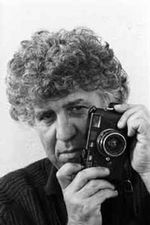
This photo is an enigma. Even I can’t say for sure what’s happening. I didn’t know what I had taken at the time. It was only afterwards, when I developed the film, that I saw the handbag.

It was April 1984 and I was on assignment in China, which was just opening up to foreigners. I had no particular commission, though: I could shoot whatever I wanted. On this day, I was visiting a monastery at Xindu in the Sichuan province. There was a symbol on the wall that meant “happiness”. The place was full of Chinese tourists and the tradition was to stand 20 metres from the sign, then walk towards it with eyes closed and try to touch the centre of the four raised points.

As a photographer, I have always been interested in gestures – I was once described as someone who made arms dance. And now I found myself in front of this extraordinary ballet: a young man who has just touched the sign and a second, in a hat, approaching with his hand out. I remember the sensation of something moving, but I really don’t remember the handbag.

more here.

Frank Buckland wanted to save—and eat—as many animals as possible

T1171881204Edward White at The Paris Review:

In the Buckland household, oddness was next to godliness. Drawing room tables were decorated with lizard feces and clumps of lava from Mount Etna; instead of hobbyhorses, the children had the corpses of dead crocodiles to ride around on; they learned to distinguish between types of animal urine by taste alone. Francis took his father’s gleeful, childlike curiosity about the wondrous variety of life on earth and magnified it into a philosophy for living, and the core of a defiantly strange personality. At his boarding school, he shared his room with rats, an owl, a buzzard, a magpie, and a racoon, and he became popular for providing feasts for the other boys with grilled trout and field mice poached from the land of a neighboring farmer. As a student at Oxford, his menagerie took a turn for the exotic: an eagle, a jackal, a pariah dog, marmots, guinea pigs, snakes, a chameleon, a monkey, and a bear came under his care, some sharing his rooms. The bear and the monkey, in particular, were prone to roaming, and on several occasions Francis had to charge across plush college quadrangles in pursuit of them. It earned him local celebrity, but somehow avoided irking the dons.

Buckland’s interest in wildlife was obviously sincere, but his brood also helped him to deflect scrutiny and cover deficiencies. His father, after all, had achieved great academic success, and there was pressure on Francis to follow in the old man’s shoes. But he struggled constantly in his studies: his time at Oxford was four years of stress, failed exams, and running to stand still. What he lacked in academic sharpness he made up for with zeal and an outsize personality.

more here.