two books on the obama era

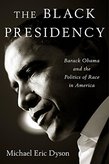
Cover00Jake Lamar at Bookforum:

I sometimes think of Election Night 2008 as analogous to the first manned moon landing in 1969. Something that had seemed, just a few years earlier, imaginable only in speculative fiction had suddenly become real before our eyes. In both cases, an American achievement was celebrated by people around the world. Like Neil Armstrong’s “small step” on the lunar surface, the election of a black man to the highest office in the most powerful nation on earth seemed to expand human possibility. But within a couple of years, the public grew tired of moon shots and, after the sixth landing in 1972, NASA abandoned lunar travel. After all, what had walking on the moon done to improve life on Earth? It had certainly done nothing to help African Americans living in poverty. “A rat done bit my sister Nell,” Gil Scott-Heron wrote in his classic 1970 protest song: “I can’t pay no doctor bills / But Whitey’s on the moon.”

It’s impossible to know whether the landmark election of a black president will follow the novelty of the moon walk into the national memory hole. But some of the exhilaration of the 2008 campaign season began to erode as soon as Barack Obama assumed the presidency. He has since presided over an era of economic devastation in black America. What’s more, the age of Obama has witnessed the Supreme Court’s evisceration of the 1965 Voting Rights Act and a grotesque series of killings of black Americans by white police officers in Ferguson, Staten Island, and Chicago, Obama’s political hometown, as well as by white private citizens in Florida and South Carolina. To many disappointed African Americans, having a black man in the White House has been as bitterly irrelevant as having a white man on the moon.

more here.

Under the Crushing Weight of the Tuscan Sun

Wilson-TheVexingFantasiesofUndertheTuscanSun-690Jason Wilson at The New Yorker:

It was with considerable baggage that I recently revisited “Under the Tuscan Sun” this year, on the occasion of its twentieth anniversary, and discovered that my opinion of the book has grown ever so slightly more generous with age. This is not to say that I found the book free of flaws the second time around. For one, it contains virtually no narrative conflicts; each incident that could potentially cause tension gets resolved within paragraphs or, at most, a few pages. Will the villa’s previous owner sell to Frances and her partner, Ed? Yes, he will. Will a big pile of money needed to make the deal arrive by wire? Several paragraphs later, it does. Frances stubs her toe, to much consternation, and a few lines later Ed applies a Band-Aid. Before Tuscany, Frances used “Williams-Sonoma as a toy store,” but now she has just a few elementary kitchen tools; the dinners she makes are still fabulous. There’s an owl in the window, and Frances is “deathly afraid of birds,” but then she falls asleep and it flies away. (It’s no wonder that the screenwriters who adapted the book inserted several wildly fictionalized plot twists.)

The book also still seems to me full of petty complaints, with talk of “restoration horrors” or a “construction debacle” when, say, there is a delay in the arrival of the sandblaster needed to smooth the exposed wooden beams. Often these grievances are what we would now call humble brags. For instance: “One day we buy two armchairs at a local furniture store. By the time they’re delivered, we realize they’re awkward and the dark paisley fabric rather weird, but we find them sumptuously comfortable, after sitting upright in the garden chairs for weeks.” After the seeming solipsism of such passages, it’s hard to take Mayes seriously when she riffs on futurism, wine, the Etruscans, or D. H. Lawrence, each of which she discusses in meandering middle chapters. Of Lawrence’s “Etruscan Places,” she writes, “Rereading him along the way, I’m struck often with what an ass he was.”

more here.

Wednesday Poem

Love After Love

The time will come
when, with elation,
you will greet yourself arriving
at your own door, in your own mirror,
and each will smile at the other’s welcome,

and say, sit here. Eat.
You will love again the stranger who was your self.
Give wine. Give bread. Give back your heart
to itself, to the stranger who has loved you

all your life, whom you ignored
for another, who knows you by heart.
Take down the love letters from the bookshelf,

the photographs, the desperate notes,
peel your own image from the mirror.
Sit. Feast on your life.
.

by Derek Walcott
from Sea Grapes
Farrar, Straus and Giroux, 1976
.
.

Russia is Pulling Out of Syria, When Will the US?

Phyllis Bennis in Counterpunch:

Shutterstock_340622207In a surprise announcement on March 14, Russian president Vladimir Putin announced that the Russians were withdrawing “most of our military” from Syria beginning immediately. According to the TASS news agency, Putin said he hoped the withdrawal “will become a good motivation for launching negotiations” and “instructed the foreign minister to intensify Russia’s participation in organization of peace process in Syria.” The withdrawal, along with Putin’s restated support for a political settlement, could help move forward the fragile UN-brokered Geneva talks on ending the Syrian crisis that began on the same day — as well as the tenuous UN-negotiated cessation of hostilities. “Those Russian servicemen who will stay in Syria will be engaged in monitoring the ceasefire regime,” TASS reported, indicating that the pilots and crews of the 50 Russian warplanes and helicopters that have been based in Syria would be withdrawn. The withdrawal is an important step that should help reduce the level of violence in the deadly war. But questions remain.

…A real reduction of violence, a durable ceasefire, and a viable peace process leading to an end to the Syrian war will require much more — more from Russia, certainly, but even more from the United States and its allies. There’s no indication yet that Russia’s move was coordinated with Washington, although White House spokespeople indicated that a Putin-Obama talk might be possible. In the meantime, Washington should follow Russia’s lead and pressure its own proxy forces to shift towards diplomacy. The withdrawal of U.S. troops, special forces, drones, and warplanes from Syria, paralleling the Russian move, would be an important first step. Further moves must include an end to both the CIA’s and the Pentagon’s programs to train and arm rebel forces in Syria.

More here.

Gene intelligence

From Nature:

CRISPR_logoLast month, one of the top intelligence officials in the United States warned that genome-editing technology is now a potential weapon of mass destruction. Techniques such as the emerging CRISPR–Cas9 system, US director of national intelligence James Clapper warned in an annual threat-assessment report to the US Senate, should be listed as dangers alongside nuclear tests in North Korea or clandestine chemical weapons in Syria (see go.nature.com/jxuyev). The headline message might scream ‘overreaction’ — and indeed most serious science commentators seem to have assumed as much and ignored Clapper’s hyperbole — but the terms he used to describe the technology seem uncontroversial. The US spooks describe the “broad distribution, low cost, and accelerated pace of development” of gene editing, and say that its “deliberate or unintentional” use could have “far-reaching economic and national security implications”. “Research in genome editing,” the threat assessment continues, “increases the risk of the creation of potentially harmful biological agents or products.” And Clapper, naturally, points the finger at science in nations “with different regulatory or ethical standards than those of Western countries”. But for a glimpse of just how far-reaching the “deliberate or unintentional” use of gene editing could be, he need only look over his shoulder.

Last year, scientists in California reported that they had used gene editing (together with another new biotechnology called gene drive) to introduce a mutation that disabled both normal copies of a pigmentation gene on a fruit-fly chromosome. The change made the insects turn pale yellow — as did their offspring, their offspring’s offspring and so on. The change was so powerful that, had any of the California flies escaped, it has been estimated that somewhere between one in five and one in two of all the fruit flies in the world would be yellow today. The flies did not escape — but then, weapons of mass destruction are a political problem because they exist, not because they are deployed.

More here.

Tuesday, March 15, 2016

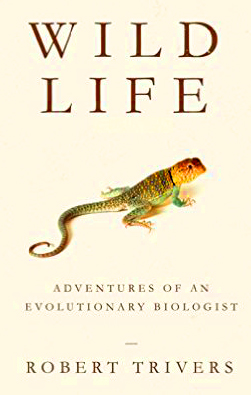
The Case of the Non-Stuffy Academic, Robert Trivers

Glenn Geher in Psychology Today:

TriversIt’s about 1:00 p.m. on a weekday in December, 2015. I am working with a small team in a radio studio on campus We are about to interview world-renowned scientist, Dr. Robert Trivers, for a potential podcast that we are working on. We are using Skype and have both audio and video channels going. We call him via Skype at exactly the time we’d said we would. He answers. Dr. Trivers’ face and upper body show up on the screen. No shirt. Our team includes veteran media personality and radio host, John Tobin, who has conducted thousands of interviews in his time. John would later report that he’d never had an interview go quite this way before.

And so it begins:

Dr. Trivers: Oh wait – I have to put on a shirt and get a beer – can we wait just a minute? Oh and I have to put this towel away. I just got out of the shower – I wanted to be fresh for this …

Of course we smiled and complied and said it was fine. In a few minutes he settles down into a chair that he describes as “near the fridge,” just in case there’s a need for more beer during this interview.

For about an hour, Dr. Trivers took us on a wild ride – emerging at times as kind of hard to pin down on a particular topic – and emerging at other times as having uniquely interesting personal anecdotes, such as one about the time that he drove a getaway car for renowned Black Panther leader Huey Newton after leaving a bar in Northern California under sketchy terms back in the 1970s.

More here.

Are American Jews Turning Away from Israel?

Bruce Stokes in Foreign Policy:

Gettyimages-758256No one ever said this would be easy. U.S.-Israeli relations are heating up as Vice President Joe Biden criticizes Israeli plans to build new housing units for Jews in East Jerusalem against a backdrop of reports that Israeli Prime Minister Benjamin Netanyahu has declined to meet with President Barack Obama due to the U.S. election — even while Washington and Tel Aviv are negotiating new U.S. military aid to Israel. This latest flurry of activity comes in the wake of a new Pew Research Center surveyhighlighting the differences between American Jews and Israeli Jews and between Israeli Jews and Arabs within Israel on a range of contentious issues surrounding the Middle East peace process.

As might be expected, Israeli society is deeply divided on Jewish-Muslim relations. On a fundamental issue, nearly three-quarters of Israeli Jews say they do not see much discrimination against Muslims in their country. But roughly eight in 10 Israeli Arabs say there is a lot of discrimination in Israeli society against Muslims.

Such divisions between Jewish and Arab views are also reflected in their perspective on the peace process.

More here.

Gravitational Waves Will Show The Quantum Nature Of Reality

Ethan Siegel in Forbes:

ScreenHunter_1779 Mar. 15 14.53One of the oldest predictions of Einstein’s general theory of relativity — the gravitational theory that spacetime is a fabric that gets bent and curved by the presence of matter and energy — is that masses that accelerate in the Universe produce ripples in the fabric of space itself: gravitational waves. But Einstein’s conception of gravity is still a classical picture, as:

  • space and time are continuous entities, not discrete ones,
  • the predictions of the theory break down (give nonsense answers) at very small distances and in the presence of very large fields,
  • and there’s no way to calculate the gravitational field for inherently quantum systems, like an electron confronted with a double slit.

We fully expect that at some level, gravity will turn out to be quantum in nature, although we don’t yet have any experimental evidence of that. But with LIGO’s recent direct detection of gravitational waves, we have every reason to believe that the existence of these waves hold the key to showing — for the first time — that gravity truly is a force that’s quantum in nature.

More here.

Hilary Putnam (1926-2016)

The day before yesterday I was saddened to hear that Hilary Putnam had died. He is the one who convinced me to go to philosophy graduate school at a meeting with him in 1992, even saying, “Perhaps you will be the next Wittgenstein, another engineer who became a philosopher.” I exchanged emails with him as recently as last year. He was a brilliant man and will be missed.

Putnam was well-known for changing his mind often over his career. Huw Price, one of our most distinguished philosophers himself, shared with me the following anecdote:

My best Putnam story came from Michael Dummett. When I was in Edinburgh around 2002, Dummett came to give a named lecture. I was acting as host and chair, and he said that he'd once done the same for Putnam, giving a lecture in Oxford. Putnam's advertised topic was 'Theory Change in Science' and Dummett said that when he introduced him, he said what an appropriate topic this was, for someone famous for changing his mind. Putnam then got up and said, “It's funny you should say that, because I've decided to give you a different paper.”

And here is Martha Nussbaum in the Huffington Post:

ScreenHunter_1778 Mar. 15 14.34Philosophy is pretty unpopular in America today. Marco Rubio says, with typical inelegance: “We need more welders and less philosophers.” Governor Pat McCrory of North Carolina also singles out philosophy as a discipline offering “worthless courses” that offer “no chances of getting people jobs.” Across the nation there's unbounded adulation for the STEM disciplines, which seem so profitable. Although all the humanities suffer disdain, philosophy keeps on attracting special negative attention — perhaps because in addition to appearing worthless, it also appears vaguely subversive, a threat to sound traditional values.

Such was not always the case. Throughout its history in Europe, philosophy has repeatedly come in for abuse from the forces of tradition and authority. The American founding, however, was different: the founders were men of the Enlightenment, steeped in the ideas and works of Rousseau, Montesquieu, Adam Smith, and the ancient Greeks and Romans — especially Cicero and the Roman Stoics. As men of the Enlightenment they took pride in steering their course by reason and argument rather than unexamined tradition. Their intellectual independence and theoretical thoughtfulness served them well when it came to setting up a new nation. We've traveled a long way from those roots, and not in a good direction.

On March 13, America lost one of the greatest philosophers this nation has ever produced. Hilary Putnam died of cancer at the age of 89.

More here.

Injustice Delayed: the Jarvis Jay Masters case

378b91410e83f258c80b5215def6c033_715__2Rebecca Solnit at Harper's Magazine:

In 1981, when he was nineteen years old, Jarvis Jay Masters given a long sentence for armed robbery, which he describes in his memoir That Bird Has My Wings.Back then, San Quentin was a violent and chaotic place, where prisoners joined gangs for protection; Masters joined one run by other black prisoners. In 1985, when Masters was twenty-three and on the fourth tier of his section of the prison, inmates two tiers below him stabbed to death a thirty-eight-year-old guard named Howell Burchfield. Despite there being no physical evidence linking Masters to the killing, despite the fact that guards found and proceeded to lose or throw away many possible murder weapons, the prosecution accused him of sharpening the weapon and participating in the plan organized by the gang to which he then belonged.

Though both the killer and prisoner who ordered the killing were sentenced to life without the possibility of parole, Masters was sentenced to the death penalty at the end of a long, problematic trial. He has lived on death row since 1990. As I explain in my column for the magazine’s March issue (“Bird in a Cage,” Easy Chair) Masters has become a respected writer, a warm and engaging conversationalist with whom I’ve now spoken many times and visited in person twice, and a devout Buddhist and friend to many in the Bay Area Buddhist community. They insist Masters is innocent and that the mountains of evidence amassed by his defense attorneys offer extensive and—to my eye also—convincing support of this position.

more here.

Gravity’s Rainbow: A Love Story

0143039946.01.MZZZZZZZSean Carswell at The Millions:

There’s a dirty secret tucked away in Thomas Pynchon’s novels, and it’s this: beyond all the postmodernism and paranoia, the anarchism and socialism, the investigations into global power, the forays into labor politics and feminism and critical race theory, the rocket science, the fourth-dimensional mathematics, the philatelic conspiracies, the ’60s radicalism and everything else that has spawned 70 or 80 monographs, probably twice as many dissertations, and hundreds if not thousands of scholarly essays, his novels are full of cheesy love stories.

Personally, I like the cheesy love stories. If reading a Pynchon novel is like running a marathon, then the love stories are the little gooey snacks that you pick up at aid stations. You could probably finish the run or the novel without the gooey parts, but having them raises your spirits and gives you the energy to cruise to the end. Still, I know the love stories are dirty secrets because I spend an inordinate amount of time in the world of Pynchon studies. I’ve read through mountains of work on his novels. I’ve written one of the aforementioned dissertations, a few of the essays, and one of the monographs. I’ve presented papers on Pynchon at academic conferences. I regularly teach a semester-long class on Pynchon. I hang out sometimes with other Pynchon scholars. And I notice that the love stories are never discussed openly. We get together after class, we gather in conference break rooms, we share a beer and confide in each other. We say things like, “I think Maxine and Horst make a better divorced couple than they do a married one” and “I’m so happy that Kit and Dahlia finally got together. I sure hope it works out.” We talk of characters as if they’re real people, and we talk about ourselves as if we’re characters. But we never write about the love stories.

more here.

the most isolated tribe on Earth

ImagesAdam Goodheart at The American Scholar:

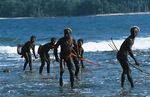
On December 31, 1857—the last day of the last year before their world began to end—a group of Andamanese went down to catch fish off the beach at South Reef Island, a tiny islet in the northern part of the archipelago. They brought with them bows and arrows, nets woven of bark fiber, and seven outrigger canoes, delicate little craft that they had made by laboriously hollowing out the trunks of fallen trees. (Many of the possessions they were carrying that day are now in the British Museum.) Before the fishermen had a chance to push their boats out into the surf, however, they saw something strange in the distance: an immense black shape, half ship and half sea monster, coughing out great exhalations of dark smoke as it moved across the ocean. It was coming toward them.

The vessel was a small East India Company steamer, inauspiciously named the Pluto, that had left Calcutta several weeks earlier on a mission to investigate the Andaman Islands, particularly their suitability as the site of a new penal colony. (On the Indian mainland, the Great Mutiny was in full blaze, and British jails were overflowing.) Despite the gravity of their assignment, the explorers had had a pleasant journey. Like many ships of its era, the Pluto was a kind of floating experiment in multiculturalism—its crew and officers included not just Britons but Irishmen, Italians, Maltese, Scandinavians, Portuguese, Americans, Chinese, Africans, Bengalis, Burmese, Malaysians, a Frenchman, and an Arab—and in this case, the experiment turned out quite well. A Scottish sailor entertained his shipmates on the bagpipes; some Goan sailors formed an impromptu band; and the Arab boatswain strummed melancholy airs on his guitar. At Christmas, crewmen held sack races on the steamer’s deck and boat races around its hull. The government officials on board—members of a special “Andaman Committee” appointed by the East India Company’s directors—were also in a good mood, because they had already found a splendid site for a penal settlement (the future Port Blair) and were headed back to Calcutta with this happy news.

more here.

WHY DO WE WORK SO HARD?

Ryan Avent in More Intelligent Life:

WorkWhen I was young, there was nothing so bad as being asked to work. Now I find it hard to conjure up that feeling, but I see it in my five-year-old daughter. “Can I please have some water, daddy?” “You can get it yourself, you’re a big girl.” “WHY DOES EVERYONE ALWAYS TREAT ME LIKE A MAID?” That was me when I was young, rolling on the ground in agony on being asked to clean my room. As a child, I wonderingly observed the hours my father worked. The stoical way he went off to the job, chin held high, seemed a beautiful, heroic embrace of personal suffering. The poor man! How few hours he left himself to rest on the couch, read or watch American football. My father had his own accounting firm in Raleigh, North Carolina. His speciality was helping people manage their tax and financial affairs as they started, expanded, or in some cases shut down their businesses. He has taken his time retiring, and I now realise how much he liked his work. I can remember the glowing terms in which his clients would tell me about the help he’d given them, as if he’d performed life-saving surgery on them. I also remember the way his voice changed when he received a call from a client when at home. Suddenly he spoke with a command and facility that I never heard at any other time, like a captive penguin released into open water, swimming in his element with natural ease.

At 37, I see my father’s routine with different eyes. I live in a terraced house in Wandsworth, a moderately smart and wildly expensive part of south-west London, and a short train ride from the headquarters of The Economist, where I write about economics. I get up at 5.30am and spend an hour or two at my desk at home. Once the children are up I join them for breakfast, then go to work as they head off to school. I can usually leave the office in time to join the family for dinner and put the children to bed. Then I can get a bit more done at home: writing, if there is a deadline looming, or reading, which is also part of the job. I work hard, doggedly, almost relentlessly. The joke, which I only now get, is that work is fun. Not all work, of course. When my father was a boy on the family farm, the tasks he and his father did in the fields – the jobs many people still do – were gruelling and thankless. I once visited the textile mill where my grandmother worked for a time. The noise of the place was so overpowering that it was impossible to think. But my work – the work we lucky few well-paid professionals do every day, as we co-operate with talented people while solving complex, interesting problems – is fun. And I find that I can devote surprising quantities of time to it.

More here.

The Anti-Packaging Movement

Aimee Lee Ball in The New York Times:

Precycling-slide-7Z2B-blog427THE SHOPPERS AT Original Unverpackt, a food market in the gentrifying but still gritty Berlin neighborhood of Kreuzberg, arrive largely by bicycle, carrying mesh totes and burlap sacks. Along one impeccably organized wall, they lift the spouts of gravity bins to let grains, nuts or legumes tumble into the tins and jars they’ve brought along. At the bulbous stainless steel fusti, they dispense olive oil, balsamic vinegar or soy sauce into glass vessels. A customer samples a Medjool date, but looks confused about what to do with the pit — there are no napkins, no trash cans — and ends up stashing it in her pocket. She is, after all, shopping at a store committed to zero waste. Designed by the Los Angles-based architect Michael J. Brown, a disciple of Daniel Libeskind, the shop is a particularly sleek and modern manifestation of precycling, the concept of eliminating trash before it is created. If you don’t use new plastic, paper or metal to begin with, you won’t have to dispose of it.

It’s been 20 years since the Environmental Protection Agency began a media campaign to introduce precycling, but it’s yet to catch on in any substantial way with Americans. Now, a new breed of mostly European store owners, who are as aesthetically sophisticated as they are ethically minded, are trying to change how we shop by presenting the market as a curated space. In an age in which we simultaneously expect and are overwhelmed by the sheer amount of choice at the grocery — this brand of whole-grain pasta or that one? — these stores offer something defiantly old-fashioned: one or two alternatives, selected by a member of a righteous cognoscenti. ‘‘There’s one kind of rice in my store,’’ said Andrea Lunzer of her eponymous Viennese shop. ‘‘I don’t have rices fighting with each other. I’ve chosen for you — that’s why it’s called Lunzers.’’

More here.

Monday, March 14, 2016

China’s Forbidden History, Forbidden Subjects, Forbidden Ideas

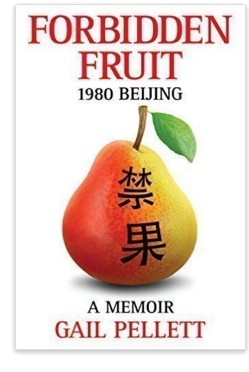
by Gail Pellett

ScreenHunter_1767 Mar. 11 11.22Along with the jaw-dropping economic and technological transformation in China over the past two decades, has come an Orwellian load of forbidden history, subjects and ideas. Aided by a Party-censored and self-censored traditional and social media these forbiddens are maintained today—as in the past—by threats and fear.

Forbidden is a passionate word compared to censored. Forbidden commands and threatens while censored seems…well, bureaucratic. Forbidden is the term the Chinese government uses to sustain ideological control.

When I began writing a book about my time in Beijing thirty-five yeas ago, friends often asked. “China is so different now, how could a book about 1980 Beijing have any relevance?” Yet daily I marvel at how the speeches and policies of President Xi Jinping reflect the tough political and ideological policies of the Deng Xiaoping era. Deng was just consolidating his power in 1980.

I was the first professional broadcast journalist hired in the forty-year history of Radio Beijing—China's equivalent to Voice of America—invited to teach courses in Western journalism and edit scripts in the English Language Department. Despite my expertise, I couldn't be trusted with a private conversation with my colleagues about the news, the world, or their ideas or our journalistic mission. Associating with me was forbidden. As one brave comrade told me privately, “Although the Cultural Revolution is over, if people are seen getting close to you they risk losing their housing, a pay raise, access to university or school for their kids. “During the Cultural Revolution,” she said, “People lost everything.” So while that fear of relationships with foreigners—especially foreign journalists—harked back to the Cultural Revolution it was reinforced by a threatening speech made by Deng Xiaoping in December 1980 when he warned those who didn't resist foreign ideas or bourgeois individualism. Those who grew chummy with foreigners. After that speech icy winds blew through the hallways of Radio Beijing.

Read more »

Sunday, March 13, 2016

The blindness of EU migration policy

Kenan Malik in Padaemonium:

ScreenHunter_1772 Mar. 14 08.42How do you solve a crisis? By brushing it far enough away from your gaze so you can pretend that it is no longer there. That, at least, appears to be the European Union’s approach. For more than a year, the migration crisis has torn at the heart of the EU, creating deep tensions between members, and raising questions about the future of freedom of movement within the union, and indeed about the future of the union itself.

Europe’s leaders have been desperately trying to figure out a solution. This week, after months of negotiation, they stitched together a deal with Turkey. Its main aim is to allow the EU to push the problem far enough away to pretend that it is not there.

Under the deal, the details of which are still being hammered out, all irregular migrants crossing from Turkey to Greece will be sent back. A ‘one for one’ agreement will allow one Syrian from a Turkish refugee camp to be resettled in the EU, for every Syrian refugee returned to Turkey from Greece. For non-Syrians, the route to Europe is entirely cut off.

In return, the EU has promised to speed up plans for Turks to travel without visas inside the EU and to actually pay Ankara some of the €3 bn that was promised in October for Turkish help in closing its borders to migrants. Turkey has reportedly asked for an extra €3 bn, which is still being negotiated. Turkey has also demanded that concrete steps be taken to resume its accession negotiations with the EU.

Donald Tusk, the President of the EU Council, has described the deal as a ‘breakthrough’ and ‘historic’. It is, in fact, immoral and unworkable.

More here.

Did LIGO Detect Dark Matter?

Sean Carroll in Preposterous Universe:

Ligo-bh-768x539It has often been said, including by me, that one of the most intriguing aspects of dark matter is that provides us with the best current evidence for physics beyond the Core Theory (general relativity plus the Standard Model of particle physics). The basis of that claim is that we have good evidence from at least two fronts — Big Bang nucleosynthesis, and perturbations in the cosmic microwave background — that the total density of matter in the universe is much greater than the density of “ordinary” matter like we find in the Standard Model.

There is one important loophole to this idea. The Core Theory includes not only the Standard Model, but also gravity. Gravitons themselves can’t be the dark matter — they’re massless particles, moving at the speed of light, while we know from its effects on galaxies that dark matter is “cold” (moving slowly compared to light). But there are massive, slowly-moving objects that are made of “pure gravity,” namely black holes. Could black holes be the dark matter?

It depends. The constraints from nucleosynthesis, for example, imply that the dark matter was not made of ordinary particles by the time the universe was a minute old. So you can’t have a universe with just regular matter and then form black-hole-dark-matter in the conventional ways (like collapsing stars) at late times. What you can do is imagine that the black holes were there from almost the start — that they’re primordial. Having primordial black holes isn’t the most natural thing in the world, but there are ways to make it happen, such as having very strong density perturbations at relatively small length scales (as opposed to the very weak density perturbations we see at universe-sized scales).

Recently, of course, black holes were in the news, when LIGO detected gravitational waves from the inspiral of two black holes of approximately 30 solar masses each. This raises an interesting question, at least if you’re clever enough to put the pieces together: could the dark matter be made of primordial black holes of around 30 solar masses, and could two of them have come together to produce the LIGO signal?

More here.