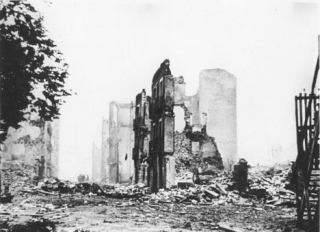
The Spanish Civil War, 80 years after

Casanova_80years_468w

Julián Casanova in Eurozine:

In the first few months of 1936, Spanish society was highly fragmented. There was uneasiness between factions and, as was happening all over Europe with the possible exception of the United Kingdom, the rejection of liberal democracy in favour of authoritarianism was rife. None of this need have led to a civil war. The war began because a military uprising against the Republic undermined the ability of the State and the Republican government to maintain order. The division of the army and security forces thwarted the victory of the military rebellion, as well as their main objective: the rapid seizure of power. But by undermining the government's ability to keep order, this coup d'état transformed into the unprecedented open violence employed by the groups that supported and those that opposed it. It was July 1936 and thus began the Spanish Civil War.

The civil war came about because the military coup d'état failed to achieve its basic objective at the outset, which was to seize power and overthrow the republican regime, and because, unlike the events in other republics of the time, there was comprehensive resistance, both military and civil, to counter any attempt at imposing an authoritarian system. Had it not been for this combination of coup d'état, division of the armed forces and resistance, there would never have been a civil war.

This coup d'état met resistance because the Spanish society of 1936 was not the same as that of 1923, when the September uprising led by General Miguel Primo de Rivera was favoured by the general abstention of the army, the weakness of the government, the apathy of public opinion and above all, the consent of King Alfonso XIII.

In 1936 there was a Republic in Spain, whose laws and measures had given it the historical opportunity to solve insurmountable problems, but it had also come across, and caused, major factors of instability, which successive governments could not provide the proper resources to counteract. Against such a widespread level of political and social mobilization as had been set in motion by the Republican regime, the coup d'état could not end, as had occurred so many times in Spain's history, in a mere return to the old order, based on traditional values. To overthrow the Republic, what was needed was a new, violent, antidemocratic and antisocialist order, such as had previously been established elsewhere in Europe, to end the crisis and repair all the fissures that had been opened, or widened, by the Republican regime.

More here.
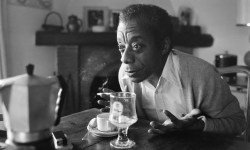
100 best nonfiction books: Notes of a Native Son by James Baldwin (1955)

Robert McCrum in The Guardian:

BaldIn the spring of 1820, Thomas Jefferson, who, in an early draft of the Declaration of Independence, had launched a withering assault on slavery, confessed to an associate that the plight of the American negro was a momentous question, which, “like a fire bell in the night, awakened and filled me with terror”. Race, still the greatest of the unresolved issues within America, has already inspired one entry on this list – No 5, Dreams From My Father by Barack Obama. With James Baldwin, African-American literature reaches one of its 20th-century masters in fiction (Go Tell It on the Mountain and Giovanni’s Room), a name to stand alongside Langston Hughes, Richard Wright and, most recently, Nobel laureate Toni Morrison. Baldwin is also the author of some important nonfiction, several landmark essays of great power and beauty on the place of the black writer in white America. In this genre, Notes of a Native Son is a recent classic. For Henry Louis Gates Jr, it was Baldwin who “named for me the things you feel but couldn’t utter… articulated for the first time to white America what it meant to be American and a black American at the same time”. The 10 essays collected in Notes of a Native Son – on subjects ranging from Uncle Tom’s Cabin to 1940s Harlem – distil Baldwin’s thinking. It is a source book for a subject that Langston Hughes described in a review of Notes as “the troubled problems of this troubled Earth”.

…Throughout his writing, Baldwin never shies away from a frank and disquieting acknowledgement of feelings: “There is no negro living in America who has not felt, briefly or for long periods… naked and unanswerable hatred; who has not wanted to smash any white face he may encounter; to violate, out of motives of cruellest vengeance, their women, to break the bodies of all white people…” Despite this admission of rage, Baldwin can also be entertainingly satirical, as in his essay on Carmen Jones: “Hollywood’s peculiar ability to milk, so to speak, the cow and the goat at the same time – and then to peddle the results as ginger ale – has seldom produced anything more arresting than the 1955 production of Carmen Jones.”

All of the foregoing culminates in the title essay, Baldwin’s declaration of independence. Speaking of his struggle to vindicate himself as an artist, he writes: “This fight begins, however, in the heart and it has now been laid to my charge to keep my own heart free of hatred and despair.”

More here.

Sunday Poem

—After “E. 1999 Eternal” by Bone Thugs-n-Harmony

Of Darker Ceremonies

Dear god of armed robberies and puff-puff-pass,
a chalk outline unpeels from the street, smashes
every windshield, and leaves florid temples of crack
on porches. Burnt-black pleats of   joint-pressed lips
prophesied your return. Please accept these nickel bags
as offerings. Brick bastions of piss-stench thresholds
and boarded windows require a weekly sacrifice.
Is there a Tarot card called “The Corner,” a shrike
shown lifting a corpse from the pike of a middle finger?
Children speak to their murdered brothers with a cereal box
and construction paper cut into a Ouija’s tongue that licks
yes when asked if   liquor could polish a skull in a way
pleasing to the dead, licks no when asked for a name.
.

by Phillip B. Williams
from Poetry -Nov. 2013
.

Saturday, July 30, 2016

On Political Fiction

Editorial in The Point:

ScreenHunter_2132 Jul. 31 00.19In May of this year, more than 450 American novelists, poets and literary critics signed an “Open Letter to the American People” opposing Donald Trump’s candidacy for president. The letter, initially posted on the literary website Lit Hub, takes the form of a list:

Because we believe that any democracy worthy of the name rests on pluralism, welcomes principled disagreement, and achieves consensus through reasoned debate;

Because American history, despite periods of nativism and bigotry, has from the first been a grand experiment in bringing people of different backgrounds together, not pitting them against one another;

Because the history of dictatorship is the history of manipulation and division, demagoguery and lies;

Because neither wealth nor celebrity qualifies anyone to speak for the United States …

Following a few more bullet points, the letter concludes by stating that Trump “appeals to the basest and most violent elements in society,” and that his candidacy therefore demands an “immediate and forceful response” from each one of us. The letter is meant, presumably, to constitute such a response.

About a week after the letter was posted, the novelist Aleksandar Hemon published a response, also on Lit Hub, explaining why he had declined to sign, despite his opposition to Trump. He began by addressing the letter’s contradictory approach to the democratic process. The letter’s authors imply that Trump is trying to become president based on his “wealth” and “celebrity”; in fact, Hemon pointed out, if one believes in the legitimacy of our democratic system, then the only way Trump or anyone else can become president is to win the most votes. The letter’s authors are surely right that “the history of dictatorship is the history of manipulation and division, demagoguery and lies,” but, as Hemon put it, “Trump is presently abiding by the rules of democratic election … Horrifying as that may seem, that’s how the system works—the election is the job interview.”

More here.

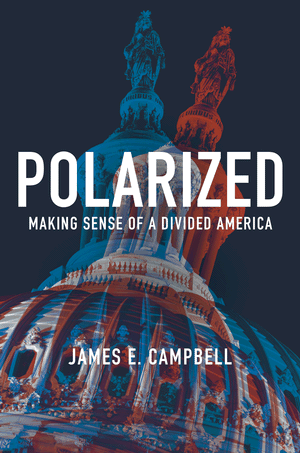
Polarized: Making Sense of a Divided America

Polarized

The introduction to James Campbell's new book over at Princeton University Press:

Voters are not fools.

—V. O. Key, Jr. The Responsible Electorate

America is polarized. Our political parties are highly polarized and the American electorate is highly polarized. By highly polarized, I mean there are substantial differences in political perspectives across a single ideological dimension. Liberals versus conservatives. Fundamental political differences slice through broad segments of the American electorate and separate the political parties on a wide range of important issues. The polarization of the American electorate is real and widespread. It is not an artifact manufactured by polarized political parties, manipulative politicians, rabble-rousing talking heads, myopic interest groups, or mischievous gerrymanders. It is not limited to rarified groups of political leaders or zealous activists, or even the politically engaged. Nor is it constrained to only a few contentious, hot-button issues. It is not an illusion formed by forced choices in elections or geographic clusterings of the like-minded. Political divisions in American politics are now deep and real.

Despite this reality, the idea persists that America is a moderate nation and that most Americans are moderates. That is a myth. Most Americans are not moderates. Not even a slim majority of Americans voting in recent elections are moderates. Some are to the left, some to the right, and together they outnumber those in the middle. America is a politically divided nation, it has been so for some time, and has become more so in recent decades.

While the American electorate and its political parties are quite polarized, the extent of polarization should not be exaggerated. Though a majority of voters are not moderates, moderates are still a large and important minority. And even among the majority of the electorate who are not moderates, few could properly be called extremists. We are substantially polarized, but we are not a bimodal nation with half of the electorate at the leftist outer edge of the political universe and the other half on the extreme right wing. We are highly polarized between liberals and conservatives, not between totalitarians and anarchists.

More here.

Thinking About “Premature Deindustrialization”: An Intellectual Toolkit I

Dlong indus

Brad De Long over at his website:

Let me back up and quickly sketch the argument that manufacturing matters, and manufacturing exports matter a lot for industrialization and economic development in the Global South. And let me make the argument in what I regard as the proper way–that is, dropping far back in time and running through the economic history…

I do not, all thing considered, think that, absent the luck and randomness that gave us the British Industrial Revolution, a permanent or semi-permanent “Gunpowder Empires”scenario was the third-millennium likely historical destiny of the Sociable Language-Using Tool-Making Big-Brained East African Plains Ape.

However, this does not mean that the historical destiny looking forward from 1750 or so in the Global South was bright. World population had quintupled in the 2000 years to 1750, carrying with it a notional five-fold shrinkage in average farm sizes, or at least in the amount of land supporting the typical family. The slow pace of technological progress from -250 to 1750 had made up for–indeed, had caused–this rise in population. And the biotechnologies of agriculture were indeed mighty: to 1750 we have the creation and diffusion of maize, of double-crop wet rice, of the combination of the iron axe and the moldboard plow that could turn northern temperate forests into farms, of domesticated cotton, of the merino sheep, and of the potato.

But a human population growing at 10% per generation required more such innovations, lest living standards fall in order to curb population growth via children so malnourished to have compromised immune systems, women who were too thin to ovulate, or increased female infanticide. People in 1750 were as well fed and clothed as they had been in -250. But what would have been the next agricultural miracles? You would have needed a number of them to attain continued total factor productivity growth at 0.02%/year to compensate for the further quartering of farm sizes that would have been inevitable for population growth to continue and human numbers topped 3 billion by 2050. Draft animals are not that much help in a densely populated near-subsistence society: they have large appetites, and the land their foodstuffs grow on is subtracted from that available for people. Only a relatively rich society can afford to replace human backs and thighs with those of horses and oxen.

More here.

The Radical Transformation of Patricia Hearst

27BOOKTOOBIN1-master315Janet Maslin at The New York Times:

One of the few unassailable facts is that Ms. Hearst was kidnapped and thrown into a car trunk at 9:17 p.m. on Feb. 4, 1974, by people calling themselves the Symbionese Liberation Army. She had been at home with her fiancé, Steven Weed, whose response to the attackers was to exclaim, “Take anything you want!” They did.

Amazingly, almost every detail from this point on remains open to interpretation. How badly was the kidnapping victim treated? It’s true she was confined to a walk-in closet that locked from the outside and that she went through extreme sensory deprivation. But would this become the basis for brainwashing?

Or were her captors, about whom Mr. Toobin has a lot of background information, partly stalling as they figured out what to do with her? Of Donald DeFreeze, the leader who became briefly ubiquitous as Cinque, the Symbionese Liberation Army’s general field marshal, and whose planning skills were hugely problematic, Mr. Toobin writes: “DeFreeze was almost the opposite of a master criminal; he was most inventive in finding ways to get caught.”

more here.

at the DNC

Screen-Shot-2016-07-29-at-7.37.37-PMNikil Saval at n+1:

One of the things the Clinton Democrats lorded over the Sanders supporters, and indeed over Trump, was their superior and more committed chauvinism. It was a sign of their adulthood, which they blared in alternately childlike and violent phraseology. America was already great, it was the greatest country on this planet. “This is the greatest nation on earth, a nation that so many are willing to die defending,” said Tammy Duckworth, an Illinois congresswoman and a candidate for Senate there. The Democrats would secure Israel’s future, they would destroy ISIS, they would honor and strengthen our commitment to our allies.

But it would all be moral. Our armed forces, General John Allen said, “will not be ordered to engage in murder,” a statement that will be falsified the moment Clinton orders her first drone strike. During his speech, in a spirit of savagery equal to anything at the Republican National Convention, pro-Clinton delegates shouted “U-S-A” at protesters holding up their fingers in peace signs. I saw one man in the Florida delegation get up on his chair to get in better chanting position, prompting his antagonist to get up as well, before they were both gently pulled down by friends. And this was for the candidate who had protested the Vietnam War and campaigned for Eugene McCarthy. Even the searing dignity of Khizr Khan’s speech memorializing his son, Humayun Khan, in which he called Hillary Clinton “the healer,” obscured the uncomfortable fact that Humayun had been killed while serving in the occupation of Iraq, the most consequential and terrible vote Clinton had ever cast.

more here.

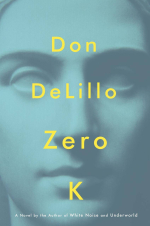
‘ZERO K’ BY DON DELILLO

Zero-k-delilloMichael J. Sanders at The Quarterly Conversation:

A blue mannequin staring you full in the face from out behind the title and author printed in the same cyan font. Don DeLillo. Zero K. This image itself seems to say that Don DeLillo’s new novel, his sixteenth, will most likely be his last. It will deal with isolation, with absolutes and nullities, and with what Catholics would call “Last Things”: heaven, hell, death, judgment. Also known as Absolute Zero, Zero K or 0° Kelvin (-273.15 °C) represents the asymptotic point where atoms reach perfect stasis. Where nothing moves. Where time stops.

However, within the novel’s own Zero K, a sparse room inside a mysterious scientific facility in rural Eastern Europe funded and run by a group known as the “Convergence,” such is not the case. Rather, here is where certain wealthy elites choose to forego their twilight years so as to be preserved in cryogenic vats. The novel’s protagonist, Jeffrey Lockhart, with his father Ross, watches as his stepmother Artis is taken to Zero K. A deep skeptic of this latest bid for scientific transcendence, Jeffrey relishes the fact that Zero K in fact brings the body that the Convergence takes and—transforms? preserves? kills?—farther from rather than closer to the coldest of temperatures.

Like many of the main players in DeLillo’s late fiction, Ross Lockhart is a billionaire whose exact occupation and power are left to the hazy cant of the industry: “private wealth management,” “dynasty trusts,” “emerging markets.” Suffice to say he is part of the same world of predatory finance capital as Eric Packer of Cosmopolis (2003) and buys from the same mega-rich abstract art market of Martin Ridnour of Falling Man (2007). After a career of being privy to pretty much anything he wants, Ross decides to fund something of actual worth, a project dedicated to ending human death.

more here.

Deep Thinking About Immigration

James Ryerson in The New York Times:

IvoryFrom Hobbes and Hegel to John Stuart Mill and John Rawls, the seminal figures of Western political theory are united in their almost complete neglect of the topic of immigration. No doubt they have their reasons. Who among them witnessed anything like the global refugee crisis of 2015? Or the anxieties about national identity that it inflamed? Be that as it may, with hostility toward immigrants and refugees fueling the “Brexit” movement and the presidential campaign of Donald J. Trump, we could use some deep thinking right now about the relationship between the state and its citizens. This deep thinking would no longer start with the assumption that we already know who is included in that relationship (thanks for nothing, John Locke!), but rather would inquire how, in light of often conflicting values like local democracy and global justice, we should go about figuring that out.

On the case is the political philosopher David Miller. His timely book STRANGERS IN OUR MIDST: The Political Philosophy of Immigration may not be the first treatise of its kind, but it aims to be the first to combine such an abstract approach to the topic with such a strong dose of realism. Make no mistake: Miller is a humane, social democratic Oxford University professor — a softy. But he does not wish away such stubborn, unfortunate facts as social prejudice and failed states, and he wrestles with the issue of immigration from that hard-­bitten perspective. He comes down in favor of a state’s right — except when human rights are threatened — to close its borders to outsiders, and proposes four principles that should govern states’ selection policies when they do choose to admit immigrants. Miller’s first principle is what he calls “weak cosmopolitanism.” A weak cosmopolitan believes in the equal worth of all human beings but sees this as morally compatible with giving special consideration to our compatriots. The argument is simple: The radical changes to our behavior required by a strong cosmopolitanism — which holds that we have an obligation to treat all people the same — would entail abandoning too much of what gives shape and meaning to our lives in the first place (our families, communities and so on).

More here.

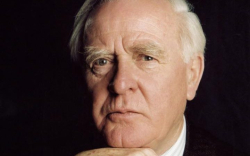
Le Carre is our greatest living author because he gets humans

Natasha Cooper in The Telegraph:

Cumming,-Le-Carre-large_trans++iwqBqhyUMy2ijIogC-Oc2OSEE34CvIFYgaVsQTrDMTkHave we ever loved John le Carré as much as we do now? After the huge success of The Night Manager, The Spy Who Came in from the Cold will now be adapted as a television series. This a fortnight after it was confirmed that Gary Oldman will reprise his role as George Smiley in the film sequel to Tinker Tailor Soldier Spy. A quarter of a century after the end of the Cold War, it seems, we cannot get enough of its most famous chronicler.Finally, we in Britain may have realised what that great American writer Philip Roth understood in 1986, when he described A Perfect Spy as “the best English novel since the war”. Is John le Carré, author of enormously popular novels since 1961, when he published Call for the Dead, our greatest living writer?

His standing has been high for years. But he has never been taken as seriously as many “literary writers” with a fraction of his talent. This is partly because his genre is thrillers, but perhaps also because there is a crusading anger about some of his later work that can make it read more as polemic than fiction.There’s no doubt, though, that in his best work he can do everything from high drama to the quietest of domestic misery. He can evoke place in only a few words, and he can be funny. For a writer whose principal subject is betrayal – personal, political, and commercial – this ability to make readers laugh is unexpected. In The Honourable Schoolboy, the third novel in his great Cold War trilogy, The Quest for Karla, le Carré has the undisciplined journalist and spy Jerry Westerby blagging his way into a south-east Asian war zone in a scene of the highest comedy.

More here.

Saturday Poem

Lot’s Wife

They say I looked back out of curiosity.
But I could have had other reasons.
I looked back mourning my silver bowl.
Carelessly, while tying my sandal strap.
So I wouldn't have to keep staring at the righteous nape
of my husband Lot's neck.
From the sudden conviction that if I dropped dead
he wouldn't so much as hesitate.
From the disobedience of the meek.
Checking for pursuers.
Struck by the silence, hoping God had changed his mind.
Our two daughters were already vanishing over the hilltop.
I felt age within me. Distance.
The futility of wandering. Torpor.
I looked back setting my bundle down.
I looked back not knowing where to set my foot.
Serpents appeared on my path,
spiders, field mice, baby vultures.
They were neither good nor evil now–every living thing
was simply creeping or hopping along in the mass panic.
I looked back in desolation.
In shame because we had stolen away.
Wanting to cry out, to go home.
Or only when a sudden gust of wind
unbound my hair and lifted up my robe.
It seemed to me that they were watching from the walls of Sodom
and bursting into thunderous laughter again and again.
I looked back in anger.
To savor their terrible fate.
I looked back for all the reasons given above.
I looked back involuntarily.
It was only a rock that turned underfoot, growling at me.
It was a sudden crack that stopped me in my tracks.
A hamster on its hind paws tottered on the edge.
It was then we both glanced back.
No, no. I ran on,
I crept, I flew upward
until darkness fell from the heavens
and with it scorching gravel and dead birds.
I couldn't breathe and spun around and around.
Anyone who saw me must have thought I was dancing.
It's not inconceivable that my eyes were open.
It's possible I fell facing the city.
.

by Wislawa Szymborska
from View With a Grain of Sand
Harcourt Brace
.

Friday, July 29, 2016

Martha Nussbaum: Anger is the emotion that has come to saturate our politics and culture. Philosophy can help us out of this dark vortex

Martha Nussbaum in Aeon:

ScreenHunter_2131 Jul. 30 09.59There’s no emotion we ought to think harder and more clearly about than anger. Anger greets most of us every day – in our personal relationships, in the workplace, on the highway, on airline trips – and, often, in our political lives as well. Anger is both poisonous and popular. Even when people acknowledge its destructive tendencies, they still so often cling to it, seeing it as a strong emotion, connected to self-respect and manliness (or, for women, to the vindication of equality). If you react to insults and wrongs without anger you’ll be seen as spineless and downtrodden. When people wrong you, says conventional wisdom, you should use justified rage to put them in their place, exact a penalty. We could call this football politics, but we’d have to acknowledge right away that athletes, whatever their rhetoric, have to be disciplined people who know how to transcend anger in pursuit of a team goal.

If we think closely about anger, we can begin to see why it is a stupid way to run one’s life. A good place to begin is Aristotle’s definition: not perfect, but useful, and a starting point for a long Western tradition of reflection. Aristotle says that anger is a response to a significant damage to something or someone one cares about, and a damage that the angry person believes to have been wrongfully inflicted. He adds that although anger is painful, it also contains within itself a hope for payback. So: significant damage, pertaining to one’s own values or circle of cares, and wrongfulness. All this seems both true and uncontroversial. More controversial, perhaps, is his idea (in which, however, all Western philosophers who write about anger concur) that the angry person wants some type of payback, and that this is a conceptual part of what anger is. In other words, if you don’t want some type of payback, your emotion is something else (grief, perhaps), but not really anger.

Is this really right? I think so.

More here.

Poetry and Politics in Myanmar

Rachel Wong in The Point:

ScreenHunter_2130 Jul. 30 09.49After a landslide victory in Myanmar’s national elections last year, Aung San Suu Kyi and the National League for Democracy came to power this February. Among those who took their seats in parliament were eleven poets, many of whom were active during the democracy protests of 1988 and are former political prisoners. Myanmar’s new president is the son of the renowned poet Min Thu Wun. And in a highly publicized trial this year, Maung Saungkha was arrested for defaming the former president in his verses. Circles of poets in traditionalist Mandalay, socialist-realist Pyinmana, cosmopolitan Yangon and elsewhere are debating what it means to write poetry in a time of transition from dictatorship to democracy. Under a state that has abolished censorship, what is the function of a dissident? When the opposition of many years, led by Aung San Suu Kyi, has finally become the ruling power, who forms the new civil society?

Recorded in April at a dinner gathering in the apartment of Point editor Rachel Wong, what follows is a conversation with four writers, publishers and translators from Yangon. Also present were American journalist Maddy Crowell and Point founding editor Jon Baskin.

More here.

Researchers apply quantum theory and Einstein’s special relativity to plasma physics issues

From Phys.org:

PpplappliesqAmong the intriguing issues in plasma physics are those surrounding X-ray pulsars—collapsed stars that orbit around a cosmic companion and beam light at regular intervals, like lighthouses in the sky. Physicists want to know the strength of the magnetic field and density of the plasma that surrounds these pulsars, which can be millions of times greater than the density of plasma in stars like the sun.

Researchers at the U.S. Department of Energy's (DOE) Princeton Plasma Physics Laboratory (PPPL) have developed a theory of plasma waves that can infer these properties in greater detail than in standard approaches. The new research analyzes the plasma surrounding the pulsar by coupling Einstein's theory of relativity with quantum mechanics, which describes the motion of subatomic particles such as the atomic nuclei—or ions—and electrons in plasma. Supporting this work is the DOE Office of Science.

The key insight comes from quantum field theory, which describes charged particles that are relativistic, meaning that they travel at near the speed of light. “Quantum theory can describe certain details of the propagation of waves in plasma,” said Yuan Shi, a graduate student in the Princeton Program in Plasma Physics and lead author of a paper published July 29 in the journal Physical Review A. Understanding the interactions behind the propagation can then reveal the composition of the plasma.

More here.