What’s It Like to See Ideas as Shapes?

Lead_960Alissa Greenberg at The Atlantic:

Jackson sees his thoughts as shapes. Every person he meets, every sentence he reads, and every decision he makes are presented as data points on a kind of continuously moving mental scatter plot, creating figures he compares to constellations. If he were to make a decision about whether to take a new job, for instance, those points might represent salary, location, and cost of living. The lines between them would change depending on how attractive they were to Jackson, creating a unique configuration for each option.

For many people, decision-making is a murky, difficult process. Think it through, go with your gut, follow your heart—there’s a reason the English language features so many ways to talk about groping around in the cellar of the conscience to find the light switch of intuition. But for Jackson, intuition is anything but blind. When he makes a choice, his gut feelings are visually laid out in front of him. He can choose among his options the way others might choose the reddest, glossiest apple from a bowl.

In 2014, Jackson, who now lives in Seattle, designed and released an app with the aim of helping others make decisions. Called ChoiceMap, it helps users weigh the factors in a given decision, using an algorithm to spit out a “perfection score” for each option. Cold hard numbers; no more groping in the darkness. The app, which was rebuilt and re-released in May, helps users view decisions through a mathematical prism. It also serves as a reminder of the distance between people’s perceptions that can never be fully crossed—and as a testament to just how delicate and strange communication is in the first place.

more here.

Wednesday Poem

One Child Has Brown Eyes

One child has brown eyes, one has blue
One slanted, another rounded
One so nearsighted he squints internal
One had her extra epicanthic folds removed
One downcast, one couldn’t be bothered
One roams the heavens for a perfect answer
One transfixed like a dead doe, a convex mirror
One shines double-edged like a poisoned dagger
Understand their vision, understand their blindness
Understand their vacuity, understand their mirth
.
by Marilyn Chin
from Poetry Magazine
.

Class Struggle in Brazil

Social_movements_defend_dilmaWilliam J. Mello and Altemar da Costa Muniz at nonsite:

The political farce perpetrated against the Brazilian people on Sunday, April 17, when the country’s national congress approved the impeachment of President Dilma Rousseff (PT—Partido dos Trabalhadores/Workers Party) is a critical moment in an ongoing class war against the left, labor and the poor. Instead of an exercise in democratic political sovereignty, as the center-right coalition would prefer the rest of the world believe, the congressional vote is a de-facto political coup. The amalgam of rightwing /neoliberal free marketers, with the support of the media, blatantly attacked basic democratic rule of law, as well as the doctrine of “innocent until proven guilty.” Most of all, there is no evidence that a crime was ever committed. The entire process was marked by the manipulation of legal procedures. This is just a small illustration of how far Brazil’s neoliberal representatives are willing to go to undermine popular democracy and working-class power.

The pathetic statements made by rightwing congressmen as they justified their votes in favor of impeachment—“for god, country and family” is just one of the more bizarre (to say the least) justifications too inane to repeat—are scarily similar to right-wing mobilizations of the past, when a U.S. backed military coup seized power in 1964. The current “crisis” in Brazil represents long-term tensions between the interests of important financial sectors (both in the US and Brazil) aligned with right-wing free marketeers and the neoliberal “left”2 all united by the objective of putting an end to the expansive socioeconomic and political policies implemented over the past 13 years, policies that have moved millions of Brazilians out of historical abject poverty while providing greater inclusion for working class organizations in the political decision making process.

more here.

Friedrich Nietzsche, the conqueror with the iron hand

Gavin Jacobson in New Statesman:

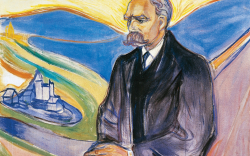
NietzscheIn 1893 Elisabeth Förster-Nietzsche returned to her mother’s adopted home town of Naumburg in Germany. She had been living in Paraguay with her husband, Bernhard Förster, a nationalist and anti-Semite who had founded an Aryan colony to begin “the purification and rebirth of the human race”. Elisabeth’s brother, Friedrich Nietzsche, had condemned her husband’s anti-Semitism and her decision to join him in South America. The experiment failed in any case. Blighted by disease, poor harvests and intercommunal strife, the outpost collapsed in two years. Förster committed suicide in 1889. Around this time, Nietzsche began his final descent into madness and Elisabeth came back to take care of him and his legacy.

Nietzsche’s first book, The Birth of Tragedy, published in 1872 while he was a professor at the University of Basel, received marginal attention. It wasn’t until the 1890s that his writings gained a wide readership across Europe. Elisabeth soon took control of Nietzsche’s literary estate and, little by little, transformed him into an instrument of her fascist designs. She began to rework his notebooks and to clip, cross out and fabricate quotations, so that, in the public imagination, her brother went from an opponent of German nationalism to a lover of the fatherland, from the author of The Antichrist to a follower of the gospel, and from an anti-anti-Semite to a venomous ­Jew-hater. Before his death in 1900, Nietzsche had asked his sister to ensure that “no priest or anyone else utters falsehoods at my graveside, when I can no longer defend myself”. He could not have foreseen this betrayal by Elisabeth, as she cast him as the lodestar of National Socialism.

More here.

Why prolonged sitting may increase risk of death

From Kurzweil AI:

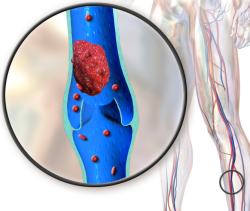
DVTProlonged sitting, such as watching a lot of television every day, may increase your risk of dying from a blood clot in the lung, according to a new open-access research letter published July 26 in the American Heart Association’s journal Circulation. A lung blood clot (pulmonary embolism) usually begins as a clot in the leg or pelvis as a result of inactivity and slowed blood flow (deep vein thrombosis). If the clot breaks free, it can travel to a lung and become lodged in a small blood vessel, where it is especially dangerous. From 1988 to 1990, Japanese researchers asked 86,024 participants, age 40-79, how many hours they spent watching TV. Over the next 19 years, 59 participants died of a pulmonary embolism*.

The researchers found that compared to participants who watched TV less than 2.5 hours each day, deaths from a pulmonary embolism increased by 70 percent among those who watched TV from 2.5 to 4.9 hours; by 40 percent for each additional 2 hours of daily TV watching; and 2.5 times among those who watched TV 5 or more hours. “Pulmonary embolism occurs at a lower rate in Japan than it does in Western countries, but it may be on the rise,” said Hiroyasu Iso, M.D., Ph.D., professor of public health at Osaka University Graduate School of Medicine and study corresponding author. “The Japanese people are increasingly adopting sedentary lifestyles, which we believe is putting them at increased risk.”Authors noted that the risk is likely greater than the findings suggest. Deaths from pulmonary embolism are believed to be underreported because diagnosis is difficult. The most common symptoms of pulmonary embolism — chest pain and shortness of breath — are the same as other life-threatening conditions, and diagnosis requires imaging that many hospitals are not equipped to provide.Other risks factors studied were obesity (the strongest link after hours sitting), diabetes, cigarette smoking, and hypertension.

More here.

Tuesday, August 2, 2016

Jonathan Franzen on Fame, Fascism, and Why He Won’t Write a Book About Race

Isaac Chotiner in Slate:

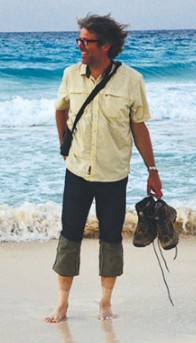
ScreenHunter_2137 Aug. 03 06.39“Manhattan is just all bank branches,” said Jonathan Franzen as he walked through the living room of his home in Santa Cruz, California. When he visits his former neighborhood on the Upper East Side these days, he can only think: “This was a nice grocery store; now it’s a bank. This was a nice liquor store; now it’s a bank.” Santa Cruz, a college town and beach city, suits him better. Franzen’s house, though part of a generic housing development, is perched on a beautiful ravine with a lovely view of both the ocean and the conservation area below. There are plenty of opportunities for birding, which Franzen loves. (When the conversation happened to turn to Jamaica, he casually stated that he had seen 27 of the island’s 29 unique bird species.) He shares the place with his longtime partner, Kathy Chetkovich, also a writer.

I first caught sight of Franzen, casually dressed, picking up his mail outside. Inside, the modest living room is tidy, and less book-heavy than one might expect. Franzen is now 56, but despite his grayish hair and unshaven chin, his face is still boyish. For someone so often characterized as remote or even curmudgeonly, he is strikingly friendly and inquisitive. When I confessed under questioning that I am not a birder, he recommended the practice with passionate generosity, offering specific locations I could visit in my hometown of Oakland, California, and doing so with the sincerity of someone who is not trying to tell you how to behave but rather suggesting something that he believes will genuinely offer you pleasure.

More here.

Crows Continue to Be Terrifyingly Intelligent

Drake Baer in New York Magazine:

ScreenHunter_2136 Aug. 03 06.30About 2,000 miles east of Australia is collection of islands called New Caledonia. The French territory is astonishingly beautiful, but the most astonishing thing about it has got to be the crows. With their beguiling smarts, New Caledonian crows are the valedictorians of the avian world (which is saying a lot, since birds’ have neuron counts on par with apes). New Caledonians can solve certain logic puzzles as well as 7-year-olds do,construct their own tools, and they’ve sussed out that if you drop a stone into a glass of water, it will rise.

Now those New Caledonians have been observed doing yet another holy crap, that’s awesome kind of thing. As reported in New Scientist, the crows have now been seen using tools to carry another object, like slipping a wooden stick into a metal nut. It’s reportedly the first time that a nonhuman animal has been seen inserting one object into another to transport it somewhere. “One subject used a stick to transport an object that was too large to be handled by beak, which suggests the tool facilitated object control,” writes lead author and Lund University cognitive scientist Ivo F. Jacobs and his colleagues. “The function in the other cases is unclear but seems to be an expression of play or exploration.”

More here.

How Comparing Qandeel Baloch to Kim Kardashian West Exposed a Crisis of Feminism in Pakistan

Hamna Zubair in Vogue:

ScreenHunter_2135 Aug. 03 06.25“Pakistan’s Kim Kardashian Murdered by Brother,” screamed headlines a few short hours after news broke that Pakistani social media sensation Qandeel Baloch had been killed on July 15 in her home by her brother, in what authorities have deemed a case of honor killing.

In their scramble to locate Baloch in contemporary discourse on Internet celebrities and women’s empowerment, newspapers in Pakistan and abroad latched onto the nearest comparison that came to mind: Kim Kardashian West. On the surface of it, the comparison seemed apt. Both Kardashian West and Baloch adopted highly sexualized personas on social media. Was it such a stretch to compare a West Coast fashionista who shot to stardom via a sex tape to a Pakistani woman who shook up society with daring selfies?

To many, it was. “She wasn’t rich. She was a working-class woman. Let’s not [compare] her to Kim Kardashian,” said a Pakistani journalist of Baloch soon after these headlines appeared.

And just like that, the floodgates opened for a larger debate about Baloch, one that called into question her feminist credentials. And though comparing Baloch to Kardashian West might in fact be unfair, the debate her persona stirred up is familiar, resembling heated discussions on Kardashian West’s nude selfies—which have everyone from Emily Ratajkowski to Chloë Grace Moretz taking sides—and calling her female empowerment “watered-down feminism.”

More here. [Thanks to Batool Raza.]

How Rousseau Predicted Trump

Pankaj Mishra in The New Yorker:
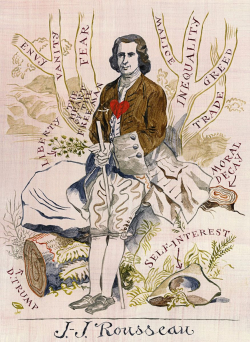
Jj“I love the poorly educated,” Donald Trump said during a victory speech in February, and he has repeatedly taken aim at America’s élites and their “false song of globalism.” Voters in Britain, heeding Brexit campaigners’ calls to “take back control” of a country ostensibly threatened by uncontrolled immigration, “unelected élites,” and “experts,” have reversed fifty years of European integration. Other countries across Western Europe, as well as Israel, Russia, Poland, and Hungary, seethe with demagogic assertions of ethnic, religious, and national identity. In India, Hindu supremacists have adopted Rush Limbaugh’s favorite epithet “libtard” to channel righteous fury against liberal and secular élites. The great eighteenth-century venture of a universal civilization harmonized by rational self-interest, commerce, luxury, arts, and science—the Enlightenment forged by Voltaire, Montesquieu, Adam Smith, and others—seems to have reached a turbulent anticlimax in a worldwide revolt against cosmopolitan modernity. No Enlightenment thinker observing our current predicament from the afterlife would be able to say “I told you so” as confidently as Jean-Jacques Rousseau, an awkward and prickly autodidact from Geneva, who was memorably described by Isaiah Berlin as the “greatest militant lowbrow in history.” In his major writings, beginning in the seventeen-fifties, Rousseau thrived on his loathing of metropolitan vanity, his distrust of technocrats and of international trade, and his advocacy of traditional mores. Voltaire, with whom Rousseau shared a long and violent animosity, caricatured him as a “tramp who would like to see the rich robbed by the poor, the better to establish the fraternal unity of man.” During the Cold War, critics such as Berlin and Jacob Talmon presented Rousseau as a prophet of totalitarianism. Now, as large middle classes in the West stagnate and billions elsewhere move out of poverty while harboring unrealizable dreams of prosperity, Rousseau’s obsession with the psychic consequences of inequality seems even more prophetic and disturbing.

Rousseau described the quintessential inner experience of modernity: being an outsider. When he arrived in Paris, in the seventeen-forties, at the age of thirty, he was a deracinated looker-on, struggling with complex feelings of envy, fascination, revulsion, and rejection provoked by a self-absorbed élite. Mocked by his peers in France, he found keen readers across Europe. Young German provincials such as the philosophers Johann Gottlieb Fichte and Johann Gottfried von Herder—the fathers, respectively, of economic and cultural nationalism—simmered with resentment toward cosmopolitan universalists. Many small-town revolutionaries, beginning with Robespierre, have been inspired by Rousseau’s hope—outlined in his book “The Social Contract” (1762)—that a new political structure could cure the ills of an unequal and commercial society. In the past decade, a number of books have asserted Rousseau’s centrality and uniqueness. Leo Damrosch’s biography, “Restless Genius” (2005), identified Rousseau as “the most original genius of his age—so original that most people at the time could not begin to appreciate how powerful his thinking was.” Last year, István Hont, in “Politics in Commercial Society,” a comparative study of Rousseau and Adam Smith, argued that we have not moved much beyond Rousseau’s fears and concerns: that a society built around self-interested individuals will necessarily lack a common morality. Heinrich Meier, in his new book, “On the Happiness of the Philosophic Life” (Chicago), offers an overview of Rousseau’s thought through a reading of his last, unfinished book, “Reveries of a Solitary Walker,” which he began in 1776, two years before his death. In “Reveries,” Rousseau moved away from political prescriptions and cultivated his belief that “liberty is not inherent in any form of government, it is in the heart of the free man.”

More here.

postcard from Dorchester County

Bazzle-e1468518077736-1024x764Katie Ryder at Harper's Magazine:

I first came to Dorchester County, Maryland, ten years ago, following signs proclaiming the birthplace of Harriet Tubman. I landed at a field known as the Brodess Farm, where Tubman was not, in fact, born, but lived for a time in her childhood and adolescence. It was summer then, hot and dry, and the shin-high plants in the field were brown and brittle. A stamped metal placard that had been posted by the state government in the 1960s briefly summarized the life of Tubman—“‘the Moses of her people’”—and a white farmhouse sat some distance beyond a padlocked gate.

Following the announcement in April that Tubman would replace Andrew Jackson on the face of the twenty-dollar bill (at an unconfirmed date in the distant future), I returned to the Eastern Shore. At the Brodess Farm, where trees now flushed green against a gray sky, a new color-printed placard designated the site as part of the Harriet Tubman Underground Railroad Byway—a 125-mile driving tour stretching north from Dorchester to Caroline County and up to the Delaware border. Unveiled in its newest form in 2013, the Byway features forty-two locations with historical significance to Tubman’s life or to the Underground Railroad, and is one of four recent honors for Tubman in the area, including a national monument and a state and National Historical Park in the works.

more here.

letters from a Parkomaniac

1bc92dd0-1725-4c2e-b9ac-b07c77be4bf8Leslie Pitchell at Literary Review:

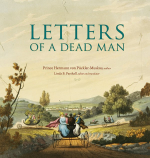
Prince Hermann von Pückler-Muskau is not a name that trips lightly off the tongue, or, indeed, is widely known at all. This is a great pity. As this handsomely produced and, in all senses, weighty book proves, he was a traveller whose company can only be relished. His observations, here presented in letters home, are critical of what he finds distasteful and admiring of the congenial. He is sharp, witty and has an ear for a good story. What more could be asked of a companion?

In 1826, the prince faced bankruptcy. A self-styled ‘parkomaniac’, he had ruined himself by trying to turn several square miles of sand and pine forest in Muskau in Silesia into English parkland. In the process, he had gone through his own patrimony and his wife’s dowry. Something drastic was called for and a dramatic scheme was decided on. He and his adored wife, his ‘precious and constant one’, would divorce. Once free, the prince would set off for England to find a new, rich wife, who would be brought back to Muskau to live in harmony with the old one. It would be a very original variation on the ménage à trois.

He was to pursue his Dulcinea in England for just over two years. That country was chosen quite simply because it was the richest in Europe, and allegedly awash with heiresses. The prince openly admitted that his journey owed everything ‘to the profound respect we all have … for English money’.

more here.

Setting the Body’s ‘Serial Killers’ Loose on Cancer

Andrew Pollack in The New York Times:

CancerThe young surgeon was mystified. A fist-size tumor had been removed from the stomach of his patient 12 years earlier, but his doctors had not been able to cut out many smaller growths in his liver. The cancer should have killed him, yet here he lay on the table for a routine gallbladder operation. The surgeon, Dr. Steven A. Rosenberg, examined the man’s abdominal cavity, sifting his liver in his fingers, feeling for hard, dense tumors — but he could find no trace of cancer. It was 1968. Dr. Rosenberg had a hunch he had just witnessed an extraordinary case in which a patient’s immune system had vanquished cancer. Hoping there was an elixir in the man’s blood, Dr. Rosenberg got permission to transfuse some of it into a patient dying of stomach cancer. The effort failed. But it was the beginning of a lifelong quest. “Something began to burn in me,” he would write later, “something that has never gone out.” Half a century later, Dr. Rosenberg, who turns 76 on Tuesday and is chief of surgery at the National Cancer Institute here, is part of a small fraternity of researchers who have doggedly pursued a dream — turbocharging the body’s immune system so that more cancer patients can experience recoveries like his long-ago patient’s.

Dr. Rosenberg, Dr. Carl H. June of the University of Pennsylvania and Dr. Michel Sadelain of Memorial Sloan Kettering Cancer Center have been at the forefront of this research for decades, laboring in separate labs in an intense sometimes-cooperative, sometimes-competitive pursuit to bring to fruition a daring therapy that few colleagues believed would work. Now, versions of the therapy for a limited number of blood cancers are nearing approval by federal regulators, and could reach the market as early as next year. The technique, known as cell therapy, gives each patient an individualized and souped-up version of their own immune system, one that “works better than nature made it,” as Dr. June puts it. The patient’s T-cells, the soldiers of the immune system, are extracted from the patient’s blood, then genetically engineered to recognize and destroy cancer. The redesigned cells are multiplied in the laboratory, and millions or billions of them are put back into the patient’s bloodstream, set loose like a vast army of tumor assassins. This is an unusual pharmaceutical — a drug that is alive and can multiply once inside the body. Dr. June calls these cells “serial killers.” A single one can destroy up to 100,000 cancer cells.

More here.

Tuesday Poem

For Mohammed Zeid of Gaza, Age 15

There is no stray bullet, sirs.
No bullet like a worried cat
crouching under a bush,
no half-hairless puppy bullet
dodging midnight streets.
The bullet could not be a pecan
plunking the tin roof,
not hardly, no fluff of pollen
on October’s breath,
no humble pebble at our feet.

So don’t gentle it, please.

We live among stray thoughts,
tasks abandoned midstream.
Our fickle hearts are fat
with stray devotions, we feel at home
among bits and pieces,
all the wandering ways of words.

But this bullet had no innocence, did not
wish anyone well, you can’t tell us otherwise
by naming it mildly, this bullet was never the friend
of life, should not be granted immunity
by soft saying—friendly fire, straying death-eye,
why have we given the wrong weight to what we do?

Mohammed, Mohammed, deserves the truth.
This bullet had no secret happy hopes,
it was not singing to itself with eyes closed
under the bridge.
.

by Naomi Shihab Nye
from Poetry Center at Smith College
.

Monday, August 1, 2016

Sunday, July 31, 2016

Ghazala Khan: Trump criticized my silence. He knows nothing about true sacrifice

Ghazala Khan in the Washington Post:

Ghazala-khan-fires-back-at-trump-shares-story-of-losing-her-son-to-warDonald Trump has asked why I did not speak at the Democratic convention. He said hewould like to hear from me. Here is my answer to Donald Trump: Because without saying a thing, all the world, all America, felt my pain. I am a Gold Star mother. Whoever saw me felt me in their heart.

Donald Trump said I had nothing to say. I do. My son Humayun Khan, an Army captain, died 12 years ago in Iraq. He loved America, where we moved when he was 2 years old. He had volunteered to help his country, signing up for the ROTC at the University of Virginia. This was before the attack of Sept. 11, 2001. He didn’t have to do this, but he wanted to.

When Humayun was sent to Iraq, my husband and I worried about his safety. I had already been through one war, in Pakistan in 1965, when I was just a high school student. So I was very scared. You can sacrifice yourself, but you cannot take it that your kids will do this.

More here.

Why Growth Will Fall

Nordhaus_1-081816

William D. Nordhaus reviews Robert J. Gordon's The Rise and Fall of American Growth in The New York Review of Books:

Robert Gordon has written a magnificent book on the economic history of the United States over the last one and a half centuries. His study focuses on what he calls the “special century” from 1870 to 1970—in which living standards increased more rapidly than at any time before or after. The book is without peer in providing a statistical analysis of the uneven pace of growth and technological change, in describing the technologies that led to the remarkable progress during the special century, and in concluding with a provocative hypothesis that the future is unlikely to bring anything approaching the economic gains of the earlier period.

The message of Rise and Fall is this. For most of human history, economic progress moved at a crawl. According to the economic historian Bradford DeLong, from the first rock tools used by humanoids three million years ago, to the earliest cities ten thousand years ago, through the Middle Ages, to the beginning of the Industrial Revolution around 1800, living standards doubled (with a growth of 0.00002 percent per year). Another doubling took place over the subsequent period to 1870. Then, according to standard calculations, the world economy took off.

Gordon focuses on growth in the United States. Living standards, as measured by GDPper capita or real wages, accelerated after 1870. The growth rate looks like an inverted U. Productivity growth rose from the late nineteenth century and peaked in the 1950s, but has slowed to a crawl since 1970. In designating 1870–1970 as the special century, Gordon emphasizes that the period since 1970 has been less special. He argues that the pace of innovation has slowed since 1970 (a point that will surprise many people), and furthermore that the gains from technological improvement have been shared less broadly (a point that is widely appreciated and true).

A central aspect of Gordon’s thesis is that the conventional measures of economic growth omit some of the largest gains in living standards and therefore underestimate economic progress. A point that is little appreciated is that the standard measures of economic progress do not include gains in health and life expectancy. Nor do they include the impact of revolutionary technological improvements such as the introduction of electricity or telephones or automobiles. Most of the book is devoted to describing many of history’s crucial technological revolutions, which in Gordon’s view took place in the special century. Moreover, he argues that the innovations of today are much narrower and contribute much less to improvements in living standards than did the innovations of the special century.

More here.

In praise of Dewey

Dewey

Nicholas Tampio in Aeon:

Did you attend a public school in the United States and perform in a school play, take field trips, or compete on a sports team? Did you have a favourite teacher who designed their own curriculum, say, about the Civil War, or helped you find your particular passions and interests? Did you take classes that were not academic per se but that still opened your eyes to different aspects of human experience such as fixing cars? Did you do projects that required planning and creativity? If the answer to any of these questions is yes, then you are the beneficiary of John Dewey’s pedagogical revolution.

Dewey put forth the philosophy of education that would change the world inDemocracy and Education, a book that turns 100 this year. Dewey’s influence is far-reaching, but his pedagogy has been under assault for at least a generation. The United States Department of Education report A Nation at Risk (1983) signalled the rise of the anti-Dewey front, under the somewhat misleading name of the ‘education reform’ movement. The report warns that other countries will soon surpass the US in wealth and power because ‘a rising tide of mediocrity’ engulfs schools in the US. The problem, according to the report, is that US education is ‘an often incoherent, outdated patchwork quilt’. The education reform movement aims to replace that ‘patchwork quilt’ – mostly made by local school boards, teachers and parents – with a more uniform system based on national standards.

The political right has often led the charge against Dewey’s legacy. In 1897, Dewey described his ‘pedagogic creed’ as ‘individualistic’ and ‘socialistic’ because it sees the need to nurture each child’s unique talents and interests in a supportive community. For both the business community and traditional-values conservatives, Dewey’s pedagogy fails to train workers, and inculcates liberal, even socialistic values.

More here.

Noise Is a Drug and New York Is Full of Addicts

9952_74765968c67007219b197f4d9aafb4e2

Susie Neilson in Nautilus:

What am I detoxing from? Noise. I live in the East Village, which is very noisy—illegally noisy. Last year, Jackie Le and Matthew Palmer, acoustics engineering students at Cooper Union, decided to investigate the noise levels of the area near their school for their senior project. Le and Palmer went to various apartments around this neighborhood and, using a decibel meter, calculated the average level of volume coming in through the open windows of multiple apartments, and compared them with “safe” levels defined by New York City’s recently-revised noise code. “In every instance, we found the noise coming into these people’s apartments was above code,” Le says.

I can vouch for this. I’ve spent this whole year telling anyone who will listen that the hundreds of nights I’ve spent trying to fall asleep in my apartment constitute a Sisyphean Hell of endurance: the iterating, irritating garbage trucks, the construction that starts at promptly 6 a.m. and continues into evening. I make a lot of noise about the noise, and I’m not the only one. Noise is the single greatest quality-of-life complaint New Yorkers have (we lodged 18,000 phone complaints with the Department of Environmental Protection last July alone). We all love to hate the noise. And yet sitting in silence, I do not feel as if I’ve found an escape from pain: I have simply traded it for a new variety. Shockingly, I realize I want to trade back.

In this city of complainers, who could admit to loving something so easy to complain about? Lewis Black, a comedian, couches his praise of noise in a cynical one-liner, noting dryly, “The reason I live in New York City is because it’s the loudest city on the planet Earth. It’s so loud I never have to listen to any of the shit that’s going on in my own head.”

Black might be on to something. Noise can cause us distress and pain, but it can also help us think, perceive, remember, and be more creative. It turns out that it’s even necessary for our physiological and mental functioning. If it’s a drug, then it’s a performance drug. And New York is full of addicts.

More here.