Burn after Reading: On Writerly Self-Immolation

BurningNick Ripatrazone at The Millions:

Gerard Manley Hopkins burned all of his poems before becoming a priest. He called his act the “slaughter of the innocents.” Jesuits begin their study with a two-year novitiate period, during which Hopkins did not write a single line of verse — in fact, he would only write fragments for the next seven years.

Hopkins struggled with the divergent pulls of poetry and prayer. That tension coaxed his best and most unique material. A sensitive ascetic with a wild soul and progressive syntax, he praised God by finding the divine in all things. The burning of his verse was not the end of his poetic life, but a cleansing and rebirth by fire: the start of a long, imperfect struggle.

We burn old love letters and photographs to be reborn. The action of burning is often a process. Find a match or a lighter. Put the papers in a container or can or shove them in a fireplace. There are so many moments along the way when we can have second thoughts, when we can decide to put memories in a drawer rather than reduce them to ash, but it is so tempting and comforting to watch the flames swallow our pain.

Hopkins is not the only writer to set fire to his creations. According to his biographers, Franz Kafka burned nearly 90 percent of his life’s work—and requested that more be burned upon his death (it wasn’t).

more here.
The visualizations transforming biology

Ewen Callaway in Nature:

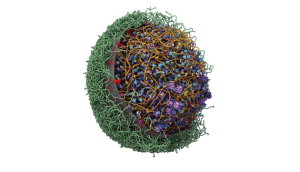
Mycoplasma2A smart visualization can transform biologists' understanding of their data. And now that it's possible to sequence every RNA molecule in a cell or fill a hard drive in a day with microscopy images, life scientists are increasingly seeking inventive visual ways of making sense of the glut of raw data that they collect. Some of the visualizations that are currently exciting biologists were presented at a conference at the European Molecular Biology Laboratory in Heidelberg, Germany, in March. Called Visualizing Biological Data (VIZBI), the meeting was co-organized by Seán O'Donoghue, a bioinformatician at the Garvan Institute of Medical Research in Sydney, Australia. The gathering attracts an eclectic mix of lab researchers, computer scientists and designers and is now in its seventh year.

…To make cellular model-making more systematic, Johnson developed a tool called cellPACK. To use it, researchers use experimental data to create a series of physical rules (a 'recipe') by which defined cellular components such as proteins, lipids and nucleic acids (the 'ingredients') fill a space. Johnson would like to create a platform such that the models are automatically updated when new data are generated. But despite lots of interest from other researchers, most life scientists find that the tool requires too much time and effort to be very practical. “It's months of research to generate a recipe from scratch,” says Johnson, who plans to release a more streamlined web version of the software later this year. The tool isn't just for making visually striking models, he emphasizes. It can also help scientists to come up with testable hypotheses. His team created a model of the internal structure of HIV and used it to predict how the protein that forms the outer shell interacts with an internal protein.

More here.

Wednesday Poem

In the Leupold Scope

With a 40X60mm spotting scope
I traverse the Halabjah skyline,
scanning rooftops two thousand meters out
to find a woman in sparkling green, standing
among antennas and satellite dishes,
hanging laundry on an invisible line.

She is dressing the dead, clothing them
as they wait in silence, the pigeons circling
as fumestacks billow a noxious black smoke.
She is welcoming them back to the dry earth,
giving them dresses in tangerine and teal,
woven cotton shirts dyed blue.

She waits for them to lean forward
into the breeze, for the wind’s breath
to return the bodies they once had,
women with breasts swollen by milk,
men with shepherd-thin bodies, children
running hard into the horizon’s curving lens.
.

by Brian Turner
from Here Bullet
Alice James Books, 2005

>

Tuesday, July 5, 2016

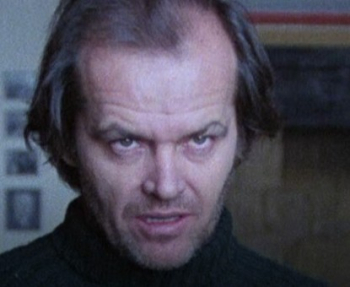
Why ‘The Shining’ Still Terrifies Us

Lisa Rosman in Signature:

ScreenHunter_2078 Jul. 05 20.52“The Shining” may have been released thirty-six years ago, but it still occupies as much real estate in our cultural imagination as it did when it first lurched into theaters on a wave of gushing blood and geometric wallpaper. The documentary “Room 237” (2012) explored the myriad theories and rumors surrounding the hotel horror flick to a groundswell of ballyhoo. Earlier this year, mainstream news outlets reported that a paranormal expert had claimedhe’d seen two ghostly figures in a photo taken at the Colorado hotel where the film was shot. And a pivotal moment in this season’s finale of “Girls”referenced the film’s classic “Heeere’s Johnny” scene. There may be no clearer indication of zeitgeist status than a hat tip from Mz. Lena Dunham.

Unlike many cult favorites (hello, “Lebowski), “The Shining” knocked most everyone’s socks off from the get-go – even when theyacknowledged its flaws. It was that rarest of things: an improvement, rather than a shoddy adaptation, of a Stephen King novel, not to mention a Stanley Kubrick film that eschewed the director’s characteristically icy elegance for over-the-top violence. The film vibrated, really, with a red, red rage. Or was that red rum?

As an ‘80s kid, I knew about “The Shining” for years before I ever got to see it: You only had to growl “red rum” at a slumber party, and no one was going to sleep a wink.

More here.

A Conversation With Behavioral Geneticist Robert Plomin

From Edge.org:

ScreenHunter_2077 Jul. 05 20.44The field I do research in is called behavioral genetics, which means the genetics of behavior, just like medical genetics means the genetics of medicine. I'm a behavioral scientist, so that's why I study it. But it also has some interesting implications from a larger science point of view. We study things like reading disability and schizophrenia. These are among the most complex traits that can be studied, but they're also very important. You don't have to explain to someone why you're trying to understand the origins of reading disabilities or schizophrenia, any of these things we study. It's not as arcane as some fields.

People understand heredity. When we talk about heredity, we're talking about eye color, hair color, height, those differences among us that are caused by DNA differences we inherit at the moment of conception. Behavioral genetics uses genetics to understand behavior. That's different from what a biologist would do, or a geneticist.

What I'm excited about now is the impact of the DNA revolution on the behavioral sciences and on society. It's an endgame for me, in terms of forty years of my research looking at genetic influences in the behavioral sciences. It's good to look at this in the perspective of forty years, and it's personal to me because it's been my journey. It might be hard for people to believe this, but forty years ago it was dangerous to talk about genetic influence in psychology.

More here.

Grammatical Gender and Transgender Identity

Justin E. H. Smith in his own blog:

ScreenHunter_2076 Jul. 05 20.40Some English-speakers have been hailing the recent mainstream campaign to eliminate gender-specific pronouns in Swedish. A few Anglophones, though far from the mainstream, have also been seeking for some years now to implement neologistic gender-neutral replacements for ‘he’ and ‘she’. The Swedish case in particular has been held to be a reflection of that society’s relative progressiveness in the politics of gender. What is missed here, out of ignorance or wilful avoidance, is that there are many languages in which gendered pronouns have either gone extinct or were never used in the first place, and which are spoken in societies that are hardly known for their gender egalitarianism: for example, Persian or Turkmen. Somehow, even without access to ‘she’ or ‘her’, but only an all-purpose ‘he/she/it’, Iranian courts manage to sentence women to death by stoning for ‘adultery’. We might just as well predict that Swedish society would take up lapidation and anti-adultery laws as a result of the elimination of gendered pronouns, as that it would thereby draw closer to full gender equality.

Both predictions are absurd. And yet, this interest in gendered personal pronouns does at least remind us of a way of thinking about grammatical gender that is generally underemphasised by linguists and language instructors: that the masculine and feminine genders of pronouns, and more interestingly of nouns, reflects a division of the cosmos into categories that radiate out from the sexual dimorphism of human bodies. In English there is only vestigial gender for substantive terms for non-biological entities: ships, sometimes countries, sometimes sportscars, are ‘she’. In French, every noun is masculine or feminine, sometimes in ways that seem arbitrary. What is it, for example, about abstractions, such as those words ending in -ité or -tion, that is inherently feminine?

More here.

THE isreali OCCUPATION’S HUMILIATION MACHINE

ZaytounBen Ehrenreich at Literary Hub:

After the turnstile came another turnstile. We were being sorted. Some of the turnstiles were more than six feet tall and barred from top to bottom, a sort of revolving door-cum-cage. Some were the waist-high kind you pass through in subways or public libraries. Except that military engineers had these ones custom-built for checkpoints, specially fitted with arms more than 25 percent shorter than the ones used in Israel. The pretext, as always, was security, so that no one could sneak by with bulky explo
sives. But the turnstiles served another function as well, a more important 
one, and it was standing between them in that dank, longitudinal cell—pressed against the people in front of and behind me, smelling the smoke of 
their cigarettes and the anxiety and irritation in their sweat and their 
breath—that I understood for the first time that in its daily functioning, the 
prime purpose of the occupation was not to take land or push people from 
their homes. It did that too of course, and effectively, but overall, with its 
checkpoints and its walls and its prisons and its permits, it functioned as a 
giant humiliation machine, a complex and sophisticated mechanism for the 
production of human despair.

That was the battle. The land mattered to everyone, but despite all the 
nationalist anthems and slogans, the harder fight was the struggle to simply stand and not be broken. It was no accident that clashes tended to occur 
at checkpoints, and it wasn’t just at the soldiers manning them that people 
threw stones. It was at the entire, cruel machine that the soldiers both 
guarded and stood in for, and its grinding insistence that they accept their 
defeat.[1] They knew—even the kids knew—that they couldn’t break it or 
even dent it and they usually couldn’t even hit it, but by fighting, by dancing and dodging fast enough and with sufficient wit and furor, they could 
avoid being caught in its gears. For a while they could, or they could try to.

more here.

Abbas Kiarostami, Palme d’Or-winning Iranian film-maker, dies aged 76

KiarostamiAndrew Pulver and Saeed Kamali Dehghan at The Guardian:

Kiarostami’s rise to the status of one of the world’s foremost auteurs started from relatively humble beginnings. He was born in 1940 in Tehran, and originally studied painting at the University of Tehran; Kiarostami began working as a graphic designer and went on to shoot dozens of commercials for Iranian TV. In 1969 he joined Kanun (the Centre for the Intellectual Development of Children and Young Adults), where he ran the film department, and was able to make his own films. In 2005 Kiarostami told the Guardian: “We were supposed to make films that dealt with childhood problems. At the beginning it was just a job, but it was the making of me as an artist.”

In the two decades he worked for Kanun, Kiarostami made films continuously, including his first feature, The Report, in 1977. He managed to negotiate the transition triggered by the Khomeini revolution, re-working the films he made to try and accommodate the demands of a new set of censors. Unlike many of his film-industry peers, Kiarostami decided to remain in Iran after the revolution, likening himself to “a tree that is rooted in the ground”. “[If you] transfer it from one place to another, the tree will no longer bear fruit … If I had left my country, I would be the same as the tree.”

more here.

The strange death of liberal politics

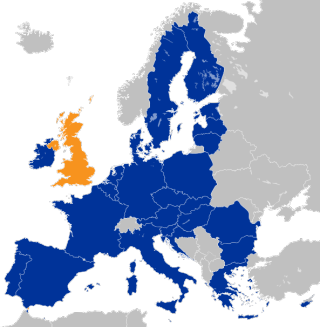
BrexitJohn Gray at The New Statesman:

As it is being used today, “populism” is a term of abuse applied by establishment thinkers to people whose lives they have not troubled to understand. A revolt of the masses is under way, but it is one in which those who have shaped policies over the past twenty years are more remote from reality than the ordinary men and women at whom they like to sneer. The interaction of a dysfunctional single currency and destructive austerity policies with the financial crisis has left most of Europe economically stagnant and parts of it blighted with unemployment on a scale unknown since the Thirties. At the same time European institutions have been paralysed by the migrant crisis. Floundering under the weight of problems it cannot solve or that it has even created, the EU has demon­strated beyond reasonable doubt that it lacks the ­capacity for effective action and is incapable of reform. As I suggested in this magazine in last year (“The neo-Georgian prime minister”, 23 October 2015), Europe’s image as a safe option has given way to the realisation that it is a failed experiment. A majority of British voters grasped this fact, which none of our establishments has yet understood.

No single leader or party is responsible for the debacle of the Remain camp. It is true that gross errors were made in the course of the campaign. Telling voters who were considering voting Leave that they were stupid, illiterate, xenophobic and racist was never going to be an effective way of persuading them to change their views. The litany of insults voiced by some leaders of the Remain campaign expressed their sentiments towards millions of ordinary people. It did not occur to these advanced minds that their contempt would be reciprocated. Increasingly callow and blundering even as they visibly aged in office, Cameron and George Osborne were particularly inept in this regard.

more here.

Voltaire’s Luck: The French philosopher outsmarts the lottery

Roger Pearson in Lapham's Quarterly:

VoltairIt was once said of Voltaire, by his friend the Marquis d’Argenson, that “our great poet forever has one foot on Mount Parnassus and the other in the rue Quincampoix.” The rue Quincampoix was the Wall Street of eighteenth-century Paris; the country’s most celebrated writer of epic and dramatic verse had a keen eye for investment opportunities. By the time d’Argenson made his remark, in 1751, Voltaire had amassed a fortune. He owed it all to a lottery win. Or, to be more precise, to several wins. Lotteries were all the rage in eighteenth-century Paris. There had been a financial crisis in 1719, and France had nearly gone bankrupt. The bankers were to blame, having devised financial instruments that magicked debt away, only for it to return multiplied once it was discovered that the collateral wasn’t there. With the ensuing austerity came the lottery and the blandishments of la bonne chance. Why tax a weary and resistant populace when luck might seduce them?

…In fact, Voltaire made his own luck. One surviving piece of documentary evidence records that Voltaire “acquired all the ticket books on payment of a deposit without filling them in.” Clearly he had an understanding of sorts with the notaries appointed to sell the tickets, and it seems that he did not have to pay the full price of the tickets, so certain were he and his associates—and perhaps the notaries selling the tickets, presumably cut in on the action—of winning. The records for each successive draw up to and including February 1730 still exist. While the draw of January 8 shows a wide disparity in the redeemable value of the winning tickets (as intended by the original terms of the lottery), already in February there is a marked rise in the number of winning tickets redeemable for the minimum bond value of 1,000 livres, several of them registered to the same owner. La Condamine himself is recorded by name as the owner of thirteen winning tickets that had cost him only one livre each but which now entitled him to the sum of 13,000 livres.

More here.

Consciousness: The Mind Messing With the Mind

George Johnson in The New York Times:

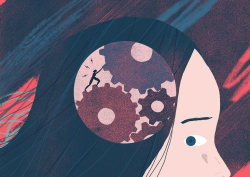
BrainA paper in The British Medical Journal in December reported that cognitive behavioral therapy — a means of coaxing people into changing the way they think — is as effective as Prozac or Zoloft in treating major depression. In ways no one understands, talk therapy reaches down into the biological plumbing and affects the flow of neurotransmitters in the brain. Other studies have found similar results for “mindfulness” — Buddhist-inspired meditation in which one’s thoughts are allowed to drift gently through the head like clouds reflected in still mountain water. Findings like these have become so commonplace that it’s easy to forget their strange implications.

Depression can be treated in two radically different ways: by altering the brain with chemicals, or by altering the mind by talking to a therapist. But we still can’t explain how mind arises from matter or how, in turn, mind acts on the brain. This longstanding conundrum — the mind-body problem — was succinctly described by the philosopher David Chalmers at a recent symposium at The New York Academy of Sciences. “The scientific and philosophical consensus is that there is no nonphysical soul or ego, or at least no evidence for that,” he said. Descartes’s notion of dualism — mind and body as separate things — has long receded from science. The challenge now is to explain how the inner world of consciousness arises from the flesh of the brain. Michael Graziano, a neuroscientist at Princeton University, suggested to the audience that consciousness is a kind of con game the brain plays with itself. The brain is a computer that evolved to simulate the outside world. Among its internal models is a simulation of itself — a crude approximation of its own neurological processes. The result is an illusion. Instead of neurons and synapses, we sense a ghostly presence — a self — inside the head. But it’s all just data processing.

More here.

Monday, July 4, 2016

Sunday, July 3, 2016

Robert Pinsky: In Praise of Memorizing Poetry—Badly

Robert Pinsky in Slate:

ScreenHunter_2070 Jul. 03 19.49Mistakes are instructive. In particular, they can become a form of analysis, as, for example, in sports or music, when getting something a little bit wrong leads to improvement in technique or understanding.

Many of us, in the imperfect memorizing of a poem, make mistakes, too—as though we were folk singers or blues artists, but without the traditional flexibility of those forms. Is it “many recognitions dim and faint,” you might ask yourself, or “many recognitions sad and faint”? And, before you can find the authoritative book and check, which one do you prefer? And why?

A dramatic demonstration of this principle came to me on a hike in the mountains years ago.

More here.

The 18th-century thinkers behind laissez-faire economics saw slavery as a great example of global free trade

Blake Smith in Aeon:

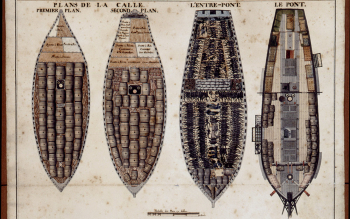
Header_V1-Essay-FINAL-2005.3.1For nearly four centuries, the Atlantic slave trade brought millions of people into bondage. Scholars estimate that around 1.5 million people perished in the brutal middle passage across the Atlantic. The slave trade linked Africa, Europe and the Americas in a horrific enterprise of death and torture and profit. Yet, in the middle of the 18th century, as the slave trade boomed like never before, some notable European observers saw it as a model of free enterprise and indeed of ‘liberty’ itself. They were not slave traders or slave-ship captains but economic thinkers, and very influential ones. They were a pioneering group of economic thinkers committed to the principle of laissezfaire: a term they themselves coined. United around the French official Vincent de Gournay (1712-1759), they were among the first European intellectuals to argue for limitations on government intervention in the economy. They organised campaigns for the deregulation of domestic and international trade, and they made the slave trade a key piece of evidence in their arguments.

More here.

The Discovery of Chance: The Life and Thought of Alexander Herzen

Herzen

Robin Feuer Miller reviews Aileen Kelly’s new biography of Herzen in Times Higher Education:

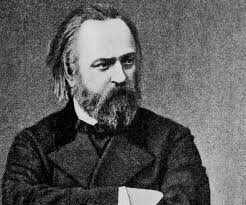
Who was Alexander Herzen (1812-1870)? Why has this most important and courageous Russian thinker remained among the least famous, the least read? Yet he figures at the centre of Tom Stoppard’s magnificent trilogy of plays, The Coast of Utopia, is fundamental to Isaiah Berlin’s thought, and now is the subject of Aileen Kelly’s magisterial new biography. Herzen, like John Dewey, was witness to the complexities of his century; a man whose ideas constantly evolved, at the centre of often tragic family and extramarital relationships, the author of far-reaching essays and an autobiography, My Past and Thoughts, generally acknowledged to be a masterwork of Russian prose and one of the great autobiographies of all time. Kelly offers us a new Herzen to consider – not the last of the Romantics, or the radical Russian exile, but the man inspired since boyhood by science and the natural world. Tracing Herzen’s thought through this lens, she places Herzen firmly and unexpectedly within a line of thinkers from Francis Bacon to Charles Darwin.

Along the way, Kelly depicts Herzen’s fascinating early years. Drawing on an impressive array of scholarly and archival materials, she forges a vivid account of the University of Moscow of the day. His friendship with an eccentric cousin known as The Chemist inspired Herzen, surprisingly, to enrol in the Faculty of Physical and Mathematical Sciences, a decision that shaped his thought. Thus Kelly understands his subsequent disillusionment with the upheavals of 1848 as being partly rooted in his sustained interest in science and the natural world rather than simply reflecting a rejection of Romantic political ideals.

Herzen lived primarily in exile – in Italy, France, England and Switzerland; he left Russia at 34, having spent six years in prison and internal exile, never to return. Eventually his complex political opinions alienated him from contemporary Russian writers such as Ivan Turgenev, Vissarion Belinsky, Nikolai Chernyshevsky and Fyodor Dostoevsky, although an admiring Leo Tolstoy wrote, “Our Russian lives…would have been different if this writer had not been hidden from the young generation.” Kelly demonstrates how Herzen’s From the Other Shore anticipates principles affirmed a decade later by Darwin’s On the Origin of Species. She situates Herzen within a “demythologizing tradition in European humanism”. His passionate attack on “philosophies of progress” and his “interest in scientific modes of inquiry and their relevance to the study of history” made him among the first to appreciate Darwin’s discovery of the role of chance in evolution as a “momentous step toward dismantling teleological systems that misrepresent the world and humans’ place in it”. He wrote to his son Sasha about his admiration for Darwin’s relegation of causes that science did not yet understand to a “black box”: “Now there’s an honest thinker…whereas others, as soon as they come up against something they can’t solve, invent a new force, such as a soul.”

More here.

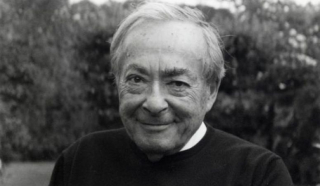
George Steiner’s Europe

Steiner_George600

Matthew Boudway in Commonweal:

THE QUESTION “WHITHER EUROPE” has been asked so often that it has become a clichéd subcategory of another cliché, the headline writer’s “Whither X?” A Google search for “Whither Europe?” turns up more than six thousand uses of the phrase. People were asking the question after World War I and again after World War II; they asked it at the birth of the European Union and have been asking it, again and again, in the wake of debt crises that have threatened to tear that union apart. Last May the historian James J. Sheehan tried to answer the question in the pages ofCommonweal—although the editors fastidiously avoided the word “whither” in the headline (we settled for “A Continent Adrift”).

The title of George Steiner’s recent book is The Idea of Europe, but there is a strong whiff of “whither” in the book’s nervously elegiac tone. When Steiner, who is generally the kind of writer one would expect to use that archaic word without embarrassment, finally arrives at his modest speculations about Europe’s future, he settles for the more demotic “What next?” But most of this very short book is about Europe’s past, not its future—about what has set the Continent apart from the rest of the world, including America. Steiner’s method here is impressionistic and idiosyncratic: his list of “five axioms” that have defined Europe is a hodgepodge of suggestive observations and monumental truisms. It is nevertheless an interesting list. Steiner makes it interesting by dint of style and erudition. It does not quite amount to a systematic theory of Europe, but then, Steiner does not promise one. As his title indicates, he is content to offer an idea—or several ideas.

His list of things that make Europe Europe starts with the concrete and becomes gradually more abstract. Item one is the café or coffeehouse. “Draw the coffeehouse map and you have one of the essential markers of the ‘idea of Europe.’”

A cup of coffee, a glass of wine, a tea with rhum secures a locale in which to work, to dream, to play chess or simply keep warm the whole day. It is the club of the spirit and theposterestante of the homeless…. Three principal cafés in imperial and interwar Vienna provided the agora, the locus of eloquence and rivalry, for competing schools of aesthetics and political economy, of psychoanalysis and philosophy. Those wishing to meet Freud or Karl Kraus, Musil or Carnap, knew precisely in which café to look, at which Stammtisch to take their place. Danton and Robespierre meet one last time at the Procope. When the lights go out in Europe, in August 1914, Jaurès is assassinated in a café. In a Geneva café, Lenin writes his treatise on empiro-criticism and plays chess with Trotsky.

More here.

Where are we now? Responses to the Referendum

Brexit

David Runciman, Neal Ascherson, James Butler, T.J. Clark, Jonathan Coe, Sionaidh Douglas-Scott, Daniel Finn, Dawn Foster, Jeremy Harding, Colin Kidd, Ross McKibbin, Philippe Marlière, James Meek, Pankaj Mishra, Jan-Werner Müller, Susan Pedersen, J.G.A. Pocock, Nick Richardson, Nicholas Spice, Wolfgang Streeck, and Daniel Trilling in the LRB. Wolfgang Streeck:

Every fortnight the Institute of Race Relations publishes a round-up of racist incidents and far right activity. Many of the stories – verbal abuse on public transport, vandalism of religious memorials or places of worship, poorly attended protests by extremist groups – are culled from the local press. They’re not usually considered important enough to merit national media attention.

Now they are. On Saturday, a photograph of a National Front demonstration in Newcastle, at which a handful of supporters hung a banner demanding the ‘repatriation’ of immigrants, went viral on Twitter. Reports of EU migrants and British citizens of visible ethnic minority backgrounds being insulted or told to ‘go home’, collected under the hashtag #postrefracism, began to flow in. A Polish cultural centre in West London was sprayed with graffiti. Sima Kotecha, a Today programme reporter, was called a ‘Paki’ in her home town during a discussion on immigration and Brexit. According to the National Police Chiefs’ Council, 85 hate crimes were reported between Thursday and Sunday, an increase of 57 per cent compared with the equivalent four days last month.

Anecdotes on Twitter are difficult to verify, and reports of hate crimes can go up when more people are looking out for them, but even so it seems clear that the referendum has led to a spike in public harassment. Yet it would be a mistake to think that the referendum campaign created this racism out of nothing, or that it’s the preserve only of those who voted Brexit. While the Leave campaigns focused on a series of racist myths – the effect of Turkey’s proposed accession to the EU; a flood of refugees from the Middle East – politicians on the Remain side have also taken xenophobic positions. It was Cameron’s government that introduced the recent immigration act which turns landlords into an extension of the border police, and Cameron himself who talked of ‘swarms’ of migrants at Calais. Labour carved the words ‘controls on immigration’ into a stone tablet during the 2015 general election campaign.

More here.