George Steiner’s Europe

Steiner_George600

Matthew Boudway in Commonweal:

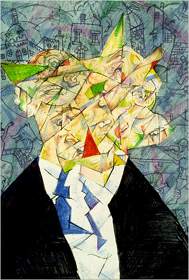
THE QUESTION “WHITHER EUROPE” has been asked so often that it has become a clichéd subcategory of another cliché, the headline writer’s “Whither X?” A Google search for “Whither Europe?” turns up more than six thousand uses of the phrase. People were asking the question after World War I and again after World War II; they asked it at the birth of the European Union and have been asking it, again and again, in the wake of debt crises that have threatened to tear that union apart. Last May the historian James J. Sheehan tried to answer the question in the pages ofCommonweal—although the editors fastidiously avoided the word “whither” in the headline (we settled for “A Continent Adrift”).

The title of George Steiner’s recent book is The Idea of Europe, but there is a strong whiff of “whither” in the book’s nervously elegiac tone. When Steiner, who is generally the kind of writer one would expect to use that archaic word without embarrassment, finally arrives at his modest speculations about Europe’s future, he settles for the more demotic “What next?” But most of this very short book is about Europe’s past, not its future—about what has set the Continent apart from the rest of the world, including America. Steiner’s method here is impressionistic and idiosyncratic: his list of “five axioms” that have defined Europe is a hodgepodge of suggestive observations and monumental truisms. It is nevertheless an interesting list. Steiner makes it interesting by dint of style and erudition. It does not quite amount to a systematic theory of Europe, but then, Steiner does not promise one. As his title indicates, he is content to offer an idea—or several ideas.

His list of things that make Europe Europe starts with the concrete and becomes gradually more abstract. Item one is the café or coffeehouse. “Draw the coffeehouse map and you have one of the essential markers of the ‘idea of Europe.’”

A cup of coffee, a glass of wine, a tea with rhum secures a locale in which to work, to dream, to play chess or simply keep warm the whole day. It is the club of the spirit and theposterestante of the homeless…. Three principal cafés in imperial and interwar Vienna provided the agora, the locus of eloquence and rivalry, for competing schools of aesthetics and political economy, of psychoanalysis and philosophy. Those wishing to meet Freud or Karl Kraus, Musil or Carnap, knew precisely in which café to look, at which Stammtisch to take their place. Danton and Robespierre meet one last time at the Procope. When the lights go out in Europe, in August 1914, Jaurès is assassinated in a café. In a Geneva café, Lenin writes his treatise on empiro-criticism and plays chess with Trotsky.

More here.
Where are we now? Responses to the Referendum

Brexit

David Runciman, Neal Ascherson, James Butler, T.J. Clark, Jonathan Coe, Sionaidh Douglas-Scott, Daniel Finn, Dawn Foster, Jeremy Harding, Colin Kidd, Ross McKibbin, Philippe Marlière, James Meek, Pankaj Mishra, Jan-Werner Müller, Susan Pedersen, J.G.A. Pocock, Nick Richardson, Nicholas Spice, Wolfgang Streeck, and Daniel Trilling in the LRB. Wolfgang Streeck:

Every fortnight the Institute of Race Relations publishes a round-up of racist incidents and far right activity. Many of the stories – verbal abuse on public transport, vandalism of religious memorials or places of worship, poorly attended protests by extremist groups – are culled from the local press. They’re not usually considered important enough to merit national media attention.

Now they are. On Saturday, a photograph of a National Front demonstration in Newcastle, at which a handful of supporters hung a banner demanding the ‘repatriation’ of immigrants, went viral on Twitter. Reports of EU migrants and British citizens of visible ethnic minority backgrounds being insulted or told to ‘go home’, collected under the hashtag #postrefracism, began to flow in. A Polish cultural centre in West London was sprayed with graffiti. Sima Kotecha, a Today programme reporter, was called a ‘Paki’ in her home town during a discussion on immigration and Brexit. According to the National Police Chiefs’ Council, 85 hate crimes were reported between Thursday and Sunday, an increase of 57 per cent compared with the equivalent four days last month.

Anecdotes on Twitter are difficult to verify, and reports of hate crimes can go up when more people are looking out for them, but even so it seems clear that the referendum has led to a spike in public harassment. Yet it would be a mistake to think that the referendum campaign created this racism out of nothing, or that it’s the preserve only of those who voted Brexit. While the Leave campaigns focused on a series of racist myths – the effect of Turkey’s proposed accession to the EU; a flood of refugees from the Middle East – politicians on the Remain side have also taken xenophobic positions. It was Cameron’s government that introduced the recent immigration act which turns landlords into an extension of the border police, and Cameron himself who talked of ‘swarms’ of migrants at Calais. Labour carved the words ‘controls on immigration’ into a stone tablet during the 2015 general election campaign.

More here.

Of Mothers and Migraines; or, How I Learned to Stop Worrying and Read Oliver Sacks

Jordan Stein in Avidly:

OliverMy mother gives me a headache. It would appear, also, that she gave me headaches. When I spoke with a neurologist last winter about the increasingly frequent migraines I was having, I told him about my mother’s medical history. He smiled sardonically, one adult survivor of Jewish parents to another, and said, “Well, the good news is that this is probably your mother’s fault!” Twenty-eight years ago, when my mother was the exact age I am now, she began to have migraines. These manifested as powerful and debilitating headaches, which, along with major pain relieving drugs administered by ER doctors and later by her neurologist, would knock her out for days. Days have a way of adding up. Enough knock outs and you stop getting up so fast. As I recall it, anyway, my mother slept on the couch in the daytime for about four years. I have memories of coming home after school and just sitting on the floor watching her sleep. I think I felt abandoned.

My mother’s neurologist was a world-famous specialist who, Google informs me, wrote what is still considered the textbook on headaches. He recommended Oliver Sacks’s book, Migraine, and when Sacks later came to our local metropolis on a book tour, my otherwise homebodyish parents went. My mother loved being taken care of, understood little science, and was in awe of doctors. Oliver Sacks blazed on her horizon like a bright star. Yet, when he signed her book, she gave him my name. Sacks inscribed my mother’s copy of Migraine “To Jordan, who taught me everything I know.” I was eleven or twelve, at home, alone. Even in those childhood days, my mother’s headaches were already marked as my inheritance. Because she suffered from migraines, there was a 40% chance I would too. But because there was some migrainous history on my father’s side, the chance jumped up to 80%. My mother repeated these numbers, and I grew up repeating them too: her words in my mouth, her pain in my head. Perhaps we each wanted to believe that having this connection was the same as her giving me what I needed. If I was being ignored as a consequence of my mother’s illness, I was being roped into it as well, made complicit with things I didn’t do and certainly didn’t understand. I coped in the ways I could: meaning, I waited out the better part of three decades, and then told this story to my therapist last week. Afterward, I walked into the independent bookstore down the block from his office and bought myself a copy of Migraine.

More here.

the True Nature of Evil

Ron Rosenbaum in Smithsonian:

Julaug2016_m02_colrosenbaumobrien-wr_v2_jpg__800x600_q85_cropLove and Evil. Two great mysteries that have obsessed the greatest writers and thinkers for as long as people have thought and written. For a long time Edna O’Brien, the celebrated Irish-born, London-dwelling writer, has been known as one of the literary world’s great chroniclers of love. Of love and longing and the desperate lives of souls in the pitiless grip of passion and doomed elation. A beautiful writer who has always been able to find beauty in life, even in despair. Some have likened her to Chekhov; others have compared her to James Joyce in his early Portrait of the Artist phase. But in her latest novel, The Little Red Chairs, O’Brien shifts from love to evil. A wild and ambitious leap that takes us behind the headlines and home screens of the most tragic world news—war crimes, refugees, genocide—and which may garner her the Nobel Prize that she’s often been mentioned for and long deserved.

Moving from Ireland to London and then to The Hague, “The Little Red Chairs” is Edna O'Brien's first novel in ten years—a vivid and unflinching exploration of humanity's capacity for evil and artifice as well as the bravest kind of love. It just so happens that her new novel was published in America just a few days after the bang of a gavel in the International Criminal Tribunal in The Hague. The evil character she’d written about in thin disguise, Radovan Karadzic—a.k.a. the Beast of Bosnia—had been found guilty of war crimes and genocide for ordering the mass murder of more than 7,000 mostly Muslim men and boys in 1995, an act that brought the terrifying term “ethnic cleansing” into common use. He was found guilty, too, of ordering the deadly shelling of women, children and civilian noncombatants in the years-long siege of Sarajevo, a thriving city Karadzic turned into a graveyard. Guilty as well of participating in a horde that committed horrific up-close and personal acts of torture, rape and mutilation.

More here.

Sunday Poem

The Mercy

The ship that took my mother to Ellis Island
eighty-three years ago was named “The Mercy.”
She remembers trying to eat a banana
without first peeling it and seeing her first orange
in the hands of a young Scot, a seaman
who gave her a bite and wiped her mouth for her
with a red bandana and taught her the word,
“orange,” saying it patiently over and over.
A long autumn voyage, the days darkening
with the black waters calming as night came on,
then nothing as far as her eyes could see and space
without limit rushing off to the corners
of creation. She prayed in Russian and Yiddish
to find her family in New York, prayers
unheard or misunderstood or perhaps ignored
by all the powers that swept the waves of darkness
before she woke, that kept “The Mercy” afloat
while smallpox raged among the passengers
and crew until the dead were buried at sea
with strange prayers in a tongue she could not fathom.
“The Mercy,” I read on the yellowing pages of a book
I located in a windowless room of the library
on 42nd Street, sat thirty-one days
offshore in quarantine before the passengers
disembarked. There a story ends. Other ships
arrived, “Tancred” out of Glasgow, “The Neptune”
registered as Danish, “Umberto IV,”
the list goes on for pages, November gives
way to winter, the sea pounds this alien shore.
Italian miners from Piemonte dig
under towns in western Pennsylvania
only to rediscover the same nightmare
they left at home. A nine-year-old girl travels
all night by train with one suitcase and an orange.
She learns that mercy is something you can eat
again and again while the juice spills over
your chin, you can wipe it away with the back
of your hands and you can never get enough.
.

by Philip Levine
from The Mercy
Knopf, 2000
.

Saturday, July 2, 2016

books about socialist futures

UrlOwen Hatherley at The Guardian:

Although it is a long time since anyone bar the neoliberal right believed that history was on their side, it is always nice to feel that you have a usable past. For much of the left, this has been a difficult matter. The 20th-century experiences of “really existing socialism” are understandably rather forbidding, and those of social democracy, though often fondly recalled, are just a little too conformist and mainstream. If there is a rock on which the fissile contemporary left might all agree to build itself on, it is the two-month-long Paris Commune of 1871, that bloodily suppressed, chaotic and radically democratic experiment in municipal anarcho-communism.

In the geography of David Harvey, the philosophy of Alain Badiou or the revolutionary heritage guidebooks of Eric Hazan, the Commune is the culmination of the French revolution, a “Universal Republic” whose ambitions were as expansive as its existence was brief. Kristin Ross’s recent Communal Luxury, for instance, tried to wrest the Commune out of the history of communism or the French left, instead tracing an unusual, intriguing line from the ideas of the Commune’s self-educated artisans, to those of figures such asWilliam Morris and Peter Kropotkin, who were inspired by their acts to reassess their entire approach to art, nature and politics. According to Ross, “the world of the communards” – migratory lives, precarious work, insecure housing – “is much closer to us than that of our parents”. These two books about celebrated communards, however, deal in myths and legends.

more here.

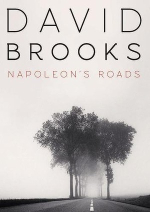
ON NAPOLEON’S ROADS BY DAVID BROOKS

Napoleons-roadsAashish Kaul at The Quarterly Conversation:

What saved these stories or inquiries from being mere postmodernist feints then, and what has always distinguished Brooks’s writing from the start—for instance, his early ekphrastic novel The House of Balthus where subjects from the paintings of the Polish-French artist Balthasar Klossowski de Rola come to life in an apartment block in a French country town—is their underlying humanity, and the struggle, plain to see, to birth them into being, the thrill of watching that rare dynamic, dialectic process where the writer is transformed in equal measure by the very material he works diligently to transform.

Napoleon’s Roads, in language now on the point of collapsing, now suddenly gone transparent to reveal the world in its minute splendor, but always totally committed to its stylistic and ethical concerns, is a step further along that path. “To hold nothing back!” writes Brooks in Balthus. “Isn’t that what the stars do? The dark, the nothing behind them, held back by them, and yet made so much the more evident because they are there?” Like the ancient seers of Vedic India, Brooks knows that the visible puts down its roots only in the soil of the invisible, that perhaps, like them, it is better to seek—in Roberto Calasso’s words—not power but rapture.

more here.

Instagram and the Fantasy of Mastery

PgpnXhhhRicky D'Ambrose at The Nation:

Looks aren’t unique to images. There are live performances with looks (immersive theater, with its prodigal vision of classical Hollywood cinema), just as there are paintings (color fields, all-over abstraction, moiré patterns) and photographs (the hot white of the flash bulb, the contrast of Tri-X, the color of Kodachrome) that are said to have a “good look.” The audience, which sees something of its own viewing habits, and its own tastes, confirmed by the image, is in any case continuously flattered: One can watch a movie like Ain’t Them Bodies Saints and very easily single out what its director, David Lowery, calls the “dirty” palette of Robert Altman’s McCabe & Mrs. Miller and Michael Cimino’s Heaven’s Gate, and feel gratified. What underlies the shift to looks is the belief in neutral, impersonal images: Anything can become a picture, and any picture, overlaid with a look, can be customized, shored up temporarily with a borrowed feeling. And that feeling is confused with evidence of achievement. Thus, all looks take the form of a direct address; each image, no matter how depersonalized and routine, always seems “personalized,” made-to-order, and aimed at gratifying an existing idea of what a ’70s movie or a ’60s canvas or an ’80s photograph is like. Nothing about an image with a look is inexplicit or ambiguous.

more here.

The link between language and cognition is a red herring

Idea_ISIZED-Indo-girl2010-5227609661_8d48e1e8fa_o

Frans de Waal in Aeon:

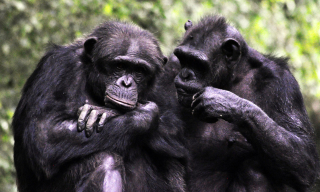
Scientists working on animal cognition often dwell on their desire to talk to the animals. Oddly enough, this particular desire must have passed me by, because I have never felt it. I am not waiting to hear what my animals have to say about themselves, taking the rather Wittgensteinian position that their message might not be all that enlightening. Even with respect to my fellow humans, I am dubious that language tells us what is going on in their heads. I am surrounded by colleagues who study members of our species by presenting them with questionnaires. They trust the answers they receive and have ways, they assure me, of checking their veracity. But who says that what people say about themselves reveals actual emotions and motivations?

This might be true for simple attitudes free from moralisations (‘What is your favourite music?’), but it seems almost pointless to ask people about their love life, eating habits, or treatment of others (‘Are you pleasant to work with?’). It is far too easy to invent post-hoc reasons for one’s behaviour, to be silent about one’s sexual habits, to downplay excessive eating or drinking, or to present oneself as more admirable than one really is.

No one is going to admit to murderous thoughts, stinginess or being a jerk. People lie all the time, so why would they stop in front of a psychologist who writes down everything they say? In one study, female college students reported more sex partners when they were hooked up to a fake lie-detector machine, demonstrating that they had been lying when interviewed without the lie-detector. I am in fact relieved to work with subjects that don’t talk. I don’t need to worry about the truth of their utterances. Instead of asking them how often they engage in sex, I just count the occasions. I am perfectly happy being an animal watcher.

More here.

From Burmese Dissident to Mystifying Politician

BN-OS134_ebadi_J_20160629142853

Shirin Ebadi in the Wall Street Journal:

In advance of a United Nations envoy’s visit to the country, Burmese officials in June instructed U.N. officials to refer to Burma’s Muslim minority as “people who believe in Islam in Rakhine state.” This is the latest chapter in what has become a tragic campaign to reassure Buddhist nationalists that the government will continue to oppress the Rohingya—even to the point of denying them their name and citizenship in Burma.

Sadly, this campaign is being led by Nobel peace laureate Aung San Suu Kyi.

After decades of defiant activism, house arrest and unimaginable personal sacrifice, Ms. Suu Kyi is finally in a position to bring democracy to her country. Ms. Suu Kyi’s party won Burma’s national elections in November 2015, and this spring, in addition to being named foreign minister, she was appointed state counselor, the de facto prime minister. The new title effectively gives her the power to run Burma.

I’m sure it is a responsibility that my fellow Nobel peace laureate—a woman who was under house arrest off and on for more than two decades—takes very seriously. Yet those of us who spoke up for Aung San Suu Kyi those many years when her human rights were being violated—including His Holiness the Dalai Lama and Archbishop Desmond Tutu—are deeply pained that she won’t extend the same respect for human rights to Burma’s more than one million Rohingya.

Like thousands of human-rights defenders around the world, we have also called upon Burma to respect the rights of other political prisoners and minorities in Burma—including the Karen, the Shan and the Chin. Global human-rights organizations, along with courageous grass roots organizations in Burma, have documented how the Burmese military and state have suppressed these minorities through religious persecution, killings, rape, disappearances, torture and other crimes against humanity.

More here.

Brexit: The Tectonic Plates

Mg_6338b-by-matthias-grauwinkel (1)

Sanjay G. Reddy over at his website:

UK voters who favoured remaining may be aggrieved by what they view as a poor choice in a flawed process, by the majority of voters who might have individually or collectively acted differently on another day — if they had more time to reflect, or if more had turned out, for instance. However, those who favoured leaving might also have viewed the aspects of Europe to which they objected as being the product of poor choices in a flawed process, by citizens too deferential to institutions and to bureaucracies and given too few democratic rights. In both cases, a more subtle view of democracy, recognizing the claims of parts of the whole, and giving them fuller realization in terms of process and outcomes, was needed. For example, under the circumstances the referendum vote might have been avoided by giving the UK fuller concessions including a temporary exception from the free mobility requirement of the EU while Eastern European wages caught up sufficiently to diminish flows, but this was not acceptable to the grandees of Europe, especially as Eastern European integration had been a political as well as economic project. (It is interesting that those who view this commitment as ‘fundamental’ do not take the same view when it comes to international mobility more generally). On the other side, the referendum mechanism provided insufficient recognition of the vital interests involved, especially as they were perceived by territorial minorities such as the Scots and non-territorial minorities with vital interests, such as the young. This is a specific and unusually stark version of a more general democratic conundrum.

Of course, the need for such choices is never fated. Political decisions, such as that of the Conservatives to address the challenge from UKIP by dignifying its narrative, and the failure of Labour to provide a robust progressive case for remaining, ushered in the impossible.

More here.

‘Healing’ detected in Antarctic ozone hole

Matt McGrath in BBC News:

OzoneThe scientists said that in September 2015 the hole was around 4 million sq km smaller than it was in the year 2000 – an area roughly the size of India. The gains have been credited to the long term phasing out of ozone-destroying chemicals. The study also sheds new light on the role of volcanoes in making the problem worse. The natural production and destruction of ozone in the stratosphere balances itself out over long time, meaning that historically there has been a constant level to protect the Earth by blocking out harmful ultraviolet radiation from the Sun. Its absence increases the chances of skin cancer, cataract damage, and harm to humans, animals and plants. British scientists first noticed a dramatic thinning of ozone in the stratosphere some 10 kilometres above Antarctica in the mid 1980s. In 1986, US researcher Susan Solomon showed that ozone was being destroyed by the presence of molecules containing chlorine and bromine that came from chlorofluorocarbons (CFCs). These gases were found in everything from hairsprays to refrigerators to air conditioning units. The reason the thinning was occurring mainly over Antarctica was because of the extreme cold and large amounts of light. These helped produce what are termed Polar Stratospheric Clouds. In these chilled-out clouds, the chlorine chemistry occurs that destroys the ozone.

Thanks to the global ban on the use of CFCs in the Montreal Protocol in 1987, the situation in Antarctica has been slowly improving. Several studies have shown the declining influence of CFCs, but according to the authors this new study shows the “first fingerprints of healing” and the ozone layer is actively growing again. Prof Solomon and colleagues, including researchers from the University of Leeds in the UK, carried out detailed measurements of the amount of ozone in the stratosphere between 2000 and 2015. Using data from weather balloons, satellites and model simulations, they were able to show that the thinning of the layer had declined by 4 million sq km over the period. The found that more than half the shrinkage was due solely to the reduction in atmospheric chlorine.

More here.

‘The Arrangements’: A Work of Fiction

Chimamanda Ngozi Adichie in The New York Times:

The New York Times Book Review asked the acclaimed novelist Chimamanda Ngozi Adichie to write a short story about the American election. A second work of election fiction by a different writer will follow this fall.

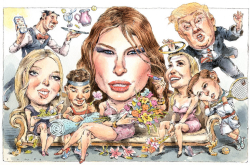
TrumpMelania decided she would order the flowers herself. Donald was too busy now anyway to call Alessandra’s as usual and ask for “something amazing.” Once, in the early years, before she fully understood him, she had asked what his favorite flowers were. “I use the best florists in the city, they’re terrific,” he replied, and she realized that taste, for him, was something to be determined by somebody else, and then flaunted. At first, she wished he would not keep asking their guests, “How do you like these great flowers?” and that he would not be so nakedly in need of their praise, but now she felt a small tug of annoyance if a guest did not gush as Donald expected. The florists were indeed good, their peonies delicate as tissue, even if a little boring, and the interior decorators Donald had brought in — all the top guys used them, he said — were good, too, even if all that gold yellowness bordered on staleness, and so she did not disagree because Donald disliked dissent, and he only wanted the best for them, and she had what she really needed, this luxurious peace. But today, she would order herself. It was her dinner party to celebrate her parents’ anniversary. Unusual orchids, maybe. Her mother loved uncommon things.

Her Pilates instructor, Janelle, would arrive in half an hour. She had just enough time to order the flowers and complete her morning skin routine. She would use a different florist, she decided, where Donald did not have an account, and pay by herself. Donald might like that; he always liked the small efforts she made. Do the little things, don’t ask for big things and he will give them to you, her mother advised her, after she first met Donald. She gently patted three different serums on her face and then, with her fingertips, applied an eye cream and ­sunscreen. What a bright morning. Summer sunlight raised her spirits. And Tiffany was leaving today. It felt good. The girl had been staying for the past week, and came and went, mostly staying out of her way. Still, it felt good. Yesterday she had taken Tiffany to lunch, so that she could tell Donald that she had taken Tiffany to lunch.

“She adores all my kids, it’s amazing,” Donald once told a reporter — he was happily blind to the strangeness in the air whenever she was with his children.

More here.

Saturday Poem

A Ghazal from Ghalib

مقدمِ سیلاب سے دل کیا نشاط آہنگ ہے

خانۂ عاشق مگر سازِ صدائے آب تھا

The waters rise past the rafters in my house.
Their undulant music calms my rage tonight.

I was homeless before: it was a proper life.
Wine-free, woman-free, I had peace all night.

I was sightless in the cave of desire. Outside,
His light shone brilliantly night after night.

Is this nothing to you, that we live or die?
Time was, our pain kept you up all night.

It happened long ago. Afraid of losing us,
She parted the veil till her beauty sang all night.

Glad I stopped him. Ghalib was so rattled,
His tears may have drowned the stars tonight.
.

translation by M. Shahid Alam
Northeastern University
.

Friday, July 1, 2016

Government Under Review

Bureaucrats_600_2

Daniel E. Ho and Becky Elias examined whether peer review for public servants can make the law more consistent in Boston Review:

Like many good arguments, this one started over a stiff drink. An Earl Grey MarTEAni, to be precise.

In January 2010, Nathalie Louissaint, a New York City health inspector, visited Pegu Club, an upscale cocktail bar. She watched as the bartender mixed the signature tea-infused drink. Borrowing a technique from the nineteenth century, the bartender added raw egg whites, which give the drink a silky body and an alluring layer of foam. Louissaint decided that the raw egg warning on the menu was insufficient and cited the bar for a health code violation.

The citation outraged many. Paul Clarke, a Seattle-based food writer, was perplexed by the department’s rigid position on raw eggs, writing on the website Serious Eats, “Does this mean the health department will begin targeting restaurants that serve raw eggs in a Caesar salad?” Others decried the health department’s seeming mandate to use pasteurized eggs, but those, said Pegu Club owner Audrey Sanders, “impart this really funky wet-diaper nose.” One bartender, who insisted on anonymity for fear of reprisal, told the New York Times, “If they make it illegal to serve egg-white drinks, that would be Hurricane Katrina for us.” In response to the uproar, the health department overruled the inspector.

This confusion is no outlier. Nationwide, implementation of health codes varies dramatically across inspectors and health departments. In Seattle, two inspectors observed Caesar salad dressing prepared with raw (unpasteurized) eggs in the same restaurant, but disagreed about whether to cite a violation. Contrary to New York City health department guidelines, New York State’s website doesn’t mention menu warnings, instead admonishing, “Consider using commercially pasteurized eggs in recipes that use eggs or consider removing the item from your menu.” The Centers for Disease Control and Prevention (CDC) document that 80 percent of restaurants nonetheless use unpasteurized eggs.

When it comes down to it, the marTEAni fight is not so much about eggs as it is an endemic challenge across government. From airport security checkpoints and routine traffic stops to home construction permits, citizens and government interact frequently through individual officials. At times, the decisions of these frontline government officials can seem disturbingly arbitrary.

More here.

Beyoncé: many things all at once

P20_Oja

Carol Oja in the TLS:

In the two months since Lemonade’s release, it has provoked an extraordinary cultural critique, with articles ranging from besotted fandom to probing essays about its racial and feminist politics. In fact, the visual album is simultaneously clear-as-a-bell and obscure, even at times surreal. In the “Denial” section, for example, Beyoncé falls off a very tall building, then is submerged under water. She floats like a ghost over a bed, ultimately striding forth from a building that suggests a seat of power, and she does so amid yet another surge of water. The omnipresence of water conjures up the devastation of Hurricane Katrina, which later moves to the foreground in “Formation”. The narrative ostensibly has an autobiographical thread, albeit with a celebrity tinge, with many critics claiming that it exposes Jay Z’s infidelity.

At a deeper level, Lemonade decries the history of oppression of African American women. “The most disrespected person in America is the black woman”, intones the sampled voice of Malcolm X after “Don’t Hurt Yourself”, the third song in the album.

Lemonade, then, is many things all at once: an extended feminist anthem with a Civil Rights inflection, performance art with an experimental edge, a revenue-generating media spectacle with high-flying aims. It juxtaposes the deep past with the vivid present, still photography with moving images, black-and-white with colour, African and Native American imagery with that of the American South, vandalism with tenderness. A startling twist is that Lemonade was released through Tidal, a streaming service owned by Jay Z and Beyoncé – the same Jay Z whom the work ostensibly exposes as an adulterer. As of mid-May,Lemonade had attracted 1.2 million new subscribers to Tidal.

Lemonade’s political intentions have been questioned: can ideological integrity coexist with big profits? Beyoncé “positively exploits images of black female bodies – placing them at the center, making them the norm”, asserts bell hooks, the African American feminist and social theorist. Yet, she concludes, “Ultimately Lemonade glamorizes a world of gendered cultural paradox and contradiction. It does not resolve”. “Glamour” certainly describes Lemonade, with Beyoncé singing, rapping, and dancing in magnificent gowns and artfully flowing hair. The women around her are also exquisitely turned out. “I’m so reckless when I rock my Givenchy dress (stylin’)”, Beyoncé intones in “Formation”, which has frequently been called a “Black Power Anthem” in the press. She flips the bird there, with perfectly manicured nails and wrists laden with expensive silver jewelry.

More here.