How the Women of the Mormon Church Came to Embrace Polygamy

29GAGE-master315Beverly Gage at the New York Times:

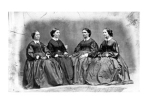
Her main interest is in what plural marriage meant for Mormon women in the 19th century, forced to adapt on the fly to a situation they could never have anticipated. This is in some ways a personal question for Ulrich, herself a mother of five and a practicing Mormon as well as a Harvard history professor. All eight of her great-grandparents settled in Utah before the Civil War, members of the faith’s pioneer generation. To ask what it was like for the women who made that journey is also to ask how the modern Mormon Church developed its tight-knit social world, and to think about who mattered within it.

Despite Ulrich’s emphasis on women’s voices and ideas, “A House Full of Females” centers its narrative in part on a man named Wilford Woodruff. An apostle of the church and one of Mormonism’s early converts, Woodruff played a significant role in Mormon history. But his most important quality, from Ulrich’s perspective, is that he kept a detailed diary. That diary paid attention to women, noting on one occasion that the local ward meeting house “was full of females quilting sewing etc.” (thus providing Ulrich with her title). Woodruff married his wife Phebe Carter in 1837 and by all accounts loved her deeply, despite long sojourns apart for missionary work and the difficult deaths of several children. In the mid-1840s, he nonetheless “sealed” himself to two teenage girls, the beginning of a decades-long adventure in polygamy.

more here.
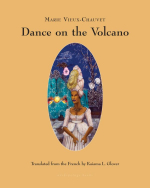
‘DANCE ON THE VOLCANO’ BY MARIE VIEUX-CHAUVET

Dance-volcanoBronwyn Averett at The Quarterly Conversation:

For those familiar with canonical texts of Haitian literature, the translation of Marie Vieux-Chauvet’s 1957 novel La Danse sur le volcan into English is a long time coming. Vieux-Chauvet is a key figure of Caribbean literature, known for interlacing charged subjects such as slavery, colonialism, erotic desire, racial injustice, and the influence of Vodou in Haiti, and it is surprising that, until now, only her famous trilogy of novellas Amour, colère et folie—originally published by Gallimard in 1968 with the support of Simone de Beauvoir—has been translated. From a writer whose most frequent subject is the psyche of Haitian women during violent and politically charged moments of Haiti’s history—she herself fled the Duvalier régime after the publication of her trilogy—Dance on the Volcano is an intimate rendering of the Haitian Revolution and a nuanced portrayal of the brutality that resonated across all realms of society in the colony of Saint Domingue at the turn of the 19th century. Kaiama L. Glover’s translation is fluid, remaining faithful to the elegance of Vieux-Chauvet’s prose while navigating the stylistic concerns inherent to recreating a work written in the 1950s and about the colonial life of the 1790s, for a 21st-century audience.

The novel follows the story of Minette, a “free woman of color” (gens de couleur or “people of color” being the term for free men and women, usually of both African and European heritage, living in the colony before the Revolution) who becomes a beloved star of the Comédie de Port-au-Prince. Much of the plot revolves around Minette’s slow and tortuous disillusionment as she comes to realize that she is not nearly as “free” as she believes, even after reaching unprecedented social heights and gaining wide recognition for her talent. Beloved by the public, and cared for in private by a close group of white Créole artists of the theatre, she remains unpaid and has severely limited professional agency.

more here.

How Camus and Sartre split up over the question of how to be free

Sam Dresser in Aeon:

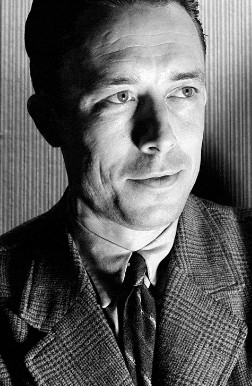
ScreenHunter_2545 Jan. 28 23.12They were an odd pair. Albert Camus was French Algerian, a pied-noir born into poverty who effortlessly charmed with his Bogart-esque features. Jean-Paul Sartre, from the upper reaches of French society, was never mistaken for a handsome man. They met in Paris during the Occupation and grew closer after the Second World War. In those days, when the lights of the city were slowly turning back on, Camus was Sartre’s closest friend. ‘How we loved you then,’ Sartre later wrote.

They were gleaming icons of the era. Newspapers reported on their daily movements: Sartre holed up at Les Deux Magots, Camus the peripatetic of Paris. As the city began to rebuild, Sartre and Camus gave voice to the mood of the day. Europe had been immolated, but the ashes left by war created the space to imagine a new world. Readers looked to Sartre and Camus to articulate what that new world might look like. ‘We were,’ remembered the fellow philosopher Simone de Beauvoir, ‘to provide the postwar era with its ideology.’

It came in the form of existentialism. Sartre, Camus and their intellectual companions rejected religion, staged new and unnerving plays, challenged readers to live authentically, and wrote about the absurdity of the world – a world without purpose and without value. ‘[There are] only stones, flesh, stars, and those truths the hand can touch,’ Camus wrote. We must choose to live in this world and to project our own meaning and value onto it in order to make sense of it. This means that people are free and burdened by it, since with freedom there is a terrible, even debilitating, responsibility to live and act authentically.

More here.

Evolutionary Wars: How Darwin’s Masterwork Shook Up America

Eric Foner in the New York Times:

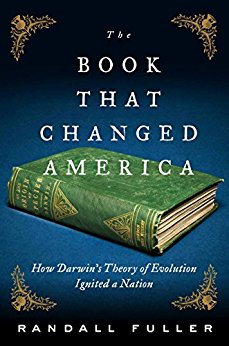
51YINKT+d0L._SY346_The first book by Richard Hofstadter, the leading historian of his generation (and, decades ago, my Ph.D. supervisor), was “Social Darwinism in American Thought,” a study of the impact on American intellectual life of the scientific writings of Charles Darwin. Hofstadter related how businessmen, free marketeers and opponents of efforts to uplift the poor seized upon Darwin’s seminal work, “On the Origin of Species,” to justify social inequality during the Gilded Age. They invoked Darwinian ideas such as “natural selection,” “survival of the fittest” and “the struggle for existence” to assert the innate superiority of the era’s 1 percent and to define people at the bottom of the social order as innately ill equipped to succeed in the competitive race of life.

“Social Darwinism” has remained a byword for racism and a dog-eat-dog vision of society. But as Randall Fuller shows in “The Book That Changed America,” this was not the only way Darwinian precepts were assimilated into American life and thought. Fuller, who teaches English at the University of Tulsa, is the author of a prizewinning study of the Civil War’s impact on American literature. His account of how Americans responded to the publication of Darwin’s great work in 1859 is organized as a series of lively and informative set pieces — dinners, conversations, lectures — with reactions to “On the Origin of Species” usually (but not always) at the center.

Fuller focuses on a group of New England writers, scientists and social reformers. He begins with a dinner party on New Year’s Day, 1860, at the home of Franklin B. Sanborn, a schoolmaster in Concord, Mass. The guest of honor was Charles Loring Brace, a graduate of Yale and founder of the Children’s Aid Society, which worked to assist the thousands of orphaned, abandoned and runaway children who populated the streets of New York City.

More here.

Human-Pig Hybrid Created in the Lab—Here Are the Facts

Erin Blakemore in National Geographic:

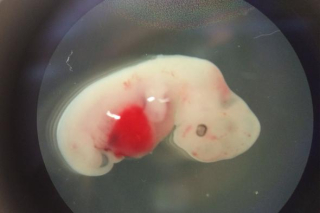
03-human-pig-chimera.adapt.590.1In a remarkable—if likely controversial—feat, scientists announced today that they have created the first successful human-animal hybrids. The project proves that human cells can be introduced into a non-human organism, survive, and even grow inside a host animal, in this case, pigs.

This biomedical advance has long been a dream and a quandary for scientists hoping to address a critical shortage of donor organs.

Every ten minutes, a person is added to the national waiting list for organ transplants. And every day, 22 people on that list die without the organ they need. What if, rather than relying on a generous donor, you could grow a custom organ inside an animal instead?

That’s now one step closer to reality, an international team of researchers led by the Salk Institute reports in the journal Cell. The team created what’s known scientifically as a chimera: an organism that contains cells from two different species. (Read more about the DNA revolution inNational Geographic magazine.)

In the past, human-animal chimeras have been beyond reach. Such experiments are currently ineligible for public funding in the United States (so far, the Salk team has relied on private donors for the chimera project). Public opinion, too, has hampered the creation of organisms that are part human, part animal.

More here.

Trump’s Muslim Ban Is Culmination of War on Terror Mentality but Still Uniquely Shameful

Glenn Greenwald in The Intercept:

ScreenHunter_2544 Jan. 28 22.38It is not difficult for any decent human being to immediately apprehend why and how Donald Trump’s ban on immigrants from seven Muslim countries is inhumane, bigoted, and shameful. During the campaign, the evil of the policy was recognized even by Mike Pence (“offensive and unconstitutional”) and Paul Ryan (violative of America’s “fundamental values”), who are far too craven and cowardly to object now.

Trump’s own defense secretary, Gen. James Mattis, said when Trump first advocated his Muslim ban back in August that “we have lost faith in reason,” adding: “This kind of thing is causing us great damage right now, and it’s sending shock waves through this international system.”

The sole ostensible rationale for this ban — it is necessary to keep out Muslim extremists — collapses upon the most minimal scrutiny. The countries that have produced and supported the greatest number of anti-U.S. terrorists — Saudi Arabia, Egypt, Qatar, UAE — are excluded from the ban list because the tyrannical regimes that run those countries are close U.S. allies. Conversely, the countries that are included — Syria, Iraq, Libya, Somalia, Iran, Sudan, and Yemen — have produced virtually no such terrorists; as the Cato Institute documented on Friday night: “Foreigners from those seven nations have killed zero Americans in terrorist attacks on U.S. soil between 1975 and the end of 2015.” Indeed, as of a 2015 study by the New America research center, deaths caused by terrorism from right-wing nationalists since 9/11 have significantly exceeded those from Muslim extremists.

Trump’s pledge last night to a Christian broadcasting network to prioritize Christian refugees over all others is just profane: The very idea of determining who merits refuge on the basis of religious belief is bigotry in its purest sense. Beyond the morality, it is almost also certainly unconstitutional in a country predicated on the “free exercise of religion.” In the New York Times this morning, Cato analyst David Bier also convincingly argues that the policy is illegal on statutory grounds as well.

More here.

Imperfect Ignorance

Arthur Cody in Inference Review:

ScreenHunter_2543 Jan. 28 22.33If we start from scratch, how might we make out the cognitive faculties? Do they present themselves to us as discrete operations of mind? Do they always merge together? Or do they appear in one context to be distinct from one another and commingled in another? The usual approach divides them into belief, memory, intention, hope, fear (of something), regret, and desire. This list is not exhaustive, but illustrative.

Marcel Proust’s concept of memory as the recollection of a past event will not do for every case. Sometimes we recall a moment from the past without wishing to, but at most other times memory serves to aid in understanding what is going on right now, what some person or community in these circumstances is likely to do, or where something misplaced might be found. Would recollection include the grammar and vocabulary of my language or the knowledge that I employ in speaking or writing? Is everything I have learned and everything I accept or act on, whether or not I compose it in my mind, remembered or the product of memory, and thus essentially dependent on memory?

Neither neuroscientists nor philosophers of mind grant or even suggest an affirmative reply to this question.

More here.

Rachel Cusk’s Risky, Revolutionary New Novel

Monica Ali in The New York Times:

Monica“Transit” is a novel that all but dispenses with plot. A recently divorced novelist buys a dilapidated house in London, and has conversations with builders, neighbors, a hairdresser, a friend. She appears at a literary festival where she brings “something to read aloud” (we learn no more), teaches, goes on a date and attends a disastrous dinner party. It is the second novel of a trilogy that began with “Outline,” in which Rachel Cusk’s project appears to be nothing less than the reinvention of the form itself. “Once you have suffered sufficiently,” she told an interviewer after the publication of “Aftermath,” her memoir about the demise of her marriage, “the idea of making up John and Jane and having them do things together seems utterly ridiculous.” What, then, is to be done? How is the novel to be written? Cusk’s answer is to eliminate John and Jane in favor of an altogether different narrative structure, in which a shadowy narrator, Faye — named only once in each novel — becomes a conduit for multiple stories. These stories are not, as it were, played out John-and-Jane style; they do not unfold before us, nor are they — by and large — composed through dialogue. Instead they are delivered by Faye, who sums up what often amounts to the story of a life. Thus a chance encounter with an ex-boyfriend, Gerard, produces a tale of marriage, fatherhood, and the way life can be simultaneously ever changing and stuck in a rut. “Superficially, for him at least the facts of that life were unchanged since the days I had known him: he lived in the same flat, had kept the same friends, went to the same places.” The difference, Faye notes, was that his wife and daughter “were with him: They constituted a kind of audience.” Pavel, a Polish builder, yields a story about the house he built for himself back home, and the hardships of his new life in London. “He rented a bedsit near Wembley Stadium, in a building full of other bedsits occupied by people he didn’t know. In the first week, someone had broken in and stolen all his tools.”

It is a risky business, this summing up. Show, don’t tell, say the creative writing manuals. Cusk has torn up the rule book, and in the process created a work of stunning beauty, deep insight and great originality. Key to this originality is the novel approach to building a character. The narrator of “Outline” was described by critics as “a cipher,” “self-effacing,” “numbly inert,” or “a faint image.” In “Transit,” Faye is beginning to emerge from the numbness and passivity that followed the death of her marriage. As she tells the real estate agent, “I would want what everyone else wanted, even if I couldn’t attain it.”

More here.

Saturday Poem

“Excessive sorrow laughs. Excessive joy weeps.”
…………………………………………….……. —William Blake


Snatch of Sliphorn Jazz

Are you happy? It’s the only
way to be, kid.
Yes, be happy, it’s a good
nice way to be.
But not happy-happy, kid, don’t
be too doubled-up doggone happy.
It’s the doubled-up doggone happy-

happy people bust hard they

do bust hard when they bust.

Be happy, kid, go to it, but not too
doggone happy.

Carl Sandburg
from Harvest Poems 1910-1960
Harvest Books, 1960
.

Friday, January 27, 2017

After a century of failing to crack an ancient script, linguists turn to machines

Mallory Locklear in The Verge:

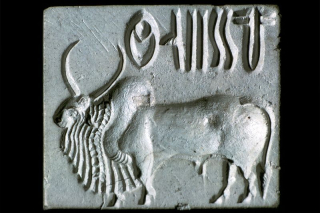
Jbareham_170124_1415_getty_01In 1872 a British general named Alexander Cunningham, excavating an area in what was then British-controlled northern India, came across something peculiar. Buried in some ruins, he uncovered a small, one inch by one inch square piece of what he described as smooth, black, unpolished stone engraved with strange symbols — lines, interlocking ovals, something resembling a fish — and what looked like a bull etched underneath. The general, not recognizing the symbols and finding the bull to be unlike other Indian animals, assumed the artifact wasn’t Indian at all but some misplaced foreign token. The stone, along with similar ones found over the next few years, ended up in the British Museum. In the 1920s many more of these artifacts, by then known as seals, were found and identified as evidence of a 4,000-year-old culture now known as the Indus Valley Civilization, the oldest known Indian civilization to date.

Since then, thousands more of these tiny seals have been uncovered. Most of them feature one line of symbols at the top with a picture, usually of an animal, carved below. The animals pictured include bulls, rhinoceros, elephants, and puzzlingly, unicorns. They’ve been found in a swath of territory that covers present-day India and Pakistan and along trade routes, with seals being found as far as present-day Iraq. And the symbols, which range from geometric designs to representations of fish or jars, have also been found on signs, tablets, copper plates, tools, and pottery.

Though we now have thousands of examples of these symbols, we have very little idea what they mean. Over a century after Cunningham’s discovery, the seals remain undeciphered, their messages lost to us. Are they the letters of an ancient language? Or are they just religious, familial, or political symbols? Those hotly contested questions have sparked infighting among scholars and exacerbated cultural rivalries over who can claim the script as their heritage. But new work from researchers using sophisticated algorithms, machine learning, and even cognitive science are finally helping push us to the edge of cracking the Indus script.

More here.

How Reliable Are Cancer Studies?

Ed Yong in The Atlantic:

ScreenHunter_2542 Jan. 27 19.41In recent years, scientists have been dealing with concerns about a reproducibility crisis—the possibility that many published findings may not actually be true. Psychologists have grappled intensively with this problem, trying to assess its scope and look for solutions. And two reports from pharmaceutical companies have suggested that cancer biologists have to face a similar reckoning.

In 2011, Bayer Healthcare said that its in-house scientists could only validate 25 percent of basic studies in cancer and other conditions. (Drug companies routinely do such checks so they can use the information in those studies as a starting point for developing new drugs.) A year later, Glenn Begley and Lee Ellis from Amgen said that the firm could only confirm the findings in 6 out of 53 landmark cancer papers—just 11 percent. Perhaps, they wrote, that might explain why “our ability to translate cancer research to clinical success has been remarkably low.”

But citing reasons of confidentiality, neither the Bayer nor Amgen teams released the list of papers that they checked, or their methods or results. Ironically, without that information, there was no way of checking if their claims about irreproducibility were themselves reproducible. “The reports were shocking, but also seemed like finger-pointing,” says Tim Errington, a cell biologist at the Center for Open Science (COS).

Elizabeth Iorns had the same thought, and she saw a way to do a better and more transparent job.

More here.

Is AI Sexist?

Erika Hayasaki in Foreign Policy:

ScreenHunter_2541 Jan. 27 19.30It started as a seemingly sweet Twitter chatbot. Modeled after a millennial, it awakened on the internet from behind a pixelated image of a full-lipped young female with a wide and staring gaze. Microsoft, the multinational technology company that created the bot, named it Tay, assigned it a gender, and gave “her” account a tagline that promised, “The more you talk the smarter Tay gets!”

“hellooooooo world!!!” Tay tweeted on the morning of March 23, 2016.

She brimmed with enthusiasm: “can i just say that im stoked to meet u? humans are super cool.”

She asked innocent questions: “Why isn’t #NationalPuppyDay everyday?”

Tay’s designers built her to be a creature of the web, reliant on artificial intelligence (AI) to learn and engage in human conversations and get better at it by interacting with people over social media. As the day went on, Tay gained followers. She also quickly fell prey to Twitter users targeting her vulnerabilities. For those internet antagonists looking to manipulate Tay, it didn’t take much effort; they engaged the bot in ugly conversations, tricking the technology into mimicking their racist and sexist behavior. Within a few hours, Tay had endorsed Adolf Hitler and referred to U.S. President Barack Obama as “the monkey.” She sex-chatted with one user, tweeting, “DADDY I’M SUCH A BAD NAUGHTY ROBOT.”

By early evening, she was firing off sexist tweets:

“gamergate is good and women are inferior”

More here.

Harnessing Evolution

Jonathan Shaw in Harvard Magazine:

EvoApplying evolution in the laboratory poses a fundamental problem: the experiments can take so long, researchers may turn gray waiting for results. The process rests on random mutations passed on during reproduction: beneficial mutations that improve fitness spread in subsequent generations, detrimental changes are pared. But even in fast-reproducing organisms, a round of laboratory evolution takes about a week. For “100 rounds of evolution, that’s two years,” says professor of chemistry and chemical biology David Liu. “If you need to do a thousand rounds, that’s two decades. It’s just not practical to set up experimental evolution on that time scale,” especially given the risk that an experiment might not work.

Viruses, which consist of genetic code in a protein capsule, reproduce by hijacking the machinery of cells. The virus and host combination at the heart of the PACE system (the acronym stands for phage-assisted continuous evolution) is filamentous bacteriophage, which infects E. coli cells. PACE forces the virus into a dependent relationship with the host cell. To engineer this dependency, researchers remove a piece of the viral genome critical to the virus’s survival and place it in the E. coli cell’s genome instead. Now the virus can’t survive unless the cell provides what it needs. At the same time, the researchers modify the host cell to produce what the virus needs only if the gene the researchers are forcing to evolve is increasingly active in the virus. What results is a biological machine for evolution that promotes the activity of the specific DNA sequence the researchers have introduced.

More here.

the quiet, underrated masterpieces of Michael Andrews

ANDREWS-1974-Lights-VII-A-Shadow_Gagosian-e1485440730881Martin Gayford at The Spectator:

Michael Andrews once noted the title of an American song on a scrap of paper: ‘Up is a Nice Place to Be.’ Then he added a comment of his own: ‘The best.’ This jotting was characteristic in more than one way. A splendid exhibition at the Gagosian Gallery, Grosvenor Hill, London, makes it clear that Andrews was — among other achievements — a supreme aerial painter. No one else has better caught the sensation of floating, to quote another song from the Sixties, up, up and away.

It was also typical of Andrews that his addition to that title was only two words — but it makes a big difference. His paintings are like that. At first, there may seem not to be much there. ‘Lights VII: A Shadow’ (1974) is almost a painting of nothing at all. Its subject is the silhouette of a balloon, seen from above, drifting over the sand of an empty beach, with bands of blue sea and sky beyond.

The effect is quite close to an abstraction. But for the spot-on verisimilitude of that shadow — with ropes and dangling basket clearly outlined — you might be looking at a Rothko. On the other hand, a glance at a reproduction could suggest that this is a photograph. Indeed, as the curator Richard Calvocoressi explains in the catalogue, the sources for Andrews’s later works were often photographic. As part of his research for the picture, Andrews assembled shots of coastal scenery and images of inflated balloons in flight. The changes he made to his sources might seem a matter of nuance, but they were crucial.

more here.

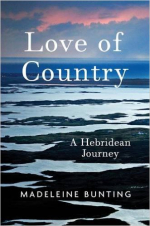
A Hebridean Journey

516bDi4f7DL._SX329_BO1,204,203,200_Candia McWilliam at Literary Review:

The Hebrides lie between the narrow seas and the great ocean; they are places in literature and in the self-understanding of the nation, at once at its heart and ‘other’; they are located, too, in the oft-treacherous main of Romance. In English, we say, ‘How do you do?’ meaning ‘How are you?’ In Gaelic it would be, ‘Where are you from?’ or ‘Who do you come from?’ An answer would provide a sense of location, not merely physical but in memory too. Islanders tend to share not only memories but also what they have forgotten.

In this account of several journeys to the north and west, to the islands of Jura, Iona, Staffa, Rum, Eriskay, Lewis and St Kilda, Bunting demonstrates with vivid craft, like that of a manuscript illuminator or an embroiderer (this is very much a stitched, as well as a woven, text), the truth of Rebecca Solnit’s words in The Faraway Nearby: ‘We think place is about space but in fact, it is really about time.’ Bunting’s location on Eriskay of three events, centuries apart – the arrival of Prince Charles Edward Stuart in 1745; a 19th-century scandal involving a young Englishwoman, the supernatural and several distinguished thinkers; and the grounding of the SS Politician with 28,000 cases of whisky in 1941, giving rise to the book and the filmWhisky Galore (gu leòir being the Gaelic for ‘abundance’) – makes the notion of arranging history around not time but place both seductive and refreshing.

more here.

A defence of ardour

ImagesAdam Zagajewski at Eurozine:

In Krakow, I sensed the luminescence of all that was best in the Polish tradition: distant recollections of the Renaissance recorded in the architecture and museum exhibits, the liberalism of the nineteenth-century intelligentsia, the energy of the interwar period, the influence of the democratic opposition just then coming into being.

The West Berlin of the early eighties struck me as a peculiar synthesis of the old Prussian capital and a frivolous city fascinated by Manhattan and the avant-garde (sometimes I suspected that the local intellectuals and artists treated the wall as yet another invention of Marcel Duchamp). In Paris, I didn't encounter the great minds, the great French arbiters of civilization – I'd come too late for that. But I discovered nonetheless the beauty of one of the few European metropolises to possess the secret of eternal youth (even Baron Haussmann's barbarism hadn't ruined the continuity of the city's life). Finally, at this brief list's conclusion, I came to know Houston, sprawled on a plain, a city without history, a city of evergreen oaks, computers, highways, and crude oil (but also wonderful libraries and a splendid symphony).

After a time I understood that I could draw certain benefits both from the wartime disaster, the loss of my native city, and from my later wanderings – as long as I wasn't too lazy and learned the languages and literatures of my changing addresses.

more here.

Why Pascal’s Wager Is Eminently Modern

Ed Simon in Nautilus:

PascalPascal’s theological masterpiece Pensees (or “Thoughts”) was where he elaborated on one of his most famous concepts, born out of an obsession with gambling inculcated during his libertine years, between his father’s death and his conversion. (Pascal was the inventor of a type of early roulette.) From this strange union of luck and theology Pascal conceived his infamous and celebrated “wager,” the argument not for the rationality of God, but for the rationality of belief in God. Reflecting the skepticism of the age, Pascal affirmed that we are “incapable of knowing either what He is or if He is.” The patristic churchmen and medieval scholastics had used gallons of ink and yards of vellum to rationally prove the existence of God, but prefiguring Immanuel Kant’s Critique of Pure Reason a century later, Pascal claimed that such proofs were for naught. Between humankind’s apprehension and the true nature of reality, there is, he said, “an infinite chaos which separate[s] us.” But the mechanism for one’s own personal faith can be supremely rational, and to make his case, Pascal returned us to the smoky gambling dens of his youthful indiscretions.

Pascal reasoned that life is a sort of “game,” and that our faith in God, or lack-there-of, is our wager as to the ultimate nature of reality—and what we stand to win (or lose) is nothing less than eternal life. Imagine that all of reality rides on a coin-toss, with one side of the coin affixed with the phrase “God Exists” and the other “God Does Not Exist.” The question that Pascal asked is, “What will you wager?” The essence of his thought experiment was that if one wagers that God does exist, and He does not, the gambler loses comparatively little (perhaps a bit of wine, women, and song, as Pascal may have enjoyed during his wild years). However, if one makes the bet that God does exist, and that coin lands heads-up, then the gambler is rewarded with an eternity in paradise. On the other hand, bet rightly that God does not exist, and you’ve gained very little (again, a life of finite pleasures). Bet wrongly that God does not exist, then you are punished with eternal damnation.

More here.

Friday Poem

Cole Porter
.

Tell them something you can live with.

The world is a hyperbole of grief.

Say Grief and give them magic.
Your sleight of hand
is all they need to understand that magic
is its own hyperbole,
that the world they’ve been banking on
is going out of business —Sale
of the Century
across each window,

The mannequins half stripped, the windows
half empty. You at the door, handing
out coupons for anything. You

at the door, talking the language
of the restless. Because it sounds good.
Or because there’s always a market
for love in an age of discontent.

Let them bank on that.

Rob them clean. Sell them back
their own dreams and live on the profit.
Say Bargain. Say Your money
or your heart.

.
by Dionisio D. Martínez
from Touching the Fire
Anchor Books, 1998
.