A Cry From the Heart: Michael Eric Dyson Addresses Race Head-On

Patrick Phillips in the New York Times:

ScreenHunter_2535 Jan. 24 20.41One Sunday in 1984, my father did something unexpected, at least for a white man in Georgia. He drove us past the little rural church we usually attended and kept going 40 miles south, all the way to Atlanta’s Ebenezer Baptist — home parish of the Rev. Martin Luther King Jr., and an epicenter of the American civil rights movement.

Reading Michael Eric Dyson’s “Tears We Cannot Stop: A Sermon to White America,” I was often reminded of that morning, when I was first exposed to the righteous anger, wry humor and unflinching honesty of a black pastor, determined to guide and teach his flock. While Dyson is best known as a writer and sociologist, he is also an ordained Baptist minister, and his new book draws both its impassioned style and its moral urgency from his years in the pulpit.

At a time when one video after another has forced us to acknowledge that unarmed African-Americans are regularly killed by the police, Dyson desperately wants his readers to confront the sources of that violence in our nation’s longstanding culture of white supremacy. But he also knows how many political arguments and sociological studies have fallen on deaf ears. And so rather than a treatise, “Tears We Cannot Stop” is a fiery sermon, and an unabashedly emotional, personal appeal. “What I need to say” to white America, Dyson writes, can only be said in “a plea, a cry, a sermon, from my heart to yours.”

More here.
Einstein’s wonderful letter to David Hilbert

Ashutosh Jogalekar in The Curious Wavefunction:

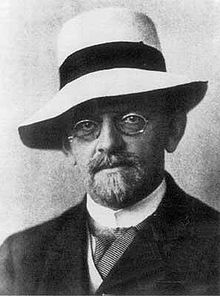
220px-HilbertDavid Hilbert (born today in 1862) was one of the greatest mathematicians of the 20th century. He made incisive contributions to a remarkable range of mathematical fields, published a best selling textbook on mathematical methods in physics, laid out a famous list of twenty-three unsolved problems which still challenge the field's practitioners and was a kind of philosophical godfather to at least two generations of mathematicians. Under his influence German mathematics reached its zenith before it was scattered apart by the rise of totalitarianism.

Perhaps less known is Hilbert's friendly and sometimes not-so-friendly rivalry with Einstein. Einstein's two most serious mathematical competitors were Hilbert and Henri Poincare. Poincare came close to discovering special relativity. Hilbert came close to discovering the equations of general relativity. Unlike Einstein, both were men of prodigious mathematical talent. Einstein's own mathematical shortcomings are well known; he had to learn most of the mathematics he needed for cracking open general relativity from friends and colleagues, most notably Marcel Grossmann.

In 1915 Hilbert came very close to publishing the equations of general relativity before Einstein did. Einstein had given a lecture in Berlin on his tentative attempts at formulating the equations. Hilbert was in the audience and doubled his efforts to find the right formulas. In the end Einstein ended up finding the correct form of the equations just a few days before Hilbert. It's quite likely that Hilbert would have gotten there first had Einstein gotten stalled for some reason.

More here.

The Mind Bleeds Into the World: A Conversation With David Chalmers

David Chalmers at Edge:

ScreenHunter_2533 Jan. 24 20.33I’ve been thinking a lot about the impact of technology on philosophy, and how technology can illuminate or sometimes even transform philosophical questions. These are exciting times right now in technology, with massive advances the last few years in artificial intelligence and virtual reality that’s got them in use on a wider scale than ever. Both of these technologies raise very deep philosophical issues. What’s artificial intelligence? That’s an artificial mind. What’s virtual reality? That’s an artificial world. This is great for a philosopher because philosophy, as I see it, is all about thinking about the nature of the mind, the nature of the world, and the connection between them. Thinking about artificial minds and artificial worlds can shed a lot of light on the mind and the world more generally.

I’ve thought a lot about the mind and consciousness, and when you’re doing that it becomes very natural to think about artificial intelligence. Could a computer have a mind? Could it be conscious? What kind of mind would it have? I’ve also thought a lot about technology augmenting the mind—like smartphones as extensions of the mind. Thinking about those questions about technology has helped philosophers get clearer on traditional questions about just what it is to have a mind.

Lately, I’ve been getting especially interested in questions about the world and about artificial worlds. It turns out that thinking about artificial worlds can help to think about many of the central questions in philosophy—the nature of reality, our knowledge of the external world, the existence of god, the mind-body problem, even the meaningfulness of life.

More here.

Double-entendre: Class takes satirical aim at Brooklyn grade-school parents and their liberal values

Sarah Lyall in National Post:

BookIf anyone is insane in Class, Lucinda Rosenfeld’s stiletto-sharp new novel about the quandaries and neuroses that consume the lives of a small swath of privileged white public-school parents in Brooklyn, it’s Karen. At 45, she works for a nonprofit organization that provides food to poor children, and she is about as self-conscious, self-involved and self-questioning a person as you’re likely to meet. It’s the rare encounter or decision that doesn’t fling her into a whirlpool of semantic, emotional and sociological analysis and second-guessing about whether she (as well as everybody else) is conveying the correct impression and living the correct way. Here she is described, for instance, after trying and failing to imbue her daughter with the requisite degree of empathy for an African-American classmate, Empriss, who lives in a homeless shelter.

“What was Karen doing wrong?” Rosenfeld writes. “She feared the only thing she’d accomplished by sending her child to a mixed-income school was to make Ruby feel venomous toward at-risk children. Or was she expecting too much from an 8-year-old?” The novel is called Class, but it’s just as preoccupied with race, and Rosenfeld deserves a great deal of credit for taking on this minefield of a subject. Karen and her “chronically underemotive” husband, Matt, a low-income-housing advocate who is “currently earning zero dollars per week,” try to live according to their values. This effort entails, among other things, sending their daughter to a public school, Betts, where white students are in the minority. It’s an admirable ideal, but Karen has a hard time with the ensuing reality. She’s reflexively dismayed at various elements of the African-American experience that she witnesses among Ruby’s classmates – the “beaded braids, buzz cuts and neon backpacks”; the names, like Sa’Ryah, “with their apostrophes, dashes, purposeful misspellings and randomly added letters”; – and then reflexively worried that she’s at heart a racist. But Mather, the predominantly white public school a few blocks away – where Karen impulsively enrolls Ruby (with the help of some forged documents) after an unpleasant incident with a bully named Jayyden, and where the children have names like Harper and Hudson – is hardly better.

More here.

Gene-Modified Ants Shed Light on How Societies Are Organized

Natalie Angier in The New York Times:

ANTSJP2-master675Among clonal raider ants, there are no permanently designated workers and queens. Instead, all the ants in a colony switch back and forth from one role to the other. About half the time, they behave like workers, gathering food for their young — generally, by raiding the nests of other ants and stealing their larvae. The rest of the time, they go into queen mode and all colony members lay eggs together.

…Whereas normal raider ants will happily pile on top of one another whenever possible, the knockout ants avoided the crowd, instead wandering around on their own for days at a time, as though they were nothing more than the average asocial beetle. The results suggest that the diversification and specialization of olfactory receptors were keys to the evolution of ant sociality. The researchers are also exploring the biochemistry of caretaking, asking which signals prod ants to leave the nest and find food for their young. Preliminary results suggest that volatile pheromones exuded by newborn larvae stimulate the brains of adult ants to begin generating the hormone inotocin, the ant’s equivalent of oxytocin, which is famed for its role in promoting nurturing behavior among mammals. For raider ants, an inotocin surge galvanizes the urge to venture forth and start plundering, and ants with the greatest number of inotocin-making neurons, Dr. Kronauer said, “are the first ones out the door.” Some ants, by contrast, ignore the community cues altogether, and they pay dearly for their scoffery. Reporting in the journal Current Biology, Dr. Kronauer and his colleagues described the strictness with which a colony of clonal ants synchronized its schedule: Now everyone lays eggs, now the eggs hatch into larvae, now the adults shut down their ovaries and instead attend to the hungry young. On occasion, though, an ant’s ovaries remain animated when they should be suspended, and other ants can detect the illicit activity through telltale hydrocarbon signatures on the offender’s cuticle. Policing ants soon move in on the hyperovarian individual, drag it out of the nest, hold it down and pull it apart, an execution that can take hours or days. “These ants are like little tanks,” Dr. Kronauer said. Why is it important to kill off an ant that might breed off-season when that ant is your genetic twin? Dr. Kronauer compared the police ants to the body’s immune system, and the rebel ant to cancer. “An ant colony faces similar problems as a multicellular organism,” he said. “You can’t have components that don’t respond to regulatory cues and start to replicate out of control.” When the ant police come knocking, there’s no rock big enough to hide you.

More here.

Monday, January 23, 2017

perceptions

PhpThumb_generated_thumbnail

Jiang Zhi. Love Letters (12), 2014.

Archival inkjet prints.

“In 2010, Jiang Zhi’s wife, whose name meant Orchid, died suddenly at the age of 37. His photo series Love Letters (2011–2014) was his way of mourning her: “She loved flowers,” he says. Selecting one or two flower stems—first orchids and later lilies, roses, peonies—he sprayed them with alcohol, set them alight, and, with his shutter clicking at 60 frames per second, captured the blossoms haloed in pale flames. The artist, who is also a poet, likens the flames to the butterfly in a fairy tale he once wrote. The butterfly fell in love with a flower, and when the flower died it wanted to die too, to “be with its beloved forever”. In Jiang Zhi’s pictures, the flowers are wreathed in flames but miraculously untouched by them. It is as if their beauty, like love itself, is immortal.”

More here and here.

Sunday, January 22, 2017

Wallace Stevens, the Detached Poet

Mark Dunbar in The American Conservative:

ScreenHunter_2528 Jan. 22 20.12The European poet Paul Celan once said that a poem “intends another, needs this other, needs an opposite.” For Wallace Stevens, this otherness was the world at large—the reason, perhaps, why his poetry contained so little but expressed so much.

Stevens was born October 2, 1879, and died August 2, 1955. Between these two dates quite a lot happened in the world. Fanatical ideologies were born, took control of states, and were defeated. Two global wars were fought: the first began with skirmishes on horseback and the second ended with the splitting of the atom. Human aviation was established, then militarized, and, finally, commercialized. Economic depressions wiped out the general optimism of the 19th century, and welfare systems were put in place as acts of material expiation. Frantic voices—either approvingly or with alarm—cried out that politics had replaced religion as society’s moral centrifuge. Telephones, cars, and antibiotics became commonplace, and the modern computer was already beginning its ascendancy toward societal ubiquitousness.

Stevens, however, was always somewhere else when the action happened and never spoke intelligently afterward about what took place. In Paul Mariani’s biography of him, The Whole Harmonium, one of the things that stands out is how little effect any of these tragedies or trends had on Stevens’s life or his poetry. Modern technology rarely appears in his poems. Planes don’t naggingly fly overhead and the telephone doesn’t interrupt the neurotic aesthetician. Scant political images can be found in a handful of his poems but never any political ideals.

More here.

The History of Popularity

Rayyan Al-Shawaf in the Los Angeles Review of Books:

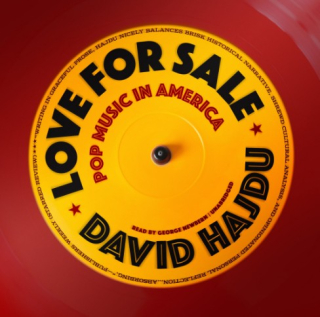
ScreenHunter_2527 Jan. 22 19.59David Hajdu, on the first page of Love for Sale: Pop Music in America, dismisses the category of popular music:

Of the countless terms for categories of music […] the least useful phrase I know is “popular music.” It provides no information about the music itself: no suggestion of how it sounds or what mood it might conjure, no indication of the traditions it grows from or defies, and no hint of whether it could be good for dancing, for solitary listening, or for anything else.

Yet he went and wrote a book on the subject — go figure — and a fine one at that.

Love for Sale examines the shape-shifting undergone by popular music, from minstrelsy to hip-hop, and the equally protean ways in which it has reached the public, from printed notation sheets for do-it-yourself parlor revelry in days of yore to the streaming and downloading of our digital era. The result is an exceptionally astute and stimulating account of music in the United States from the late 19th century until the early 21st. Hajdu’s propensity for stepping away from the hit parade in order to mingle with its architects as well as members of its audience not only militates against the monotony that a straightforward chronicle of the charts would generate, but it also fleshes out the social context of the songs under discussion.

The author also fills in the history of popularity for different kinds of music before 1940, when Billboard, which already compiled and published lists of popular songs, devised a system of charts — albeit an imperfect one — for tracking their sales.

More here.

Both NASA and NOAA declare that our planet is experiencing record-breaking warming for the third year in a row

Andrea Thompson in Scientific American:

ScreenHunter_2526 Jan. 22 19.532016 was the hottest year in 137 years of record keeping and the third year in a row to take the number one slot, a mark of how much the world has warmed over the last century because of human activities, U.S. government scientists announced Wednesday.

2016 is a “data point at the end of many data points that indicates” long-term warming, Deke Arndt, chief of the monitoring branch of the National Centers for Environmental Information, said.

While the record was expected, the joint announcement by NASA and the National Oceanic and Atmospheric Administration came in the midst of Senate confirmation hearings for President-elect Trump’s cabinet nominees, several of whom have expressed doubts about established climate science, as has Trump himself.

Many climate scientists, policy experts and environmentalists are concerned about the potential for the incoming administration to limit funding for climate science and roll back both national and international progress toward limiting the greenhouse gases that are warming the planet.

According to NOAA data, the global average temperature for 2016 was 1.69°F (0.94°C) above the 20th century average and 0.07°F (0.04°C) above the previous record set last year.

In NASA’s records, 2016 was 1.8°F (0.99°C) above the 1951-1980 average.

Each agency has slightly different methods of processing the data and different baseline periods they use for comparison, as do other groups around the world that monitor global temperatures, leading to slightly different year-to-year numbers.

But despite these differences, all of these records “are capturing the same long-term signal. It’s a pretty unmistakable signal,” Arndt said. Or as he likes to put it: “They’re singing the same song, even if they’re hitting different notes along the way.”

More here.

Moral Polarization and Many Pussyhats

John Holbo in Crooked Timber:

Election2016tippedabit_white-1024x743I agree with a lot in this piece by Will Wilkinson. But I disagree with stuff he says after asking the question ‘why is our moral culture polarizing?’

One place to start is to ask why it is that people, as individuals, gravitate to certain moral and political viewpoints. Jonathan Haidt’s “moral foundations” theory—which shows that conservatives and liberals have different moral sensibilities, sensitive to different moral considerations—is perhaps the best-known account. But there are others.

In a 2012 piece for the Economist, I surveyed some of the research in personality psychology that indicates a correlation between political ideology and a couple of the “Big Five” dimensions of personality—conscientiousness and openness to experience, in particular—and then connected that to evidence that people have self-segregated geographically by personality and ideology. It’s an interesting post and you should read it.

The upshot is that liberals (low conscientiousness, high openness to experience) and conservatives (high conscientiousness, low openness) have distinctive personalities, and that there’s reason to believe we’ve been sorting ourselves into communities of psychologically/ideologically similar people.

Wilkinson goes on to talk about other, non-Haidt stuff that contributes to polarization. I like that better. (I think Wilkinson does, too.) But I want to grouse about Haidt, who I think has done interesting empirical work but who commits what I regard as terrible howlers when it comes to moral theory, and when it comes to reasoning about practical, normative implications of his work.

More here.

Cryptocurrencies and Blockchains

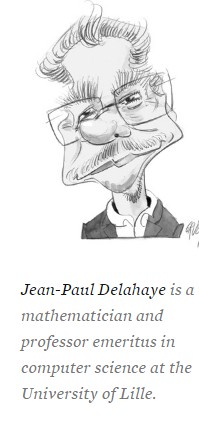
Jean-Paul Delahaye in Inference Review:

ScreenHunter_2525 Jan. 22 19.35In November 2008, a paper entitled “Bitcoin: A Peer-to-Peer Electronic Cash System” was published online.1 The system described in the paper, including a monetary unit termed “bitcoins,” embodied the world’s first cryptocurrency. The most striking characteristic of the bitcoin system is the complete absence of any form of centralized control. There is no role for governments, financial institutions, or regulatory bodies. The system is completely autonomous. Peer-to-peer networking technology and mathematical encryption form the basis for the system. A distributed ledger, known as the blockchain, maintains a public record of all transactions. In the absence of trusted third parties, the security and maintenance of the system is a shared responsibility.

On January 3, 2009, with access limited to a select few cryptologists, the bitcoin software was released and the first bitcoins issued. Bitcoin was not, it must be noted, an overnight success. In fact, it wasn’t until 2013 that the system really began to take off. That year saw a fifty-fold increase in valuation, so that by January 2014, a bitcoin was worth around nine hundred euros. A series of advances and declines since then has seen the value of bitcoins fluctuate. Against the expectations of some observers, the currency has recovered and a bitcoin is again worth around six hundred euros.2 There are now more than seven hundred cryptocurrencies competing with bitcoin.3 Their success to date has been limited, with a cumulative capitalization of only around twenty percent that of bitcoin. The total capitalization of the bitcoins issued thus far amounts to more than fifteen billion euros.

Although credited to Satoshi Nakamoto, the true identity of the person, or people, responsible for the bitcoin paper remains unknown.

More here.

Sunday Poem

The depth of value of a thing
is in how much its missed.
………………………. Roshi Bob

The Executive’s Death


Merchants have multiplied more than the stars of heaven
Half the population are like the long grasshoppers
That sleep in the bushes in the cool of the day;
The sound of their wings is heard at noon, muffled, near the earth.
The crane handler dies; the taxi driver dies, slumped over
In his taxi. Meanwhile high in the air an executive
Walks on cool floors, and suddenly falls.
Dying, he dreams he is lost in a snowbound mountain
On which he crashed, carried at night by great machines.
As he lies on the wintry slope, cut off and dying,
A pine stump talks to him of Goethe and Jesus.
Commuters arrive in Hartford at dusk like moles
Or hares flying from a fire behind them,
And the dusk in Hartford is full of their sighs.
Their trains come through the air like a dark music,
Like the sound of horns, the sound of thousands of small wings.

by Robert Bly
from The Light Around the Body
HarperCollins Publishers, 1967
.

Saturday, January 21, 2017

An inaugural poem of protest by Robert Pinsky

Robert Pinsky at CNN:

170120100154-robert-pinsky-headshot-new-medium-plus-169'Exile and Lightning'

You choose your ancestors our
Ancestor Ralph Ellison wrote.
Now, fellow-descendants, we endure a
Moment of charismatic indecency
And sanctimonious greed. Falsehood
Beyond shame. Our Polish Grandfather
Milosz and African American Grandmother Brooks
Endured worse than this.
Fight first, then fiddle she wrote.
Our great-grandmother Emma Lazarus
Wrote that the flame of the lamp of the
Mother of Exiles is "Imprisoned lightning."
My fellow children of exile
And lightning, the indecency
Constructs its own statuary.
But our uncle Ernesto Cardenal
Says, sabemos que el pueblo
la derribará un día. The people
Will tear it down. Milosz says,
Beautiful and very young
, meaning recent,
Are poetry and philo-sophia, meaning science,
Her ally in the service of the good . …

Their enemies, he wrote, have delivered
Themselves to destruction.
"Un dia," and "very young" — that long
Ancestral view of time:
Inheritors, el pueblo, fellow-exiles:
All the quicker our need to
Fight and make music. As Gwendolyn
Brooks wrote, To civilize a space.
From here.

J.M. Coetzee: Antonio Di Benedetto is a Great Writer We Should Know

J.M. Coetzee in the New York Review of Books:

ScreenHunter_2524 Jan. 21 19.25The year is 1790, the place an unnamed outpost on the Paraguay River ruled from faraway Buenos Aires. Don Diego de Zama has been here for fourteen months, serving in the Spanish administration, separated from his wife and sons. Nostalgically Zama looks back to the days when he was a corregidor (chief administrator) with a district of his own to run:

Doctor Don Diego de Zama!… The forceful executive, the pacifier of Indians, the warrior who rendered justice without recourse to the sword…, who put down the native rebellion without wasting a drop of Spanish blood.

Now, under a new, centralized system of government meant to tighten Spain’s control over its colonies, chief administrators have to be Spanish-born. Zama serves as second-in-command to a Spanish gobernador: as a Creole, an americano born in the New World, he can aspire no higher. He is in his mid-thirties; his career is stagnating. He has applied for a transfer; he dreams of the letter from the viceroy that will whisk him away to Buenos Aires, but it does not come.

Strolling around the docks, he notices a corpse floating in the water, the corpse of a monkey that had dared to quit the jungle and dive into the flux. Yet even in death the monkey is trapped amid the piles of the wharf, unable to escape downriver. Is it an omen?

More here.

No sign of seasonal dark matter after four years of searching

Jennifer Oullette in New Scientist:

BottompmtarrayDark matter has just suffered another blow. Only one experiment claims to have seen signs of the mysterious stuff, and now the massive XENON100 experiment has failed to find any evidence for that signal. This may put the controversial signal to rest once and for all – but some say it’s not that simple.

Dark matter is a mysterious substance that makes up roughly 23 per cent of our universe. We know it’s there because of the gravitational force it exerts on normal matter, but it’s devilishly difficult to detect.

Myriad experiments have been trying to do just that, most buried deep underground to block out troublesome cosmic rays. But while there have been a few tantalising hints here and there, nothing has reached the threshold required to count as detection – with one exception.

In 1998, scientists at the DAMA experiment buried deep in Italy’s Gran Sasso mountain claimed to have detected dark matter in the form of a weakly interacting massive particle (WIMP) weighing around 10 gigaelectronvolts (GeV). The rate of recorded blips as particles collide with the nuclei of the detector material varied with the seasons. The DAMA scientists attributed this to the Earth moving through a “wind” of dark matter as it orbits the sun.

DAMA’s signal was unmistakable, but many physicists argued that other factors besides dark matter could explain it. It didn’t help that the DAMA team refused to share their data publicly or collaborate with other researchers, making it more difficult to test those claims.

More here.