The Making of Future Man

James Gleick in the New York Review of Books:

ScreenHunter_2564 Feb. 01 20.03The annual awards for best science fiction are called “Hugos.” A futuristic story by William Gibson in 1981 was called “The Gernsback Continuum.” But except for a few markers like these, Hugo Gernsback (1884-1967) has mostly vanished from our cultural memory, which is a pity, because he was an extraordinary man, and his influence on our modern age—electrical, science-permeated, and full of wonders—was outsized.

Gernsback is sometimes called the father of science fiction, though not because of any he wrote himself.(He did self-publish one novel, Ralph 124C 41+: A Romance of the Year 2660, which Martin Gardner called “surely the worst SF novel ever written.”) He gave the new genre its name in the 1920s, when he published “pulp” magazines like Amazing Stories and Science Wonder Stories in which eager writers could ply their trade for pennies a word (when he paid them at all). “By ‘scientifiction,’” he declared, “I mean the Jules Verne, H. G. Wells, and Edgar Allan Poe type of story—a charming romance intermingled with scientific fact and prophetic vision.”

First, though, he was a radio man, immersed in and obsessed with the new technology of wireless communication. He was an inventor in the turn-of-the-century generation inspired by Thomas Edison; among his eighty patents are “Radio Horn”; “Detectorium”; “Luminous Electric Mirror”; “Ear Cushion” (for telephone receivers); “Combined Electric Hair Brush and Comb” (“may also be used as a massage instrument”). He formed the first radio hobbyist group, the Wireless Association of America, when he was twenty-five years old, and incorporated its successor, the Radio League of America, six years later; created Radio News magazine; and started one of New York’s first stations, WRNY, broadcasting from atop the Roosevelt Hotel on Madison Avenue. The station and the league promoted the magazine, and the magazine promoted the station and the league, and all promoted Gernsback. He was an evangelist for the church we might call electronic culture. Most of us are its parishioners nowadays, with our magic boxes.

More here.
A History of the Centuries-Long Argument over What Makes Living Things Tick

George Scialabba in Inference Review:

ScreenHunter_2563 Feb. 01 19.59When two aspiring young writers meet and circle each other at a party in Boston, Brooklyn, or Berkeley, sooner or later (usually sooner) one will ask: “Do you have an agent?” Without one, every hopeful writer knows, you’re nowhere: editors nowadays are too beleaguered to read anything not vouched for by someone whose commercial judgment has been tested and vindicated in the literary marketplace.

According to the delightful science fiction romance film, Her, artificial intelligences also socialize, or will before long.1 I imagine them asking one another at parties, “Are you an agent?” They will not, of course, be asking about literary representation, but about the psychological or emotional or moral capacity we commonly call agency. They’ll be looking to find out whether the AI they’re meeting answers ultimately to itself or to someone else, whether it can set and change its own goals, whether it can surprise itself and others. Beings possessed of agency are autonomous, spontaneous, capable of initiative, and moved by internal as well as external forces or drives.

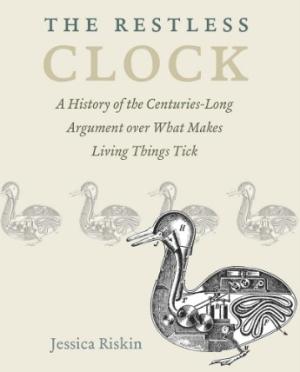
According to Jessica Riskin’s The Restless Clock, agency is everywhere, or at least far more widespread than is dreamt of in modern philosophy of science. If agency is “an intrinsic capacity to act in the world,”2 then science is not having any of it. It is “a founding principle of modern science … that a scientific explanation must not attribute will or agency to natural phenomena.”3 This ban on agency is the foundation of scientific epistemology; it “seems as close to the heart of what science is as any scientific rule or principle.”

More here.

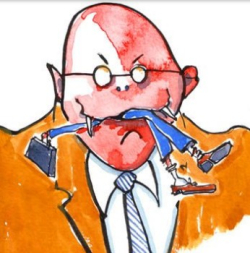
The Dumbest Business Idea Ever: The Myth of Maximizing Shareholder Value

Lynn Stout in Evonomics:

ScreenHunter_2561 Feb. 01 18.57By the end of the 20th century, a broad consensus had emerged in the Anglo-American business world that corporations should be governed according to the philosophy often called shareholder primacy. Shareholder primacy theory taught that corporations were owned by their shareholders; that directors and executives should do what the company’s owners/shareholders wanted them to do; and that what shareholders generally wanted managers to do was to maximize “shareholder value,” measured by share price.

Today this consensus is crumbling. As just one example, in the past year no fewer than three prominent New York Times columnists have published articles questioning shareholder value thinking.1 Shareholder primacy theory is suffering a crisis of confidence. This is happening in large part because it is becoming clear that shareholder value thinking doesn’t seem to work, even for most shareholders.

Consider the example of the United States. The idea that corporations should be managed to maximize shareholder value has led over the past two decades to dramatic shifts in U.S. corporate law and practice. Executive compensation rules, governance practices, and federal securities laws, have all been “reformed” to give shareholders more influence over boards and to make managers more attentive to share price.2 The results are disappointing at best. Shareholders are suffering their worst investment returns since the Great Depression;3 the population of publicly-listed companies has declined by 40%;4 and the life expectancy of Fortune 500 firms has plunged from 75 years in the early 20th century to only 15 years today.

More here.

Poetry in a Time of Protest

Edwidge Danticat in The New Yorker:

Danticat-PoetryinaTimeofProtest-690Political language, like poetry, is rarely uttered without intention. When Trump said, unconvincingly in his speech, that “we are one nation, and their pain is our pain,” I knew that the They was Us, this separate America, which he continually labels and addresses as Other. “Their dreams are our dreams,” he added. To which I could hear the eternal bard of Harlem, Langston Hughes, shout from his grave, “What happens to a dream deferred?” or “I, too, am America.” The late Gwendolyn Brooks, a Chicagoan and the Pulitzer Prize winner for poetry in 1950, might have chimed in with “Speech to the Young,” a poem about one manner of resisting and what we now commonly call “self-care”:

Say to them,

say to the down-keepers,

the sun-slappers,

the self-soilers,

the harmony-hushers,

“Even if you are not ready for day

it cannot always be night.”

You will be right.

For that is the hard home-run.

Live not for battles won.

Live not for the-end-of-the-song.

Live in the along.

Looking to both living and dead poets for words of inspiration and guidance is now part of my living “in the along,” for however many years this particular “night” lasts.

More here.

The intolerance of the left

Thurmond-west-virginiaThomas Frank at The Guardian:

Liberal Americans like to think we know the answer to a lot of things – including why those who live outside liberal bubbles chose Donald Trumpover Hillary Clinton.

Small-town people, we liberals think, are Republican people. At their best, they are pious, respectful, and conservative; at their worst they are smug and self-righteous, small-minded and yet capable of broad prejudice. People in the hinterlands, we think, are just different: all the adults are church-going puritans with a neatness obsession, and all the kids long to escape and finally be themselves.

But there’s another way of looking at it, and it is just this: small towns are dying.

Donald Trump doesn’t really reflect the moral values of middle America. He is a consummate city slicker, a soft-handed, foul-mouthed toff who lives in a 58-story building and has been identified with New York City excess his entire life. But people in rural areas are desperate these days. Many of them chose Trump, despite his vulgarity and his big-city ways, because he promised to make them “great again”.

Watching movies won’t help you to understand this. You need to see the thing itself. And what you will discover, should you choose to undertake this mission in the part of the midwest where I come from, is this: ruination, unless the town you choose to visit has a college or a hospital or a prison in it.

more here.

How Slaves Reacted to Their Appraisals: Traumatic U.S. History

Daina Ramey Berry in AlterNet:

Average Appraised Values:
Females: $517 ($15,189 in 2014); Males: $610 ($17,934 in 2014)
Average Sale Prices:
Females: $515 ($15,131 in 2014); Males: $662 ($19,447 in 2014)

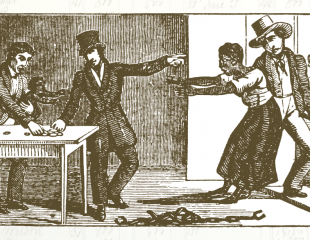
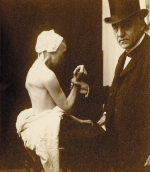
On the eve of the Civil War, an abolitionist attending the auction of 149 human souls in New Orleans, Louisiana, was intrigued by the bid caller’s excitement over a seventeen-year-old field hand named Joseph who was on the auction block. “Gentlemen,” the bid caller exclaimed, “there is a young blood, and a capital one! He is a great boy, a hand for almost every thing. Besides, he is the best dancer in the whole lot, and he knows also how to pray—oh! so beautifully, you would believe he was made to be a minister! How much will you bid for him?” The opening bid for Joseph was a thousand dollars, but according to the enthusiastic auctioneer, Joseph was worth more, considering his value over time. “One thousand dollars for a boy who will be worth in three years fully twenty-five hundred dollars cash down. Who is going to bid two thousand?” the caller asked his audience. As the price for Joseph increased to $1,400, each interested party eagerly made eye contact with the bid caller. Standing on the podium with a wand in hand, he tried to increase Joseph’s price by assuring the audience that $1,400 was “too small an amount for” him. “Seventeen years only,” he added, “a strong, healthy, fine-looking, intelligent boy. Fourteen hundred and fifty dollars!… One thousand, four hundred and fifty—going! going! going! And last—gone!” As the caller slapped his hand on the platform, just like that, in less than five minutes, Joseph was sold “to the highest bidder.”

More here. (Note: At least one post throughout February will be in honor of Black History Month)

kafka, a life

StachEarly-199x300Robert Minto at Open Letters Monthly:

Kafka’s swimming is a perfect example — a small thing, it might seem, a mere recreational tributary to the torrent of a life. But Stach begins by exploring its somatic and symbolic dimensions:

Swimming is an archaic activity that taps into deep, preponderantly unconscious realms of experience. It is an exceptionally intense and multi-layered, yet easily achievable physical and mental state of being, comparable only to sexuality.

From such lyrical abstractions, Stach circles in to mention virtually every major passage in Kafka’s texts that pertains to swimming (his story about a man who wins an Olympic medal for swimming despite not knowing how to swim, passages from his letters). He speculates on the psychoanalytic explanation for Kafka’s love of floating. He briefly summarizes Kafka’s prospects for swimming-places over the course of his life. Then he continues to weave appropriate references to Kafka’s aquatic disporting through the whole of his narrative. All of this sets up the moment when Stach will address one of the most famous sentences in Kafka’s writings, a line in his journal with which he commemorated August 2, 1914: “Germany has declared war on Russia — went swimming in the afternoon.” This passage has been held up as an illustration of Kafka’s self-absorption and unworldliness. Stach touches it lightly, and merely notes why it has been over-quoted. But in the context of his tender inquiry, the reader of this biography understands at once how profound a response it was for Kafka to swim on the first day of the war. Stach lays the groundwork for such epiphanies everywhere. When you consider how long it took to write the volumes of this biography, and that they were written out of order, such an architectural achievement becomes truly remarkable.

more here.

on ‘The Sound of Music’

SoundofmusicKate Guadagnino at The Paris Review:

The Sound of Music hasn’t tarnished over time; it was always dated, always reviled by the learned. Rumor has it that Pauline Kael was fired from McCall’s for her withering review of it (“the sugar-coated lie that people seem to want to eat”) and that Joan Didion was fired from Vogue for hers, which described it as “more embarrassing than most, if only because of its suggestion that history need not happen to people … Just whistle a happy tune, and leave the Anschluss behind.”

She’s right that the film hints at the limits of art’s power in the face of real danger. “Believe me,” Billy Wilder said at an industry party when he heard of Fox’s production plans, “no musical with swastikas in it will ever be a success!” Of course he was wrong—this was three years before The Producers—though the film might have contained more swastikas than it does. Before Robert Wise could be convinced to sign on, William Wyler was meant to direct. He’d lost relatives in concentration camps and was angling to add a military scene showing tanks decimating Salzburg. Instead, the film treats Nazism as little more than a vague threat to the Austrian aristocracy. At the same time, it capitalizes on a villain everyone can get behind, rendering the Third Reich a least favorite thing. Who among us doesn’t love siblings, lakeside villas, and grandma-chic floral prints—and who wouldn’t root for a Nazi-sympathizing boyfriend to get dumped?

more here.

Tuesday, January 31, 2017

Poetry Should Talk Honestly About Money

Aaron Giovannone in The Walrus:

ScreenHunter_2560 Jan. 31 20.49It’s april 2016 and I’m unemployed again. When lobster fishers launch their boats in the spring, we contract professors drift into harbour, mooring to their vacated spots on the unemployment lists.

But it’s worse this season. The college where I have been teaching for two years, filling in for professors on leave, doesn’t need to rehire me. Soon my unemployment benefits will run out, and I’ll untie again, sail off. It’ll be my fourth move in three years. And moving is a lot of work, even if, like me, you live in a cheap one-bedroom apartment, and you sleep on an air mattress (and have another air mattress as a “couch”) and you don’t bother unpacking anymore, and you only own a few pieces of disintegrating, assemble-it-yourself furniture. My attachments to people, places and things are disintegrating too, but I don’t have time to worry about that. I’m thirty-six, and need a job.

But while I make my living as an English professor, that job stems from my career as a poet, without which I wouldn’t have earned my degrees or found teaching jobs. Many poets and other creative writers are in the same situation, struggling to make money in the academy. For those in the publishing industry, the situation is worse.

Few poets, however, write honestly about their economic situation. Indeed, it’s a challenge to find any poet willing to come clean about money: wanting it, enjoying it, needing it, or lacking it—even though this must necessarily be our condition.

More here.

POETRY BY LEE YUK SA, Translated by Sekyo Nam Haines

O Plantain

Ever ailing, my breath drifts lazily today
above the silver waves like a moon over the ocean.

O Plantain, lift your long green sleeve,
and wet my burning lips with your moist tenderness.

Long ago, we were two separate souls, parted
without a word on that last day of the Saracen kingdom.

The young women’s firm and slender hands at the cuffs of your sleeves,
the delicate lines in their palms still weaving their dreams.

Each time when you saw the new flowers and the constellation afar,
how often have you tried to re-imagine the forgotten seasons?

Oh, better a thousand years from now, on this autumn night,
you and I together, let’s measure how long the sound of rain is!

As dawn comes, somewhere in the sky, a rainbow will rise—
treading on that rainbow, let us return to our endless parting.

Translators note; plantain leaves resemble the sleeves of Korean women’s traditional blouse.

More here.

Hydrogen turned into metal in stunning act of alchemy

Ian Johnston in The Independent:

ScreenHunter_2559 Jan. 31 20.36For nearly 100 years, scientists have dreamed of turning the lightest of all the elements, hydrogen, into a metal.

Now, in a stunning act of modern-day alchemy, scientists at Harvard University have finally succeeded in creating a tiny amount of what is the rarest, and possibly most valuable, material on the planet, they reported in the journal Science.

For metallic hydrogen could theoretically revolutionise technology, enabling the creation of super-fast computers, high-speed levitating trains and ultra-efficient vehicles and dramatically improving almost anything involving electricity.

And it could also allow humanity to explore outer space as never before.

But the prospect of this bright future could be at risk if the scientists’ next step – to establish whether the metal is stable at normal pressures and temperatures – fails to go as hoped.

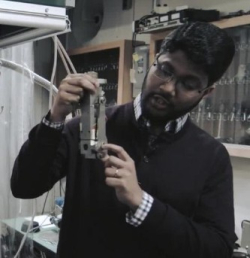
Professor Isaac Silvera, who made the breakthrough with Dr Ranga Dias, said: “This is the holy grail of high-pressure physics.

“It's the first-ever sample of metallic hydrogen on Earth, so when you're looking at it, you're looking at something that’s never existed before.”

More here.

Collective Effervescence

Drake Baer in New York Magazine:

ScreenHunter_2558 Jan. 31 20.27Let’s say you recently marched with 3.2 million people, celebrated a 108-year wait for a World Series, or raved deep into the night. The contagious euphoria you felt has a name: “collective effervescence,” coined a century ago by the French sociologist Émile Durkheim. It’s that glowy, giddy feeling where your sense of self slackens, yielding to a connection with your fellow, synchronized humans.

In an instance of sublime timing, I caught SUNY Buffalo psychologist Shira Gabriel’s presentation about collective effervescence at the the Society for Personality and Social Psychology conference on Saturday. According to her forthcoming research, these effervescent experiences fill the human need for belonging in a way that most social psychology research — so long preoccupied with couples, families, and small groups — has tended to overlook. It underscores how customs as ancient as pilgrimages and feast days, and modern as protests and pro sports, help people to lead happier, connected, and more personally meaningful lives.

Gabriel, who was initiated into effervescence by following Phish during her grad-school years, said it’s the sort of thing most people experience without ever considering. Think about why people go to concerts, for instance: The sound is loud, the drinks expensive, the people sweaty, and you can hear the same songs at home. “What is so positive about being in the spot where the music is made?” she said in an interview. While you don’t say to yourself that you’re going to the show to fulfill your need for collective effervescence, the need is being met.

More here.

Sick But Not Sick

Groopman_1-020917Jerome Groopman at the NYRB:

Suzanne O’Sullivan is a neurologist specializing in epilepsy who practices in London. Many of her patients suffer from so-called conversion disorders: somatic symptoms caused by psychological distress that defy ready diagnosis by medical tests or physical examination. “They are medical disorders like no others,” O’Sullivan writes. “They obey no rules. They can affect any part of the body…. Almost any symptom we can imagine can become real when we are in distress.”

Physicians who practice family medicine, pediatrics, or internal medicine learn that a substantial proportion of people seeking care have inexplicable complaints. Some surveys indicate that at least a quarter of such patients report symptoms that appear to have no physical basis, and that one in ten continues to believe that he has a terminal disease even after the doctor has found him to be healthy.1

Understandably, because the symptoms obscure the psychological genesis, patients seek a physical disorder to explain their condition, and turn to doctors like O’Sullivan to provide a diagnosis.

more here.

Finding the Blank Spaces in a Well-Mapped World

Vqr9_0Lois Parshley at VQR:

Explorers have long filled in our understanding of the world, using and then discarding the sexton, the compass, MapQuest. “The project of mapping the Earth properly is to some extent complete,” Hessler says. But while there are no longer dragons fleshing out far-flung places, a surprising number of spaces are still uncharted—and the locations we’ve discovered to explore have only expanded. “Where we were just trying to accurately map terrestrial space,” Hessler says, we’ve moved into a “metaphor for how we live. We’re mapping things that don’t have a physical existence, like internet data and the neural connections in our heads.”

From mapping the dark between stars to the patterns of disease outbreaks, who is making maps today, and what they’re used for, says a lot about the modern world. “Now anything can be mapped,” says Hessler. “It’s the Wild West. We are in the great age of cartography, and we’re still just finding out what its powers are.”

The Amundsen-Scott South Pole Station sits on the Earth’s axis, at an altitude just above 9,000 feet, smack in the world’s largest, coldest desert, where a small settlement of metal shipping containers takes shape in rows on a windblown sheet of continental ice. Heavy equipment beeps in the polar air. In these harsh conditions, Naoko Kurahashi Neilson has been trying to map black holes.

more here.

The 100 best nonfiction books: – De Profundis

Robert McCrum in The Guardian:

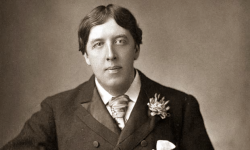
UntitledIn his cell, between January and March 1897, in preparation for his release from Reading jail in April, Oscar Wilde began to write an extraordinary letter. He wanted to address his notorious relationship with Lord Alfred Douglas, the fin-de-siècle romance that had swiftly become a fatal tragedy. “Bosie” had remained aloof from his former lover throughout the two years of Wilde’s sentence (“with hard labour”), and the 80 pages of manuscript written on 20 folios of thin blue prison paper became Wilde’s tormented bid for some kind of rapprochement. What began as an act of would-be reconciliation blossomed into an excruciating, and utterly compelling, chapter of autobiography, an aesthetic apologia (Epistola: In Carcere et Vinculis – “Letter: from Prison and in Chains”) , and finally a tour de force of prose by a late-Victorian writer of genius.

…“I now see that Sorrow is at once the type and test of all great Art. What the artist is always looking for is that mode of existence in which soul and body are one and indivisible: in which the outward is expressive of the inward: in which Form reveals…” “To the artist, expression is the only mode under which he can conceive life at all. To him what is dumb is dead. But to Christ it was not so…

More here.

The Right Way to Say ‘I’m Sorry’

Jane Brody in The New York Times:

SorryMost people say “I’m sorry” many times a day for a host of trivial affronts – accidentally bumping into someone or failing to hold open a door. These apologies are easy and usually readily accepted, often with a response like, “No problem.” But when “I’m sorry” are the words needed to right truly hurtful words, acts or inaction, they can be the hardest ones to utter. And even when an apology is offered with the best of intentions, it can be seriously undermined by the way in which it is worded. Instead of eradicating the emotional pain the affront caused, a poorly worded apology can result in lasting anger and antagonism, and undermine an important relationship. I admit to a lifetime of challenges when it comes to apologizing, especially when I thought I was right or misunderstood or that the offended party was being overly sensitive. But I recently discovered that the need for an apology is less about me than the person who, for whatever reason, is offended by something I said or did or failed to do, regardless of my intentions. I also learned that a sincere apology can be powerful medicine with surprising value for the giver as well as the recipient.

In the very first chapter of her new book, “Why Won’t You Apologize?,” Dr. Lerner points out that apologies followed by rationalizations are “never satisfying” and can even be harmful. “When ‘but’ is tagged on to an apology,” she wrote, it’s an excuse that counters the sincerity of the original message. The best apologies are short and don’t include explanations that can undo them. Nor should a request for forgiveness be part of an apology. The offended party may accept a sincere apology but still be unready to forgive the transgression. Forgiveness, should it come, may depend on a demonstration going forward that the offense will not be repeated. “It’s not our place to tell anyone to forgive or not to forgive,” Dr. Lerner said in an interview. She disputes popular thinking that failing to forgive is bad for one’s health and can lead to a life mired in bitterness and hate.

More here.

Tuesday Poem

We Lived Happily During the War
.

And when they bombed other people’s houses, we

protested
but not enough, we opposed them but not

enough. I was
in my bed, around my bed America

was falling: invisible house by invisible house by invisible house.

I took a chair outside and watched the sun.

In the sixth month
of a disastrous reign in the house of money

in the street of money in the city of money in the country of money,
our great country of money, we (forgive us)

lived happily during the war.
.
.
by Ilya Kaminsky
from Poetry International Website
.

Monday, January 30, 2017

Deep learning dead languages

by Espen Sommer Eide

It is a tingling sense of presence in the room, when I finally press play on the generated audio file, and hear my trained deep-learning neural net try to formulate new and never before spoken sentences in a language where the last fluent speaker passed away in 2003. When Edison invented the phonograph, it was soon conceived as a means not primarily to play music, but to hear voices of dead persons. The voices recorded on the phonograph were experienced as sounds without bodies, as spirits in space. Listening intensely to the sound, at first I can hear only static noise, but deep inside it various spectral shapes and pulses are starting to make themselves present. I think this is what it must have felt like for Edison when he played his first ghost-like recording of a human voice.

Two early versions of experiment:

Recently there have been big breakthroughs in the field of artificial intelligence and machine learning. Over a period of just a couple of years, it has found new and novel uses in everything from self-driving cars and medical image processing to automatic translation algorithms, including speech recognition and natural language processing. Companies such as Google, Facebook, Apple, Amazon, Microsoft and the Chinese firm Baidu are currently competing in hunting down and clearing out whole computer science departments at universities around the globe, in order to employ the best heads in the field.

One of the technologies driving this revolution goes by names such as deep learning and deep neural networks. In short, the form of computing that is inspired by the brain and its billions of neurons working in parallel to interpret and act in accordance with its surroundings. What has made this old idea of neural networks make such a comeback is the recent availability of big data – large data sets used in the training of the networks, and also the speed of parallel processing in modern GPU chipsets.

As an artist and electronic musician with a keen interest in language and computing, I came across an article published fall 2016, where a group of Google scientists had turned towards the field of audio to try to improve artificial speech[1]. What triggered my imagination was not the fact that they had succeeded in making computer speech sounding much more natural, but the weird by-products of trying the technology out on musical material and other sounds. I had to try this out myself and I fearlessly installed the necessary software on one of Google's cloud-based computing engines to run the tests. My first experiments were with a collection of water-insect field recordings, and also with my own music to see if it could learn to "sound" like tracks of my musical projects phonophani or alog (possibly putting me out of work in the process!).

Read more »