New results from CERN could fill one of the biggest gaps in the Standard Model of physics

From Science Alert:

ScreenHunter_2570 Feb. 03 19.17Of the many unanswered questions that stand in the way of the Standard Model of physics being able to adequately explain the Universe and everything in it, the mystery of matter-antimatter asymmetry is one of the biggest.

The equal amounts of matter and antimatter produced by the Big Bang should have cancelled each other out, resulting in a Universe with barely any particles, and yet, here we are. Now, new results from a Large Hadron Collider detector at CERN could be our best chance at explaining the paradox of our own existence.

For a bit of background into our asymmetrical Universe problem, the laws of physics predict that for every particle of regular matter, there’s an equal but opposite antiparticle.

That means for every negatively-charged electron, there’s a positively charged positron. For every regular hydrogen atom, there’s an anti-hydrogen atom.

If an antiparticle happens to find a regular particle, they will annihilate each other, releasing energy in the form of light.

The problem arises when we consider that the Standard Model of physics predicts that the Big Bang would have produced equal amounts of baryon particles in matter and antimatter forms – called baryonic matter and antibaryonic matter.

Baryons are a crucial type of subatomic particle, because you know those protons and neutrons that make up most of the mass of the visible matter in the Universe? They’re baryons.

The fact that we ended up with so much more baryonic matter than antibaryonic matter in the Universe is a problem, because the equal amounts produced by the Big Bang should have instantly cancelled out almost everything, resulting in a Universe with barely any particles – just radiation.

More here.
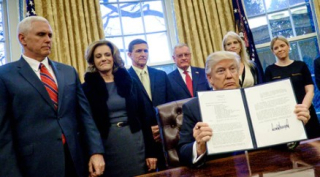
American institutions won’t keep us safe from Donald Trump’s excesses

Corey Robin in The Guardian:

ScreenHunter_2569 Feb. 03 19.08I recently expressed skepticism that Trump is installing fascism in America. Someone then asked me: what did I think was going to happen with Trump? I answered her as truthfully as I could: I don’t know. The fact is none of us knows. Not even, I suspect, Trump or Steve Bannon. That’s because our political situation is not a fixed or frozen force field; it’s changing every day. It also – crucially – depends in part on what we do.

Before I wrote my book on conservatism, I was a student of the politics of fear. My first book, which was based on more than a decade of research, was an analysis of how political theorists since Hobbes have understood the politics of fear. In the second part of the book, I offered my own counter-analysis of the politics of fear in the United States. Fear, American Style, I called it.

Here’s what I learned about it: the worst, most terrible things that the United States has done have almost never happened through an assault on American institutions; they’ve always happened through American institutions and practices.

These are the elements of the American polity that have offered especially potent tools and instruments of intimidation and coercion: federalism, the separation of powers, social pluralism and the rule of law.

All the elements of the American experience that liberals and conservatives have so cherished as bulwarks of American freedom have also been sources and instruments of political fear. In all the cases I looked at, coercion, intimidation, repression and violence were leveraged through these mechanisms, not in spite of them.

More here.

The Poetry, Politics and Madness of Ezra Pound

52196947Robert Crawford at Literary Review:

Examining some of Pound’s late prose writings, Swift concludes that ‘Pound never calls for violence, but preaches brutality in code.’ His book concentrates on the period, between 1945 and 1958, when Pound was incarcerated in the huge Washington mental hospital of St Elizabeths – which Pound nicknamed ‘the bughouse’ – after his legal team had successfully argued that he could not be tried for treason because he was insane. Before joining about seven thousand other inmates at St Elizabeths, Pound had been detained in Guantanamo-like conditions in a prison camp near Pisa controlled by US forces. The crime he was accused of was making, throughout the Second World War, radio broadcasts for Mussolini in an attempt to convince Americans of, among other things, the rightness of the Fascist cause. For Pound, America’s modern political leaders had abandoned true American values; he considered Hitler to be a martyr, Churchill a supporter of ‘kikes’ and Mussolini a great ‘Boss’.

Pound was lucky not to be executed as a traitor. The defence of insanity saved him but also condemned him. From the asylum he submitted for publication his Pisan Cantos, which was soon awarded one of America’s most prestigious literary awards, the Bollingen Prize. This is a reminder, if one were needed, that he continued to be regarded as one of the 20th century’s leading English-language poets. He had, after all, been at the heart of the Imagist movement; he had also produced, in Cathay (1915), perhaps the greatest volume of verse translations in English and, Swift asserts, ‘arguably the book which invents modernist poetry’; his friend T S Eliot had described him as il miglior fabbro (‘the greater craftsman’) after Pound helped edit The Waste Land; his ongoing Cantos, an epic of Coleridgean and Ossianic ambition, ranked among the most provocative achievements in the poetry of the Anglophone avant-garde. At the heart of Swift’s book is the issue of how Pound could be at once Fascist, madman and great poet.

more here.

Arson and the long war on black progress

Emanuel-churchElias Rodriques at n+1:

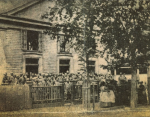
IN THE EARLY 1800S, they called them hush harbors: as in, “Don’t tell anyone.” Mentioning their existence, much less their location, could invite violence. Congregations were signs of conspiracy.

White southerners passed slave laws that prohibited black gatherings without white supervision, including congregating at church, out of fear of revolution. They did so at different times in different states. In 1723, Virginia explicitly outlawed black assembly. In 1800, South Carolina prohibited slave assemblies without whites. The church, refuge for many slaves, seemed for whites the most potent symbol of potential insurrection.

The specter of slave rebellions inspired the first burning of the “Mother Emanuel” African Methodist Church in Charleston in 1822. According to trial documents, Denmark Vesey, a free black carpenter, hatched the idea of a revolt in the church. He organized members of the congregation and got them to spread the word to their families. Thousands of slaves, from Charleston to the countryside of South Carolina, pledged to join the revolution. They planned to capture weapons from a Charleston weapon store, burn down the city, board ships in the harbor, and sail to newly liberated Haiti.

more here.

Picabia’s Big Moment

Schwartz_2-022317Sanford Schwartz at the NYRB:

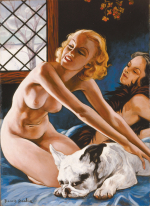
He was an ironist and a contrarian by temperament. In an era when writers and artists saw received opinions and all proprieties as so much sham, his contribution was the thought that diversions were what mattered. Independently wealthy, chubby, possessed of a wad of lustrous, dark hair (he was Spanish and of aristocratic descent on his father’s side), Picabia was known for his appreciation of showgirls, racing cars, and life with the party set. After he moved to the Riviera, in the mid-1920s, his appreciations also included gambling and yachting. (In snapshots of the era, he often has a tan.) When he wasn’t acting as a playboy, though—he supplemented his income in the 1930s by being an organizer of fetes and soirees—much of his energy went into producing and designing pamphlets and little magazines. He was often dashing off poems and aphorisms, and he wrote a novel but was unable to get it published.

The Modern has chosen one of his epigrams, “Our heads are round so our thoughts can change direction,” for the subtitle of its exhibition, and uses others, including “Every conviction is an illness,” to advertise it. Picabia’s words show him to have been as much an agent of disillusionment as he was a cultivator of frivolity. Sometimes, though, his words are no more than ordinary quips, and there being no selection of his writings in the catalog one assumes that in general they are slight. How assured and magnetic he could be as a person comes out in an Alfred Stieglitz photograph of him from 1915, in which he wears a bowtie and leans toward us, a slight smile on his face. (It is not reproduced in the catalog.) Picabia was often in New York between 1913 and 1917, and here Stieglitz, a good friend, caught a figure of considerable sensuous handsomeness. He looks like what might be called a Mediterranean banker prince.

more here.

Friday Poem

The Waters

Poet, oracle and wit
Like unsuccessful anglers by
The ponds of apperception sit,
Baiting with the wrong request
The vectors of their interest;
At nightfall tell the anglers lie.

With time in tempest everywhere
To rafts of frail assumption cling
The saintly and the insincere;
Enraged phenomena bear down
In overwhelming wave to drown
Both sufferer and suffering.

The waters long to hear our question put
Which would release their longed-for answer, but.

W.H. Auden
from Selected Poems
Vintage Books 1972

Melville and the Language of Denial

Toni Morrison in The Nation:

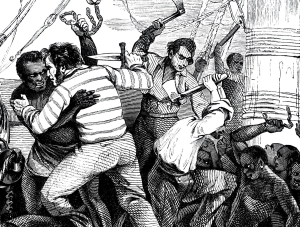
Laporte_slave_revolt_otu_img“Black slavery,” Toni Morrison wrote in her classic work of criticism, Playing in the Dark, “enriched” America’s “creative possibilities,” resulting in “a playground for the imagination.” Nothing better illustrates this observation than Herman Melville’s haunting Benito Cereno, a tale about a slave ship where nothing was as it seemed. Over the years, Morrison has noted how the deception that Melville masterfully depicted in his story replays itself again and again in the racial spectacles that regularly grip the nation, including Clarence Thomas’s Supreme Court confirmation hearings and the O.J. Simpson murder trial. I asked Morrison about the first time she read Benito Cereno and if she realized what Melville was up to. Below is her answer. —Greg Grandin

Since my earliest readings of Moby-Dick, I always sensed Melville’s deliberate misdirections: that he was telling some other story underneath the obvious one. So it was not hard to suspect his manipulation of the reader as well as his tendency to hide/display deeper revelations underneath the surface narrative. Benito Cereno fell quickly (for me) into that category because I didn’t believe a kidnapped African slave en route to ownership by a stranger in a foreign land would be so accommodating. Why would he care about the health and well-being of his captor? I understood that the massacre of violently rebelling slaves would be condoned in nineteenth-century “slave history” as the erasure of evil or the culling of herds. But I saw the equally violent response of the slaves on the ship as that of rational, if enraged, humans unwilling to be kidnapped for profit.

Following the discovery of Babo’s rebellion, Amasa Delano has a choice between fear and profit. But when measuring fear and the loss of control against money, money wins. Delano has to lie and promise his men gold and silver to encourage them to recapture the ship. More than two centuries have passed since the events on Benito Cerreño’s ship took place, but the deception of racial inferiority as an excuse for theft of resources and labor is worldwide and in important ways contemporary. Slavery was not unique; the Americas, Europe, Africa—all knew its benefits and engaged in a “moral rationale” of benevolent civilizing efforts in order to deflect from its lethal consequences. A stunningly deceitful discourse had to be developed among slaveholders and abolitionists alike.

More here.

The Purpose of Sleep? To Forget, Scientists Say

Carl Zimmer in The New York Times:

Sleep_promo_asset-master495Over the years, scientists have come up with a lot of ideas about why we sleep. Some have argued that it’s a way to save energy. Others have suggested that slumber provides an opportunity to clear away the brain’s cellular waste. Still others have proposed that sleep simply forces animals to lie still, letting them hide from predators. A pair of papers published on Thursday in the journal Science offer evidence for another notion: We sleep to forget some of the things we learn each day. In order to learn, we have to grow connections, or synapses, between the neurons in our brains. These connections enable neurons to send signals to one another quickly and efficiently. We store new memories in these networks.

In 2003, Giulio Tononi and Chiara Cirelli, biologists at the University of Wisconsin-Madison, proposed that synapses grew so exuberantly during the day that our brain circuits got “noisy.” When we sleep, the scientists argued, our brains pare back the connections to lift the signal over the noise. In the years since, Dr. Tononi and Dr. Cirelli, along with other researchers, have found a great deal of indirect evidence to support the so-called synaptic homeostasis hypothesis. It turns out, for example, that neurons can prune their synapses — at least in a dish. In laboratory experiments on clumps of neurons, scientists can give them a drug that spurs them to grow extra synapses. Afterward, the neurons pare back some of the growth. Other evidence comes from the electric waves released by the brain. During deep sleep, the waves slow down. Dr. Tononi and Dr. Cirelli have argued that shrinking synapses produce this change.

More here.

Thursday, February 2, 2017

Philosophy used to be a staple of television and the newspapers. Not any longer. So where did all the philosophers go?

David Herman in the New Statesman:

ScreenHunter_2567 Feb. 02 16.06The Oxford philosopher Derek Parfit died on New Year’s Day. He was one of the leading thinkers of his generation, yet his death was not widely reported outside the obituary pages of the broadsheets. The contrast with the response to John Berger’s death the following day is striking. Soon after Berger died, a number of pieces appeared on the Guardian and New Statesman websites, and there were tributes on the BBC’s News at Ten, Newsnight and Today programmes.

Parfit was an outstanding philosopher. However, few people outside academic philosophy could name one of his books. Perhaps more telling, how many could name any British academic philosopher?

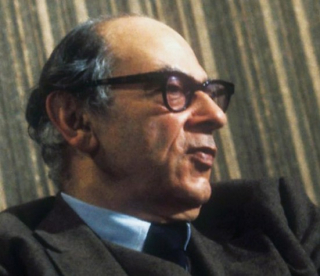
It has not always been like this. The reaction could hardly have been more different when another leading Oxford philosopher, Isaiah Berlin, died in November 1997. BBC2 showed two hour-long programmes about him on consecutive days, and Radio 3 broadcast a two-and-a-half-hour tribute the following month. Berlin’s death was reported on the front page of the New York Times and memorial services were held in three countries. In less than two decades something fundamental has changed. Has academic philosophy lost its place in mainstream British culture? If so, who is to blame? Is it the fault of academic philosophers themselves, or the media, or are there other changes going on in British culture?

More here.

Two prose poems by Ghayath Almadhoun

Ghayath Almadhoun and Catherine Cobham (translation from Arabic) in The Guardian:

How I became…

ScreenHunter_2566 Feb. 02 15.54Her grief fell from the balcony and broke into pieces, so she needed a new grief. When I went with her to the market the prices were unreal, so I advised her to buy a used grief. We found one in excellent condition although it was a bit big. As the vendor told us, it belonged to a young poet who had killed himself the previous summer. She liked this grief so we decided to take it. We argued with the vendor over the price and he said he’d give us an angst dating from the sixties as a free gift if we bought the grief. We agreed, and I was happy with this unexpected angst. She sensed this and said ‘It’s yours’. I took it and put it in my bag and we went off. In the evening I remembered it and took it out of the bag and examined it closely. It was high quality and in excellent condition despite half a century of use. The vendor must have been unaware of its value otherwise he wouldn’t have given it to us in exchange for buying a young poet’s low quality grief. The thing that pleased me most about it was that it was existentialist angst, meticulously crafted and containing details of extraordinary subtlety and beauty. It must have belonged to an intellectual with encyclopedic knowledge or a former prisoner. I began to use it and insomnia became my constant companion. I became an enthusiastic supporter of peace negotiations and stopped visiting relatives. There were increasing numbers of memoirs in my bookshelves and I no longer voiced my opinion, except on rare occasions. Human beings became more precious to me than nations and I began to feel a general ennui, but what I noticed most was that I had become a poet.

More here.

First ever blueprint unveiled to construct a large scale quantum computer

From Phys.org:

ScreenHunter_2565 Feb. 02 15.46This huge leap forward towards creating a universal quantum computer is published today (1 February 2017) in the influential journal Science Advances (1). It has long been known that such a computer would revolutionise industry, science and commerce on a similar scale as the invention of ordinary computers. But this new work features the actual industrial blueprint to construct such a large-scale machine, more powerful in solving certain problems than any computer ever constructed before.

Once built, the computer's capabilities mean it would have the potential to answer many questions in science; create new, lifesaving medicines; solve the most mind-boggling scientific problems; unravel the yet unknown mysteries of the furthest reaches of deepest space; and solve some problems that an ordinary computer would take billions of years to compute.

The work features a new invention permitting actual quantum bits to be transmitted between individual quantum computing modules in order to obtain a fully modular large-scale machine capable of reaching nearly arbitrary large computational processing powers.

Previously, scientists had proposed using fibre optic connections to connect individual computer modules. The new invention introduces connections created by electric fields that allow charged atoms (ions) to be transported from one module to another. This new approach allows 100,000 times faster connection speeds between individual quantum computing modules compared to current state-of-the-art fibre link technology.

More here. [Thanks to Farrukh Azfar.]

on the age of mass incarceration

782f7280-e876-11e6-a25d-096a58632842Clive Stafford Smith at the Times Literary Supplement:

By 2014 – the year of the latest available statistics – those under correctional supervision in the US had soared to 6,851,000. This is an extraordinary one in thirty-six American adults, but even that obscures more shocking figures: in the State of Georgia the rate was one in thirteen; male incarceration runs at five times the female rate; perhaps as many as one in three black males can expect to be imprisoned during his lifetime. And yet overall there has been a significant drop in the prison population – of more than 488,900 – from just seven years earlier.

At one level it is heartening, then, that David Dagan and Steven Teles detail a profound shift in attitudes in Prison Break: Why conservatives turned against mass incar­ceration. In the devolution of bogeymen, the authors note how domestic criminals replaced the “commies” of the Soviet Union. Politicians, the media and pop culture had encouraged Americans to fear the communists, who truly did have an unparalleled ability to do potential harm when we consider their access to nuclear weapons in conjunction with America’s own policy of Mutually Assured Destruction. In the same way the (primarily white) populous was taught to hate and fear (primarily black) criminals. After 9/11, though, the lens of vilification turned on the “Muslim Extremist”. And now, in the words of the new National Security Advisor, Lt General Michael Flynn, fear of Muslims is “rational” and “the term ‘moderate Islam’ is ugly and offensive – Islam is Islam”.

But let us celebrate where we may.

more here.

Unearthing the history of the ancient city-state of Palmyra

022b70ffe0014305b5afd1b7c559758f_18Paul Veyne at Lapham's Quarterly:

In the year 200 Palmyra was part of the vast Roman Empire at the height of its power, which extended from Andalusia to the Euphrates, from Morocco to Syria. When a traveler arrived in the merchant republic of Palmyra, a Greek or Italian trader on horseback, an Egyptian, a Jew, a magistrate sent by Rome, a Roman publican or soldier—in short, a citizen or subject of the empire—the newcomer immediately realized he had entered a new world. He heard an unknown language being spoken, a great language of the civilized world: Aramaic. (This stranger needed not worry about language, however; every rich person he encountered would have known Greek, the English of that time.) Local residents weren’t dressed like other inhabitants of the empire. Their clothing wasn’t draped but sewn like our modern clothing, and men wore wide trousers that looked a lot like those of the Persians. Noble Palmyrene horsemen, lords of import-export, wore a dagger around their waists, defying the prohibition against carrying weapons on one’s person that was imposed on citizens elsewhere in the empire. The women wore full-length tunics and cloaks that concealed only their hair; they wore an embroidered band around their heads, with a twisted turban on top. Others wore voluminous pantaloons. Their faces weren’t veiled, as was the custom in many regions of the Hellenic world. And so much jewelry! They may have been in the heart of the desert, but everything exuded wealth. There were statues everywhere, but they were made of bronze, not marble (there being no marble in Syria); in the great temple the columns had gilded bronze capitals.

more here.

A New Progressive Populism

1485618662FraserBerniePeoples_RallyLorie_Shaull666Nancy Fraser at Dissent:

Bernie Sanders is the exception that proves the rule. Though far from perfect, his campaign directly challenged established political fault lines. By targeting “the billionaire class,” he reached out to those abandoned by progressive neoliberalism, addressing communities struggling to preserve “middle-class” lives as victims of a “rigged economy” who deserve respect and are capable of making common cause with other victims, many of whom never had access to “middle-class” jobs. At the same time, Sanders split off a good chunk of those who had gravitated toward progressive neoliberalism. Though defeated by Clinton, he pointed the way to a potential counterhegemony: in place of the progressive-neoliberal alliance of financialization plus emancipation, he gave us a glimpse of a new, “progressive-populist” bloc combining emancipation with social protection.

In my view, the Sanders option remains the only principled and winning strategy in the era of Trump. To those who are now mobilizing under the banner of “resistance,” I suggest the counter-project of “course correction.” Whereas the first suggests a doubling down on progressive-neoliberalism’s definition of “us” (progressives) versus “them” (Trump’s “deplorable” supporters), the second means redrawing the political map—by forging common cause among all whom his administration is set to betray: not just the immigrants, feminists, and people of color who voted against him, but also the rust-belt and Southern working-class strata who voted for him. Contra Brenner, the point is not to dissolve “identity politics” into “class politics.” It is to clearly identify the shared roots of class and status injustices in financialized capitalism, and to build alliances among those who must join together to fight against both of them.

more here.

State of the Species

Charles C. Mann in Orion Magazine:

MannND12_Anonymous-silo-e1421175894287THE PROBLEM WITH environmentalists, Lynn Margulis used to say, is that they think conservation has something to do with biological reality. A researcher who specialized in cells and microorganisms, Margulis was one of the most important biologists in the last half century—she literally helped to reorder the tree of life, convincing her colleagues that it did not consist of two kingdoms (plants and animals), but five or even six (plants, animals, fungi, protists, and two types of bacteria).

Until Margulis’s death last year, she lived in my town, and I would bump into her on the street from time to time. She knew I was interested in ecology, and she liked to needle me. Hey, Charles, she would call out, are you still all worked up about protecting endangered species? Margulis was no apologist for unthinking destruction. Still, she couldn’t help regarding conservationists’ preoccupation with the fate of birds, mammals, and plants as evidence of their ignorance about the greatest source of evolutionary creativity: the microworld of bacteria, fungi, and protists. More than 90 percent of the living matter on earth consists of microorganisms and viruses, she liked to point out. Heck, the number of bacterial cells in our body is ten times more than the number of human cells! Bacteria and protists can do things undreamed of by clumsy mammals like us: form giant supercolonies, reproduce either asexually or by swapping genes with others, routinely incorporate DNA from entirely unrelated species, merge into symbiotic beings—the list is as endless as it is amazing. Microorganisms have changed the face of the earth, crumbling stone and even giving rise to the oxygen we breathe. Compared to this power and diversity, Margulis liked to tell me, pandas and polar bears were biological epiphenomena—interesting and fun, perhaps, but not actually significant.

Does that apply to human beings, too? I once asked her, feeling like someone whining to Copernicus about why he couldn’t move the earth a little closer to the center of the universe. Aren’t we special at all? This was just chitchat on the street, so I didn’t write anything down. But as I recall it, she answered that Homo sapiens actually might be interesting—for a mammal, anyway. For one thing, she said, we’re unusually successful.

More here.

Who was Frederick Douglass?

From Digital History:

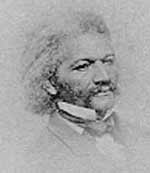
Frederick Douglass has been called the father of the civil rights movement. He rose through determination, brilliance, and eloquence to shape the American nation. He was an abolitionist, human rights and women's rights activist, orator, author, journalist, publisher, and social reformer.

Douglas…Douglass established his own weekly abolitionist newspaper, the North Star, that became a major voice of African-American opinion. Later, through his periodical titled the Douglass Monthly, he recruited black Union soldiers for the African-American Fifty-Fourth Massachusetts Volunteers. His sons Lewis and Charles both served in this regiment and saw combat. Douglass worked to retain the hard-won advances of African-Americans. However, the progress made during Reconstruction soon eroded as the twentieth century approached. Douglass spent his last years opposing lynching and supporting the rights of women. The antislavery crusade of the early nineteenth century served as a training ground for the women's suffrage movement. Douglass actively supported the women's rights movement, yet he believed black men should receive suffrage first. Demonstrating his support for women's rights, Douglass participated in the first feminist convention at Seneca Falls in July of 1848 where he was largely responsible for passage of the motion to support female suffrage. Together with abolitionist and feminist Elizabeth Cady Stanton, Douglass signed the Declaration of Sentiments that became the movement's manifesto. His masthead of his newspaper, the North Star, once read "Right is of no Sex – Truth is of no Color." A women's rights activist to the end, Douglass died in February 1895, having just attended a Woman's Council meeting.

More here. (Note: At least one post throughout February will be in honor of Black History Month)

Thursday Poem

Whittling: The Last Class

What has been written
about whittling
is not true

most of it

It is the discovery
that keeps
the fingers moving

not idleness

but the knife looking for
the right plane
that will let the secret out

Whittling is no pastime

he says
who has been whittling
in spare minutes at the wood

of his life for forty years

Three rules he thinks
have helped
Make small cuts

In this way

you may be able to stop before
what was to be an arm
has to be something else

Always whittle away from yourself

and toward something.
For God's sake
and your own

know when to stop

Whittling is the best example
I know of what most
may happen when

least expected

bad or good
Hurry before
angina comes like a pair of pliers

over your left shoulder

There is plenty of wood
for everyone
and you

Go ahead now

May you find
in the waiting wood
rough unspoken

what is true

or
nearly true
or
true enough.
.

by Robert Stone
from In All This Rain
Louisiana State University Press, 1980
.

Wednesday, February 1, 2017

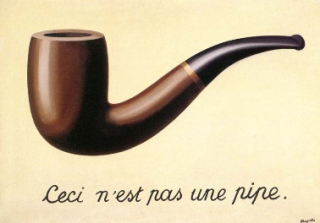
Ceci n’est pas une parodie: A Full Transcript Of Donald Trump’s Black History Month Remarks

From The Concourse:

MagrittePipeWell, the election, it came out really well. Next time we’ll triple the number or quadruple it. We want to get it over 51, right? At least 51.

Well this is Black History Month, so this is our little breakfast, our little get-together. Hi Lynn, how are you? Just a few notes. During this month, we honor the tremendous history of African-Americans throughout our country. Throughout the world, if you really think about it, right? And their story is one of unimaginable sacrifice, hard work, and faith in America. I’ve gotten a real glimpse—during the campaign, I’d go around with Ben to a lot of different places I wasn’t so familiar with. They’re incredible people. And I want to thank Ben Carson, who’s gonna be heading up HUD. That’s a big job. That’s a job that’s not only housing, but it’s mind and spirit. Right, Ben? And you understand, nobody’s gonna be better than Ben.

Last month, we celebrated the life of Reverend Martin Luther King, Jr., whose incredible example is unique in American history. You read all about Dr. Martin Luther King a week ago when somebody said I took the statue out of my office. It turned out that that was fake news. Fake news. The statue is cherished, it’s one of the favorite things in the—and we have some good ones. We have Lincoln, and we have Jefferson, and we have Dr. Martin Luther King. But they said the statue, the bust of Martin Luther King, was taken out of the office. And it was never even touched. So I think it was a disgrace, but that’s the way the press is. Very unfortunate.

More here.