
Ben Brubaker at Quanta:
 If language models really are learning language, researchers may need new theories to explain how they do it. But if the models are doing something more superficial, then perhaps machine learning has no insights to offer linguistics.
Noam Chomsky(opens a new tab), a titan of the field of linguistics, has publicly argued for the latter view. In a scathing 2023 New York Times opinion piece(opens a new tab), he and two co-authors laid out many arguments against language models, including one that at first sounds contradictory: Language models are irrelevant to linguistics because they learn too well. Specifically, the authors claimed that models can master “impossible” languages — ones governed by rules unlike those of any known human language — just as easily as possible ones.
Recently, five computational linguists put Chomsky’s claim to the test. They modified an English text database to generate a dozen impossible languages and found that language models had more difficulty learning these languages than ordinary English. Their paper, titled “Mission: Impossible Language Models(opens a new tab),” was awarded a best paper prize at the 2024 Association of Computational Linguistics conference.
More here.
Enjoying the content on 3QD? Help keep us going by donating now.
 I
I T
T The dream of a universal AI interpreter just got a bit closer. This week, tech giant Meta
  “THE MONTE DE PIEDAD [a pawnshop] is run like a bank, big, efficient, and clean,” Mavis Gallant
 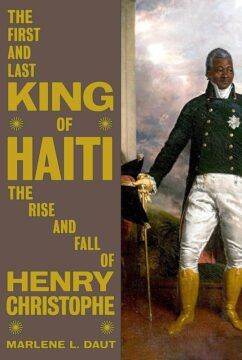 Forty years ago, most white Americans had no idea that, hard on the heels of the American and French revolutions, an enslaved population on a Caribbean island had claimed its freedom by force of arms and founded a new Black nation called Haiti. Today, Haitian revolutionary studies is an overcrowded field. Researchers have combed through acres of hard-to-find and often drastically disorganized archives, not only in Haiti and France but also in other European and Caribbean countries, and made their contents a lot more orderly and accessible than they used to be. Still, reconstructing the profile of even a fairly well-known individual from the revolutionary period can be something like deducing a whole dinosaur from a couple of toenails and teeth—a problem that confronts Marlene Daut in the writing of her exhaustive and sometime exhausting biography of Henry Christophe, the onetime king of Haiti.
 It was in a trattoria on the Piazza Navona in early April of 1974 that for the first but not the last time I heard Gabriel García Márquez refuse to even contemplate turning his masterpiece, Cien Aňos de Soledad, into a film.
 What makes agentic AI truly revolutionary is its architecture. While generative AI excels at processing and producing content based on patterns in its training data, agentic systems incorporate sophisticated planning modules, memory systems, and decision-making frameworks that allow them to maintain context and pursue objectives over time. They can break down complex tasks into manageable steps, prioritize actions, and even recognize when their current approach isn’t working and needs adjustment.
 I
I  W
W The literature showed insects to be far more sophisticated than one might expect of an automaton. Many have nociceptors that send signals to other parts of the insect brain, such as the central complex (associated with spatial navigation and locomotion) and the mushroom bodies (linked to learning, memory, and sensory integration). Cockroaches have a nervous-system pathway that leads up from the body to the brain and back again. In a 2019 study, researchers exposed cockroaches to a hot stimulus and a neutral stimulus; the neutral stimulus prompted a weaker signal from the body to the brain, and the hot stimulus led the roaches to try and escape. (Unsettlingly, cockroaches without heads responded to the heat but did not try to escape.) A recent genomic study of mantises, which are notorious for eating their mates during and after sex, found genes that code for nociceptive ion channels—proteins that respond to pain.
 As the first ever memoir by a sitting pope, Hope is a publisher’s dream, with a rich backstory culminating in Francis’s election in 2013. It recounts how, as Jorge Bergoglio, grandchild of Italian immigrants to Argentina, he grew up in a sprawling family, loved football and the tango (which he calls “an emotional, visceral dialogue that comes from afar, from ancient roots”), studied chemistry, then joined the Jesuit order and became a priest. After dallying with Peronism and enduring the Argentinian junta, he became the cardinal archbishop of Buenos Aires. Then, just as he was planning his retirement, Benedict XVI resigned and he was chosen as his successor.