
Thomas Westerholm in Newsweek:
 Older adults whose cholesterol levels change over time might be tied to a greater risk of dementia, according to a new study.
Researchers from Monash University in Australia published a study in Neurology conducted on nearly 10,000 participants with an average age of 74. The researchers measured cholesterol levels at the beginning of the study and over the course of three more visits, following the participants for more than five years.
‘A new biomarker’
They found that regardless of the cholesterol level, changes in cholesterol level were linked to higher risk of dementia. “These results suggest that fluctuating cholesterol, measured annually, may be a new biomarker for identifying people at risk of dementia, providing more information than the actual cholesterol levels measured at a single time point,” study author Zhen Zhou said in a press release.
More here.
Enjoying the content on 3QD? Help keep us going by donating now.
 Although mice with two dads
 ‘Big Steve,’ his students called him. Steven Weinberg was not physically imposing, but was an intellectually dominant and much-revered figure in the scientific community and on the public stage. One of the most distinguished theoretical physicists of the past 75 years, Weinberg dedicated his professional life to leading what he described as the ‘grand enterprise’ of seeking the bedrock laws of nature that underpin the workings of the Universe. He looked the part, too — at physics conferences, he was often the only participant wearing a suit and tie.
 A few weeks ago I
  One story
 Did you know your gut microbiome can impact various aspects of your health—including your mental and
  But the problem with advice is not conceptual. Atwood’s disappointed acolytes were hoping not for a kind of guidance that is analytically impossible but for one that is merely in severe decline.
 The second hour of “Gone with the Wind,” the bold, almost brazenly romantic Civil War epic that won ten Academy Awards, is largely a portrait of hell. “The skies rained death,” the screen reads. General William Tecumseh Sherman and his Union Army have brutally taken Atlanta during a hard-fought campaign, at a combined cost of nearly seventy-five thousand casualties. Scarlett O’Hara, a wealthy white Southerner, picks her way out of the city, passing the littered remains of wagons and men while vultures hover overhead. All the plantation houses she sees have been reduced to charred ruins.
 O
O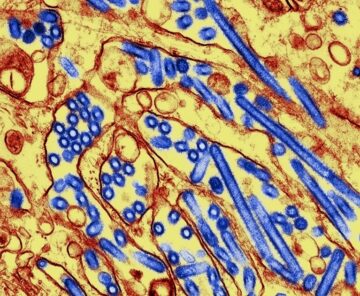 Ten months on from the shocking discovery that a virus usually carried by wild birds
 …As for putting on the airs of religion and spirituality, this is probably both the saddest and desperate pose of all and one, if you are a believer, that perilously approaches blasphemy in its violation of the 3rd commandment: “Thou shalt not take the name of the Lord thy God in vain.”No wonder then that despite all the holy muttering there is no hint of the pathos and depth that can be conveyed by genuine religious art and sentiment even to sensitive non-believers. It is more spiritually sterile than the secular world it reviles.
 In 2009, Jonathan Weissman was hunting for a new way to spy on
  Robert Eggers’s new version of Nosferatu is not my favorite contemporary vampire movie (that would have to be Ana Lily Amipour’s A Girl Walks Home Alone at Night [2014]), or even my favorite Eggers film. The Lighthouse (2019), an extraordinary and idiosyncratic nightmare, is probably more true to Murnau’s Expressionist ideals, and the sublime potential of the Gothic, than this remake. For the first hour I didn’t know why Nosferatu was being remade at all – surely this was a mistaken project from the beginning since Murnau’s inimitable 1922 classic remains incorruptible from beyond the grave. As the second half of the film unfolded into abject madness, and afterwards thinking through the film with friends, however, Eggers’s Nosferatu has stayed with me, its shadows deepening as its various challenges to its predecessors have seeped into the frame.