Category: Recommended Reading
on ‘katalin street’ by magda szabó
Nick Holdstock at 3:AM Magazine:
Reading the short, melancholy Katalin Street made me remember the time when machine-gun wielding Yugoslav soldiers removed me from a train in the middle of the night. It also made me recall being robbed by two men in the shadows of Tahrir Square in Cairo, how close they held a knife to my face as I lay trembling on the ground. I wouldn’t say these were defining moments in my life, but they certainly cast a long shadow. I cannot walk down any street at night without being startled by the sound of footsteps approaching behind me, not even the quiet, familiar dead end street I live on. The persistence of trauma is the dominant theme of Katalin Street, Magda Szabó’s 1969 novel, now available in a new translation by Len Rix. It shows the way in which the lives of the inhabitants of three adjacent Budapest households in the 1930s and 1940s are badly warped by the death of one of the children during the Second World War, so much so that many of them seem to “die long before their real death”.
Though Szabó, who died in 2007, had a long, distinguished career in Hungary, her work only began to reach a wide readership in English after Rix’s translation of her novel, The Door, appeared in 2005. The Door is a confessional story about a painful, yet intensely close relationship between a writer and Emerence, the elderly woman who works as her cleaner. At times the novel verges on the supernatural: Emerence seems able to control the writer’s dog even when she is absent.
more here.
Belonging: The Story of the Jews 1492–1900
David Biale at Literary Review:
Only a quotation, taken pretty much at random, can capture the charming but equally irritating quality of the second volume of Simon Schama’s highly personal and idiosyncratic history of the Jews:
There was a time when Jewish catering opened doors. Every Friday afternoon, following Muslim prayers but before the Jewish Sabbath, a caravan of confections from the villa of the Great Jew in Pera was delivered to Topkapi Palace. Seated upon silk cushions, the yellow-haired sultan, Selim II, awaited with keen anticipation the delicacies brought to him on Chinese porcelain: pigeon dainties baked in rose water and sugar, goose livers chopped with Corinth raisins and the spices which were, after all, the Jew’s to command; also some items preserved in the kitchen of culinary nostalgia, from the ancient Turkic days of tents and flocks and racing ponies; the sour yogurts and yufka, the unleavened bread that was wrapped around a pilaf. In the new style there was an array of zeytinyagli dishes, named for the olive oil (another Jewish import trade) in which they were cooked and served cold – a corrective, the physicians said, to the black bile that would come on the humid summers.
This passage is vintage Schama: lush in evocative detail, a veritable word picture, but also self-indulgently overwritten. The passage goes on for another page and a half before we learn the identity of this Jewish confectioner, Don Joseph Nasi, a refugee from the Iberian Peninsula, who became one of the richest and most powerful men (and certainly the richest and most powerful Jew) in the Ottoman Empire.
more here.
Google, Twitter and Facebook workers who helped make technology so addictive are disconnecting themselves from the internet
Paul Lewis at The Guardian:
Justin Rosenstein had tweaked his laptop’s operating system to block Reddit, banned himself from Snapchat, which he compares to heroin, and imposed limits on his use of Facebook. But even that wasn’t enough. In August, the 34-year-old tech executive took a more radical step to restrict his use of social media and other addictive technologies.
Rosenstein purchased a new iPhone and instructed his assistant to set up a parental-control feature to prevent him from downloading any apps.
A decade after he stayed up all night coding a prototype of what was then called an “awesome” button, Rosenstein belongs to a small but growing band of Silicon Valley heretics who complain about the rise of the so-called “attention economy”: an internet shaped around the demands of an advertising economy.
more here.
How Bacteria Could Protect Tumors From Anticancer Drugs
Ed Yong in The Huffington Post:
Cancers have unwitting allies: the healthy cells that surround them. Several groups of scientists have now found that normal cells can inadvertently release substances that shield their malignant neighbors from anticancer drugs. That would explain why even targeted therapies — smart drugs that are meant to hit the specific genetic faults behind various cancers—sometimes stumble right out of the gate. When pitted against isolated cancer cells in laboratory tests, they perform as expected. But when pitted against actual tumors, which enjoy a kind of innate resistance because of the healthy cells around them, the drugs can fail. But at least half of the cells in the human body are not human. Every person is a seething colony of microbes — a collection of tens of trillions of bacteria and other microscopic organisms that live in and on our bodies. And a team of researchers, led by Ravid Straussman from the Weizmann Institute of Science and Todd Golub from Harvard Medical School, have shown that some of these bacteria can also shield tumors from anticancer drugs.
Back in 2012, Straussman and Golub’s team grew dozens of types of cancer cells together with dozens of types of healthy cells, and found hundreds of combinations where the latter protected the former to some degree against chemotherapy. But one particular interaction was especially dramatic: A lineage of skin cells from one individual could completely protect pancreatic cancer cells from gemcitabine — a frontline drug that’s used to treat this stubborn disease. “We could pour on more and more gemcitabine — ten times more than was needed to kill the cancers — and the skin cells from this woman were enough to protect them,” Straussman recalls. Even the liquid in which the skin cells had grown was enough to protect cancers from gemcitabine. Clearly, the skin cells were secreting some kind of chemical that neutralized the drug. But what was it? A protein? A piece of DNA? The team spent years trying to identify the mystery molecule, to no avail. “We did tons of experiments and they led us nowhere,” says Straussman. “It didn’t make any sense.” They finally worked out what was happening when they filtered the liquid — and completely removed its ability to protect tumors. Even filter paper with very large pores, through which most molecules could easily fit, had this effect. That’s when they realized that they weren’t dealing with a molecule at all. They were dealing with a microbe.
More here.
Why Stanford Researchers Tried to Create a ‘Gaydar’ Machine
Heather Murphy in The New York Times:
Michal Kosinski felt he had good reason to teach a machine to detect sexual orientation. An Israeli start-up had started hawking a service that predicted terrorist proclivities based on facial analysis. Chinese companies were developing facial recognition software not only to catch known criminals — but also to help the government predict who might break the law next. And all around Silicon Valley, where Dr. Kosinski works as a professor at Stanford Graduate School of Business, entrepreneurs were talking about faces as if they were gold waiting to be mined. Few seemed concerned. So to call attention to the privacy risks, he decided to show that it was possible to use facial recognition analysis to detect something intimate, something “people should have full rights to keep private.” After considering atheism, he settled on sexual orientation. Whether he has now created “A.I. gaydar,” and whether that’s even an ethical line of inquiry, has been hotly debated over the past several weeks, ever since a draft of his study was posted online. resented with photos of gay men and straight men, a computer program was able to determine which of the two was gay with 81 percent accuracy, according to Dr. Kosinski and co-author Yilun Wang’s paper.
The backlash has been fierce.
“I imagined I’d raise the alarm,” Dr. Kosinski said in an interview. “Now I’m paying the price.” He’d just had a meeting with campus police “because of the number of death threats.” Advocacy groups like Glaad and the Human Rights Campaign denounced the study as “junk science” that “threatens the safety and privacy of LGBTQ and non-LGBTQ people alike.” The authors have “invented the algorithmic equivalent of a 13-year-old bully,” wrote Greggor Mattson, the director of the Gender, Sexuality and Feminist Studies Program at Oberlin College. He was one of dozens of academics, scientists and others who picked apart the study in blog posts and Tweet storms. Some argued that the study is just the latest example of a disturbing technology-fueled revival of physiognomy, the long discredited notion that personality traits can be revealed by measuring the size and shape of a person’s eyes, nose and face.
More here.
Monday, October 9, 2017
The Far Right Movement in Germany and the Burden of History
by Jalees Rehman
A friend who was invited to serve as a visiting professor at a German university recently contacted me and asked whether staying in Germany would be safe for him and his family. His concern was prompted by the September 2017 election of the federal German parliament in which the far-right AfD (Alternative für Deutschland, translated as "Alternative for Germany") party received approximately 13% of the popular vote. AfD had campaigned on an anti-immigrant and anti-Muslim platform, and has been referred to by various media outlets as a nationalist, racist, far-right populist, right wing extremist or even Neo-Nazi party. For the first time in history since World War 2, a far-right or nationalist party would be sitting in the federal German parliament by crossing the 5% minimum threshold designed to keep out fringe political movements. Even though all other political parties had categorically ruled out forming a government coalition with the AfD, thus relegating it to an opposition role in parliament with only a limited role in policy-making, my friend was concerned that its success could be indicative of rising neo-Nazism and hatred towards immigrants or Muslims. As a Muslim and visibly South Asian, he and his family could be prime targets for right-wing hatred.
I was flabbergasted by his concern. What surprised me most was that someone living in the US would be worried about safety and racial prejudice in Germany. Violent crime rates in major German cities are much lower than those of their US counterparts. While it is true that AfD garnered 13% of the popular vote in Germany, the US president who also ran on a similar populist, nationalist and anti-immigrant platform (with promises of building walls and enacting Muslim bans) received 46% of the popular vote! Many of the views of the AfD – for example the claims that traditional Islam is not compatible with Western European culture and the constitution, that immigrants and refugees represent a major threat to the economy and safety or that multiculturalism and progressive-liberal views have betrayed the ideals of the country's heritage – are increasingly becoming mainstream views of the ruling Republican party in the US. White supremacists, supporters of confederate ideology and neo-Nazis now feel emboldened to hold rallies in the US, knowing that they might only receive lukewarm or relativistic criticism from the US government whereas such acts would be unequivocally condemned by the German government. Racial or religious prejudices held by members of the government and the ruling party can lead to severe institutional reprisals against individuals. When these views are held by a minority party, there is much less danger of immediate institutionalized discrimination and persecution by the government or law enforcement.
So why is it that the 13% vote for AfD is causing such concern, both in Germany and outside of Germany?
A few of my favorite (mathematical) things
by Jonathan Kujawa
This summer Kevin Knudson and Evelyn Lamb started a podcast called "My Favorite Theorem". In it, they interview a mathematician and get them to geek out about their favorite mathematical result. Like "The Best Thing I Ever Ate" on the Food Network, but with less butter and more math.
This month here at 3QD I thought I'd share my favorite theorem. There are lots of amazing math results I get to work with every day in my teaching and research, but there is one which warms my heart above all others: the Intermediate Value Theorem (IVT) from calculus. As we'll see, it's easy to grasp, has remarkable and surprising implications even in the real world, and foreshadows some really cool results from elsewhere in math.
The IVT tells us about continuous functions. A function, you'll recall, is a rule which takes in one (or more) input numbers and spits out one (or more) output numbers. A first example is f(x)=x2+1. It takes in a single number and squares it and then adds 1. The result is the output. If you plug in 2 you get out 5, and if you plug in 4 you get out 17. If you plot all the pairs of inputs and outputs as x's and y's, you get the graph of your function.
Functions are ubiquitous. Every time you have a cause and an effect, there is a function in the background. The input could be the pressure exerted on a car's gas pedal, the output the velocity of the car. The input could be the income a person earned, the output the tax they owe. The input could be the surface temperature of the Gulf of Mexico along the path of a hurricane, the output the severity of the hurricane. The input could be the ambient temperature, the output the growth rate of a colony of bacteria. The list goes on and on.
A continuous function is a function in which the outputs are close together whenever the inputs are sufficiently close together. Said differently, there are no sudden jumps, breaks, or dramatic changes in outputs as you change from one input to another. Many, many, many functions in real life are continuous. If you press down slightly on a gas pedal, the car doesn't jump into warp speed, it slowly accelerates. If you slowly travel across the Gulf, the surface temperature also slowly changes. Same with the population of a bacteria if you slowly vary the temperature.
Of course, not everything varies in a continuous way. Taxes are usually done in whole dollars (at least in the US) and there are various tax brackets and other rules which come into play. You could earn a penny more and suddenly owe an entire dollar more in tax. The prices of stocks on Wall Street are even more dramatically non-continuous. If bad news about a company is announced, a stock can drop by a huge amount from one moment to the next. Even in the natural world you can have non-continuous phenomena at the extremes. A sudden phase change in a material as it is slowly warmed, or crossing the event horizon of a black hole.
But almost every function you see in everyday life is continuous. Even though it is so simple as to be ridiculous, the IVT tells us remarkable things about continuous functions.
Why spacetime?
by Daniel Ranard
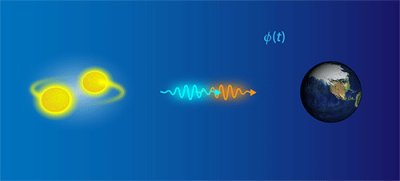
Last week's Nobel prize in physics was awarded for the observation of gravitational waves, the famous ripples in spacetime. You can read about these waves first predicted by Einstein, but I want to talk about a more basic idea: that of spacetime itself. Why do physicists insist on "spacetime"—why can't we content ourselves with just space and time?
Many thinkers before Einstein pondered the connection between time and space. Medieval timeline makers must have understood the analogy between points and lengths of space, on the one hand, and instants and durations of time, on the other. It's an analogy rendered physical by the timeline itself. Still earlier, sundials mapped temporal durations to spatial intervals. In Edgar Allen Poe's book-length "Eureka: A Prose Poem," he concludes that "Space and Duration are one." But contrary to Poe, modern physicists do not contend space and time have an identical character. Indeed, the differences would appear obvious: for instance, we always move forward in time, while in space we may remain still.
Though spatial and temporal directions may differ, Einstein and his contemporaries realized they must be considered together, part of a geometrical whole. In one limited sense, space and time had already been considered together for centuries. A graphical timeline emphasizes time as a dimension; if you add a dimension of space to your timeline, you create the spacetime arena. More quantitatively, if you make a graph of an object's position over time, then the background of the graph – the two-dimensional plane, with axes of both space and time – suggests a notion of spacetime. Such graphs predate even Descartes, who's most often credited with the invention of Cartesian coordinates; Oresme and others drew similar figures long before.
Modern illustrations of spacetime take the same form: the Cartesian plane, with axes of time and space. But the modern marriage of space and time entails far more than just a nailing together of the axes. Though many thinkers drew time and space together, it was the insights of Einstein in 1905 that bound them inextricably. In fact, it was Einstein's old teacher, the mathematician Hermann Minkowski, who most clearly cast Einstein's results in the language of spacetime.
Minkowski began his 1908 lecture Space and Time by declaring that "Henceforth, space for itself, and time for itself shall completely reduce to a mere shadow, and only some sort of union of the two shall preserve independence." What could that mean? We often label the three axes of space as x,y,z, measuring width, height, and depth, while t labels time. The four dimensions of x, y, z, and t together constitute spacetime. Why put them together? That is, why does their union constitute a four-dimensional arena whose components demand joint consideration?
Unsafe Havens: Representations of the Trafficking of Women and Girls in Contemporary Women’s Writing
by Claire Chambers
On 19 October I am presenting at a York Explore Library event entitled Refugees, Asylum and Women's Human Trafficking in Fiction. While preparing for the talk I was reminded that in November 2013, three women aged between 30 and 69 were rescued from a house in Lambeth in south London where they had lived as modern-day slaves since 1983. The youngest woman had been born into slavery. All of them were brainwashed by, and under the control of, the girl's father Aravindan Balakrishnan, an Indian from Singapore, who had founded the Workers Institute of Marxism-Leninism-Mao Zedong Thought in Brixton during the 1970s. This left-wing organization quickly became a quasi-religious cult. Its leader and figurehead Balakrishnan forbade his women members to leave the premises on their own, submitting several of them to grave physical and sexual abuse.
As I understand it, in their forthcoming book Child Migration, law experts Kathryn Cronin and Jemma Dally will challenge the current global legislation around refugees. The 1951 Convention Relating to the Status of Refugees led to authorities in countries across the world working to deny refugees entry, because once displaced people come under their jurisdiction they become their responsibility. Essentially, this means that the entry system is closed to anyone who is poor. If a refugee can afford convincing forged papers, she can get on a plane. If not, she can only turn to the criminal network of smugglers and agents. The Convention has spawned an irregular type of travel almost completely dominated by a criminal network: an alternative economy of forgers, lorry drivers, agents, an elaborate infrastructure and various specialisms. As authorities get wind of one trafficking route, it alters its course, in a game of cat and mouse. Also commonplace is the enormous amount of debt bondage that exists within this system.
Cronin and Dally show that more children than ever before are refugees. These minors find themselves detained at various points along their journey, and are compelled to engage in exploitative labour relations as their families back home run out of the money intended to help them move inexorably towards Europe. Yet lawyers merely interrogate the child migrant's age and the reasons for his asylum claim — a test which he is set up to fail. Rarely is the child asked about his background and his leave-taking from his family, which is an enormously significant and gut-wrenching moment. Few child migrants have any knowledge of their destination or the army of officials they will meet there, instead being told vaguely that they're going somewhere safe.
Sunday, October 8, 2017
How Ta-Nehisi Coates Gives Whiteness Power
Thomas Chatterton Williams in the New York Times:
In the study of German history, there is the notion of sonderweg, literally the “special path,” down which the German people are fated to wander. In different eras, and depending on who employed it, the term could imply different things. It began as a positive myth during the imperial period that some German scholars told themselves about their political system and culture. During and after World War II it turned distinctly negative, a way for outsiders to make sense of the singularity of Germany’s crimes.
Yet whether viewed from within or without, left or right, the Germans could be seen through such a lens to possess some collective essence — a specialness — capable of explaining everything. In this way, one could speak of a trajectory “from Luther to Hitler” and interpret history not as some chaotic jumble but as a crisp, linear process.
There is something both terrifying and oddly soothing about such a formulation. For better or worse, it leaves many very important matters beyond the scope of choice or action. It imagines Germans as having been either glorious or terrible puppets, the powerful agents of forces nonetheless beyond their control.
A similar unifying theory has been taking hold in America. Its roots lie in the national triple sin of slavery, land theft and genocide. In this view, the conditions at the core of the country’s founding don’t just reverberate through the ages — they determine the present. No matter what we might hope, that original sin — white supremacy — explains everything, an all-American sonderweg.
No one today has done more to push this theory in the mainstream than the 42-year-old author Ta-Nehisi Coates.
More here.
‘Kanhaiya, Yaad Hai Kuchh Bhi Hamaari’ by Farid Ayaz & Abu Muhammed
Note: For Ga.
tom petty (1950 – 2017)
anne wiazemsky (1947 – 2017)
tom paley (1928 – 2017)
How Putin came to rule the Middle East
John R. Bradley in The Spectator:
When Russia entered the Syrian civil war in September 2015 the then US secretary of defense, Ash Carter, predicted catastrophe for the Kremlin. Vladimir Putin was ‘pouring gasoline on the fire’ of the conflict, he said, and his strategy of fighting Isis while backing the Assad regime was ‘doomed to failure’. Two years on, Putin has emerged triumphant and Bashar al-Assad’s future is secure. They will soon declare victory over Isis inside the country. The dismal failure turned out to be our cynical effort to install a Sunni regime in Damascus by adopting the Afghanistan playbook from the 1980s. We would train, fund and arm jihadis, foreign and domestic, in partnership with the Gulf Arab despots. This way we would rob Russia of its only warm-water naval base, Tartus, on Syria’s Mediterranean coast. In the process we would create a buffer between Iran and its Lebanon-based proxy, Hezbollah, to divide the anti-Israel Shia axis. And we would further marginalise Iran by extending the influence of our Sunni Gulf allies from Lebanon deeper into the Levant. Half a million Syrians were slaughtered as a consequence of this hare-brained scheme, which geo-politically has resulted in the exact opposite of the intended outcome.
Putin, though, had grasped the reality at the outset. Unlike Afghans, ordinary Syrians were used to living in a liberal, diverse culture that, while politically repressive, championed peaceful religious co-existence. Most of them were nervous about seeing their country transformed into a Wahhabi theocracy. Assad, for all his faults, was the buffer between them and internecine carnage. They stuck with the devil they knew, and there was no popular revolution against Assad — nothing compared to the Tahrir uprising that ousted the hated Egyptian dictator Hosni Mubarak. The millions-strong demonstrations in Damascus were pro-regime. Among the two-thirds of the Syrian population now living in government–controlled parts of the country, Assad is more popular than ever, and Putin is a hero.
Small wonder Putin recently mocked Washington for ‘not knowing the difference between Austria and Australia’.
More here.
Saturday, October 7, 2017
The cosmological constant and the creation of the universe
Thanu Padmanabhan in Nautilus:
There are two tantalizing mysteries about our universe, one dealing with its final fate and the other with its beginning, that have intrigued cosmologists for decades. The community has always believed these to be independent problems—but what if they are not?
The first problem has to do with the existence of something called “dark energy,” which is today accelerating the expansion of the universe and will determine its final fate. Theorists tell us that the effects of dark energy can be explained by introducing a term into Einstein’s equations of gravity called the cosmological constant. But, for this explanation to work, the cosmological constant must have a very specific—and tiny—value. In natural units, the cosmological constant is given by 1 divided by a number made of 1 followed by 123 zeros! Explaining this value is considered one of the greatest challenges faced by theoretical physics today.
The second problem relates to another crucial number that shapes our universe, and is related to the formation of structures like galaxies and groups of galaxies. We know that the early universe, while being very smooth, also contained tiny fluctuations in density that acted as seeds for all the cosmic structures we see today. These fluctuations must have a specific magnitude and shape to be consistent with present-day observations. Understanding how these tiny fluctuations were created during the earliest stages in the evolution of the universe, and explaining their magnitude and shape, is an equally fascinating mystery in cosmology.
In the conventional approaches to cosmology, these two numbers—the numerical value of the cosmological constant and the magnitude of initial perturbations—are considered unrelated.
More here.
FOLLOWING THE PEREGRINE
Adam Kosan at The Quarterly Conversation:
Baker tells us that he followed peregrines for ten years, and that his book is the record of one season’s pursuit, lasting October to April. In fact his book is a compression of ten years of experience and observation into a focused period of mystical journeying toward the outward edge of things. It’s a quest poem in prose, but lacking the human-centered incidents typical of quest poems and fiction, and with an unusual reticence. Not only does the narrator say nothing about his life or his past, he also abstains from the contemplative involvement of, say, the narrator in Walden. He is shorn of biography, austere like Wallace Stevens’s snow man: moving through isolation, stopping for long periods to observe what occurs apart from him, aware of the breath that leaves the heat of his body for the cold of the land. The action, so to speak, emerges around the falcon and Baker’s dogged pursuit of it. When he provides rare self-portraits of himself as pursuer, he appears like one of the slinking creaturely specters of Beckett’s fiction: “I crept towards them along a dry ditch, inching forward like the tide. I crawled across stubble and dry plough.” He aims to achieve alarm-dissipating invisibility: “Hood the glare of the eyes, hide the white tremor of the hands, shade the stark reflecting face, assume the stillness of a tree.”
If this is a grail poem, though, why does Baker chase the falcon? It’s not to capture or tame it, and certainly not to kill it. He wishes to join it, but even in moments of greatest identification, when his language shifts from metaphor and longing into consummation, it isn’t long before the dream of union breaks up: “I shut my eyes and tried to crystallise my will into the light-drenched prism of the hawk’s mind.
more here.
the Renaissance gossip of Giorgio Vasari
Michael Dirda at the Washington Post:
Today, Giorgio Vasari (1511-1574) is usually remembered only as the author of “The Lives of the Most Excellent Painters, Sculptors, and Architects,” one of the foundational works of art history and a book nearly as entertaining as its models, Plutarch’s “Lives of the Noble Grecians and Romans” and Suetonius’s “Lives of the Caesars.” In its fullest edition, Vasari presents gossipy biographical portraits of seemingly all of Renaissance Italy’s major (and minor) artists, including Cimabue, Leonardo, Botticelli, Raphael, Titian and Michelangelo.
As Ingrid Rowland and Noah Charney remind us in “The Collector of Lives,” scholars still turn to Vasari as a primary source, albeit with caution: He is hardly what one would call impartial or disinterested. Vasari badmouths his enemies (such as Cellini), while his novella-length account of Michelangelo approaches hagiography. Moreover, rather than verify his facts, he tends to “print the legend.” Did the young Giotto really draw a perfect O when asked to supply an example of his work? Did Piero di Cosimo really live almost entirely on hard-boiled eggs? Maybe, maybe not. Some stories are too good to check. Rowland lives in Rome and is the author of a fine biography of the philosopher Giordano Bruno and of a guide to Pompeii ; Charney, who resides in Slovenia, founded the Association for Research Into Crimes Against Art.
more here.
Why Harvey Weinstein’s apology is so hard to believe
Amanda Marcotte in Salon:
I don't buy Harvey Weinstein's apology. I realize this isn't really a novel opinion, as social media is burning up with people mocking the statement he released to the New York Times after Times reporters Jodi Kantor and Megan Twohey published an exposé chronicling decades of allegations of sexual harassment against the renowned studio executive. Still, it's an opinion worth explicating because the excuses that Weinstein trots out in his statement are the kinds of excuses that sexual harassers and abusers all too often get away with, even in the 21st century. Weinstein is trying to gaslight us all. An insincere apology is no apology at all, and people should not accept it. "I came of age in the 60’s and 70’s, when all the rules about behavior and workplaces were different. That was the culture then," Weinstein wrote. "I have since learned it’s not an excuse, in the office — or out of it. To anyone." First, if it's not an excuse, then why offer it up as one? Second, the claim that he didn't know any better is particularly hard to believe in light of the eight legal settlements — that we know about — uncovered by the Times. After you have repeatedly paid out hundreds of thousands of dollars to women who say you have behaved inappropriately, that might have been a clue that something was wrong. But mostly, the whole "I didn't know better" claim, common to sexual harassers, needs to be understood as the nonsense that it is. Sexual harassers know better. They know it's wrong. They know their behavior upsets women.
That's why they do it.
A lot of sexual harassers want to pass off their behavior as merely awkward or unwelcome advances, knowing that draws sympathy. Who among us hasn't flirted with someone who didn't flirt back? Who hasn't worried about asking someone out for fear of rejection? That's how the harassers want you to imagine them: hapless Romeos, guilty not of being cruel but of having no game. Well, don't believe it. As most women who've been targeted by creeps — which is most women, by the way — can tell you, what is usually obvious is how much of the creep's pleasure depends on knowing he's making you uncomfortable. The stories relayed by women to the Times reporters suggest that's the case here. Many of the women describe Weinstein making excuses to get them alone in a hotel room. Making sure there are no witnesses to the behavior doesn't suggest a well-meaning guy who doesn't know better, but someone who knows exactly what he's doing and how he plans to get away with it.
More here.