
Category: Recommended Reading
charles neville (1939 – 2018)
Welcome to 3 Quarks Daily Version 5.0
 Dear Reader,
As you can see, we have made some big changes here at 3 Quarks Daily. I have been working with the supremely talented and competent Dumky de Wilde on this new version for some months now and here are some of the improvements and changes:
- We have moved from Typepad to the much-more-powerful and efficient WordPress platform.
- There is a clean, contemporary new look (please give it a chance, sometimes it takes a while to get used to something new).
- The page should load much faster than before; in some cases, more than 10 times faster.
- For a small monthly payment or a one-time donation, you need not see ads at all on the new 3QD. Existing monthly subscribers will be imported to the new site and should not see any advertising.
- The “About Us” and “Monday Magazine” pages have been cleaned up and redesigned, as have all other pages too.
- One may click on any author’s name to see a short bio of that person as well as all their posts on 3QD. (We are still putting in the bios of some of the writers.)
- Wider main column and better readability of text everywhere.
- The site works much better now on phones and tablets, as well as full-screen browsers.
- We are still working on a few things, such as: getting old posts from October 2017 up until last week imported into the archives; fixing some issues with images not displaying correctly in old posts; problems with the daily emails not showing all posts; and a couple of other small issues.
- You can easily provide valuable feedback to us about any aspect of the site by clicking the red “Feedback” tab in the middle-right of the screen. Or just comment on this post so I can reply to you more quickly.
We are excited to hear about what you think! Please do tell us in the comments to this post and/or by using the Feedback tab. And please do click “Support 3QD” on the main menu, will you? Thanks for all your generous support.
New posts are below this one for a few days!
Best wishes,
Abbas
Chimamanda Ngozi Adichie: ‘This could be the beginning of a revolution’
Lisa Allardice in The Guardian:
At a PEN lecture in Manhattan last weekend, the novelist Chimamanda Ngozi Adichie took Hillary Clinton to task for beginning her Twitter biowith “Wife, mom, grandma”. Her husband’s account, it will surprise no one to know, does not begin with the word “husband”. “When you put it like that, I’m going to change it,” promised the 2016 presidential candidate. Adichie is an international bestseller and about as starry as a writer can be (when we meet she chats casually about recently meeting Oprah Winfrey, who made a little bow to her). Her first novel, Purple Hibiscus, published when she was only 26, was longlisted for the 2004 Man Booker; she won the 2006 Orange prize for Half of a Yellow Sun; was awarded a MacArthur fellowship – the so-called genius grant – and her work is now a fixture on American school reading lists. Following her sensational 2013 TED talk, We Should All Be Feminists, (sampled by Beyoncé, used by Dior for a series of slogan T-shirts and distributed in book format to every 16-year-old in Sweden) the 40-year-old has become something of a public feminist: hence scolding the former US secretary of state.
The atmosphere at a recent event with Reni Eddo-Lodge (author of Why I Am No Longer Talking to White People About Race), part of the Southbank’s WOW: Women of the World festival in London, was more like a party than a books evening. The excitement among the audience of largely young women was as striking as the amazing hair and outfits (“That will be the Nigerians,” Adichie says proudly). The two writers received a riotous standing ovation before they had even sat down. As festival founder Jude Kelly said in her whoop-inducing introduction, “The world is changing very fast, and we intend to accelerate it.”
…But now in Dear Ijeawele: A Feminist Manifesto in Fifteen Suggestions (just published in paperback), she writes that she is angrier about sexism than she is about racism. “I don’t think sexism is worse than racism, it’s impossible even to compare,” she clarifies. “It’s that I feel lonely in my fight against sexism, in a way that I don’t feel in my fight against racism. My friends, my family, they get racism, they get it. The people I’m close to who are not black get it. But I find that with sexism you are constantly having to explain, justify, convince, make a case for.” Written just before the birth of her own daughter, the manifesto began as a letter to her friend, who had asked for advice about how she might raise her baby girl as a feminist. “Teach her to love books”; “it is important to be able to fend for herself”.
More here.
Chimamanda Ngozi Adichie: ‘This could be the beginning of a revolution’
Lisa Allardice in The Guardian:
The atmosphere at a recent event with Reni Eddo-Lodge (author of Why I Am No Longer Talking to White People About Race), part of the Southbank’s WOW: Women of the World festival in London, was more like a party than a books evening. The excitement among the audience of largely young women was as striking as the amazing hair and outfits (“That will be the Nigerians,” Adichie says proudly). The two writers received a riotous standing ovation before they had even sat down. As festival founder Jude Kelly said in her whoop-inducing introduction, “The world is changing very fast, and we intend to accelerate it.”
…But now in Dear Ijeawele: A Feminist Manifesto in Fifteen Suggestions (just published in paperback), she writes that she is angrier about sexism than she is about racism. “I don’t think sexism is worse than racism, it’s impossible even to compare,” she clarifies. “It’s that I feel lonely in my fight against sexism, in a way that I don’t feel in my fight against racism. My friends, my family, they get racism, they get it. The people I’m close to who are not black get it. But I find that with sexism you are constantly having to explain, justify, convince, make a case for.” Written just before the birth of her own daughter, the manifesto began as a letter to her friend, who had asked for advice about how she might raise her baby girl as a feminist. “Teach her to love books”; “it is important to be able to fend for herself”.
More here.
Sunday Poem
Lying in a Hammock at William Duffy’s Farm
in Pine Island, Minnesota
Over my head, I see the bronze butterfly,
Asleep on the black trunk,
Blowing like a leaf in green shadow.
Down the ravine behind the empty house,
The cowbells follow one another
Into the distances of the afternoon.
To my right,
In a field of sunlight between two pines
The droppings of last year’s horses
Blaze up into golden stones.
I lean back, as the evening darkens and comes on.
A chicken hawk floats over, looking for home.
I have wasted my life.
by James Wright
from Above the River: The Complete Poems and Selected Prose.
Wesleyan University Press
Sunday Poem
Lying in a Hammock at William Duffy’s Farm
in Pine Island, Minnesota
Over my head, I see the bronze butterfly,
Asleep on the black trunk,
Blowing like a leaf in green shadow.
Down the ravine behind the empty house,
The cowbells follow one another
Into the distances of the afternoon.
To my right,
In a field of sunlight between two pines
The droppings of last year’s horses
Blaze up into golden stones.
I lean back, as the evening darkens and comes on.
A chicken hawk floats over, looking for home.
I have wasted my life.
by James Wright
from Above the River: The Complete Poems and Selected Prose.
Wesleyan University Press
Saturday, April 28, 2018
Why Only Art Can Save Us: An Interview with Santiago Zabala
Leonardo Franceschini in Arcade:
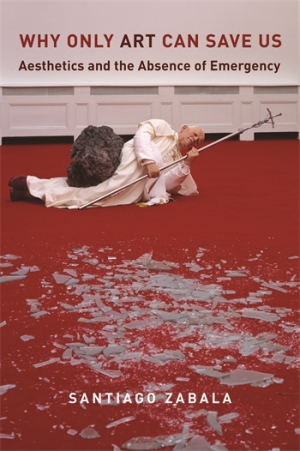
SZ: I’m not certain whether Cattelan and Spector wanted to provoke or educate the Trump family. Either way, Cattelan’s America is a serious work of art that, as we can see, has managed to intervene in the public sphere. The sculpture on the cover of my book is called The NinthHour (1999) and depicts Pope John Paul II lying on the ground after being struck by a meteorite. Recently, Paolo Sorrentino used it in the opening credits of his TV series The Young Pope. The sculpture’s title alludes to the ninth hour of darkness that fell upon all the land when Christ cried out, “Eli, Eli, lema sabachthani?”—“My God, my God, why have you forsaken me?”—but the book’s title paraphrases Martin Heidegger’s famous response when he was asked whether we could still have any influence now that we are so overpowered by technology: “only a God can still save us.” My intention is to point out, now that God is dead and we are even more overpowered, perhaps it's art’s time to save us. The intervention you refer to has to do with demands of art in the twenty-first century, which are linked to our continued existence, that is, our salvation.
More here.
Cell by Cell, Scientists Map the Genetic Steps as Eggs Become Animals
Jordana Cepelewicz in Quanta:
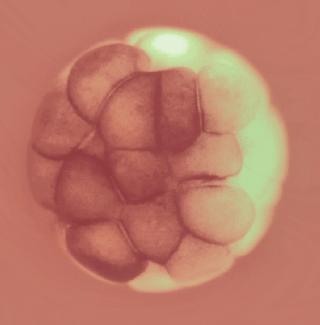
A fertilized egg divides first into two cells, then four, then eight and so on. Meanwhile, those cells progress from undifferentiated blobs in a cluster to more diverse identities associated with heart, brain, muscle, blood, bone and other tissues. Though the overall process is familiar, scientists have not understood it in much detail.
But three papers appearing today in Science are changing that, as they unveil work with major significance for the field of developmental biology. Using a combination of gene sequencing and mathematical methods, the researchers traced the patterns of gene expression in every cell in embryos of zebra fish and of Western clawed frogsthrough many stages of development during their first 24 hours.
The results revealed, at a previously impossible resolution and scale, the genetic and developmental trajectories that embryonic cells follow to their eventual fates in fully differentiated tissues. Surprising new insights emerged as well: Many biologists, for example, believed that embryonic cells always followed branching paths toward maturity that committed them irrevocably to certain fates. But the new data indicates that cells can, in effect, sometimes “loop back” to follow a different path, and that cells with different developmental histories can sometimes end up as the same type of cell.
More here. [Thanks to Stefan Saal.]
The Islamic State’s Lingering Legacy among Young Men from the Mosul Area
Scott Atran, Hoshang Waziri, Ángel Gomez, Hammad Sheikh, Lucia Lopez-Rodriguez, Charles Rogan, and Richard Davis at the Combating Terrorism Center:
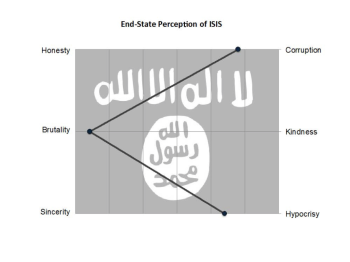
The multidisciplinary and multinational team of researchers has been working on the frontlines of the fight against the Islamic State since the beginning of 2015.a In their research with frontline combatants in Iraq (peshmerga, Iraqi Army, Sunni Arab militia, Kurdistan’s Workers’ Party (PKK), and captured Islamic State fighters), the authors employed an initial set of psychological measures to gauge willingness to make costly sacrifices.1 In these frontline studies, whose results the authors’ replicated in more than a dozen online studies among thousands of Western Europeans outside the conflict zone, the authors investigated two key components of a theoretical framework they termed “The Devoted Actor” to better understand people’s willingness to make costly sacrifices.2
The Devoted Actor framework integrates research on “sacred values” that are immune to material tradeoffs—whether religious or secular, as when land or law become holy or hallowed—and “identity fusion,” which gives individuals a visceral feeling of oneness and invulnerability to a primary reference group to which they belong.
More here.
Where the wild tales are: how stories teach kids to nurture nature
S. F. Said in Nature:
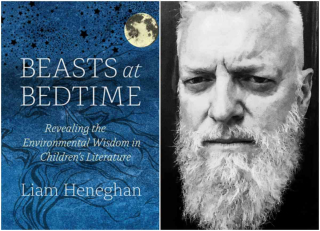
Heneghan’s assertion is partly a response to the ‘No Child Left Inside’ movement, sparked by journalist Richard Louv’s 2005 Last Child in the Woods. Heneghan supports Louv’s aim of re-introducing today’s digital-drenched children to outdoor life. But he also believes that reading and being read to help children gain environmental literacy, enabling them to engage with nature in profound ways. To make his case, Heneghan discusses around 20 children’s books in detail, and analyses their environmental themes.
His focus is on classics such as Beatrix Potter’s Tale of Peter Rabbit (1902) and L. Frank Baum’s The Wonderful Wizard of Oz (1900): British and North American texts that have found a global readership. The selection is drawn from his experiences as a parent and reader, and from recommendations. In lists provided by US professional teachers’ organization the National Education Association, for example, he finds that every book recommended for preschoolers is environmentally themed. Meanwhile, 60% of those recommended for 4- to 8-year-olds “feature animals or are in other ways concerned with nature”, as do 50% for 9- to 12-year-olds.
More here.
A flying Tesla Roadster and the future of flying cars
The Endless Summer by Madame Nielsen
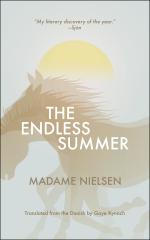
The Danish transgender performance artist, has, over the course of her career, presented, masqueraded, invented, and re-invented herself many times, even having her birth-identified self, Claus Beck-Nielsen, declared dead along the way. (He was ultimately revived when the lack of any identity altogether proved too difficult to sustain.) The multi-faceted Madame Nielsen is a novelist, poet, artist, performer, stage director, composer, and singer. With The Endless Summer, newly released from Open Letter Books in a translation by Gaye Kynoch, Nielsen weaves a tale that sidesteps the common expectations of narrative progress and character development. Rather, an odd cast of characters is choreographed through a shifting, dreamlike landscape openly reminiscent of David Lynch, complete with digressions into side stories, tales from the past, and glances into the future. The stories are continually being started, interrupted, and resumed again. The influence of Proust and other French novelists is evident, but Nielsen’s wistful narrator, who will ultimately become an actor, demonstrates a strong theatrical sensibility throughout.
The novel opens with a simple statement, the oddly incomplete sentence: “The young boy, who is perhaps a girl, but does not know it yet.” This phrase will be echoed, with slightly different shades, gradation, and detail, throughout the text. Likewise, the other main characters’ defining characteristics or curious features will be continually evoked, elaborated, and elegized as the tale unwinds.
more here.
Annabella Byron is rescued from more than a century of bad press
“Oh! What an instrument of torture I have acquired in you,” Byronfamously exclaimed on first beholding his baby daughter Ada, leaving it unclear whether he saw himself as the scourger or the scourged. In truth, it was probably a bit of both. Within six months the poet had left Britain and would never see either his daughter or his wife Annabella again. He spent the next decade racketing around the continent writing verse that was beautiful and scabrous by turns, and intervening in foreign conflicts that were actually none of his business. Annabella Byron, meanwhile, morphed from wretched bride into a queenly philanthropist, who was equally certain that she knew what was best for other people. Baby Ada, by contrast, grew up to be mostly interested in herself. She was, she announced proudly, a genius.
The story of this unhappy trio has been told before, but seldom with as much brio as it is here. Miranda Seymour’s particular aim is to rescue Annabella from over a century’s worth of bad press. Everyone, detractors and advocates alike, agrees that at the age of 22 she was too naive to see how stupid it was to pester Byron into marrying her when he was clearly only after her fortune. She’d always had a thing about Jane Austen’s Mr Darcy and thought Byron was cut from the same cloth.
more here.
Saturday Poem
the other nils
the hand in the mirror moved a
fraction of a second before his
own . his hand followed as
if drawn to scratch his nose where
the mirror hand already gave relief
the mirror eye began to wink and
his own eyelids slid together
in conspiracy . he left the bathroom
quickly, closed the door, wondering
if the other nils were walking down
the other hall and if those dark shoes
touched the carpet just ahead of his own
touched the carpet just ahead of his own
Saturday Poem
the other nils
the hand in the mirror moved a
fraction of a second before his
own . his hand followed as
if drawn to scratch his nose where
the mirror hand already gave relief
the mirror eye began to wink and
his own eyelids slid together
in conspiracy . he left the bathroom
quickly, closed the door, wondering
if the other nils were walking down
the other hall and if those dark shoes
touched the carpet just ahead of his own
by Nils Peterson
The Literature of Mars: A Brief History
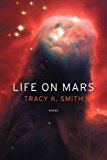
It was really not until the ’90s when quality literature about Mars and Martians became popular again. This is because it was in the 1990s that high-tech probes like Mars Global Surveyor, Pathfinder, and Sojourner landed on the planet, giving us new, more detailed imagery of the Martian surface. The Mars Society was also founded in the late 1990s. In this decade, astronomer and astrobiologist Carl Sagansaid, “Because of the historic romance of the general public with Mars (consider even today the associations of the word ‘martian’), the exploration of Mars has a public resonance and support that probably no other goal of the space program can claim.”
In 1993, Greg Bear published his award-winning novel Moving Mars, a futuristic story that discusses many political themes. Kim Stanley Robinson also published numerous Martian novels throughout this decade. Dr. John Gray published a book entitled Men Are from Mars, Women Are from Venus (1992), which covered topics about the psychological differences between men and women. It employed the metaphor of the title to get its point across, picturing that the two sexes originated from two different planets of drastically different societies. Apparently, it was the longest-running nonfiction bestseller of the ’90s. And in 1999, bringing the decade to a close, the novel The Martian Race by Gregory Benford was released.
more here.
The IQ trap: how the study of genetics could transform education
Philip Ball in New Statesman:
Researchers are now becoming confident enough to claim that the information available from sequencing a person’s genome – the instructions encoded in our DNA that influence our physical and behavioural traits – can be used to make predictions about their potential to achieve academic success. “The speed of this research has surprised me,” says the psychologist Kathryn Asbury of the University of York, “and I think that it is probable that pretty soon someone – probably a commercial company – will start to try to sell it in some way.” Asbury believes “it is vital that we have regulations in place for the use of genetic information in education and that we prepare legal, social and ethical cases for how it could and should be used.” If that sounds frightening, however, it might be because of a wide misapprehension about what genes are and what they do.
It’s sometimes said that the whole notion that intelligence has a genetic component is anathema to the liberals and left-wingers who dominate education. Young reliably depicts the extreme version here, saying “liberal educationalists… reject the idea that intelligence has a genetic basis [and] prefer to think of man as a tabula rasa, forged by society rather than nature”. He’s not alone, though. The psychologist Jill Boucher of City, University of London has lambasted what she calls “the unthinkingly self-righteous, hypocritical and ultimately damaging political correctness of those who deny that genetic inheritance contributes to academic achievement and hence social status”. Teach First’s suppression of Young’s article contributed to that impression: it was a clumsy and poorly motivated move. (The organisation has since apologised to Young.)
Despite this rhetoric, however, you’d be hard pushed to find a teacher who would question that children arrive at school with differing intrinsic aptitudes and abilities. Some kids pick things up in a flash, others struggle with the basics. This doesn’t mean it’s all in their genes: no one researching genes and intelligence denies that a child’s environment can play a big role in educational attainment. Of course kids with supportive, stimulating families and motivated peers have an advantage, while in some extreme cases the effects of trauma or malnutrition can compromise brain development. But the idea of the child as tabula rasa seems to be something of a straw man.
More here.
The IQ trap: how the study of genetics could transform education
Philip Ball in New Statesman:

It’s sometimes said that the whole notion that intelligence has a genetic component is anathema to the liberals and left-wingers who dominate education. Young reliably depicts the extreme version here, saying “liberal educationalists… reject the idea that intelligence has a genetic basis [and] prefer to think of man as a tabula rasa, forged by society rather than nature”. He’s not alone, though. The psychologist Jill Boucher of City, University of London has lambasted what she calls “the unthinkingly self-righteous, hypocritical and ultimately damaging political correctness of those who deny that genetic inheritance contributes to academic achievement and hence social status”. Teach First’s suppression of Young’s article contributed to that impression: it was a clumsy and poorly motivated move. (The organisation has since apologised to Young.)
Despite this rhetoric, however, you’d be hard pushed to find a teacher who would question that children arrive at school with differing intrinsic aptitudes and abilities. Some kids pick things up in a flash, others struggle with the basics. This doesn’t mean it’s all in their genes: no one researching genes and intelligence denies that a child’s environment can play a big role in educational attainment. Of course kids with supportive, stimulating families and motivated peers have an advantage, while in some extreme cases the effects of trauma or malnutrition can compromise brain development. But the idea of the child as tabula rasa seems to be something of a straw man.
More here.
Friday, April 27, 2018
The History of the Shariʿa
Mohammad Fadel in Lapham’s Quarterly:
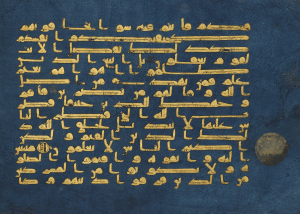 What is shariʿa? It is often translated as “Islamic law,” as if it represented the law in its entirety. It is also commonly thought to be a rigid set of practices and punishments inherited directly from early Islam that are meant to be applied in a single inflexible manner. But none of this is accurate.
Shariʿa is best understood as Islam’s specifically divine law, virtually synonymous with revelation. Muslims believe it to have been revealed to the Prophet Muhammad and principally transmitted through the Quran and his own teachings. But it was not itself the letter of the law followed by early Muslims. Acceding to the commands of revelation required further human interpretation, and this effort to use shariʿa toward the establishment of rules for a moral life has a different name: fiqh (literally “understanding”).
Muhammad died in 632, and shariʿa and fiqh developed in the following years, as his community needed to figure out how to proceed without his personal authority—especially as his successors, known as the caliphs, soon expanded his Islamic state beyond the Arabian Peninsula. They consolidated control over the Near East by driving out the Byzantine Empire from North Africa and the Levant and completely destroying the Sasanian Empire in Mesopotamia, Iran, and Central Asia. Islam then spread through the region.
More here.