
Katie Reid in Nautilus:
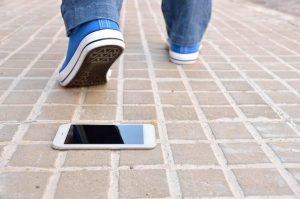 As a kid, I’d sometimes try to imagine what life would be like without a particular sense or part of my body, like with questions from the Would You Rather? game. Would you rather be deaf or blind? Would you rather have no legs or no arms? I’d try to erase the sound of my mom’s piano playing, the sight of the ground growing smaller as I soared on the tree swing in my backyard, or the feeling of playing basketball so hard my lungs might explode, but I just couldn’t. How could life go on without these sensations that were so tied to my idea of what it meant to be alive? I guess I’ve been feeling extra contemplative and nostalgic these days because I recently went through a pretty significant break-up…with my smartphone. My relationship with my phone was unhealthy in a lot of ways. I don’t remember exactly when I started needing to hold it during dinner or having to check Twitter before I got out of bed in the morning, but at some point I’d decided I couldn’t be without it. I’d started to notice just how often I was on my phone—and how unpleasant much of that time had become—when my daughter came along, and, just like that, time became infinitely more precious. So, I said goodbye. Now, as I reflect on the almost seven years my smartphone and I spent together, I’m starting to realize: What I had with my phone was largely physical.
Cognitive scientists have long debated whether objects in our environment can become part of us. Philosophers Andy Clark and David Chalmers argued in their 1998 paper “The Extended Mind” that when tools help us with cognitive tasks, they become part of us—augmenting and extending our minds. Today the idea that phones specifically are extensions of ourselves is receiving a lot of recent attention. In February, in Aeon, philosopher Karina Vold explored the legal implications of applying the extended mind theory to our smartphones. If the extended mind view is correct, she writes, then smartphones would merit recognition “as a part of the essential toolkit of the mind.” Last month, in a fascinating New Yorker profile of Clark, Larissa MacFarquhar wrote that Clark thinks “we are all cyborgs, in the most natural way. Without the stimulus of the world, an infant could not learn to hear or see, and a brain develops and rewires itself in response to its environment throughout its life. Any human who uses language to think with has already incorporated an external device into his most intimate self, and the connections only proliferate from there.” For Clark, MacFarquhar continues, “The more devices and objects there are available to foster better ways of thinking, the happier he is.”
I agree with the theory, if not Clark’s sunny outlook on its implications. (More on that later.) However, when it comes to the most widely useful of modern-day tools—the smartphone—both of these recent articles overlook a key component of the extended self: embodiment. Our devices aren’t just extensions of our minds, they’re extensions of our bodies too. Clark ventures into embodiment in his 2008 book, Supersizing the Mind, in which he spends half of the first chapter discussing how bodies and senses adapt to external technology. From a monkey learning to master a robotic arm to the familiar process of “body babbling,” in which infants learn, through practice, how neural commands control certain bodily movements, Clark shows that the ability to incorporate new objects into our bodies is part of how we’re designed:
Because bodily growth and change continue, it is simply good design not to permanently lock in knowledge of any particular configuration but instead to deploy plastic neural resources and an ongoing regime of monitoring and recalibration.
I experienced that recalibration when I got my first smartphone in 2011.
More here.
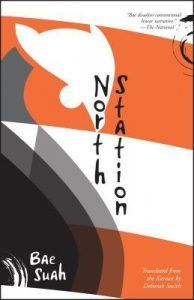 Bae Suah seems to know that writing is a kind of time travel, and in each of these stories, brought deftly into English by Deborah Smith, the caroming and hyperlinking movements that characterize this traveling raise such questions as: what does it demand of me when I reach out to you? Where does my memory of you end and your reality begin? Why do I remember only that which I remember? And, as I write all of this, do I move any closer toward the answers?
 W
W For some readers, Howe’s work seems inscrutable or obtuse—obscure for the sake of difficulty as a kind of meaning in itself. Indeed, the poems stand awkwardly as individual works, and are best read as a volume. Taken as such, they offer a rewarding route to how one might construct a life—and a life’s work—from diving into language, the past, archival sources, and visual art. There is freedom in vastness and there is always more—more ideas, more ways of speaking and hearing, listening and knowing—to be found. Howe convinces us that intuited connections are real and possess a logic of their own, and that supposed breaks in continuity, in history or associations or sentences, are often the very place we should look to forge new connections. To stutter, to recombine or pull apart phonemes and line breaks, to wrench metaphors and to wrongly employ words, to cut and paste texts in images, shapes, lines, is to uncover so much possibility. Most critically, it is to admit and to relish the fact that we do not know all the ways in which we do not know—to be open to the grace of “not being in the no.”
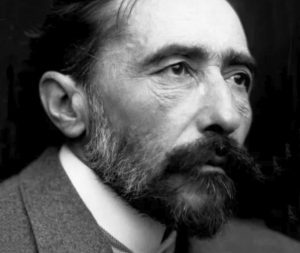 “I am glad you’ve read the Heart of D. tho’ of course it’s an awful fudge,” Joseph Conrad wrote to Roger Casement in late 1903. Casement, an Irish diplomat working for the British Foreign Office, had just returned to London from Belgium’s African colony, the Congo Free State, and was about to submit a report to Parliament detailing the existence of a vast system of slavery used to extract ivory and rubber. Looking to draw public attention to the atrocities, Casement traveled to the author’s home outside London to attempt to recruit him into the Congo Reform Association. Conrad was sympathetic: Africa, he told Casement, shared with Europe “the consciousness of the universe in which we live,” and it had been difficult for him to learn that the horrors he witnessed on his 1890 trip up the Congo River had only gotten worse. But he resisted playing the part of an on-the-spot authority and begged off joining Casement’s association. “I would help him but it is not in me,” Conrad later explained to a friend. “I am only a wretched novelist inventing wretched stories and not even up to that miserable game.”
 The scientific
 I would like to write about the bullshitization of academic life: that is, the degree to which those involved in teaching and academic management spend more and more of their time involved in tasks which they secretly — or not so secretly — believe to be entirely pointless.
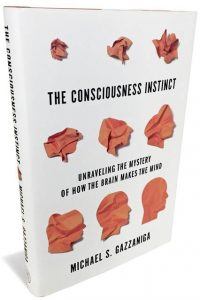 Three decades after being awarded the Nobel Prize for his discovery of DNA, Francis Crick wrote a book about consciousness, “The Astonishing Hypothesis: The Scientific Search for the Soul.” It was momentous: A world-renowned scientist had decided to directly confront the mind/body problem, the centuries-old challenge of reconciling the brain, a gelatinous mass of physical tissue, and human consciousness, the realm of emotion, volition and boundless imagination. Crick’s contention that the human mind arises from neurons in the brain rather than from an ineffable soul is perhaps less astonishing today, when this premise is nearly universally accepted among neuroscientists. But it still hints at something remarkable about Crick’s own mind. Why would a Nobel-winning scientist, already credited with discovering the secret of life, decide to switch gears and focus on an inquiry not only in a different field but so scientifically impenetrable as to have earned nicknames like “the hard problem” and “the last great mystery of science?” Crick answered this question with “what I called the gossip test: What you’re really interested in is what you gossip about. Gossip is things you’re interested in, but you don’t know much about.” In short: genuine curiosity.
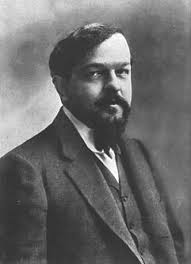 The idea that Debussy is one of music’s great revolutionaries still causes consternation. Many who consider themselves fans are aware only of the sensual timbres and mellifluous images in sound, often inspired by literary or visual allusion: water, air, wind, moonlight, at once static and mobile. How can music so apparently formless and exquisite also trigger innovation?
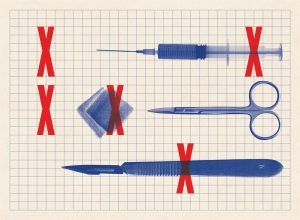 Late last year, I witnessed an extraordinary surgical procedure at the Cleveland Clinic in Ohio. The patient was a middle-aged man who was born with a leaky valve at the root of his aorta, the wide-bored blood vessel that arcs out of the human heart and carries blood to the upper and lower reaches of the body. That faulty valve had been replaced several years ago but wasn’t working properly and was leaking again. To fix the valve, the cardiac surgeon intended to remove the old tissue, resecting the ring-shaped wall of the aorta around it. He would then build a new vessel wall, crafted from the heart-lining of a cow, and stitch a new valve into that freshly built ring of aorta. It was the most exquisite form of human tailoring that I had ever seen. The surgical suite ran with unobstructed, preternatural smoothness. Minutes before the incision was made, the charge nurse called a “time out.” The patient’s identity was confirmed by the name tag on his wrist. The surgeon reviewed the anatomy, while the nurses — six in all — took their positions around the bed and identified themselves by name. A large steel tray, with needles, sponges, gauze and scalpels, was placed in front of the head nurse. Each time a scalpel or sponge was removed from the tray, as I recall, the nurse checked off a box on a list; when it was returned, the box was checked off again. The old tray was not exchanged for a new one, I noted, until every item had been ticked off twice. It was a simple, effective method to stave off a devastating but avoidable human error: leaving a needle or sponge inside a patient’s body.
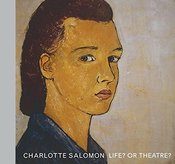 Origin stories are woven with many threads: Some we spin ourselves, while others we inherit. The great German artist Charlotte Salomon (1917–1943) accounted for herself—for who she was, and why she was, and where she came from—not by wondering what of herself was fact and what was fiction. Rather, the real and present question was Leben? oder Theater? (Life? or Theatre?). In other words, how to distinguish genuine presence and raw experience from the spectacle and folly of human making.
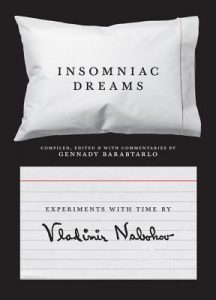 There’s
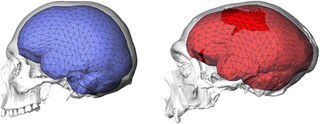 In recent months, there’s been a groundswell of evidence showing that more volume in both the left and right hemispheres of the cerebellum (Latin for “little
 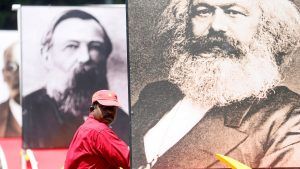 One hundred and sixty years ago, at a time when the light bulb was not yet invented, Karl Marx predicted that robots would replace humans in the workplace.
 Politics on both sides of the Atlantic is being played out in the costumes of dead generations. Trump won the White House with a Reagan campaign slogan, pledging to bring back factory jobs and tariff wars. Democrats believe desperately in the existence of Russian conspiracies. British conservatives yearn for the nineteenth century, while academics at Oxford seek an “intelligent Christian ethic of empire.” Jeremy Corbyn has made postwar socialism popular again, with the help of a line from Shelley. Such retromania might not be so surprising—every age of crisis, as Marx famously argued, conjures up the spirits of the past for guidance and inspiration. But it is harder to account for a ghostly presence that provides neither: the public intellectual who wants to fight about the Enlightenment.