
Mark Dery at The Brooklyn Rail:

Bowiephilia is the bedroom religion of the too-smart, sensitive loner alone at home while everyone else is at the prom—an alienated adolescent’s dream of an aesthetic rapture, out of the soul-killing suburbs (like Bromley, where Bowie lived and languished as a teen), into a world where weirdos are exalted, not stuffed into gym lockers while the jocks guffaw. Unsurprisingly, Bowie was that kid. “I felt often, ever since I was a teenager, so adrift and so not part of everyone else…so on the outside of everything,” he says, in Geoffrey Marsh’s essay “Astronaut of Inner Spaces” (in the exhibition catalogue). “I wanted to be a fantastic artist, see the colors, hear the music, and they just wanted me turned down. … I had to retreat into my room; so you get in the room and you carry that ruddy”—British for “damned”—“room around with you for the rest of your life.”
How many of the visitors to David Bowie is were that kid, too? How many of us still carry that room around with us, a lifetime later? As a teen, I lived in mine.
more here.
 O
O Grant was thirty-nine years old, apparently a hopeless failure, when Confederate troops fired the first shots on Fort Sumter. In the meantime, his political ideas had been slowly developing. While Jesse Grant was an avid abolitionist, Ulysses was no such thing; he opposed slavery in theory, but also feared, like many Northerners, that “outright abolitionism might lead to bloody sectional conflict.” He had even cast his one vote in a presidential election for James Buchanan, a Democrat—a fact that would embarrass him in later years. His father-in-law Fred Dent (a man as bossy and controlling as his own father) was a Missouri slaveowner of reactionary leanings, and his own wife, Julia, owned slaves while she was married to Grant, not divesting herself of this property until the Emancipation Proclamation. Grant himself quickly freed the slave who was given him by Fred, William Jones, but he was no abolitionist, dismissing John Brown’s raid as the act of a fanatic. But Chernow provides evidence that Grant became increasingly anti-slavery, a Free-Soil Democrat, in the years leading up to the war.
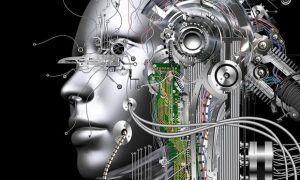 As humans, we are defined by, among other things, our desire to transcend our humanity. Mythology, religion, fiction and science offer different versions of this dream. Transhumanism – a social movement predicated on the belief that we can and should leave behind our biological condition by merging with technology – is a kind of feverish amalgamation of all four. Though it’s oriented toward the future, and is fuelled by excitable speculation about the implications of the latest science and technology, its roots can be glimpsed in ancient stories like that of the Sumerian king Gilgamesh and his quest for immortality.
 According to Akeel Bilgrami, liberalism and liberal politics have their own limitations and cannot save us from the savagery of capital. In this way, he intellectually provokes us to go beyond liberalism and reimagine an alternative political vocabulary. His philosophy rejects the ideology of capitalism and envisions an alternative as the way forward for humanity. This alternative is, of course, Left-centric and socialistic in perspective, and Bilgrami sympathises with the Left politics in his home country and others.
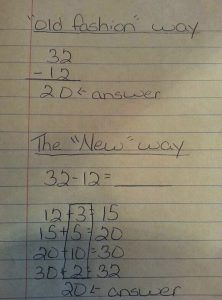 Ever since mathematics got properly underway around 3,000 years ago, there was only one way to achieve access to the field. You had to spend many years developing a fairly extensive calculation skillset. In the first instance, to pass the graduation and entrance examinations to gain initial access to the field. Then, once accepted into the world of mathematics, calculation of one kind or another was what all mathematicians spent the bulk of their mathematical time doing. Arguably, for most of mathematics history, the subject really was, to a large extent, primarily about calculation of one form or another. Newton, Leibniz, Bernoulli (any of them), Fermat, Euler, Riemann, Gauss, and the other greats of times past, were all superb masters of calculation. (We should also include Boole, since his famous Boolean algebra is also a calculation system.)
 The New York City police officers looked bored, unable to understand a word, as they eyed the angry crowd at Madison Square Garden. A sawmill worker from the Canadian province of British Columbia took the stage with a retinue of robed warriors toting curved swords. He wore an ornate turban and sliced the air with his hand as he promised a massacre of Hindus.
 It’s 2018 and everybody’s talking about sex robots.
 Basingstoke sits roughly equidistant between London, where I’ve lived all my adult life, and Southampton, where I grew up. On the frequent train journey between the two, Southampton would barely ever change, but Basingstoke constantly threw up new office complexes and blocks of luxury flats, seemingly enjoying a permanent boom while Southampton declined. I’d never get off the train to look at the town, having been alarmed by it on a visit as a teenager, by the way there seemed to be “no there there”—just an enclosed mall, ringed by motorways, with Barratt Homes suburbia around it and nothing much more. This, I melodramatically thought to myself, is what they want for all of us, lives lived around shopping, property and nothing else, in towns stripped of anything distinct.
 Does the lizard brain trick the body into singing its ancient song? Of course, you are more than the parts you recognize as you. Perhaps those other parts were quieter in the past, or did their work without being noticed, while now you can see their elbows, their toes sticking out, pulling on the strings of your life. But those same creatures were always there, pulling on the strings of your life. Will you one day feel about the mothering instinct the same way you now feel about the sex instinct, which also suddenly turned on? Like that other passage, you’ll resist it, but in retrospect, it took you. You didn’t make a choice to go in that direction. Life—nature—pulled your strings. That is why you have no regrets about those years. And where did it land you? In a more interesting place. It resulted in a more interesting time. Is your body now pulling you towards motherhood, in the same way?
 E
E Most jobs that exist today might disappear within decades. As artificial intelligence outperforms humans in more and more tasks, it will replace humans in more and more jobs. Many new professions are likely to appear: virtual-world designers, for example. But such professions will probably require more creativity and flexibility, and it is unclear whether 40-year-old unemployed taxi drivers or insurance agents will be able to reinvent themselves as virtual-world designers (try to imagine a virtual world created by an insurance agent!). And even if the ex-insurance agent somehow makes the transition into a virtual-world designer, the pace of progress is such that within another decade he might have to reinvent himself yet again. The crucial problem isn’t creating new jobs. The crucial problem is creating new jobs that humans perform better than algorithms. Consequently, by 2050 a new class of people might emerge – the useless class. People who are not just unemployed, but unemployable. The same technology that renders humans useless might also make it feasible to feed and support the unemployable masses through some scheme of
  Benter and Coladonato watched as a software script filtered out the losing bets, one at a time, until there were 36 lines left on the screens. Thirty-five of their bets had correctly called the finishers in two of the races, qualifying for a consolation prize. And one wager had correctly predicted all nine horses.
 Precisely how and when will our curiosity kill us? I bet you’re curious. A number of scientists and engineers fear that, once we build an artificial intelligence smarter than we are, a form of A.I. known as artificial general intelligence, doomsday may follow. Bill Gates and Tim Berners-Lee, the founder of the World Wide Web, recognize the promise of an A.G.I., a wish-granting genie rubbed up from our dreams, yet each has voiced grave concerns. Elon Musk warns against “summoning the demon,” envisaging “an immortal dictator from which we can never escape.” Stephen Hawking declared that an A.G.I. “could spell the end of the human race.” Such advisories aren’t new. In 1951, the year of the first rudimentary chess program and neural network, the A.I. pioneer Alan Turing predicted that machines would “outstrip our feeble powers” and “take control.” In 1965, Turing’s colleague Irving Good pointed out that brainy devices could design even brainier ones, ad infinitum: “Thus the first ultraintelligent machine is the last invention that man need ever make, provided that the machine is docile enough to tell us how to keep it under control.” It’s that last clause that has claws.
 At a company-wide town hall-style event in early April, Jeffrey Goldberg, the editor of The Atlantic, and his star writer, Ta-Nehisi Coates engaged in some candid public soul searching about how it is the venerable magazine, founded by abolitionists over 150 years ago, had hired (very briefly) a writer who advocated state-sanctioned hanging of women who abort pregnancies, and compared a small black child he encountered on a reporting trip to “a three-fifths scale Snoop Dogg” who gestured like a “primate.”