Ian Volner in Curbed:
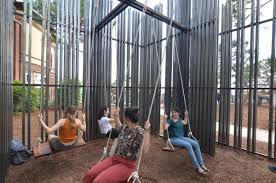 Every two years, a few dozen nations deputize a small circle of curators and thinkers to represent them at the show; many of the participating countries are regulars, with permanent pavilions of their own, often dating back to the early 20th century, and located in the leafy Giardini della Biennale near Venice’s easternmost tip. But each edition of the exhibition also brings a batch of wildcards, never-before-seen entrants whose homelands have decided, for whatever reason, to throw their hats into the ring. This year, first-timers included Guatemala, Saudi Arabia, and Lebanon. And social media (full disclosure: mine included) took a special shine to the premier outing from the Vatican, a brace of inventive freestanding chapels by architects both well- and lesser-known. There was one rookie nation, however, whose appearance at the Biennale was especially poignant, both for the character of its installation and for the mere fact of its being in Venice at all: Pakistan.
“This is a very political statement,” says Salman Jawed, a member of Coalesce Design Studio, the collaborative, multidisciplinary firm that helped bring the Islamic Republic of Pakistan to Venice for the first time. The politics he’s speaking about are not, at least at first, overtly evident: Situated in a small public park not far from the Giardini, the Pakistani installation, titled “The Fold,” is a roughly four-yard-square cage of irregularly-spaced steel bars towering some twenty feet in the air.
Slipping into this rather forbidding envelope via a narrow passage, the visitor discovers a playground-like atmosphere within, a trio of wooden swings dangling from overhead beams, and a pair of wooden benches on curved, brushed-steel rockers. The contrast between stern exterior and playful interior gives a pleasant jolt. But understanding its polemical intent requires a little more digging. As Coalesce partner Zeba Asad explains, in Karachi, “all the urban spaces are in the street.” The Pakistani capital is home to over 21 million people, most of them jammed into a relatively small wedge of the metropolis, with little room for parks, plazas, or other urban amenities. Seen from one perspective, “The Fold” is an attempt to address this condition: The placement of the swings at odd angles means that users are constantly at risk of colliding with their fellow swingers, just as the children of Karachi must hazard cars, pedestrians, and one another as they play in the city’s crowded streets.
More here. (Thanks to Batool Raza)

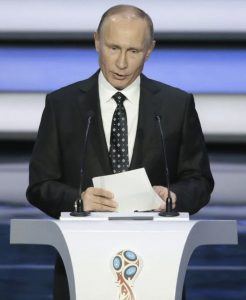 As the World Cup begins next week in Russia, 2.3 million civilians in Syria’s Idlib province are facing an endgame of their own. The two events are linked because the Russian government could play a central role in avoiding mass atrocities in Syria but so far has played the role of accomplice.
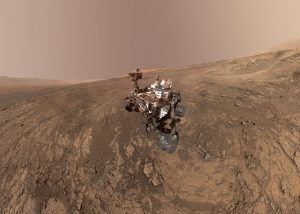 In a much-hyped press conference held on Thursday, NASA announced its Curiosity rover had uncovered new evidence of methane — a potential sign of life — as well as signs of organic compounds buried in ancient mudstone. The space agency did not say it had found evidence of alien life. However, these new results are still tantalizing. Curiosity landed on Mars back in 2012 and it’s been slowly climbing up Mount Sharp, a large hill formed when an asteroid impact created Gale Crater, simultaneously exposing multi-billion year old sedimentary rocks laid down in an ancient lakebed. The rover came equipped with a suite of instruments known as Sample Analysis at Mars, or SAM. And its main goal was to find organic molecules. These commonly form in non-biological processes, but they’re also the building blocks of life. And mysteriously, the VW Beetle-sized rover succeeded in finding organics even though past Mars missions, like 1976’s Viking landers, did not. This latest announcement was tied to two scientific papers published simultaneously in the prestigious journal Science. One study focused on the methane and the other looked at the organics.
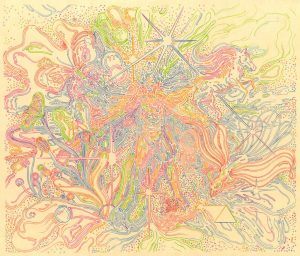 Well, why does anyone take drugs? The simplest answer is that drugs are generally fun to take, until they aren’t. But psychedelics are different. They don’t drape you in marijuana’s gauzy haze or imbue you with cocaine’s wintry, italicized focus. They’re nothing like opioids, which balance the human body on a knife’s edge between pleasure and death. Psychedelics are to drugs what the Pyramids are to architecture — majestic, ancient and a little frightening. Pollan persuasively argues that our anxieties are misplaced when it comes to psychedelics, most of which are nonaddictive. They also fail to produce what Pollan calls the “physiological noise” of other psychoactive drugs. All things considered, LSD is probably less harmful to the human body than Diet Dr Pepper.
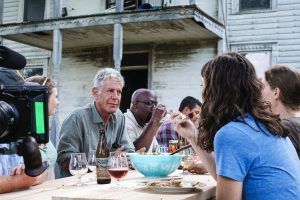 Anthony Bourdain, whose madcap memoir about the dark corners of New York’s restaurants made him into a celebrity chef and touched off a nearly two-decade career as a globe-trotting television host, was found dead in his hotel room in France on Friday. He was 61.
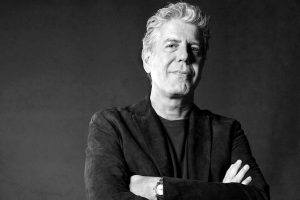 Good food, good eating, is all about blood and organs, cruelty and decay. It’s about sodium-loaded pork fat, stinky triple-cream cheeses, the tender thymus glands and distended livers of young animals. It’s about danger—risking the dark, bacterial forces of beef, chicken, cheese, and shellfish. Your first two hundred and seven Wellfleet oysters may transport you to a state of rapture, but your two hundred and eighth may send you to bed with the sweats, chills, and vomits.
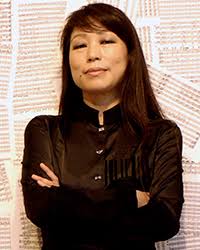 They are highly virtuosic pieces, which, I assume, must not be played slowly, because then you would hear and see nothing, just as when you walk too slowly past a fence, you perceive the flashes of life from behind it not as a cohesive picture, but rather only as disparate snapshots. The first etude, “In C,” is indeed, as the title reveals, built around this fundamental note. It conveys a mysteriously contemplative and at the same time very harmonious impression. In several slow breaths, flickering structures are built up repeatedly to towering heights. In the second part, nested rhythms become so dense that they generate the gingerbread men feeling. The etude is heading for a climax, but then no explosive outburst occurs; instead, individual melodic lines break free in a high register and simply waft away.
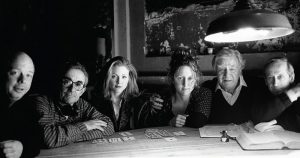 For much of the 1980s, André Gregory rehearsed Chekhov nearby in another boarded up Broadway jewel, the ruined Victory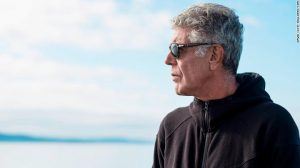
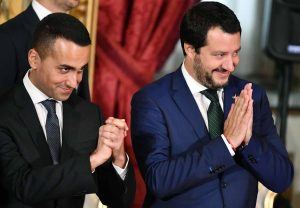 But Podemos
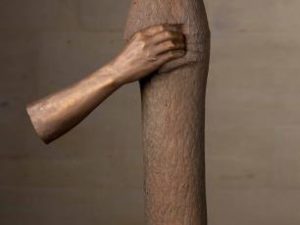 The use of local produce is something you might think it more likely to find advertised in a gallery’s café, than at the opening of the exhibition itself. At the Yorkshire Sculpture Park’s retrospective of the works of the Italian sculptor Giuseppe Penone, however, a credit tells you that the potatoes for one of the exhibts were supplied by W. Moore and Son and Bradshaw Wholesale Ltd.
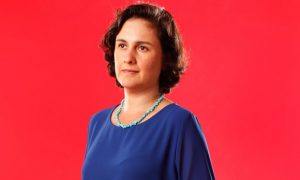 Kamila Shamsie’s Home Fire, which reworks Sophocles’ tragedy Antigone to tell the story of a British Muslim family’s connection to Islamic State, has won the Women’s prize for fiction, acclaimed by judges as “the story of our times”.
 I’ve been a psychology professor since 2012. In the past six years, I’ve witnessed students of all ages procrastinate on papers, skip presentation days, miss assignments, and let due dates fly by. I’ve seen promising prospective grad students fail to get applications in on time; I’ve watched PhD candidates take months or years revising a single dissertation draft; I once had a student who enrolled in the same class of mine two semesters in a row, and never turned in anything either time.
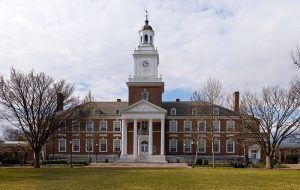 The cost of college is a notoriously complex subject. The list price at many private colleges, including tuition, fees, room and board, has reached the bewildering sum of $70,000 a year. But the real price, taking into account financial aid, is often vastly lower.
 A
A