Robin McKie in The Guardian:
 In 2017, scientists in Australia observed some striking avian behaviour. A handful of kites and falcons in the outback were seen picking up burning sticks from bush fires. The birds would then carry these smoking embers in their beaks to areas of dry grass and drop them. New fires were set off, triggering frenzied evacuations by small animals – which were promptly snatched from above by the waiting raptors. Such actions are extraordinary, says Adam Rutherford, a science writer and broadcaster. “It is, as far as I am aware, the only documented account of deliberate fire-starting by an animal other than a human. These birds are using fire as a tool.” Indigenous Australians occasionally deliberately start fires in order to flush out game, he notes. Did they learn the habit from birds? “Or maybe it is just a good trick and only us and the raptors have worked it out.” Either way, it is clear humans are not the only ones who see fire as a means for getting what they want – and that is key to Rutherford’s examination of what it means to be human. In what way, exactly, are we exceptional as a species? Science has continually chipped away at the notion of human specialness, the idea of our being “the paragon of animals”. Prowess at pyrotechnics is just the latest “human-only” attribute that has since been revealed to have animal exponents.
So what is left? What behaviours uniquely define our species? The usual list includes speech, tool-making, culture, as well as art and fashion. We are masters and mistresses of all, but none are exclusive human attributes. Crows make and use tools; apes can be taught sign language; dolphins and birds have been observed adopting habits through cultural transmission; chimps have been seen using styles of headwear “just to be in with the in-crowd”, as Rutherford puts it.
That leaves war and sex, both popular human pastimes. But is either peculiar to our species? Sex certainly occupies a titanic amount of our time and interest. One study has indicated that in Britain alone roughly 900,000,000 acts of heterosexual intercourse take place every year. (That’s about 100,000 an hour, if you are interested.) Yet only 0.1% of these bouts of British bonking results in a conception – and that is a very, very low rate of reproduction. Our species has almost, but not quite, decoupled sexual intercourse from its replication, it seems. But that still does not make us unique. Bonobo apes turn out to be even more genitally obsessed and sexually motivated than humans. All have intercourse several times a day, usually with different partners.
That leaves us with war. Again we seem infatuated with violence.
More here.
 If we keep burning coal and petroleum to power our society, we’re cooked — and a lot faster than we thought. The United Nations scientific panel on climate change issued
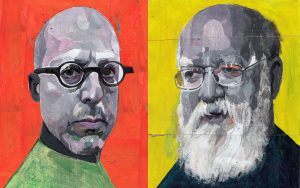 Caruso: [Dan,] you have famously argued that freedom evolves and that humans, alone among the animals, have evolved minds that give us free will and moral responsibility. I, on the other hand, have argued that what we do and the way we are is ultimately the result of factors beyond our control, and that because of this we are never morally responsible for our actions, in a particular but pervasive sense – the sense that would make us truly deserving of blame and praise, punishment and reward. While these two views appear to be at odds with each other, one of the things I would like to explore in this conversation is how far apart we actually are. I suspect that we may have more in common than some think – but I could be wrong. To begin, can you explain what you mean by ‘free will’ and why you think humans alone have it?
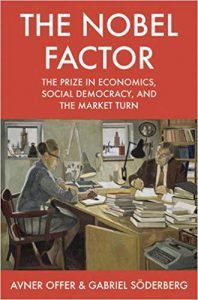
 Ajay Singh Chaudhary in Public Seminar:
 Sanjay G. Reddy in Development and Change:
 Three years ago I posted on this site “
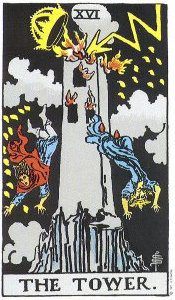
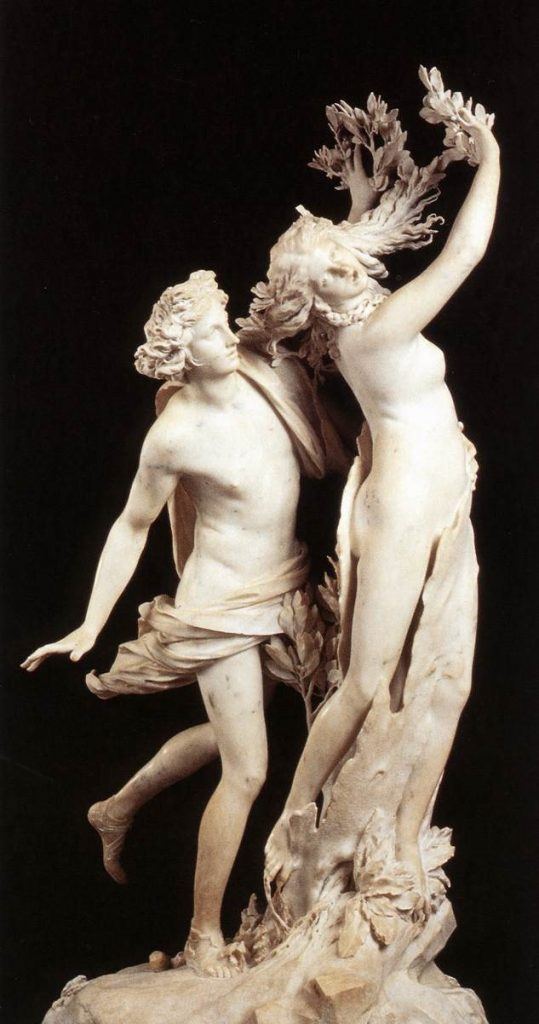
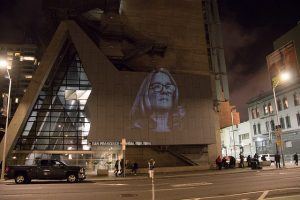
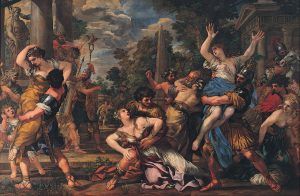 I write this as Saturday begins to wane on the long Columbus Day weekend while I listen on the radio to the speeches given by senator after senator prior to the final confirmation vote for Bret Kavanaugh as Associate Justice on the Supreme Court of the United States of America. The vote is scheduled for 3.30 p.m. October 6, 2016. I listen to their conflicted words in the Senate of the United States pleading yes or no, or yes and no. Conjuring images, I am reminded of that Roman mythology and the artists’ rendition of it, of the Rape of the Sabine Women.
 A rather ambitious
 CHRISTOPHER TALBOT THOUGHT
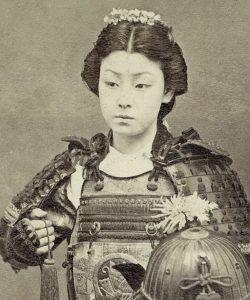 It was the autumn of 1868, and for the samurai warriors of the Aizu clan in northern Japan, battle was on the horizon. Earlier in the year, the Satsuma samurai had staged a coup, overthrowing the Shogunate government and handing power to a new emperor, 15-year-old
 IT’S PROVING DIFFICULT TO STOP THINKING