
“They flee from me that sometime did me seek”
……………………………………….. – Sir Thomas Wyatt)
After Wyatt After 11/8/’01
I flee from some whom sometime I sought out
for honest kind opinions: ‘Tell – do you like this?’
These trustees’ approval I have drunk like milk
to fortify my unproved notions’ bones;
their contrasting praises have supplied
my groping inspirations’ vitamins.
I’d now avoid their eyes and voices.
War’s ejaculation having mashed to dust
machines and walls and flesh, injects cement
into divergent certainties.
The knowing now all know
what knowledge will improve their faiths.
Discovered hesitant between, I would be crushed.
I grow surreptitious,
hide away my thoughts,
in case dear confidants, now fired
with passionate convictions,
find me out – the insult of my questioning,
the chill treachery inherent in my doubt.
by Lionel Abrahams
from International Poetry Web, 2004
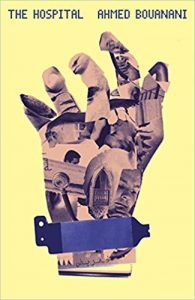 Like Bouanani’s memories of his childhood rue de Monastir, The Hospital is fastened securely to Morocco, even if it floats above it in a haze of time and space. Vergnaud expresses this endemic connection between lexicon and place succinctly: “The taxonomy of flora and fauna, smells and tastes, saints and legends permeates The Hospital,” she writes, meaning of course the one in Bouanani’s novel, and Bouanani’s novel itself. “With amnesia as the disease, and time itself in question, Bouanani delights in naming things—weeping willows and cyclamen flowers, prickly pears and esparto grass, Sidi bel Abbas and the two-horned Alexander—to anchor his character’s memories and dream lives.” Vergnaud’s lexical choices in these instances affect her reader in a slightly different way that do Bouanani’s, as the local implications can’t necessary cross the gap, but in the end, the result is quite similar: these precisely vague choices tie us to a Morocco we can’t reach, much as they connect the in-patients to a Morocco that is fragmentary, inaccessible, and lost in the past.
 The book gives us a glimpse not only into Lynch, the man and the artist, but also into Lynch’s America — the place the man came from, the space the artist depicts. “In Lynch’s realm,” McKenna writes, “America is like a river that flows ever forward, carrying odds and ends from one decade into the next, where they intermingle and blur dividing lines we’ve invented to mark time.” Lynch’s America is dream-like, uncanny, full of mystery, full of madness, ever-askew.
 The internet has for some time hummed with anxious murmuring about the Singularity. The rate of technological progress is accelerating exponentially; the Singularity refers to the moment when computers have become so smart that they escape our control and eventually become super-intelligences capable of stamping out humans like so much vermin. Those tuned into news of the coming catastrophe keep a beady eye on IBM, whose scientists are doing all they can to ensure their own survival as obsequious quislings to our future mechanical overlords. On Tuesday, the company announced that it had brought us one step closer to “real AI” (an intelligence as smart as a human) with its snappily named Project Debater: a supercomputer dedicated to the art of competitive debating. After years of research, this week it finally competed against two real-life human debaters. The result? A thumping one-all draw – according to an audience that I suspect was almost entirely made up of people who thought that HAL, the genial yet murderous computer in “2001: A Space Odyssey”, was the real hero of the film.
 When “Go Set a Watchman” was published in 2015, an Alabama lawyer called me with a catch in his voice. Had I heard that his hero Atticus Finch had an evil twin? Unlike the virtuous lawyer who saved an innocent black man from a lynch mob in “To Kill a Mockingbird,” the segregationist Atticus organized the white citizens council, figuratively speaking, in Boo Radley’s peaceful backyard. Three years later, my friend still believes that Harper Lee was tricked, in her dotage, into shredding the image of perhaps the only white Alabamian other than Helen Keller to be admired around the world. Never mind that this better Atticus is fictional; my home state has learned to grab admiration where it can.
 Barbara Ehrenreich cuts an unusual figure in American culture. A prominent radical who never became a liberal, a celebrity, or a reactionary, who built a successful career around socialist-feminist writing and activism, she embodies an opportunity that was lost when the New Left went down to defeat. Since the mid-1970s she has devoted her work to an unsparing examination of what she viewed as the self-involvement of her professional, middle-class peers: from their narcissism and superiority in
  In order to test General Relativity as a theory of gravity, you need to find a system where the signal you’ll see differs from other theories of gravity. This must at least include Newton’s theory, but should, ideally, include alternative theories of gravity that make distinct predictions from Einstein’s. Classically, the first such test that did this was right at the edge of the Sun: where gravity is strongest in our Solar System.
 In an expert analysis commissioned to defend Harvard’s admissions practices against a lawsuit, claiming the elite university discriminates against Asian-American applicants, economist
 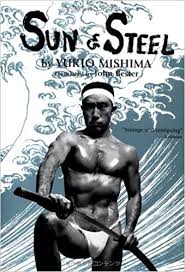 HALF A CENTURY AGO, when Yukio Mishima’s Sun and Steel was published, reasonable people the world over were entertaining the possibility that a global Marxist revolution really was at hand. Naturally, not everyone was enthused about the prospect. In Japan, where the upheaval was massive, campus demonstrators were regularly attacked by gangs of right-wing phys-ed majors wielding sports equipment. Administrators at Tokyo’s Nihon University at one point publicly requested the help of these reactionary jocks in quelling student unrest. Mishima (1925–70), a reactionary jock himself, was appalled by the demonstrations and by the New Left in general, but bashing people on the head with golf clubs was not his style. Sun and Steel—billed by the author as a “personal history,” but really more of a philosophical tract—has the unhurried cadences of the long game. Mishima was dreaming of imperial restoration, a rewinding not only of the 1960s but also of Bretton Woods, the whole postwar geopolitical order, and, possibly, political modernity tout court. Many contemporary readers of Sun and Steel harbor analogous ambitions. A minor work in the context of world literature, it is a major one in the bizarro universe of white-supremacist arts and letters.
 But here is the real reason I hate asterisks.
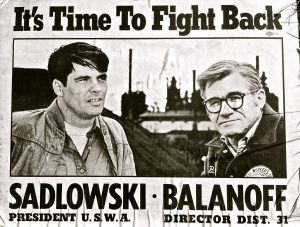 Sadlowski embodied the wish for organized labor to wake from its postwar slumber and again throw its weight behind a great movement for a different country, as it had done in the 1930s and before. The AFL-CIO had shamefully backed the Vietnam War; Sadlowski opposed it and denounced the growth of “the weapons economy”—of which steel was very much a part. Many of the unions in the federation, including the USWA, had dragged their heels at best on racial integration of their workplaces; Sadlowski called for strengthening the union’s civil rights apparatus, attracting the support of Jesse Jackson and members of the Coalition of Black Trade Unionists. Much of organized labor met environmentalism with hostility; Sadlowski dissented. “It’s one hell of a thing for me to say—we just don’t need any more steel mills. We don’t need that kind of industrial growth, at the expense of what the environment should be.” He followed the thought where it led: “Enough with the car!” What more radical claim could a blue-collar worker make about postwar society than to doubt the automobile?
 Contrary to the proverbial tree-falling-in-the forest quandary, a musical note that fails to materialize is at least as present in our brain as it would be had it actually sounded. That’s because neural substrates of imagined sound correlate with those of perceived external sounds. The more vivid the image of what must happen, the more jarring it is when that certainty is subverted.
 Arundhati Roy does not believe in rushing things.
 On her Goop website, Gwyneth Paltrow claimed that charcoal lemonade was one of the
  In the months leading up to Monday’s
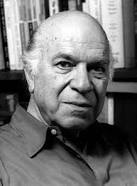 It’s no insult to the late Stanley Cavell, whose death at age 91 was announced on Tuesday, that he was the rare philosopher who was read as much for his prose as for his ideas. Although Cavell had all the right academic credentials — he taught at Harvard for many years and was a distinguished advocate for the “ordinary language philosophy” of J.L. Austin — his books were written with an eccentric, sometimes maddening, elan. Cavell’s sentences were alive with allusions in hectic smart-alecky self-mocking prose that seem closer in spirit to a Marx Brothers movie than a philosophic tome.