
From Lapham’s Quarterly:
Donovan Hohn speaks with essayist and critic Morgan Meis, author of a trilogy of books about the history of art, civilization, war, and much else. In The Drunken Silenus: On Gods, Goats, and the Cracks in Reality (2020), Meis investigates a painting by Peter Paul Rubens. In The Fate of the Animals: On Horses, the Apocalypse, and Painting as Prophecy (2022), he turns to a masterpiece Franz Marc painted in 1913, three years before his death during the Battle of Verdun. And in The Grand Valley: On Going to Hell, to France, and Back to Childhood (2025), Meis explores Joan Mitchell’s The Grand Valley, a series of twenty-one paintings that Mitchell made between 1983 and 1984. Like the books, the conversation spirals outward into history and inward into the paintings under examination, all the while putting these three artists into conversation with other artists, writers, and philosophers—Friedrich Nietzsche, D.H. Lawrence, Gertrude Stein, Degas, Klee, and Monet, among others.
Enjoying the content on 3QD? Help keep us going by donating now.
 The strength of metallic bonding — and, therefore, the melting point — also decreases from the top to the bottom of the periodic table, as the atoms get larger. But extrapolating from these established trends, mercury should still have a
 The escalating conflict between the United States, Israel and Iran has thrown a spotlight on the use of artificial intelligence in warfare. Just one day before the US–Israeli offensive began on 28 February, the US government sidelined one of its main AI suppliers as part of a disagreement that underlines ethical concerns about AI’s use.
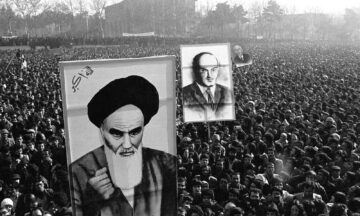 Ali Shariati, often regarded as the principal ideologue of the Iranian Revolution, was a student in Paris in the late 1950s when he became involved with the Algerian national liberation struggle and encountered the writings of Frantz Fanon. Shariati translated anti-colonial thought into Islamic symbols, locating within Islam a revolutionary potential capable of sustaining anti-colonial struggle. He sought to merge Fanon’s revolutionary anti-colonialism with an Islamic existentialist framework, linking the material struggle against oppression with the spiritual search for meaning.
 Oldoini was born in Florence, in 1837, just two years before the announcement of a new photographic medium: the daguerreotype. In 1854, at sixteen, she married the twenty-eight-year-old Count de Castiglione; the following spring, they had a son, Georgio, and she had her first documented extramarital affair. Near the end of 1855, the family moved to Paris. The move involved some diplomatic intrigue: present-day Italy was then a patchwork of independent states, and Oldoini’s cousin, the politician Camillo Benso, Count di Cavour, tasked her with promoting Italian unification at Napoleon III’s court. It seems to have been clear to di Cavour that, no matter what happened, Oldoini could not be ignored.
 I was watching Vampyros Lesbos the other day, which is, shall we say, very much less than a perfect movie. It is not even, by any reasonable standard for what makes a movie good, a good movie. It is a bad movie, and upon further reflection I’m not even sure if we should call it a movie at all, since it is constructed so sloppily. You could say that instead of a movie it is really just some scenes. There are some scenes, they don’t fit together that well, and then it is over.
 Much of the public conversation about AI focuses on chat interfaces like ChatGPT. But a quieter revolution is happening in command line AI systems such as Claude Code or Codex. Unlike chatbots, these systems can act autonomously. Given a goal, they can download data, write code, install software, run analyses, and generate figures, working like a research assistant in a can.
 American military planners in the Pentagon have been
  Scientists once thought illness was caused by “
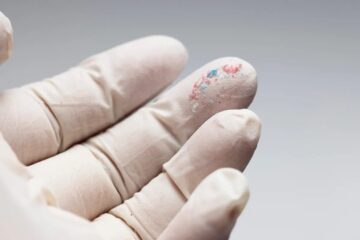 Over the last few years, numerous studies, including those in Nature Communications and Environmental International, have found nanoplastics and microplastics throughout the human body, including the blood, bones, and brain. Unsurprisingly, these findings sparked serious concern about the possible impact on human health. But as these papers began making headlines, some researchers questioned the findings and the approach. One scientist told The Guardian these concerns amount to a “bombshell.” Stephanie Wright, an associate professor at Imperial College London, discussed in The Guardian how we don’t have a strong grasp of the accuracy of these microplastic studies. It’s possible that they are overestimating the amount of plastic in our bodies.
 By the spring of 1939, the widely acknowledged dean of Anglo-American Modernist poetry, fifty-three-year-old Ezra Pound, had lived in Europe for three decades. After leaving the United States in 1908 at the age of twenty- three, the poet had initially settled in London, then moved on to Paris, and in 1924, to the Italian seaside town of Rapallo, fifteen miles southeast of Genoa. A virulent anti-Semite, Pound became an ardent and vocal supporter of Benito Mussolini and Italian fascism. The poet actually met Il Duce in person on January 30, 1933, and following Franklin Roosevelt’s inauguration as America’s thirty-seventh president just over a month later, Pound quickly evolved into a rabid and outspoken foe of the New Deal and all it represented.