Why We’re Underestimating American Collapse

Umair Haque in Eudaimonia:

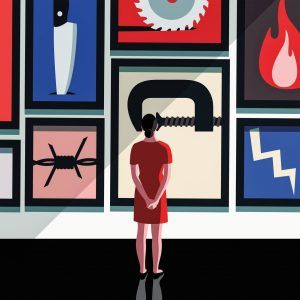
SchoolYou might say, having read some of my recent essays, “Umair! Don’t worry! Everything will be fine! It’s not that bad!” I would look at you politely, and then say gently, “To tell you the truth, I don’t think we’re taking collapse nearly seriously enough.” Why? When we take a hard look at US collapse, we see a number of social pathologies on the rise. Not just any kind. Not even troubling, worrying, and dangerous ones. But strange and bizarre ones. Unique ones. Singular and gruesomely weird ones I’ve never really seen before, and outside of a dystopia written by Dickens and Orwell, nor have you, and neither has history. They suggest that whatever “numbers” we use to represent decline — shrinking real incomes, inequality, and so on —we are in fact grossly underestimating what pundits call the “human toll”, but which sensible human beings like you and I should simply think of as the overwhelming despair, rage, and anxiety of living in a collapsing society. Let me give you just five examples of what I’ll call the social pathologies of collapse — strange, weird, and gruesome new diseases, not just ones we don’t usually see in healthy societies, but ones that we have never really seen before in any modern society.

America has had 11 school shootings in the last 23 days. That’s one every other day, more or less. That statistic is alarming enough — but it is just a number. Perspective asks us for comparison. So let me put that another way. America has had 11 school shootings in the last 23 days, which is more than anywhere else in the world, even Afghanistan or Iraq. In fact, the phenomenon of regular school shootings appears to be a unique feature of American collapse — it just doesn’t happen in any other country — and that is what I mean by “social pathologies of collapse”: a new, bizarre, terrible disease striking society. Why are American kids killing each other? Why doesn’t their society care enough to intervene? Well, probably because those kids have given up on life — and their elders have given up on them. Or maybe you’re right — and it’s not that simple. Still, what do the kids who aren’t killing each other do? Well, a lot of them are busy killing themselves.

So there is of course also an “opioid epidemic”. We use that phrase too casually, but it much more troubling than it appears on first glance. Here is what is really curious about it. In many countries in the world — most of Asia and Africa — one can buy all the opioids one wants from any local pharmacy, without a prescription. You might suppose then that opioid abuse as a mass epidemic would be a global phenomenon. Yet we don’t see opioid epidemics anywhere but America — especially not ones so vicious and widespread they shrink life expectancy. So the “opioid epidemic” — mass self-medication with the hardest of hard drugs — is again a social pathology of collapse: unique to American life. It is not quite captured in the numbers, but only through comparison — and when we see it in global perspective, we get a sense of just how singularly troubled American life really is.

Why would people abuse opioids en masse unlike anywhere else in the world? They must be living genuinely traumatic and desperate lives, in which there is little healthcare, so they have to self-medicate the terror away. But what is so desperate about them? Well, consider another example: the “nomadic retirees”. They live in their cars. They go from place to place, season after season, chasing whatever low-wage work they can find — spring, an Amazon warehouse, Christmas, Walmart.

More here. (Note: Thanks to Asad Raza)

Tuesday, January 30, 2018

The Great British Empire Debate

Kenan Malik in the New York Review of Books:

ScreenHunter_2952 Jan. 30 20.18The sun may have long ago set on the British Empire (or on all but a few tattered shreds of it), but it never seems to set on the debate about the merits of empire. The latest controversy began when the Third World Quarterly, an academic journal known for its radical stance, published a paper by Bruce Gilley, an associate professor of political science at Portland State University in Oregon, called “The Case for Colonialism.” Fifteen of the thirty-four members on the journal’s editorial board resigned in protest, while a petition, with more than 10,000 signatories, called for the paper to be retracted. It was eventually withdrawn after the editor “received serious and credible threats of personal violence.”

Then, in November, Nigel Biggar, regius professor of theology at Oxford University, wrote an article in the London Times defending Gilley. Biggar saw Gilley’s “balanced reappraisal of the colonial past” as “courageous,” and called for “us British to moderate our post-imperial guilt.”

Biggar also revealed that he was launching a five-year academic project, under the auspices of Oxford University’s McDonald Centre for Theology, Ethics and Public Life, called “Ethics and Empire.” The project aims to question the notion prevalent “in most reaches of academic discourse,” that “imperialism is wicked; and empire is therefore unethical” and to develop “a Christian ethic of empire.” Fifty-eight Oxford scholars working on “histories of empire and colonialism” wrote an open lettercondemning the project as asking “the wrong questions, using the wrong terms, and for the wrong purposes.” A second open letter with nearly two hundred signatures from academics across the globe expressed “alarm that the University of Oxford should invest resources in this project.” Another Oxford historian of empire, Alexander Morrison, denounced these open letters as being “deeply corrosive of normal academic exchange” and encouraging “online mobbing, public shaming and political polarization.”

More here.

Gender bias goes away when grant reviewers focus on the science

Giorgia Guglielmi in Nature:

10LegalTrendsWomen lose out when reviewers are asked to assess the researcher, rather than the research, on a grant application, according to a study on gender bias. Training reviewers to recognize unconscious biases seems to correct this imbalance, despite previous work suggesting that it increased bias instead.

The findings were posted last month on the bioRxiv1 preprint server and are currently in review at a journal. They came out of a 2014 decision by the Canadian Institutes of Health Research (CIHR) to phase out conventional grant programmes, in which reviewers evaluated both the science and the investigator. Instead, the CIHR started one programme that focused its evaluation on the applicants and another that focused mostly on their research. This created a natural experiment that allowed scientists to analyse the outcome of nearly 24,000 grant applications and to test whether funding differences were due to the quality of the applicants’ research or to biased assessments of their gender.

Past studies have looked at gender inequalities in grant funding, but most examined grant programmes that didn't separate their application pool like the CIHR programmes. Some also didn’t consider other factors, such as whether research fields had different ratios of male to female scientists2. The new analysis, which took into account applicants’ research areas and age — a proxy for career stage — allowed the study authors to draw “more robust conclusions”, says Holly Witteman, a health-informatics researcher at Laval University in Quebec City, Canada, who led the study.

More here.

Bill Gates: My new favorite book of all time

Bill Gates in his blog:

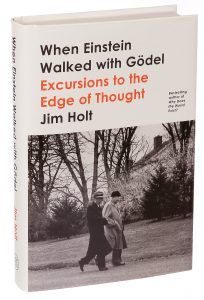
ScreenHunter_2951 Jan. 30 19.37For years, I’ve been saying Steven Pinker’s The Better Angels of Our Nature was the best book I’d read in a decade. If I could recommend just one book for anyone to pick up, that was it. Pinker uses meticulous research to argue that we are living in the most peaceful time in human history. I’d never seen such a clear explanation of progress.

I’m going to stop talking up Better Angels so much, because Pinker has managed to top himself. His new book, Enlightenment Now, is even better.

Enlightenment Now takes the approach he uses in Better Angels to track violence throughout history and applies it to 15 different measures of progress (like quality of life, knowledge, and safety). The result is a holistic picture of how and why the world is getting better. It’s like Better Angels on steroids.

Pinker was generous enough to send me an early copy, even though Enlightenment Now won’t be released until the end of February. I read the book slowly since I loved it so much, but I think most people will find it a quick and accessible read. He manages to share a ton of information in a way that’s compelling, memorable, and easy to digest.

It opens with an argument in favor of returning to the ideals of the Enlightenment—an era when reason, science, and humanism were touted as the highest virtues.

More here.

Clearing a decade of American bombs in Laos

LETTER-FROM-BOMB-CRADLE-600x315Karen Coates at The American Scholar:

The bomb fell in the Laotian forest sometime between 1964 and 1973, and there it lay for decades, rusting in rain, oxidizing with time, until someone found it, cracked it open, and extracted the explosive inside, perhaps to sell or to use for bomb fishing or removing big boulders from a path. The weapon’s remnants ended up in a ditch, right outside a little shop house along a dusty dirt road linking Laos and Vietnam, run by a Vietnamese couple selling phone cards and noodles, hats and belts, chips and shampoo. The immigrants live there with their young son and never liked the looks of that old bomb—three feet of solid steel, red as the earth around it. Its back end was missing, and you could peer inside. Something didn’t feel quite right. But what could they do?

Then one day, a dozen Laotian men in blue uniforms, joined by a lone American, pass the shop in a Land Cruiser. They are the members of a bomb-clearance team assembled by the Wisconsin-based organization We Help War Victims, in partnership with the nonprofit CARE.

more here.

a Bone-Deep Risk for Heart Disease

Gina Kolata in The New York Times:

Chip 2It’s been one of the vexing questions in medicine: Why is it that most people who have heart attacks or strokes have few or no conventional risk factors? These are patients with normal levels of cholesterol and blood pressure, no history of smoking or diabetes, and no family history of cardiovascular disease. Why aren’t they spared? To some researchers, this hidden risk is the dark matter of cardiology: an invisible but omnipresent force that lands tens of thousands of patients in the hospital each year. But now scientists may have gotten a glimpse of part of it. They have learned that a bizarre accumulation of mutated stem cells in bone marrow increases a person’s risk of dying within a decade, usually from a heart attack or stroke, by 40 or 50 percent. They named the condition with medical jargon: clonal hematopoiesis of indeterminate potential.

CHIP has emerged as a risk for heart attack and stroke that is as powerful as high LDL or high blood pressure but it acts independently of them. And CHIP is not uncommon. The condition becomes more likely with age. Up to 20 percent of people in their 60s have it, and perhaps 50 percent of those in their 80s. “It is beginning to appear that there are only two types of people in the world: those that exhibit clonal hematopoiesis and those that are going to develop clonal hematopoiesis,” said Kenneth Walsh, who directs the hematovascular biology center at the University of Virginia School of Medicine.

…“Some mutations are just markers of past events without any lasting consequence,” said Dr. David Steensma, a blood cancer specialist at Harvard Medical School and Dana-Farber Cancer Institute. But others, especially those linked to leukemia, seem to give stem cells a new ability to accumulate in the marrow. The result is a sort of survival of the fittest, or fastest growing, stem cells in the marrow. “Some mutations may alter the growth properties of the stem cell,” said Dr. Steensma. “Some may just make the stem cell better at surviving in certain less hospitable parts of the bone marrow where other stem cells can’t thrive.”

More here.

A history of humans trying and failing to understand the minds of apes

Download (8)Ferris Jabr at Lapham's Quarterly:

Around 500 BC, the Carthaginian explorer Hanno the Navigator guided a fleet of sixty oared ships through the Strait of Gibraltar and along the northwest lobe of the great elephant ear that is the African continent. Toward the end of his journey, on an island in a lagoon, he encountered a “rude description of people”—rough-skinned, hairy, violent. The local interpreters called them Gorillae. Hanno and his crew attempted to capture some of them, but many climbed up steep elevations and hurled stones in defense. Eventually, the Carthaginians caught three female Gorillae, flayed them, and brought their skins back home, where they hung in the Temple of Tanit for several centuries.

Though scholars dispute whether the Gorillae were gorillas, chimpanzees, or an indigenous tribe of humans, many regard Hanno’s account as the oldest surviving record of humans encountering another species of great ape. The ambiguity of Hanno’s early descriptions—are the Gorillae human or beast, people or apes?—is not just an artifact of translational difficulties; it is exemplary of a profound misunderstanding in historical attitudes about our closest animal cousins, a confusion that is still being resolved today.

more here.

SEARCHING FOR SUBJECTIVITY ON AMAZON

Download (7)Rachel Z. Arndt at The Believer:

If a cat doesn’t like the furniture you’ve bought for it, you have two choices: blame the furniture or blame the cat. (Never blame yourself for raising an ungrateful cat.) Most Amazon reviewers choose the former, steering clear of inquiry into the hairy world of cat taste or into whether animals are fickle by nature or nurture: they just slap single-star ratings on the trees and castles and scratching posts that don’t delight their pets as promised. “This product must have something in it that cats don’t like!” they write. “Our cats wouldn’t touch it, our friends [sic] cats wouldn’t touch it, and their friends [sic] cats wouldn’t touch it!”

I know all of this intimately, unfortunately. For half a year, as a researcher for a start-up incubator, I was tasked with trawling Amazon for some insight into what people like and don’t like. I’d sit—back to the window and face to the screen, sunlight bouncing off Lake Michigan’s corduroy waters and onto my shoulders, an occasional horn twenty floors below piercing the murmuring air conditioning—and I’d click.

more here.

Tuesday Poem

Crossing Half of China to Sleep With You

To sleep with you or to be slept, what’s the difference if there’s any?
Two bodies collide — the force, the flower pushed open by the force,
the virtual spring in the flowering — nothing more than this,
and this we mistake as life restarting.
In half of China, things are happening: volcanoes
erupting, rivers running dry,
political prisoners and displaced workers abandoned,
elk deer and red-crowned cranes shot.
I cross the hail of bullets to sleep with you.
I squeeze many nights into one morning to sleep with you.
I run across many of me and many of me run into one to sleep with you.
Of course I can be misled by butterflies
and mistake praise as spring,
a village similar to Hengdian as home.
But all these are absolutely indispensable reasons that I sleep
with you.

by Yu Xiuhua
fromPoetry International Web
.

Original Chinese click Continue Reading:

Read more »

Monday, January 29, 2018

Joe Frank: An Appreciation

by Misha Lepetic

"It is not humiliating to be unhappy."
~ Camus

Joe1It was only a few days ago that I heard about Joe Frank's recent passing, which was an odd feeling, because I'd thought he was already dead. Further reflection made me realize that I based this opinion on no evidence whatsoever, but if you know about Joe Frank, you'll agree that an abiding belief in his demise would have been entirely appropriate, and that he would have likely even approved of such a confusion. If you don't know Frank, though, I envy you the experience of hearing him for the first time. To me, he was the greatest radio ever committed to the airwaves. But, regrettably, the best way to hear Frank's work is to have no idea that it's him at all. In that sense, I apologize for blowing it with this modest appreciation, and take comfort from knowing that Frank would be amused by such ambivalence.

Any fan will remember exactly where they were when they first heard one of Joe Frank's broadcasts. For me, it was back in high school, in 1980s central New Jersey. One of my friends was Nadim, a burly Pakistani guy who lived in the tonier part of my neighborhood. Nadim always tramped around in big black combat boots and teased out his long hair with liberal amounts of hairspray to signal his devotion to The Cure. He also played guitar in a few bands, and was the first person to pass me a joint. His parents were wealthy enough that they gave him a red Trans Am for some birthday or other, and we would cruise down the farm lanes of central Jersey late at night, smoking, listening to Joy Division, The Smiths, Bauhaus, Hüsker Dü or Big Black, and remonstrating against life as only teenagers could.

On one of these bone cruises I was fiddling with the radio when I came across a husky, grieving voice intoning over a short loop of a Jewish cantor singing. Frank's voice is unforgettable in its immediacy. He spoke so closely into the microphone that you could feel the humidity of his breath. Although he had many guests on his shows (both intentional and unintentional) his was the only voice that sounded as if it were coming from inside your head. On the occasion of discovering him, it's difficult to remember what he was talking about; his surrealist's take on life was obscured further by the fact that we'd just parachuted into the middle of one of his stories, and immediately, in the words of Conrad at the start of Heart Of Darkness, "we knew we were fated…to hear about one of Marlow's inconclusive experiences." But while Marlow's listeners were mildly irritated at being a captive audience, Nadim and I were hooked. We kept driving, and Joe Frank kept talking. It felt as if we'd made a pact with the radio.

Read more »

Monday Poem

Odtyssey Suitors
Slaying of the Suitors

—thoughts on finishing Emily Wilson’s new translation of the Odyssey

Ancient Cinema

Book 22 of The Odyssey plays like a scene of The Punisher
so we know that men have been bloodthirsty since the Greeks sacked Troy
(at least) and that Homer rivals Hensleigh in imagery of hacked limbs
and scarlet springs. Almost 3000 years have not dulled our thirst
for an aesthetic of pain. We can imagine Homer yakking with Tarantino
of techniques depicting dread death and cruel dispatch over cups of sea-dark wine
imagining clueless suitors mocking an 800 BC ISIS collapsed into the form
of one Odysseus disguised by Athena as an old mendicant, a beggar envisioning
his tormentors' imminent decapitations, amputations, punctures, skewers,
unconcerned of R ratings, happily scripting till bloody-fingered dawn rolls in
with crime scene cleaners to make the place respectable for the almost-civilized
who’ve slapped down good money for tickets to clean, screen brutality
and spent small fortunes on popcorn and coke

Jim Culleny
1/26/18
.

The Joy of Fair Division

by Jonathan Kujawa

If you have a sibling you are familiar with the problem of dividing up something desirable between selfish people. For some things, like ice cream or money, your only preference is to get as much as you can. If you divide it equally, then at least nobody will be envious of anyone else. My parents used the trick of letting one of us make the divisions, but in the knowledge that the other kids would get first pick. NASA can only dream of the atomic scale cuts made by me and my siblings [1]!

But what happens if the item in question isn't all the same? If it's a cake, a corner piece with roses made of frosting might be more desirable than a piece from the center. In an inheritance, a taxidermy collection and jewelry are hardly the same. Worse, each person might have very different preferences! My brother has a huge sweet tooth. He loves frosting while I'd definitely steer clear of corner pieces. One person's mounted deer head is another person's diamond earrings.

Sweets_pastries_pastry_shop_cake_cakes_bakery_eating_food-1109237

Delicious Baked Alaska

You might guess math has useful things to say about dividing things. But we'll soon see that there are more than a few surprises, too. The first question you might ask is if it is even possible to always divide something into two equal pieces with a single straight cut. It's not too hard to see if you have a single uniform object (say a plain cake), then no matter its shape, a single, well-chosen slice with a Samurai sword will split it into two equal sized pieces.

But what if your cake is a Baked Alaska? Surely you can't make a single cut which equally splits the cake and the ice cream and the chocolate drizzled on top? The Ham Sandwich Theorem is a remarkable result which says that no matter how elaborately intertwined three objects are, it is always possible to make a single cut which separates each of the three into two equal sized pieces!

Read more »

perceptions

1517051927-9d993

William Klein, Gerard Ifert, Wojciech Zamecznik. 1950s-1960s

"… In the post-war years, these three photographers managed to revolutionize photography, despite its young history in the arts. Through photomontages, formal abstractions, they became predecessors and influences of the Bauhaus, a school that promotes the alliance between the fine arts and the applied arts. The artist takes center stage and is in charge. The photographer becomes a painter, the camera, his pencil. To draw with light, as most would define photography."

"Photographisme" at the Centre Pompidou, Paris, through January 29, 2018.

More here and here.

Arjun Appadurai: My Imaginary Invitation to the Jaipur Literature Festival

by Arjun Appadurai

62648094Dear Professor Appadurai,

We are writing with great trepidation to invite you to the Jaipur Literary Festival this year. You have never been invited to this Festival over its many years of star-studded glory, unbridled creativity and collaborative celebrity, because we have hesitated to include someone with your fame, stature and credentials to our humble (yet magnificent) event. It is also the case that we do not generally support serious books with too many footnotes. Unless they are published by one of our already established cognoscenti, who sometimes dabble in scholarship of various kinds.

But we digress. We want you to give a plenary talk, during which all other panels, promotional events, political processions, private parties or sexual interactions will be strictly prohibited. This can be at a location and time of your choosing. We suggest the Taj Rambagh Palace lawns at sunset, with a special rendition of Raag Yaman will be performed by a global orchestra conducted by A.K. Rahman.

We are aware, of course, that Rajasthan is a slightly controversial setting, where bride-burnings, film censorship, mob lynching, beef bans, cow protection militias and murders of Dalits, sometimes upset the royal serenity of our palaces, forts, villages and luxury hotels. But we assure you that we guarantee your security, comfort and peace of mind, unless you say something that could hurt the feelings of the sponsors, the Rajasthan government or the Karni Sena, though these are all composed of individuals who are usually entirely free of feelings.

Read more »

Two Poems About Mirrors

by Amanda Beth Peery

I once had a handheld plastic mirror
that reflected one feature at a time:
the wrist, the blushing shell of an ear or
lips pulled into a grimace or smile.

For a while I gazed into water and ice
to see my vision in ripples and whiteness
from every lake-rimmed forest shore,
I got older, and I wanted more:

a long, thin mirror on the back of my door
mirror-chips glued to the walls and glinting
a clean bathroom mirror divided in four
foldable parts—no, I wanted even more:

mirrors on ceilings and closet doors
and a looking glass showing that other thing
my double with its dark core, rising
and taking its form, in light, of wings.

. . .

"Poetry is also the precise language of getting lost."

―Abdelmajid Benjelloun

. . .

At first everything lived
in the Mirror Kingdom
under the lake: the trees
with wavering trunks stood
sideways, the sides of faces
were permanently switched.

Everything was soft and
magnified. The spaces
between things were known to shift,
and things would shrink and grow:
a root's thin tendril wound in soil
would become in a blink

a dark river of smooth bark.
The animals had ink-
black coats and dreamed loudly
through the night, calling to
the whirling stars crossing close
over ground—in the Mirror

Kingdom, there was no gap
between soil and sky. You could
catch stars in a net like
silver fish, or catch them
in spread fingers and wear them.
They were gloriously bright rings.

Until one day an earthquake
loosened the creatures from
the Kingdom, sucked them out
of the lake. Now they live
tall and solid as statues
prancing oddly on dry land.

The Controversy Over Natural Wines: Moral Purity or Moral Preening?

by Dwight Furrow

Natural wine squeezing grapesIf you are one of the billions of people on this planet who avoid the wine press you might never have heard of "natural wines". Yet, they are the source of great controversy in the wine world, dividing brother from brother and tearing at the delicate fabric of overwrought sensibilities. It's not quite civil war but it's serious enough to generate plenty of creative insults. To select one example, a Newsweek article was entitled "Why Natural Wine Tastes Worse than Putrid Cider" which, as you might imagine, caused natural wine proponents to launch diatribes against smug, snobbish, closed-minded apologists for "frankenwines". That's the tenor of the debate.

What is this debate about?

Natural wines are wines made without cultured yeast, minimal (or no) use of the preservative sulfur dioxide, no modern winemaking technology such as reverse osmosis or micro-oxygenation, no additives such as mega purple, enzymes, or additional acid, no filtration, and using only grapes grown organically and/or sustainably. Natural wine producers often advertise an aspiration to make wine the way it was made 120 years ago.

So what is wrong with modern winemaking technology? Well, environmental issues such as soil depletion and potentially harmful chemicals to start with, but natural wine enthusiasts also claim modern industrial winemaking destroys flavor, creates generic wines that lack freshness and complexity, and that no longer reflect the unique characteristics of the grapes' origins.

Read more »

Sunday, January 28, 2018

In Youth Is Suffering: Denton Welch and the Literature of Convalescence

Daniel Felsenthal in the Los Angeles Review of Books:

PhpThumb_generated_thumbnailIn 1935, the writer and artist Denton Welch, then a 20-year-old student at Goldsmiths’ College in London, was struck by a car while biking to his aunt’s house in Surrey. It was the beginning of a bank-holiday weekend, and if his autobiographical fiction can be taken as fact, Welch was unused to the amount of traffic on the road. The vehicle crushed his legs, leaving him catheterized and sporadically impotent, with ultimately fatal injuries to his spine and kidneys. Before he died at the age of 33, Welch drafted three novels, Maiden Voyage (1943), In Youth Is Pleasure(1944), and the posthumously published A Voice Through a Cloud (1950), along with numerous stories and poems. He also produced oil paintings, watercolors, and a refurbished dollhouse now in the permanent collection of the Victoria and Albert Museum of Childhood. His biography places him in a lineage of doomed literary geniuses, one that includes Flannery O’Connor and Carson McCullers, whose premature awareness of their own mortality gave their artistic visions an askew acuteness.

While England’s young males were at war, Welch lived an invalid’s life in the countryside, developing an idiosyncratic voice that addressed highly personal passions: material culture, food, manmade grottos, architectural restoration, homosexuality. In real life, Welch haunted antique stores and junk sales; his narrators pride themselves on finding beautiful objects among other people’s garbage. He exerted enough control over his books’ design that they beg consideration as physical objects.

More here.

A ‘Rebel’ Without a PhD: A conversation with the mathematical physicist Freeman Dyson on quantum electrodynamics, climate change and his latest pet project

Thomas Lin in Quanta:

ScreenHunter_2948 Jan. 28 22.33Freeman Dyson — the world-renowned mathematical physicist who helped found quantum electrodynamics with the bongo-playing, Nobel Prize-winning physicist Richard Feynman and others, devised numerous mathematical techniques, led the team that designed a low-power nuclear reactor that produces medical isotopes for research hospitals, dreamed of exploring the solar system in spaceships propelled by nuclear bombs, wrote technical and popular science books, penned dozens of reviews for The New York Review of Books, and turned 90 in December — is pondering a new math problem.

“There’s a class of problem that Freeman just lights up on,” said the physicist and computational biologist William Press, a longtime colleague and friend. “It has to be unsolved and well-posed and have something in it that admits to his particular kind of genius.” That genius, he said, represents a kind of “ingenuity and a spark” that most physicists lack: “The ability to see further in the mathematical world of concepts and instantly grasp a path to the distant horizon that’s the solution.”

Press said he’s posed a number of problems to Dyson that didn’t “measure up.” Months and years went by, with no response. But when Press asked a question about the “iterated prisoner’s dilemma,” a variation of the classic game theory scenario pitting cooperation against betrayal, Dyson replied the next day. “It probably only took him a minute to grasp the solution,” Press said, “and half an hour to write it out.”

Together, they published a much-cited 2012 paper in the Proceedings of the National Academy of Sciences.

More here.