
Category: Recommended Reading
Sean Carroll speaks with Carol Tavris about Mistakes, Justification, and Cognitive Dissonance
Sean Carroll’s first Mindscape podcast at Preposterous Universe:
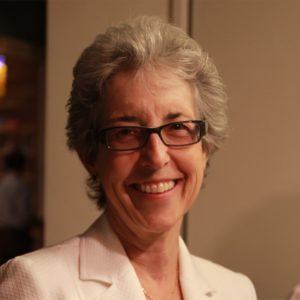 For the first full episode of Mindscape, it’s an honor to welcome social psychologist Carol Tavris. Her book with co-author Eliot Aronson, Mistakes Were Made (But Not By Me), explores the effect that cognitive dissonance has on how we think. We talk about the fascinating process by which people justify the mistakes that they make, and how that leads to everything from false memories to political polarization.
More here.
Thomas Cole: The Prophet-Painter of America
Michael Prodger at The New Statesman:
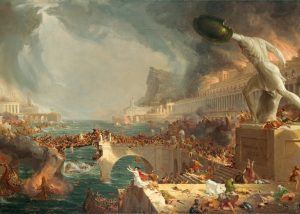 If these paintings were all about the inherent self-destructiveness of man, Cole was just as concerned with the fate of nature. He took a break from painting The Course of Empire to work on a large allegorical landscape called View from Mount Holyoke, Northampton, Massachusetts, after a Thunderstorm – The Oxbow (1836). It is no mere view: the left-hand side of the picture shows wild, wooded hilltops under a lowering sky while the right-hand side shows the tight bend of the oxbow river and a vista of carefully tended fields bathed in sunlight.
One part, therefore, shows the sublime, the other the picturesque; one nature in the raw, the other nature tamed; although God is present in both, Cole wished his meaning to be clear. His countrymen should beware of the urge to tame the landscape: “the ravages of the axe are daily increasing – the most noble scenes are made desolate”.
more here.
The Myth of Modern Disenchantment
Doug Sikkema at The New Atlantis:
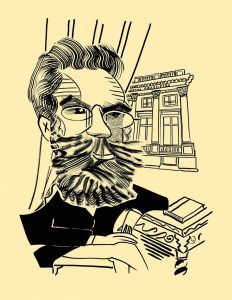 Whichever your take, the narrative abides: Modernity, thus understood, is an age of rationalism, science, and technology that eventually (and inevitably) overcame the mysterious wonders of magic, religion, and superstition. But this story, Josephson-Storm argues, is a myth. Why else, he suggests, would an esteemed scientist like Curie be cavorting with the likes of Palladino?
Part of his evidence comes from recent polls, which show that belief in psychic healing, ghosts, telepathy, witches, reincarnation, and other paranormal phenomena remains remarkably high. According to 2005 Gallup research, seventy-six percent of Americans “profess at least one paranormal belief.” Results from the large Baylor Religion Survey of the same year show that about 80 percent of respondents believe that angels probably or absolutely exist, and about 66 percent in the case of demons.
While these numbers challenge the idea that ours is a disenchanted age, perhaps such beliefs might still be expected among the common folk. Thus Josephson-Storm places in the crosshairs members of the scientific establishment, who we would expect to be right-thinking.
more here.
One of Brazil’s Greatest Writers
Benjamin Moser at The New Yorker:
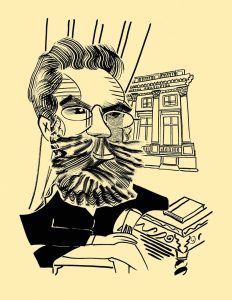 Machado “had a half dozen gestures, habits, and pat phrases,” an early biographer, Lúcia Miguel Pereira, wrote, in 1936. He avoided politics. He was an ideal husband. He spent his free time at the bookshop. And, in founding the Academy of Letters, he brought an administrative structure to literature.
Yet to place this image beside his books is to wonder whether such diligence was a carefully calibrated act—and to see why, despite more than a century’s veneration, the vestment of national spokesman will never quite fit. Machado was too ironic, too mischievous, for the pretentions that the official homages imply. In stories about the polite society of Rio de Janeiro, he managed, with unruffled elegance and composure, to say the most outrageous things. A drag queen might have called this decorous performance “executive realness.”
more here.
Will Science Ever Solve the Mysteries of Consciousness, Free Will and God?
Michael Shermer in Scientific American:
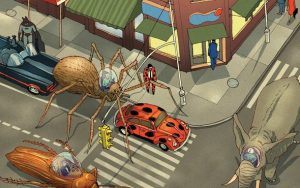 In 1967 British biologist and Nobel laureate Sir Peter Medawar famously characterized science as, in book title form, The Art of the Soluble. “Good scientists study the most important problems they think they can solve. It is, after all, their professional business to solve problems, not merely to grapple with them,” he wrote. For millennia, the greatest minds of our species have grappled to gain purchase on the vertiginous ontological cliffs of three great mysteries—consciousness, free will and God—without ascending anywhere near the thin air of their peaks. Unlike other inscrutable problems, such as the structure of the atom, the molecular basis of replication and the causes of human violence, which have witnessed stunning advancements of enlightenment, these three seem to recede ever further away from understanding, even as we race ever faster to catch them in our scientific nets.
Are these “hard” problems, as philosopher David Chalmers characterized consciousness, or are they truly insoluble “mysterian” problems, as philosopher Owen Flanagan designated them (inspired by the 1960s rock group Question Mark and the Mysterians)? The “old mysterians” were dualists who believed in nonmaterial properties, such as the soul, that cannot be explained by natural processes. The “new mysterians,” Flanagan says, contend that consciousness can never be explained because of the limitations of human cognition. I contend that not only consciousness but also free will and God are mysterian problems—not because we are not yet smart enough to solve them but because they can never be solved, not even in principle, relating to how the concepts are conceived in language. Call those of us in this camp the “final mysterians.”
More here.
Wednesday Poem
At the Galleria Shopping Mall
Just past the bin of pastel baby socks and underwear,
there are some 49-dollar Chinese-made TVs;
one of them singing news about a far-off war,
one comparing the breast size of an actress from Hollywood
to the breast size of an actress from Bollywood.
And here is my niece Lucinda,
who is nine and a true daughter of Texas,
who has developed the flounce of a pedigreed blonde
and declares that her favorite sport is shopping.
Today is the day she embarks upon her journey,
swinging a credit card like a scythe
through the meadows of golden merchandise.
Today is the day she stops looking at faces,
and starts assessing the labels of purses;
so let it begin. Let her be dipped in the dazzling bounty
and raised and wrung out again and again.
And let us watch.
As the gods in olden stories
turned mortals into laurel trees and crows
to teach them some kind of lesson,
so we were turned into Americans
to learn something about loneliness.
by Tony Hoagland
from: Poetry, Vol. 194, No. 4, July/August, 2009
Tuesday, July 10, 2018
Imperfect Remembrance: Nostalgia for Svetlana Boym
Marta Figlerowicz in the Boston Review:
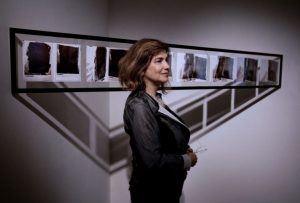 Immigrant life easily slips into melodrama. A whiff of blood sausage has me tearfully recalling the evenings when my grandmother cooked it for me. An unexpected “cześć,” or hello, overheard between two fellow Poles immerses me in involuntary memories, as I mourn greetings I shared with high school friends. I never actually liked blood sausage, or high school, and had rejoiced to leave them behind when I moved here. But for a moment, my unconscious fools me, and these recalled sensations compose themselves into a Hallmark card.
Most émigré writers gloss over such moments of weakness, depicting their attitudes and tastes as detached and worldly. Svetlana Boym (1959–2015), renowned scholar of comparative literature, was the rare thinker who leaned into them, in search for a more honest account of the uprooted life. “What might appear as an aestheticization of social existence to the ‘native,’” she wrote of such experiences, “strikes the immigrant as an accurate depiction of the condition of exile.” To be an immigrant is, paradoxically, not just to live in partial alienation from one’s new surroundings, but also to lose distance from the world one has left behind. It is only from such a position of humility, Boym further insisted, that illuminating generalizations about one’s experience—and about what this experience can teach others—can begin. As demonized and idealized depictions of migration loom large, Boym’s reflections on the fragilities of our memories in times of loss and transit seem more pressing than ever.
More here.
Toxic History, Poisoned Water: The Story of Flint
Parul Sehgal in the New York Times:
 From the start, the people of Flint, Mich., knew something was wrong with the water coming out of their taps — it was brown and orange, visibly full of particles, frothy and foul-smelling. Their hair started falling out, and showers left their bodies burning with red welts. Their plants and pets began to die. On a hot day, children playing in the spray of a water hydrant were streaked with coffee-colored liquid.
In the spring of 2014, the city, as part of a cost-cutting plan devised under emergency management, switched its water source from Lake Huron to the notorious Flint River, once so polluted it was said to have caught fire. America’s infrastructure is old; corrosion control is federally mandated to prevent pipes from crumbling into the water, but none was instituted in this case.
That summer General Motors, based in the city, noticed that the new water seemed to be corroding engines. The company swiftly shifted to a new water supply. But the city strenuously argued that the water was safe for human consumption, even as residents protested and got sicker and sicker.
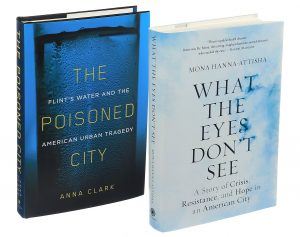
Two new books approach this disaster from different angles.
More here.
What Drives Young Men to Embrace Religious Extremism in Pakistan?
Andy Heintz interviews Pervez Hoodbhoy in New Internationalist:
What are the biggest reasons driving young Pakistani men to embrace religious extremism?
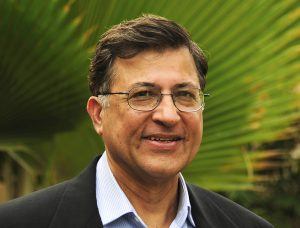 Biased education poisons minds. The curriculum, textbooks, teachers and exams all act to create an ‘us’ versus ‘them’ mentality. Islam is shown as under siege by the evil West as well as India. And then there’s the electronic and print media – mostly privately owned – which drips with piety and with conspiracy theories that attribute all our ills to India, Israel and the United States. It seizes upon their every fault and then multiplies by ten. So a mindset is created wherein young people imagine that they, and their religion, are beset by enemies lurking behind every bush. The West is excoriated for being selective and hypocritical – which it surely is. But there’s no introspection, no explanation for how we went wrong. Ask a student why East Pakistan broke off to become Bangladesh and you’ll get the pat answer: it was a Hindu conspiracy. They won’t know of the genocide West Pakistan carried out there in 1971.
More here.
Jonathan Richman, modern lover
Daniel Felsenthal in The Point:
 In 1973, a 22-year-old named Jonathan Richman wrote a letter to the editor of Creem. The Detroit magazine, which started in 1969 when both New Journalism and the archetype of the music critic were solidifying in the consciousness of American counterculture, was an iconic purveyor of rock ‘n’ roll criticism and culture. It had recently run a short, positive notice about Richman’s band, the Modern Lovers, whose fast, angry guitar music had given them a reputation in their native Boston. With its signature hopscotch of irony and humor, Creem synthesized the Lovers’ sound: “More than a little like a teenage Velvet Underground.” The magazine called one of their songs, “a guaranteed hit single” and another, “possibly the next national anthem.” Creem’s kidding aside, by most metrics, the Modern Lovers were in a good place in 1973. John Cale, legendary member of the Velvet Underground, was producing the Lovers’ debut album for Warner Brothers when their singer decided to write a letter to Creem.
Richman’s reasoning reflects the mingling of iconoclasm and wisdom that would direct him his entire career: he wanted to defend a decidedly non-countercultural, non-hip icon of a past era, Frankie Valli and the Four Seasons, whose work Creem had appraised negatively in a recent issue. The title of his letter: “Masculine Arrogance Blows.”
More here.
Julian Baggini: Is There A Real You?
The Writings of Bruno Schultz
Robert Looby at the Dublin Review of Books:
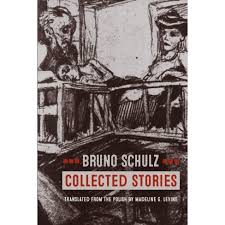 Lovers of a spare prose style, not to mention tight plotting, may be disappointed by Bruno Schulz:
The world lay mute, unfolding and rising somewhere above, somewhere behind and deep inside – blissfully powerless – and floated on. At times it slowed and vaguely resembled something, it branched out in trees, grafted onto the gray day a thick, glistening net of bird twittering that had been thrown over it, and moved deep into the subterranean snakelike tangle of roots, into the blind pulsing of worms and caterpillars, the muffled darkness of chernozem and clay.
Born in 1892 in a part of Poland that now lies in Ukraine, Schulz’s “biography was monotonous and largely unvaried – as grey as the life of a provincial drawing teacher can be”, writes Jerzy Jarzębski in Poland’s National Library edition of Schulz’s works. Jerzy Ficowski, dedicated student and biographer of the writer, calls Schulz’s three-week trip to Paris his only international excursion, although in an earlier book he writes that Schulz spent several months studying in Vienna. Schulz also visited Stockholm, in 1936, and corresponded with the likes of Julian Tuwim, Witkacy (Stanisław Ignacy Witkiewicz) and Witold Gombrowicz, leading lights of 1930s Polish literature, among whose ranks he has long been counted.
more here.
Why The Novel Matters
Howard Jacobson at the TLS:
 To read a novel by D. H. Lawrence is to acquire – not always without resistance – a language of the feelings that is new to us: words we thought we knew well already are made to work in unexpected ways, locating places in the human heart we didn’t know existed, even changing what we understand by human nature. What else, we now ask, were those words ever for? To read Henry James is to inhabit an unaccustomed grammar of thought. Some readers find James’s style tortuous; but those snaking parentheses sharpen our wits; without them we will not keep up with the moral quandaries and vacillations of his characters. They are markers, not just of our penetration, but of our emotional largesse. We are inclined to believe it’s the characters in a novel that extend our sympathies. “We are all of us born in moral stupidity”, George Eliot tells us, whereupon, chastened, we practise acts of reflective empathy on Mr Casaubon. But it is truer to say that it is first of all a novel’s language – its syntactical orchestration of our thinking and feeling faculties – that enables us to go where George Eliot wants us to go, to conceive another person’s equivalence of self with what she rather wonderfully calls “that distinctness which is no longer reflection but feeling”.
It’s good for us, morally – it makes us larger of mind – to see how well Tony Soprano loves his family while he’s wiping out other people’s. But we don’t feel his breath on our neck as we do that of the half-dead murderer Meursault in Camus’s The Stranger.
more here.
(Still) Rethinking the Origins of the Nag Hammadi Codices
Nicola Denzey Lewis at The Marginalia Review of Books:
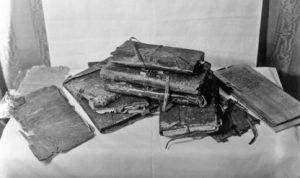 The find story of the Nag Hammadi codices is well known to anyone who works in the field of Gnosticism or early Christian literature. There is no point in rehearsing the beginning of the story here in detail; it can be distilled into these central themes: an illiterate peasant, a search for fertilizer gone awry, and the fortuitous discovery of a mysterious jar deep in the Egyptian wilderness containing ancient secret books. But the story does not end there. In this tale of intrigue, the codices themselves emerge as the new romantic heroines of the story. Narrowly escaping their own destruction by fire, the books are hidden and then smuggled, alternately recognized for their value and treated as virtually worthless, passed through multiple hands of people who only exploit them, and hastily dumped or traded for a scandalous price: some tea, some sugar, a bag of oranges. According to the common story, the codices are even witnesses to a gory act of murder, “the ultimate act of blood vengeance,” as Mohamed Ali al-Samman, the peasant in question, slaughters with his brothers the man who a few months before killed their father, tearing out his heart and “devouring it on the spot.”
Even as find stories of ancient documents go, this tale has many compelling elements: a mysterious and exciting discovery; an almost lovably superstitious protagonist; a clueless old woman who almost ruins everything by tossing precious manuscript pages in the fire; exotically dangerous fellaheen who ride through the desert on camels or in jeeps, brandishing rifles and scimitars and whatever else they use to slaughter one another; and finally a happy resolution as the codices are rescued from an ignominious fate and delivered safely into the knowing hands of Western scholars. It’s thoroughly Orientalizing, and, when you think about its lurid details, quite implausible.
more here.
Dying Organs Restored to Life in Novel Experiments
Gina Kolata in The New York Times:
 When Georgia Bowen was born by emergency cesarean on May 18, she took a breath, threw her arms in the air, cried twice, and went into cardiac arrest. The baby had had a heart attack, most likely while she was still in the womb. Her heart was profoundly damaged; a large portion of the muscle was dead, or nearly so, leading to the cardiac arrest. Doctors kept her alive with a cumbersome machine that did the work of her heart and lungs. The physicians moved her from Massachusetts General Hospital, where she was born, to Boston Children’s Hospital and decided to try an experimental procedure that had never before been attempted in a human being following a heart attack. They would take a billion mitochondria — the energy factories found in every cell in the body — from a small plug of Georgia’s healthy abdominalmuscle and infuse them into the injured muscle of her heart. Mitochondria are tiny organelles that fuel the operation of the cell, and they are among the first parts of the cell to die when it is deprived of oxygen-rich blood. Once they are lost, the cell itself dies. But a series of experiments has found that fresh mitochondria can revive flagging cells and enable them to quickly recover.
…The idea for mitochondrial transplants was born of serendipity, desperation and the lucky meeting of two researchers at two Harvard teaching hospitals — Dr. Emani at Boston Children’s and James McCully at New England Deaconess Hospital. Dr. Emani is a pediatric surgeon. Dr. McCully is a scientist who studies adult hearts. Both were wrestling with the same problem: how to fix hearts that had been deprived of oxygen during surgery or a heart attack. “If you cut off oxygen for a long time, the heart barely beats,” Dr. McCully said. The cells may survive, but they may never fully recover. While preparing to give a talk to surgeons, Dr. McCully created electron micrographs of damaged cells. The images turned out to be revelatory: The mitochondria in the damaged heart cells were abnormally small and translucent, instead of a healthy black.
…Dr. McCully moved to Boston Children’s, and he and Dr. Emani prepared to see if the new technique might help tiny babies who were the sickest of the sick — those surviving on Ecmo.
…He injected a billion mitochondria, in about a quarter of a teaspoon of fluid. Within two days, the baby had a normal heart, strong and beating quickly. “It was amazing,” Dr. Emani said.
More here.
Tuesday Poem
Nativity: For Two Salvadoran Women, 1986-87
Your eyes, large as Canada, welcome
this stranger.
We meet in a Juárez train station
where you sat for hours,
your offspring blooming in you
like cactus fruit,
dresses stained where breasts leak,
panties in purses tagged
“Hecho en El Salvador,”
your belts like equators,
mark north from south,
border I cannot cross,
for I am an American reporter,
pen and notebook, the tools
of my tribe, distance us,
though in any other era I might
press a stethoscope to your wounds,
hear the symphony of the unborn,
finger forth infants to light,
wipe afterbirth, cut cords.
It is impossible to raise a child
in the country.
Sisters, I am no saint, just a woman
who happens to be a reporter,
a reporter who happens
to be a woman,
squat in a forest, peeing
on pine needles,
watching you vomit morning sickness,
a sickness infinite as the war in El Salvador,
a sickness my pen and notebook will not ease,
tell me, ¿Por qué están aqui?
How did you cross over?
In my country we sing of a baby in a manger,
finance death sqauds,
how to write of this shame,
of the children you chose to save?
It is impossible to raise a child
in the country.
A North American reporter,
I smile, you tell me you are due
in December, we nod,
knowing what women know,
I shut my notebook,
watch your car rock
through the Gila,
a canoe hanging over the windshield
like the beak of an eagle,
babies turning in your wombs,
summoned to Belén to be born.
by Demeteria Martínez
from After Aztlan
David Godine, Publisher, 1992
~~~~~~~~~~~~~~~~~~~~~~
Gila- Gila National Forest, New Mexico USA
Belén – Belén, New Mexico USA
Monday, July 9, 2018
Perceptions
Passive Voice
by Gabrielle C. Durham
Folks love to pick on passive constructions. “Passive sentences are too wordy. They are unclear. They gave me a bruise.” Two out of three of these are objectively wrong. The third I can’t help you with.
Passive voice provides a valuable service. We all know when something bad happens, even if we do not know who or what caused the bad. The perfect opportunity to use the passive presents itself on such an occasion. If you insist on using active voice, you are forced to use the sloppy “someone” or “something” as the agents of nefariousness.
The house was destroyed, the livestock abducted, and the women were observed to be strangely beatific.
Something destroyed the house, someone abducted the livestock, and the absence of useless husbands pleased the women greatly.
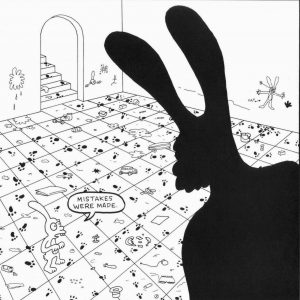
Don’t get it twisted: The passive is not going to fit the bill every time. Reagan’s professing that “Mistakes were made” illustrates the weakness of the passive voice. No one is accountable in the passive, unless you consider whatever mealy-mouthed alleged subject follows the preposition “by.”
Your bicycle was run into by me in my car.
Eww. This is the verbiage of bureaucratic nightmare. Read more »
Catspeak
by Brooks Riley
