
Hendriks and Besse in Nature:
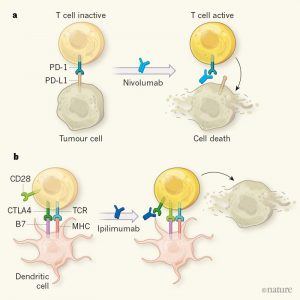 Chemotherapy became the standard treatment for lung cancer in the twentieth century1. But in the past 15 years, there has been a drive to improve outcomes for people with this still-deadly disease, either through therapies that target enzymes encoded by genes harbouring cancer-driving mutations, or through immunotherapies, which activate the body’s immune system to target tumours. Writing in The New England Journal of Medicine, two groups2,3 provide evidence that supports the use of immunotherapies to treat non-small-cell lung cancer (NSCLC) at different stages of the disease. Tumour cells evade destruction by activating signals known as immune checkpoints, which deactivate immune cells called T cells4. Two immune checkpoints are the proteins cytotoxic T lymphocyte antigen 4 (CTLA-4) and programmed cell death 1 (PD-1), which are expressed by T cells themselves. Another, programmed cell death ligand 1 (PD-L1), is produced by tumour cells (Fig. 1).
Antibodies that interact with these proteins to prevent their normal activity, and so reawaken the immune system, are now used to treat metastatic NSCLC — the stage at which the cancer has spread. Antibodies that bind PD-1 or PD-L1 are sometimes successful in patients who have had treatments such as chemotherapy, but whose cancer has nonetheless progressed5. Alternatively, the anti-PD-1 antibody pembrolizumab can be used as a first-line treatment for metastatic NSCLC when the percentage of tumour cells that express PD-L1 is high — these patients respond better to immunotherapy than to chemotherapy6.
If such immune-checkpoint-targeted antibodies (ICTs) can improve outcomes for metastatic NSCLC, could they also help to tackle early-stage disease? In the first of the current papers, Forde et al.2 carried out a pilot study to investigate whether the anti-PD-1 ICT nivolumab could be used to shrink tumours before surgery, which is a standard treatment for most cases of early-stage NSCLC. The authors treated 21 patients with 2 doses of nivolumab 2 weeks apart, starting 4 weeks before the planned surgery date. They showed that surgery did not need to be delayed (for example, because of an adverse event with nivolumab) for any patient. The researchers anticipated that four weeks would not be enough time for the reactivated immune system to significantly shrink the tumour. Indeed, imaging revealed significant shrinkage in tumours in only two patients before surgery. However, examination of the surgically removed tumours revealed that 45% had undergone a major response to the ICT — less than 10% of the tumour cells remained alive. ICTs, unlike chemotherapy, cause inflammation and scar-tissue formation in tumours, and can therefore sometimes cause tumour growth. However, the researchers found that even two tumours that showed such growth had undergone a strong pathological response.
More here.
 I have been uncharacteristically silent these past ten months. I had thought that silence would soon be coming to an end, but I’m afraid I must tell you now that fate has decided on a different course for me.
 “Disgust evolved to protect us from disease in our ancient past. The disgust response today may, or may not, be a good guide to what might make us sick today,” said Val Curtis, lead author of the study and a professor and director of the Environmental Health Group of the London School of Hygiene & Tropical Medicine.
 Donald Trump’s early departure, and his subsequent refusal to endorse the
  Around 1,500 years ago, shortly after the collapse of the Roman Empire, a baobab tree started growing in what is now Namibia. The San people would eventually name the tree Homasi, and others would call it Grootboom, after the Afrikaans words for “big tree.” As new empires rose and fell, Homasi continued growing. As humans invented paper money, printing presses, cars, and computers, Homasi sprouted new twigs, branches, and even stems, becoming a five-trunked behemoth with a height of 32 meters and a girth to match.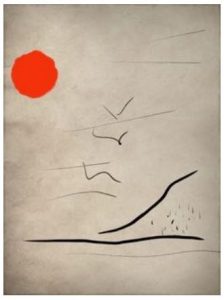
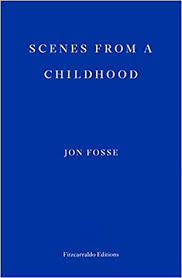 Jon Fosse is also a man, though about a decade older than Knausgaard. This story collection, Scenes From A Childhood, has recently been published in the UK by Fitzcarraldo Editions. In fact, acknowledging (or ignoring) this gender bias, the publishers include an extract from a Paris Review article in the blurbs at the front of the text that compares “the four elder statesmen of Norwegian letters” to the Beatles, deciding that “Knausgaard is Paul, the cute one; and Fosse is George, the quiet one, mystical, spiritual, probably the best craftsman of them all”. This description of Fosse is certainly accurate, if the impression given by this collection is correct, as the stories included here boast a rich emotionality as well as a complex blending of reality and dream to create a powerful dissociative response. The stories that comprise this collection vary from the bizarre to the conventional, using a gentle variety of voices to show loneliness, affection, depression, anxiety, excitement, hope and loss. This is powerful work.
 By 1956, Howard had graduated more than five hundred Santas, working in department stores across the country from Macy’s in Kansas City to D. H. Holmes in New Orleans. On his fifty-acre farm just west of Albion, he opened a Christmas-themed amusement park, encircled by a miniature railroad, and home to pigs, cows, and a team of reindeer. “But he wasn’t a good businessman,” said Cheryl Mowatt, a local librarian. Howard would wave poorer families through the gates, sometimes allowing entry to six kids when they had only three tickets. Eventually, he could not pay a bill for toys, and a court put the school, suit business, and park up on the auction block in 1965.
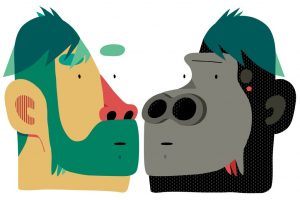 In advance of Father’s Day, let’s take a moment to sort out the differences and similarities between “Dad jeans” and “Dad genes.” Dad jeans are articles of sex-specific leisure clothing, long mocked for being comfy, dumpy and elastic-waisted but lately reinvented as a fashion trend, suitable for male bodies of all shapes and ages. Dad genes are particles on the sex-specific Y chromosome, long mocked for being a stunted clump of mostly useless nucleic waste but lately revealed as man’s fastest friend, essential to the health of male bodies and brains no matter the age. Yes, dear fathers and others born with the appurtenances generally designated male. We live in exciting times, and that includes novel insights into the sole chromosomal distinction between you and the women now prowling the aisles at the hardware store. (“Didn’t he say he could use a new bow saw? Or some halogen light bulbs?”)
 “In receiving this award, I thank my parents, Zsa Zsa Gabor and Mr. T.”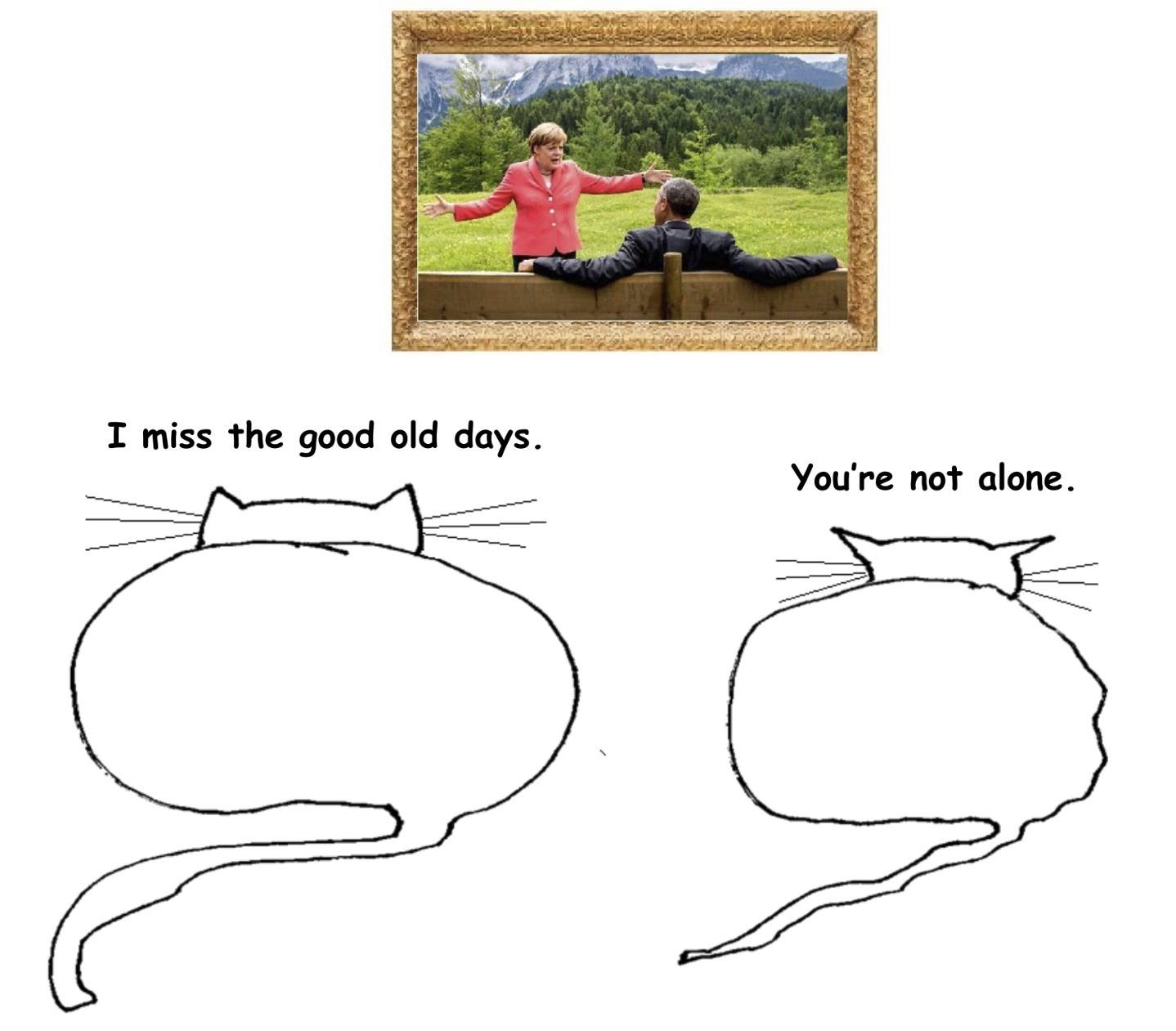

 Many Palestinians would disagree on political grounds with my decision to watch Fauda. In fact, some have called for a boycott of the show. “It is an anti-Arab, racist, Israeli propaganda tool that glorifies the Israeli military’s war crimes against the Palestinian people,” the Palestinian-led Boycott, Divestment, and Sanctions movement
  This is the
 I’d been suffering under the misguided illusion that the purpose of mainstream publishers like Penguin Random House was to sell and promote fine writing. A colleague’s forwarded email has set me straight. Sent to a literary agent, presumably this letter was also fired off to the agents of the entire Penguin Random House stable. The email cites the publisher’s ‘new company-wide goal’: for ‘both our new hires and the authors we acquire to reflect UK society by 2025.’ (Gotta love that shouty boldface.) ‘This means we want our authors and new colleagues to reflect the UK population taking into account ethnicity, gender, sexuality, social mobility and disability.’ The email proudly proclaims that the company has removed ‘the need for a university degree from nearly all our jobs’ — which, if my manuscript were being copy-edited and proof-read by folks whose university-educated predecessors already exhibited horrifyingly weak grammar and punctuation, I would find alarming.