
Sarah Marshall in The New Republic:
 I first encountered Lorrie Moore when I read “How to Become a Writer,” a mesmerizingly bleak story from her 1985 debut collection, Self-Help, which I imagine to be so frequently anthologized because editors want something of hers and because the title is so appealing. Besides, it’s a promising one, suggesting a clear set of instructions. Like much of Self-Help, the story is voiced in second-person imperative, but it can only offer directions down a road to nowhere: “First,” its opening lines instruct, “try to be something, anything, else.”
Did Lorrie Moore ever try to be anything else? Her collected nonfiction, in the newly-released See What Can Be Done, offers a few answers: some about Moore herself, and some about the intertwined joys and despairs of a writing life—and the futility, perhaps, of resisting one. As in her fiction—for which the vast majority of readers know her—Moore’s one-liners are tart, but never acid. “The clichés here,” she writes of James Cameron’s Titanic, “are sturdy to the point of eloquence.” Of George H.W. Bush in the 1992 election: “He was too proud to flirt.” She strikes the reader as someone who could silence a room with a few well-placed glances; the most withering thing she will say about the most ridiculous of passages is that it “gives one pause.” I was three-quarters of the way through this book before I realized—shocked, and then shocked at my shock—that it contains no hatchet jobs.
See What Can Be Done is mostly cultural criticism: a scabbard sheathing 34 years’ worth of American media, from Nora Ephron’s Heartburn to the 2016 election, but studded, here and there, with gem-dense personal essay. The most unsettling of all these is “One Hot Summer, or A Brief History of Time,” Moore’s essay on her own honeymoon, folded into a book that contains occasional tossed-over-the-shoulder references to male partners who alternately support and undermine women’s creative work. (Edna St. Vincent Millay, we learn, was married to “the stunning Eugen Boissevain,” who cooked her dinners and tried morphine to better understand his wife’s addiction and withdrawal.)
More here.
 After the success of my predictions for the 2010 and
 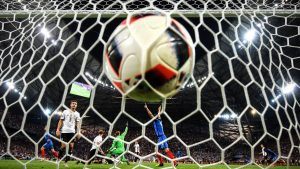 One way to gauge likely outcomes is to look at bookmakers’ odds. These companies use professional statisticians to analyze extensive databases of results in a way that quantifies the probability of different outcomes of any possible match. In this way, bookmakers can offer odds on all the games that will kick off in the next few weeks, as well as odds on potential winners.
 Into the shifting sands of Oman he follows the stories of
 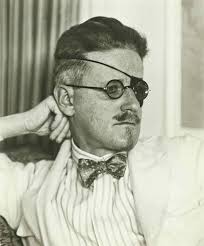 ‘Is Finnegans Wake really important?’ my student asked me a few years ago. He was from India, sent to Australia for his education at great expense by his parents. I felt sorry for him so I had invented some cash-in-hand filing work, much of which involved compiling notes, essays, articles, emails and letters in relation to Finnegans Wake. Now he was daring to ask whether the book I’d spent much of my adult life devoted to was really of any importance.
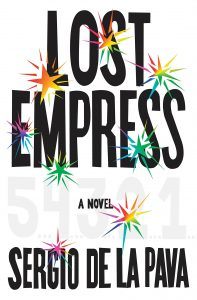 One of the most ambitious, audacious books of recent memory, Lost Empress by Sergio de la Pava brings together a smorgasbord of plot lines and scenes ranging from the serious to the comic, including: a clash between the NFL and the Indoor Football League, the history of Joni Mitchell’s career, the heist of a lost Dalí, a court case involving a high-profile murder and an incredibly intelligent inmate, the Mandela Effect, the life of a 911 operator, the origins of a brain tumor, quantum mechanics and the mind-body divide as it relates to time and consciousness, an accidental impaling and the said consequences of such as relates to the nature of getting revenge, multiple love stories that go unfulfilled, and a fight between a pig mascot and a crab one.
 On my way to a meeting on cancer and personalized medicine a few weeks ago, I found myself thinking, improbably, of the Saul Steinberg New Yorker cover illustration “View From Ninth Avenue.” Steinberg’s drawing (yes, you’ve seen it — in undergraduate dorm rooms, in subway ads) depicts a mental map of the world viewed through the eyes of a typical New Yorker. We’re somewhere on Ninth Avenue, looking out toward the water. Tenth Avenue looms large, thrumming with pedestrians and traffic. The Hudson is a band of gray-blue. But the rest of the world is gone — irrelevant, inconsequential, specks of sesame falling off a bagel. Kansas City, Chicago, Las Vegas and Los Angeles are blips on the horizon. There’s a strip of water denoting the Pacific Ocean, and faraway blobs of rising land: Japan, China, Russia. The whole thing is a wry joke on self-obsession and navel gazing: A New Yorker’s world begins and ends in New York.
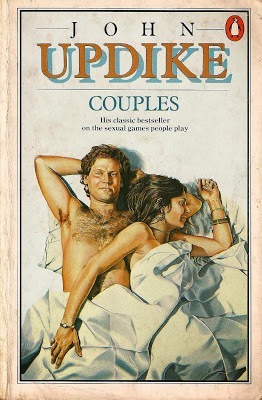 By the time Couples came out, John Updike had already published four novels, three story collections, two poetry collections, and a volume of assorted prose. He had been called, by the New York Times Book Review, “the most significant young novelist in America,” and had been sent by the State Department on a tour of the Communist bloc. And yet there was a growing sense that he had not made a major statement on the issues of the day. He could describe a barn well enough, but to what end? The man whose name will be forever asterisked with the insult David Foster Wallace made famous—“just a penis with a thesaurus”—was thought to be clever but a little small, too decorative, and overly fond of childhood reminiscence. Norman Podhoretz complained that Updike “has very little to say.” John Aldridge put him in “the second or just possibly the third rank of serious American novelists.” Elizabeth Hardwick admired Rabbit, Run, but thought there was “something insignificant, or understated, or too dimly felt in the heart of Rabbit himself.” As for his sexual frankness, Updike, like his contemporaries, had “not decided or discovered in what way this frankness will change the work itself. It cannot be merely interlarded like suet in the roast.”
 The Congo is one of the most biodiverse countries in the world. It was here that
  Liberal democracy has enjoyed much better days. Vladimir Putin has entrenched authoritarian rule and is firmly in charge of a resurgent Russia. In global influence, China may have surpassed the United States, and Chinese president Xi Jinping is now empowered to remain in office indefinitely. In light of recent turns toward authoritarianism in Turkey, Poland, Hungary, and the Philippines, there is widespread talk of a “democratic recession.” In the United States, President Donald Trump may not be sufficiently committed to constitutional principles of democratic government.
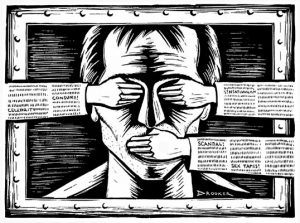 It seems everyone these days laments the polarized condition of democratic politics. It is widely agreed that fake news is a central cause of the degradation of our political culture. That there is accord on this point is noteworthy. Perhaps the consensus on fake news offers a swath of common ground amidst all of the divisiveness? Maybe our shared condemnation of fake news provides a basis for a broader plan for rehabilitating democracy?
 The Stanford Prison Experiment, one of the most famous and compelling psychological studies of all time, told us a tantalizingly simple story about human nature.
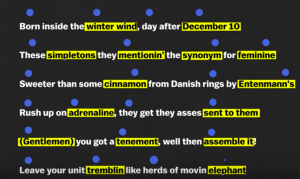 If high school English teachers can challenge skeptical students to cultivate an appreciation for Shakespeare and poetry with rap-based assignments, might the reverse also hold true?