
Ed Quish in Jacobin:
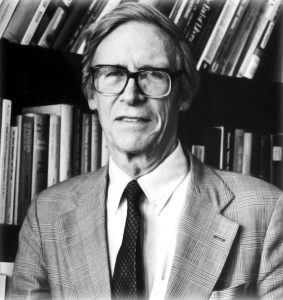 John Rawls was one of the twentieth century’s preeminent liberal philosophers. His major work, A Theory of Justice (1971), redefined the field of political philosophy, shaping generations of subsequent scholarship on politics, ethics, and law. For many of his admirers, Rawls represents the best of the liberal tradition, and his theory of justice offers a rigorous defense of liberalism’s most humane hope: a democratic welfare state that preserves capitalism while also keeping it in check.
For critics on the Left, Rawls’s theory has often seemed insufficient for a critique of injustice. The just society derived from Rawls’s famous thought experiment — where rational parties in an “original position” design a social contract unaware of their ultimate place in the society they create — largely mirrors the United States’ basic social, political, and legal institutions. Rawls’s basic theoretical approach risked buttressing the existing order by making it seem like the inevitable product of consensual reasoning — obscuring rather than clarifying political possibility.
In John Rawls: Reticent Socialist, William A. Edmundson offers a left defense of Rawls by focusing on the philosopher’s most mature and radical writings. By the time of Rawls’s final work, released in 2001 and called Justice as Fairness: A Restatement, he had concluded that capitalism is incompatible with the political equality and fair opportunity that justice demands.
More here.
 The speed with which campus life has changed for the worse is one of the most important points made by Greg Lukianoff and Jonathan Haidt in this important if disturbing book. Lukianoff is a lawyer and head of the Foundation for Individual Rights in Education (Fire), which works to protect academic freedom. Haidt is a professor of social psychology at NYU’s Stern School of Business and the founder of Heterodox Academy, which promotes intellectual diversity in academic life — the one type of diversity that universities appear not to care about.
 While the recent Heterodox Psychology conference in southern California was filled with highlights, for me, the keynote address by Leda Cosmides and John Tooby, two pioneers in the field of
  Moore was not alone in her writerly affinity with Pratt’s art. Pratt’s Wedding Dress graced the cover of Alice Munro’s 1990 short story collection Friend of My Youth. The late Diana Brebner won the
  Prior to her death from breast cancer in 1997, Kathy Acker wrote critically on the normative and hegemonic discourses and structures surrounding gender and sexuality, the (feminised) body, and taboos, in particular of sex, pornography and abjected beings. Through the female characters in her novels she explored and situated her own sexed and gendered positionality within systems of power and disciplinary, totalitarian violence. Acker was heralded and criticised for challenging traditional literary conventions, melding the boundaries of fiction, poetry, essay and diary writing or epistolary, of high-brow and low-brow, or as she called it “Schlock”, as well as the distinctions between literature and art. She has often been labelled a writer of the postmodern era, or, at worst, confined as a female literary offspring of William S. Burroughs or David Antin, Charles Olson and other Black Mountain Poets. Yes Acker did plagiarise or “cut-up” existing works, describing it as a crisis of voice as well as a (tactic of guerilla warfare, in the use of fictions, of language). Her Fathers told her to find her own voice, or in other words, to find and then sell her soul; although not as the stuff of essence or transcendent energy, but the individualised Cartesian soul, aka the mind.
 I hadn’t appreciated how important the idea of dignity is to his thought. It structures his critique of the limits placed on human liberty and opportunity by Jim Crow, and his objections to the impoverishment and ghettoization of northern black people. Maybe I also I hadn’t appreciated some of the more pragmatic features of his thought. It’s easy to see King as an idealist, but there’s a strong streak of realism in his work. He’s thinking very hard about what forms of political pressure one must bring to bear in order to realize the most fundamental ideals and principles. There’s a lot of focus on psychology, on diagnosing the mindset of allies and opponents. People often imagine that as a Christian minister he was aligned with moral suasion as the principal means of realizing his political ideals, and neglect the other forms of political maneuvering that are central to his thought.
 When you think of sugar, you probably think of the sweet, white, crystalline table sugar that you use to make cookies or sweeten your coffee. But did you know that within our body, simple sugar molecules can be connected together to create powerful structures that have recently been found to be linked to health problems, including cancer, aging and autoimmune diseases. These long sugar chains that cover each of our cells are called glycans, and according to the National Academy of Sciences, creating a map of their location and structure will
  In a mysterious addition to the brain’s family of cells, researchers have discovered a new kind of neuron—a dense, bushy bundle (above) that is present in people but seems to be missing in mice. These “rosehip neurons,” were found in the uppermost layer of the cortex, which is home to many different types of neurons that inhibit the activity of other neurons. Scientists spotted the neurons in slices of human brain tissue as part of a larger effort to inventory human brain cells by combining microscopic study of brain anatomy and the genetic analysis of individual cells. The cells were small and compact, with a dense, bushy shape. At the points along their projections where they transmit signals to other cells—called axonal boutons—they had unusually large, bulbous structures, which inspired their name.
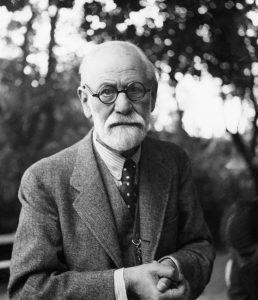 Originally, Freud analyzed only himself, and did so for five years, but he grew exhausted running back and forth between his chair and the couch. He then came up with the idea of analyzing patients, and continued to do so for the rest of his life. At first, Freud sat on the couch and the patient sat at his desk, but he changed places after discovering that his pens were disappearing.
 Official statistics say we are winning the War on Cancer. Cancer incidence rates, mortality rates, and five-year-survival rates have generally been moving in the right direction over the past few decades.
 Throughout most of American history, the idea of socialism has been a hopeless, often vaguely defined dream. So distant were its prospects at midcentury that the best definition Irving Howe and Lewis Coser, editors of the socialist periodical Dissent, could come up with in 1954 was this: “Socialism is the name of our desire.”
 A mostly overlooked component of
  While Zanzibar’s political landscape has shifted over the decades, Swahili coastal culture and tradition have remained central to island life. Haji Gora traces his love of language to ngoma, a hypnotic and exuberant drumming that hails from Congo. It’s a Bantu tradition that spread to Zanzibar via a harrowing history of slavery and trade between inland Africa and the Swahili coast, as well as the Arab Peninsula. There are various forms of ngoma, each with its own rhythms and sounds, but Haji Gora was drawn to Ngoma ya Kibati, which features quick, improvised dialogue set to drums while singers and dancers punctuate the rhythms with choral lines.
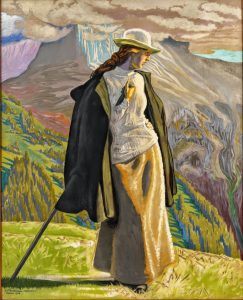 Wanderlust is, historically, a German idea. Wandern, meaning to hike or to roam, and lust, of course, meaning to desire, began not as a leisure activity but as a serious existential exercise of going out into nature in order to go into oneself. The Romantics believed this is where happiness and self-contentment could be found. The Germans of the eighteenth century, especially, were enamored with Italy for its natural landscapes, but German men with the time and the means for long hikes tended mostly to traverse their own country’s varied landscapes, from the Rhine Valley to the Harz Mountains to the Elbe Sandstone Mountains, which straddle the Czech Republic nearby.
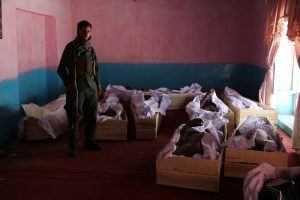 An equally pressing issue, which the US forces, especially, have yet to address, concerns the source, or sources, of all the Taliban’s new equipment. Providing logistics, massing fighters, and coordinating serial attacks around the country are the task of a well-drilled, well-supplied command structure. That is what Washington and Kabul are dealing with: a Taliban force, once considered a rag-tag army of militants, that now has the savvy of generals and the resources of a serious army.
 Replication is essential for building confidence in research studies