
Chris Simms at New Scientist:
 “People who have more frequent nightmares age faster and die earlier,” says Abidemi Otaiku at Imperial College London.
Along with his colleagues, Otaiku analysed more than 183,000 adults, aged 26 to 86, who had taken part in several studies. At the start, the adults self-reported how often they had nightmares, and were then tracked for as little as 1.5 years to as long as 19 years.
The researchers found that those who reported having nightmares on a weekly basis were more than three times as likely to die before they turned 70 than those who said they never or rarely had nightmares.
There is a clear association, says Otaiku, whose team also found nightmare frequency to be a stronger predictor of premature death than smoking, obesity, poor diet or lack of physical activity.
More here.
Enjoying the content on 3QD? Help keep us going by donating now.
 I
I In January, the economist and blogger Tyler Cowen
  For over a century there has been just one verifiable photograph of Dickinson. In the iconic black and white silver daguerreotype, she is not wearing the white dress. She’s a teenager fixed in a dress she will live in forever. And that dress is made in an undefinable dark printed fabric with a slight sheen. Not surprising, given dark fabrics were considered more suitable as it kept sitters from becoming spectral blurs—there and not there. But people will mostly forget this first dress. There’s nothing spectacular or singular about it. The daguerreotype era produces millions of replica dark dresses. There’s no narrative we can attach to its common folds. The white fabric arrives in the future.
 T
T Since taking over as the top US health official in February, Robert F. Kennedy Jr has overseen radical changes that have alarmed many public-health experts. The agency he leads announced that it would
 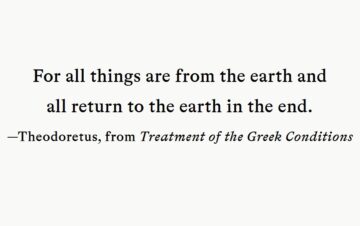 1. Before my father’s final illness, I had not understood that when the call goes out to assemble family members dolefully about a deathbed, it’s because a decision has been made to let the loved one pass. The timer is set; the sand is trickling down. Death—that omnipresent possibility at the best of times—becomes calculable when sustenance is withheld. Paddy Heneghan, born in Tralee, Ireland, on 29 March 1927, lived ninety-five years and, though defying predictions by lingering beyond his appointed hour, is now, by all reasonable standards used to determine such matters, dead.
 First, he and his colleagues test people on tasks related to language or vision. Then they compare the observed behavior or brain activity to results from AI models built to do the same things. Finally, they use the data to fine-tune their models to create increasingly humanlike AI.
 Lateness may imply death or an ending, as when we speak of my late grandfather or the late afternoon. When the German social theorist Werner Sombart first used the term in the early twentieth century, late capitalism did mean the end of capitalism. Yet ‘late’ in the superlative also suggests up-to-date or state-of-the-art, pointing not to the demise of something but to its refinement and advance. Surveying the same developments as Sombart, the Austrian Marxist Rudolf Hilferding claimed that the emerging economy of the twentieth century was simply ‘the latest phase of capitalist development’, a phrase echoed by Lenin, who took pains to remind his followers that ‘there is no such thing as an absolutely hopeless situation’ for the bourgeoisie.
 A
A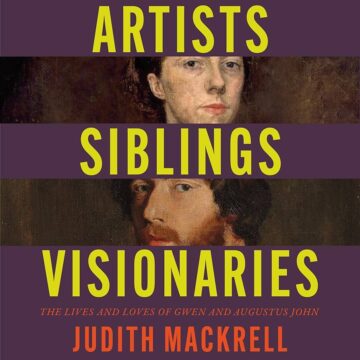 As Dorothy Rowe’s classic study My Dearest Enemy, My Dangerous Friend explains, sibling relationships – invariably intense, often fraught – are among the most underexamined of familial connections. Although every sibling strives to create a unique place in the world, inescapably their longest relationships will be with loved, ignored or actively disliked brothers and sisters.
 The Big Bang is often described as the explosive birth of the universe—a singular moment when space, time, and matter sprang into existence. But what if this was not the beginning at all? What if our universe emerged from something else—something more familiar and radical at the same time?
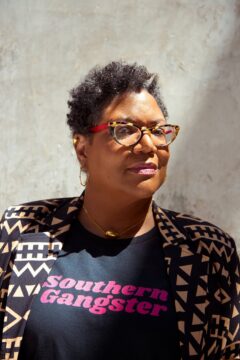 There’s a difference between being at a crossroads — weighing an important decision at a crucial moment — and being at the crossroads: a fabled space in the Black diasporic tradition where powers can be granted, whisked away or reclaimed by the spirit world, sometimes for the price of a soul. With her nonfiction debut, Honorée Fanonne Jeffers comfortably inhabits this mythic juncture, telling the stories of Black women in her genealogy with a literary style that joyfully resists easy categorization.