
Tamar Haspel in The Washington Post:
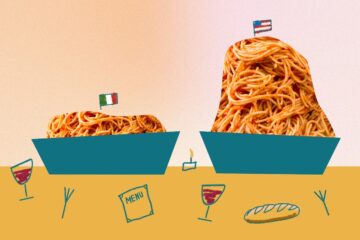 I had the great good fortune to spend the entire month of May in Italy. And if you’ve heard the reports of people going there on vacation, eating their way through the country, and miraculously coming home a few pounds lighter, I’m here to tell you it doesn’t always work out that way. Those folks, though, often come home scratching their head about why Italians are so much thinner than Americans. And, when you go to Italy, or even read about going to Italy, it does make you wonder. They eat cookies for breakfast. Lunch and dinner are typically multicourse meals, with a pasta or risotto as a first course and a meat dish as a second. There are sometimes antipasti as well. Even schoolkids often get multicourse meals.
And the foods! Charcuterie! Cheese! Ravioli! Pizza! Focaccia! Gelato! On its face, it doesn’t seem like a recipe for avoiding weight gain. Yet, according to the U.N.’s Food and Agriculture Organization, the obesity rate among Italian adults was 17 percent in 2022. In the United States, it was 42 percent.
More here.
Enjoying the content on 3QD? Help keep us going by donating now.
 If you ask a BaYaka Forager
 The narrative premises
 Today marks the 50th anniversary of
 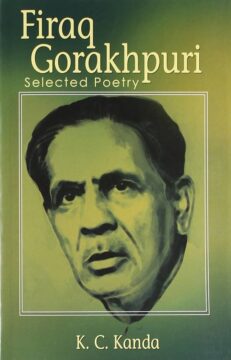 Everybody likes ghazals. Or they do when they learn what they are: A ghazal is a poetic form originating in and strongly associated with the Islamic cultural sphere. It is a medieval thing—or what Westerners would call medieval. Many famous Persian poets are famous for their ghazals. Likewise, Arabic poets, Turkish, Urdu … The ready-to-hand comparison is with the Italian sonnet. Ghazals are a lot like that: song length, rhyme heavy, lots of lovey-doveyness, lots of over-the-top cosmic reasoning.
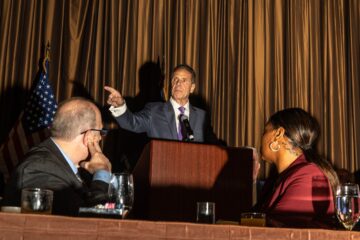 Mamdani didn’t have Cuomo’s money or institutional support, which may have freed him to run a transformative campaign. He didn’t shy away from his racial and religious identity, or from backing trans rights, or from supporting Palestine, and he didn’t have to because those positions are not inherently at odds with a “kitchen-table” campaign. He ran on affordability and championed meaningful economic proposals like universal child care and baby baskets, plus a rent freeze for regulated apartments. He told the obvious truth, which is that the city is crushing everyone who isn’t rich, and proposed solutions. With the laudatory assistance of Brad Lander, he modeled a new and more collaborative politics in contrast to Cuomo’s narcissism. He took that optimism to the streets and to social media with what seemed like boundless energy, and he redefined pragmatism for a new age in city politics. Maybe it’s radical to let child-care costs drive families out of the city. Maybe it’s Cuomo and his backers who are out of touch with real people.
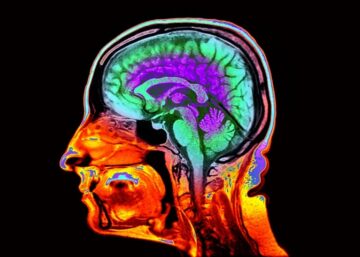 Telltale features visible in standard brain images can reveal
  Take a look at this video of a waiting room. Do you see anything strange?
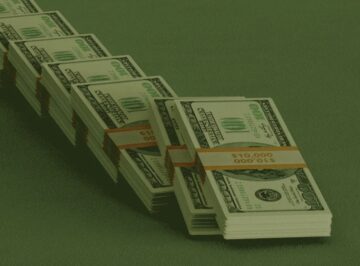 The global economy is getting a hardware refit and trying out a new operating system—in effect, a full reboot, the likes of which we have not seen in nearly a century. To understand why this is happening and what it means, we need to abandon any illusion that the worldwide turn toward right-wing populism and economic nationalism is merely a temporary error, and that everything will eventually snap back to the relatively benign world of the late 1990s and early 2000s. The computer’s architecture is changing, but how this next version of capitalism will work depends a great deal on the software we choose to run on it. The governing ideas about the economy are in flux: We have to decide what the new economic order looks like and whose interests it will serve.
 T
T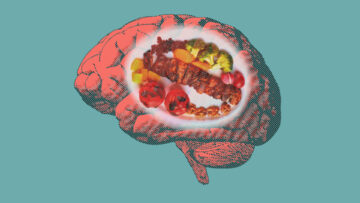

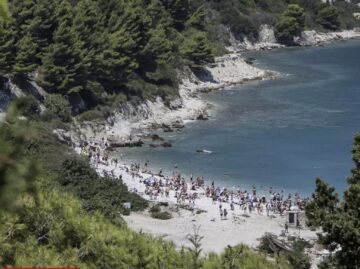 Albanians call Sazan Ishulli i Trumpëve – Trump Island. Until now mostly untrammelled by development, it is on the verge of becoming a mecca for ultra-luxury tourism, another addition to Ivanka Trump and Jared Kushner’s real-estate portfolio. Speaking on the