
David Cyranosky and Heidi Ledford in Nature:
 A Chinese scientist claims to have helped make the world’s first genome-edited babies — twin girls, who were born this month. The announcement has provoked shock and outrage among scientists around the world. He Jiankui, a genome-editing researcher at the Southern University of Science and Technology of China in Shenzhen, says that he impregnated a woman with embryos that had been edited to disable the genetic pathway HIV uses to infect cells. In a video posted to YouTube, He says the girls are healthy and now at home with their parents. Sequencing of the babies’ DNA has shown that the editing worked, and altered only the target gene, he says. The scientist’s claims have not been verified through independent genome testing, nor published in a peer-reviewed journal. But, if true, the twins’ birth would represent a significant — and controversial — leap in the use of genome editing. Until now, the use of these tools in embryos has been limited to research, often to investigate the benefit of using the technology to eliminate disease-causing mutations from the human germ line. But some studies have reported off-target effects, raising significant safety concerns.
HIV’s entry point
Documents posted on China’s clinical-trial registry show that He used the popular CRISPR–Cas9 genome-editing tool to disable a gene called CCR5, which encodes a protein that allows HIV to enter a cell. Genome-editing scientist Fyodor Urnov was asked to review documents that described DNA sequence analysis of human embryos and fetuses edited at the CCR5 locus for an article in MIT Technology Review. “The data I reviewed are consistent with the fact that the editing has, in fact, taken place,” says Urnov, who is based at the Altius Institute for Biomedical Sciences in Seattle, Washington. But he adds that the only way to tell whether the children’s genomes have been edited is to independently test their DNA.
More here.
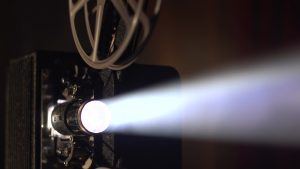 Ever since my childhood I have been excited, even electrified, by movies. In my college days in Calcutta, in search of alternate experience beyond Indian and Hollywood movies, I used to frequent the local Film Society events, showing some commercially unavailable European fare. Short of funds these Film Society outfits mainly went for movies they could procure at low cost. The East European consulates in the city were particularly generous in making available films from their countries.
 Many decades ago, I packed my bags and left the shores of Australia and headed to the United Kingdom (UK). My secondary years of education had taught me to believe that my journey to the UK would amount to a ‘return’ to the ‘motherland’. A ‘return to the motherland’? Really? That says more about the education system I was exposed to, than just how naïve I was. However, having learned after my arrival that the UK was not, in fact, my ‘motherland’, I did discern that it had more to offer in terms of being ‘in’ the world than the distant shores of Australia, and I decided to stay. Thus, after many years resident in the UK, I considered myself as someone familiar with the country, until, that is, a change in my life circumstances provided me the opportunity to know the UK, or more specifically, England, in a totally different way.
 We can agree that a verb in the present tense means that action is occurring now. What about the present progressive, which I used in the previous statement? That apparently confounds non-native English speakers because it means that an action is in the middle of happening. Friends have asked me, “What is the difference between I am playing tennis and I play tennis?” That example is actually a softball because the present progressive indicates that the first person is in the middle of playing a game and the simple present indicates the playing of the sport in general.
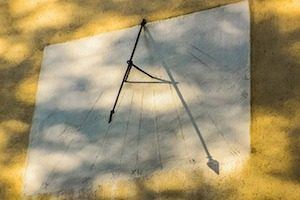 Before the second was defined in terms of the characteristics of the cesium atom, before leap seconds or leap days or Julian dates or the Gregorian calendar, before clocks, even before the sundial and the hourglass, there were sunrise, sunset, and shadows.


 I joined Facebook in 2008, and for the most part, I have benefited from being on it. Lately, however, I have wondered whether I should delete my Facebook account. As a philosopher with a special interest in ethics, I am using “should” in the moral sense. That is, in light of recent events implicating Facebook in objectionable behavior, is there a duty to leave it?
 If you hate Assange because of his role in the 2016 race, please take a deep breath and consider what a criminal charge that does not involve the 2016 election might mean. An Assange prosecution could give the Trump presidency broad new powers to put Trump’s media “enemies” in jail, instead of just yanking a credential or two. The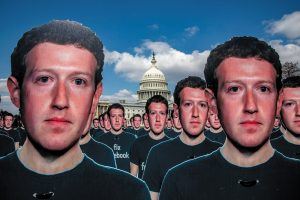
 This episode features political scientist
  Confronting the
 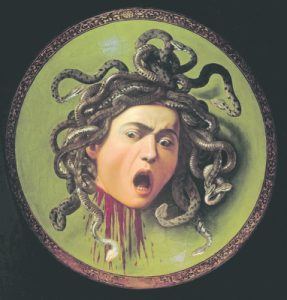 Two Southern belles on the run get catcalled one too many times by the same schlubby dude; they blow up his truck. A couple of rough-and-ready French chicks talk their way into an architect’s house—his place is “like a drawing by a well-balanced child,” as is his smug, suave, symmetrical mug—and point their Smith & Wessons at him, all the while admiring both his book collection and his calm under pressure. “It’s clear to me,” one of them tells him affectionately, “that you stand out from our past encounters.” Then she shoots him in the face. “Get your fucking hands off me, goddamn it!” yells a leader of the National Women’s Political Caucus at the 1972 Democratic National Convention, addressing the member of the white-guy network-news crowd who is trying to restrain her as she rages over their failure to cover her group’s contributions. “The next son of a bitch that touches a woman is gonna get kicked in the balls.” A ten-year-old African American girl, menaced by a white boy, picks up a chunk of brick and aims it at him. When an avowed pussy-grabber tries to win a presidential debate against his female opponent by trotting out a bunch of women who’ve accused her husband of rape and other misconduct, a woman journalist takes to cable news to defend her beloved historic candidate, “shaking and red-faced with rage.”
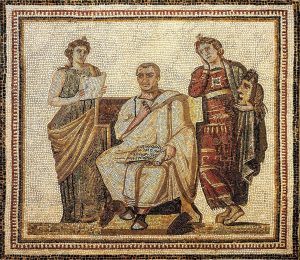 Since the end of the first century A.D., people have been playing a game with a certain book. In this game, you open the book to a random spot and place your finger on the text; the passage you select will, it is thought, predict your future. If this sounds silly, the results suggest otherwise. The first person known to have played the game was a highborn Roman who was fretting about whether he’d be chosen to follow his cousin, the emperor Trajan, on the throne; after opening the book to this passage—